Kirjojen hintavertailu – 12 903 725 kirjaa ja 27 kauppaa

Kirjailija

John Marsh

Kirjat ja teokset yhdessä paikassa: 38 kirjaa, julkaisuja vuosilta 1981–2026, suosituimpiin kuuluu Temperance Recollections [Microform] Labors, Defeats, Triumphs. An Autobiography. by John Marsh.. Vertaile teosten hintoja ja tarkista saatavuus suomalaisista kirjakaupoista.

38 kirjaa

Kirjojen julkaisuvuodet: 1981–2026.

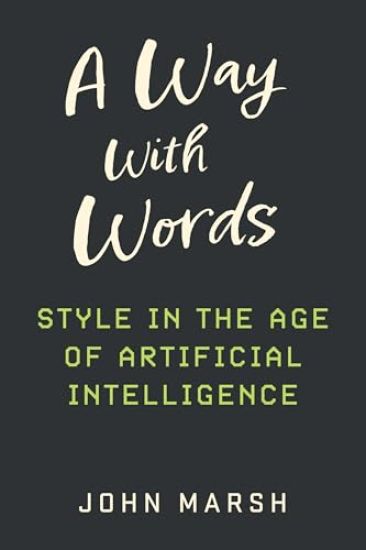
A Way With Words

A Way With Words

John Marsh

THE UNIVERSITY OF MICHIGAN PRESS
2026
nidottu

Halvin toimitettuna 28,60 €

A Way with Words helps readers learn the essentials of writing. Rather than lecturing about when to use who or whom, this book focuses on writing clear, concise, and lively prose: eliminating wordiness, using active verbs, avoiding run-on sentences. John Marsh applies his experience grading over 5,000 essays over a quarter century as a teacher to take readers through the issues he most commonly sees. While Marsh teaches in the humanities, the advice applies to writing regardless of discipline. Using examples from papers students might actually write, the book invites readers to apply what they have learned to quizzes that mix and match issues—vague pronouns, sentence fragments, punctuating quotations—from previous chapters. The book includes a thoughtful discussion about balancing the competing demands of writing well and fighting linguistic discrimination. Finally, A Way with Words prompts readers to consider what artificial intelligence programs like ChatGPT and Bard will mean for student writing. It offers advice about how writers can distinguish their writing from the assembly-line writing that artificial intelligence tends to generate, and how they can develop their style to stand out to their teachers, employers, and clients.
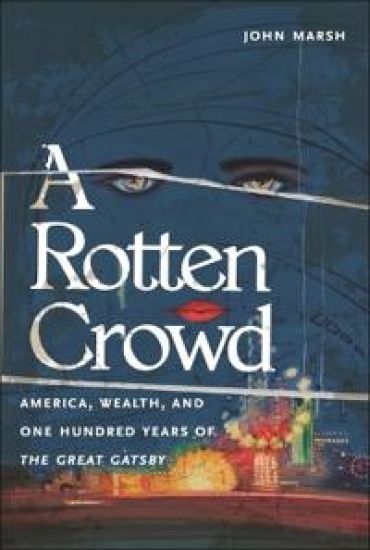
A Rotten Crowd

A Rotten Crowd

John Marsh

MONTHLY REVIEW PRESS,U.S.
2024
sidottu
A look at how much, and how little, has changed about class in America One century ago, F. Scott Fitzgerald invited us into the lives of the "rotten crowd," Jazz Age Americans with far more money than morals. In "A Rotten Crowd" America, Wealth, and One Hundred Years of The Great Gatsby, John Marsh welcomes us back to Fitzgerald's world to examine the rich and their reckless approach to human relationships, their poor taste in friends, and the harm they cause. Marsh leads us to wonder: What kinds of waste--economic, environmental, emotional--accompany a culture of wealth? What kinds of relationships do the wealthy form with those they rely upon to maintain their power--and how does capitalism and the need for the accumulation of wealth influence the bonds the rest of us form? On a surface level, how do the clothes people wear signal their status--and how do those fashions trickle down to the rest of us? And on a deeper level, how does racism drive a wedge between those who might otherwise stand up to the rich? As we move between 2025 and 1925 to consider how much--or little--has changed in the interim, A Rotten Crowd helps us discover what we can do about the obscene concentration of wealth in America today.
Congressional Oversight Of National Security

Congressional Oversight Of National Security

John Marsh; Blackwell James

Centre for Strategic International Studies,U.S.
2021
nidottu
The CSIS Project on Congressional Oversight of Defence has attempted to forge a bipartisan mandate to reform the way Congress handles its defence oversight. Congress itself has long recognized that it spends too much time on details of defence programs and too little time deliberating the objectives, policies and management of US national security. This report, phase III of CSIS's research on defence reform, builds on the Center's previous analyses. Phase I assessed the implementation of the Packard Commission recommendations and the Goldwater-Nichols legislation, while phase II focused on the Bush administraton and the 101st Congress.
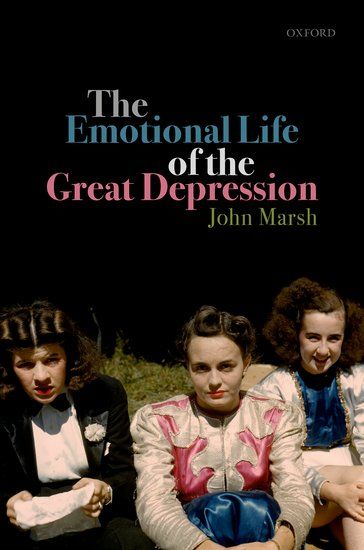
The Emotional Life of the Great Depression

The Emotional Life of the Great Depression

John Marsh

Oxford University Press
2019
sidottu
The Emotional Life of the Great Depression documents how Americans responded emotionally to the crisis of the Great Depression. Unlike most books about the 1930s, which focus almost exclusively on the despair of the American people during the decade, this volume explores the 1930s through other, equally essential emotions: righteousness, panic, fear, awe, love, and hope. In expanding the canon of Great Depression emotions, the book draws on an eclectic archive of sources, including the ravings of a would-be presidential assassin, stock market investment handbooks, a Cleveland serial murder case, Jesse Owens's record-setting long jump at the 1936 Berlin Olympics, King Edward VIII's abdication from his throne to marry a twice-divorced American woman, and the founding of Alcoholics Anonymous. In concert with these, it offers new readings of the imaginative literature of the period, from obscure Christian apocalyptic novels and H. P. Lovecraft short stories to classics like John Steinbeck's The Grapes of Wrath and Richard Wright's Native Son. The result is a new take on the Great Depression, one that emphasizes its major events (the stock market crash, unemployment, the passage of the Social Security Act) but also, and perhaps even more so, its sensibilities, its structures of feeling.
It's All About the Money

It's All About the Money

John Marsh

Percy Publishing
2017
nidottu
Max Edwards has done his time in the British Army. The big wide world is now his Oyster. He has an Army Pension and his Bounty in his pocket. He knows what he is going to do. He is going to make money and plenty of it. Civvy street is not the friendly helpful place he was expecting. The Stock Market beckons then turns on him. Edwards has no choice but to adapt and overcome leading him into the arms of the underworld. Edwards is now in business, which soon gets out of control, he finds he has no where to turn and no way out.
In Walt We Trust

In Walt We Trust

John Marsh

Monthly Review Press,U.S.
2014
sidottu
Life in the United States today is shot through with uncertainty: about our jobs, our mortgaged houses, our retirement accounts, our health, our marriages, and the future that awaits our children. For many, our lives, public and private, have come to feel like the discomfort and unease you experience the day or two before you get really sick. Our life is a scratchy throat. John Marsh offers an unlikely remedy for this widespread malaise: the poetry of Walt Whitman. Mired in personal and political depression, Marsh turned to Whitman--and it saved his life. In Walt We Trust: How a Queer Socialist Poet Can Save America from Itself is a book about how Walt Whitman can save America's life, too. Marsh identifies four sources for our contemporary malaise (death, money, sex, democracy) and then looks to a particular Whitman poem for relief from it. He makes plain what, exactly, Whitman wrote and what he believed by showing how they emerged from Whitman's life and times, and by recreating the places and incidents (crossing Brooklyn ferry, visiting wounded soldiers in hospitals) that inspired Whitman to write the poems. Whitman, Marsh argues, can show us how to die, how to accept and even celebrate our (relatively speaking) imminent death. Just as important, though, he can show us how to live: how to have better sex, what to do about money, and, best of all, how to survive our fetid democracy without coming away stinking ourselves. The result is a mix of biography, literary criticism, manifesto, and a kind of self-help you're unlikely to encounter anywhere else.

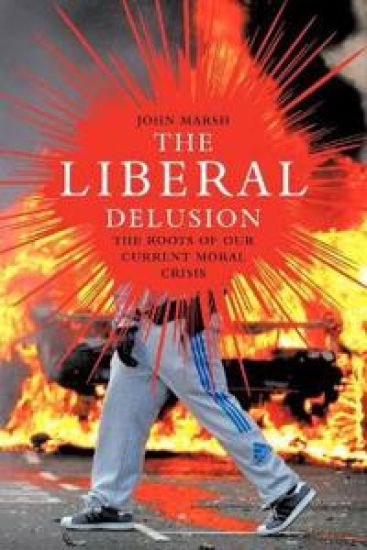
The Liberal Delusion

The Liberal Delusion

John Marsh

Arena Books
2012
pokkari
Is western civilisation based on a mistaken understanding of humanity? Fundamental to any society is its comprehension of human nature. It shapes attitudes and policies on a whole range of issues: interpersonal relations, child-rearing, discipline and punishment, economics and welfare. For millennia western societies were based on the idea that human nature is flawed. This was turned upside down 300 years ago during the Enlightenment by writers such as Rousseau, who argued that we are born good and later warped by parents and society; a liberal view of human nature which is now being challenged by scientific discoveries in the fields of the mind, the brain, and genetics (including the Human Genome), evolutionary psychology, and anthropology. This fundamental change has had profound effects. If we are essentially good then we can safely maximize freedom and abandon morality, religion and tradition. Many aspects of life have been liberalised - sexual behaviour, alcohol consumption, censorship, gambling, divorce laws and economic activity. Economic liberals thought free markets were rational and good and favoured minimal government interference and light-touch regulations. This led to the credit crunch and the greatest financial crisis since World War Two. Many parents now hesitate to discipline their own children. The belief that we are essentially good but corrupted by society has also influenced penal policy. Liberals see criminals as victims, not as wrongdoers; because surely no-one would choose to do something wrong. This is a world far removed from the self-sacrifice and fraternity shown during World War Two. It has not brought happiness but rather more alienated individuals. The outcome of egalitarian aims or methods has often missed its mark: e.g., in education it has led to the dumbing down of academic standards, grade inflation and a decline in social mobility. Egalitarian regimes from the French Revolution to the Soviet era have been amongst the most bigoted, brutal and bloody in history. The drive for greater social justice and fairness must remain an essential objective. There is, therefore, an urgent need to separate out the positive from the negative aspects of liberal thought and practice, as otherwise there is the risk of descent into moral anarchy and social disintegration.