Kirjojen hintavertailu – 12 903 735 kirjaa ja 27 kauppaa

Kirjailija

John Maynard Smith

Kirjat ja teokset yhdessä paikassa: 5 kirjaa, julkaisuja vuosilta 1978–1998, suosituimpiin kuuluu The Major Transitions in Evolution. Vertaile teosten hintoja ja tarkista saatavuus suomalaisista kirjakaupoista.

5 kirjaa

Kirjojen julkaisuvuodet: 1978–1998.

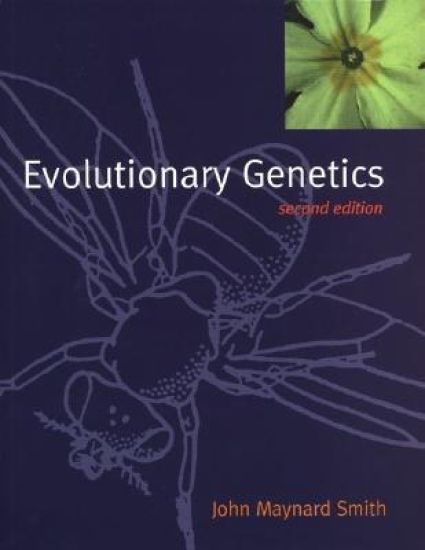
Evolutionary Genetics

Evolutionary Genetics

John Maynard Smith

Oxford University Press
1998
nidottu
The first edition of Maynard Smith's Evolutionary Genetics (first published in 1989) was welcomed as the first comprehensive introduction to the molecular and population aspects of evolutionary genetics, and has now become one of the definitive textbooks in the field. Aimed at advanced undergraduates in the biological sciences, the book covers basic population and quantitative genetics, evolutionary game theory, behavioural evolution, sexual selection and mating systems, speciation, and macroevolution. Theory and mathematics are clearly explained, with the aid of problems at the ends of the chapters, and the author takes care to place these within the context of questions central to current research in evolutionary biology. This Second Edition has been revised and updated throughout to reflect new findings and research interests. In the chapter on phenotypic evolution, the author incorporates new research on game theory. The discussions of sex and host-parasite interactions have been extensively revised and the author has added a new chapter on molecular genetics and the reconstruction of evolutionary history. Evolutionary Genetics remains the essential textbook for advanced undergraduates seeking a clear, comprehensive, and up-to-date account of the theory of evolutionary biology.
The Major Transitions in Evolution

The Major Transitions in Evolution

John Maynard Smith; Eors Szathmary

Oxford University Press
1997
nidottu
During evolution, there have been several major changes in the way that genetic information is organized and transmitted from one generation to the next. These transitions include the origin of life itself, the first eukaryotic cells, reproduction by sexual means, the appearance of multicellular plants and animals, the emergence of cooperation and of animal societies, and the unique language ability of humans. This is the first book to discuss all of these major transitions. In discussing such a wide range of topics in one volume, the authors are able to highlight the similarities between different transitions - for example, between the union of replicating molecules to form chromosomes and of cells to form multicellular organisms. The authors also show how an understanding of one transition sheds light on others. A common theme in the book is that entities that could replicate independently before the transition can replicate afterwards only as part of a larger whole. Why, then, does selection between entities at the lower level not disrupt selection at the higher level? In answering this question, the authors offer an explanation for the evolution of cooperation at all levels of complexity. Written in a clear style, and illustrated with many original diagrams, this book can be read with enjoyment by anyone with an undergraduate training in the biological sciences. It will be ideal for advanced discussion groups on evolution. Although the content ranges widely from molecular biology to linguistics and from intragenomic conflict to insect societies, no detailed knowledge of any of these topics is required. Mathematical models are clearly explained, and equations and formulae are kept to a minimum.
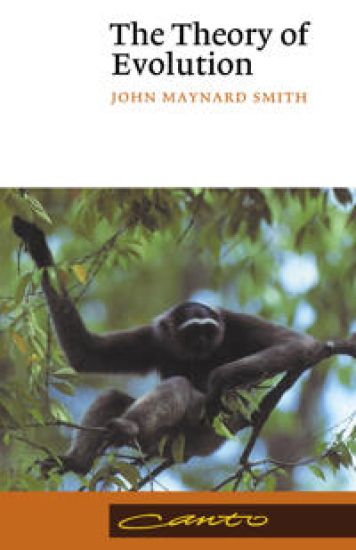
The Theory of Evolution

The Theory of Evolution

John Maynard Smith; Richard Dawkins

Cambridge University Press
1993
pokkari

Halvin toimitettuna 32,90 €

All living plants and animals, including man, are the modified descendants of one or a few simple living things. A hundred years ago Darwin and Wallace in their theory of natural selection, or the survival of the fittest, explained how evolution could have happened in terms of processes known to take place today. In this book John Maynard Smith describes how their theory has been confirmed, but at the same time transformed, by recent research, and in particular by the discovery of the laws of inheritance. This reissue reprints the third edition of John Maynard Smith’s classic account, adding a substantial new introduction covering recent developments. A new foreword, by the author of The Selfish Gene and The Blind Watchmaker, commends the book to a fresh generation of readers.
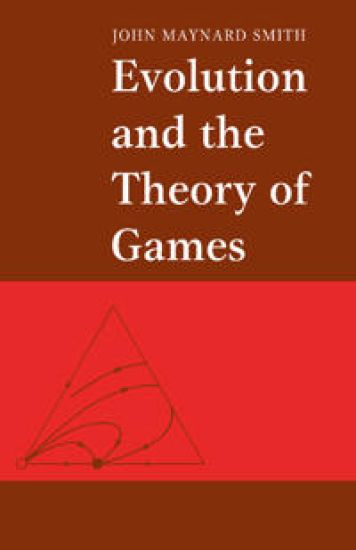
Evolution and the Theory of Games

Evolution and the Theory of Games

John Maynard Smith

Cambridge University Press
1982
pokkari
Professor John Maynard Smith has written an account of a new way of thinking about evolution which has been developed in the last ten years. The theory of games, first developed to analyse economic behaviour, is modified so that it can be applied to evolving populations. John Maynard Smith’s concept of an evolutionarily stable strategy is relevant whenever the best thing for an animal or plant to do depends on what others are doing. The theory leads to testable predictions about the evolution of behaviour, of sex and genetic systems, and of growth and life history patterns. This book contains the first full account of the theory, and of the data relevant to it. The account is aimed at senior undergraduate and graduate students, teachers and research workers in animal behaviour, population genetics and evolutionary biology. The book will also be of interest to mathematicians and game theorists; the mathematics has been largely confined to appendixes so that the main text may be easily followed by biologists.
The Evolution of Sex

The Evolution of Sex

John Maynard Smith

Cambridge University Press
1978
pokkari
The question of why organisms reproduce sexually is still a matter of controversy. In this account, Professor Maynard Smith considers the selective forces responsible for the origin and evolution of sexual reproduction and genetic recombination, using quantitative population genetics arguments to support his ideas. The relative importance of individual and group selection processes are also considered. the aim is to give a clear statement of the theoretical issues, and present enough of the evidence to show what kinds of facts are relevant. It is hoped that where crucial evidence is missing, experimentalists and field workers may be encouraged to collect the relevant data. The author does not claim to solve all the problems he raises, but this clear and well-argued account should provide stimulating reading for advanced undergraduate students and research workers in evolutionary theory.