Kirjojen hintavertailu – 12 859 829 kirjaa ja 27 kauppaa

Kirjailija

John McCombie

Kirjat ja teokset yhdessä paikassa: 4 kirjaa, julkaisuja vuosilta 1993–2010, suosituimpiin kuuluu Economic Growth and the Balance-of-Payments Constraint. Vertaile teosten hintoja ja tarkista saatavuus suomalaisista kirjakaupoista.

4 kirjaa

Kirjojen julkaisuvuodet: 1993–2010.

Macroeconomics, Finance and Money

Macroeconomics, Finance and Money

Giuseppe Fontana; John McCombie; Malcolm Sawyer

Palgrave Macmillan
2010
nidottu
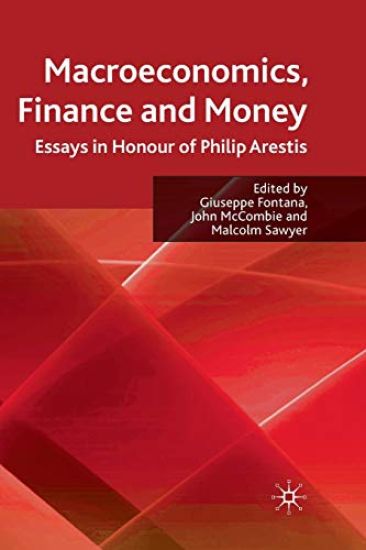
This volume focuses on current issues of debate in the area of modern macroeconomics and money, written from (a broadly interpreted) post Keynesian perspective. The papers connect with Philip Arestis' contributions to macroeconomics and money, and pay tribute to his distinguished career.
Macroeconomics, Finance and Money

Macroeconomics, Finance and Money

Giuseppe Fontana; John McCombie; Malcolm Sawyer

Palgrave Macmillan
2010
sidottu
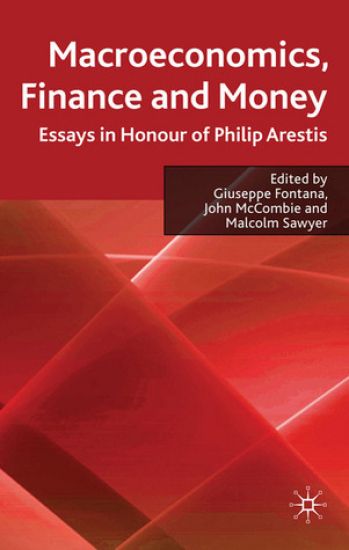
This volume focuses on current issues of debate in the area of modern macroeconomics and money, written from (a broadly interpreted) post Keynesian perspective. The papers connect with Philip Arestis' contributions to macroeconomics and money, and pay tribute to his distinguished career.
Economic Growth and the Balance-of-Payments Constraint

Economic Growth and the Balance-of-Payments Constraint

John McCombie; A.P. Thirlwall

Palgrave Macmillan
1994
sidottu
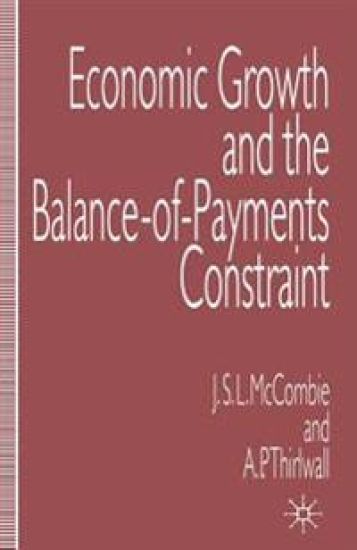
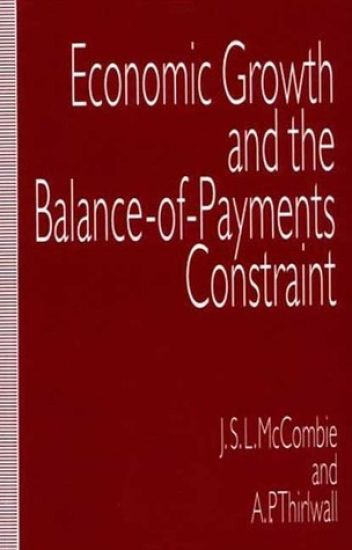
'... a well written book ... covering ... a vast amount of material ... well balanced between the theoretical and applied works. The authors are judicious and fair in providing a balanced treatment of the two alternative theories of growth performance: supply-oriented and demand-oriented. The book will serve as a guideline to researchers and policymakers ... as a textbook for upperdivision undergraduate and graduate courses.'- Kashi Nath Tiwari, Kennesaw State College This is the first book of its kind to argue in a consistent and comprehensive way the idea that a country's growth performance cannot be properly understood without reference to the performance of its tradeable goods sector and the strength of its balance of payments. It puts forward a demand orientated theory of why growth rates differ between countries where the major constraint on demand is the balance of payments. The book is critical of neoclassical growth analysis and provides an alternative theory of growth performance to the supply orientated approach of neoclassical theory. There are theoretical chapters comparing and contrasting neoclassical growth analysis with the new demand orientated approach, and empirical sections which apply the new model to regions and countries, including two case studies of the UK and Australia.
Economic Growth and the Balance-of-Payments Constraint

Economic Growth and the Balance-of-Payments Constraint

John McCombie; A. P. Thirlwall

Palgrave Macmillan
1993
nidottu
'... a well written book ... covering ... a vast amount of material ... well balanced between the theoretical and applied works. The authors are judicious and fair in providing a balanced treatment of the two alternative theories of growth performance: supply-oriented and demand-oriented. The book will serve as a guideline to researchers and policymakers ... as a textbook for upperdivision undergraduate and graduate courses.'- Kashi Nath Tiwari, Kennesaw State College This is the first book of its kind to argue in a consistent and comprehensive way the idea that a country's growth performance cannot be properly understood without reference to the performance of its tradeable goods sector and the strength of its balance of payments. It puts forward a demand orientated theory of why growth rates differ between countries where the major constraint on demand is the balance of payments. The book is critical of neoclassical growth analysis and provides an alternative theory of growth performance to the supply orientated approach of neoclassical theory. There are theoretical chapters comparing and contrasting neoclassical growth analysis with the new demand orientated approach, and empirical sections which apply the new model to regions and countries, including two case studies of the UK and Australia.