Kirjojen hintavertailu – 12 903 725 kirjaa ja 27 kauppaa

Kirjailija

John Micklewright

Kirjat ja teokset yhdessä paikassa: 5 kirjaa, julkaisuja vuosilta 1992–2021, suosituimpiin kuuluu The welfare of Europe's children. Vertaile teosten hintoja ja tarkista saatavuus suomalaisista kirjakaupoista.

5 kirjaa

Kirjojen julkaisuvuodet: 1992–2021.

The Opening Country

The Opening Country

John Micklewright

Matador
2021
nidottu
In this journey of discovery, John Micklewright travels the slow way, on foot, on paths, tracks and byways from the Channel to the Alps – from the coast of Normandy to the flanks of Mont Blanc. The Opening Country is a beautifully written account of his progress through the French countryside, an evocative patchwork of landscape, nature, history, literature, film, and – drawing on his father’s diaries that stretch back to the 1930s – of memoir. Always curious, absorbing all around him, ready on a whim to divert from his chosen route as he heads unhurriedly southwards. The natural world unfolds as spring turns to summer with surprises of bird song and butterflies, against a constant background of reminders of the economic and social story of rural France and of wars past. The result is an engrossing record of a classic long-distance walk through Britain’s nearest continental neighbour. The Opening Country is a book to fire the imagination – a call to travel slowly, to open eyes and ears, to discover and explore.

Family Background and University Success

Family Background and University Success

Claire Crawford; Lorraine Dearden; John Micklewright; Anna Vignoles

Oxford University Press
2016
sidottu
Why do fewer teenagers in England from disadvantaged backgrounds go to university than young people from better-off families? Once at university, how well do poorer students fare compared with other students - who drops out from university and who gets the best degrees? After university - who secures better jobs and higher pay? What really has been the impact on university entry of the controversial increases in tuition fees in 2006 and 2012, especially for students from poorer families? Is there no alternative to charging for university places and what do other countries do? What should governments, universities, and schools do to reduce the gaps in university entry and success by family background? And what advice can be given to families and young people themselves deciding between the costs and benefits of university? This book answers these questions using the latest available evidence, drawing on a wealth of data from administrative records of the school and university system and sample surveys of young people and their families. The authors' analysis of the situation in England is set against a background of evidence for other countries. The book provides much needed dispassionate analysis of issues that are at the forefront of both public policy and popular debate on higher education around the world today.
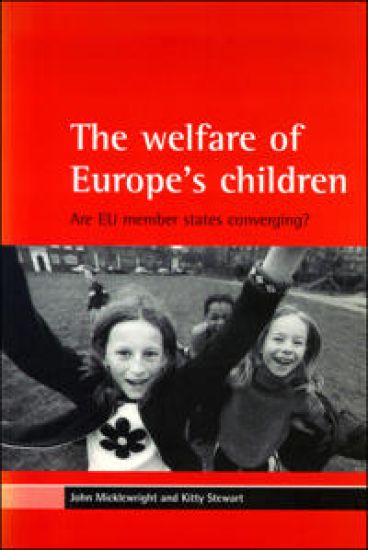
The welfare of Europe's children

The welfare of Europe's children

John Micklewright; Kitty Stewart

Policy Press
2000
nidottu
Discussion of convergence in the EU in recent years has centred on economic indicators related to monetary union and the single European currency, but it is the convergence of living standards that is the ultimate goal of European integration. This book analyses the living standards of the nearly 80 million children in the EU, who represent over a fifth of the Union's total population. The well-being of Europe's children is important now - and the nature of their progress to adulthood will have a major impact on the shape of Europe's future. By analysing the trends of child well-being in Europe over the last two decades, this book asks: Is the well-being of children in the EU becoming more similar across member states? Or Are countries diverging while their economies converge? These issues are addressed with a wealth of data on different dimensions of the changing welfare of Europe's children - evidence that has not previously been drawn together in a single source. The authors consider in turn the material well-being of children, their health and education, teenage fertility, and young people's own views of their lives. There is careful treatment of conceptual and measurement issues and data quality and comparability, together with reference to a large literature across the different relevant disciplines. This book aims to raise the profile of children in the debate on Europe's future, and in doing so to contribute to the growing discussion of economic and social cohesion in the EU. The analysis is rigorous but it avoids disciplinary jargon and will appeal to a pan-European audience. It is important reading for academics across the social sciences interested in the well-being of children and youth, NGOs working on behalf of the young, and local and national government policy advisers concerned with the issues in a domestic or European context.
Economic Transformation in Eastern Europe and the Distribution of Income

Economic Transformation in Eastern Europe and the Distribution of Income

Anthony Barnes Atkinson; John Micklewright

Cambridge University Press
1992
sidottu
Who gains and who loses from economic transformation in Eastern Europe is a key question, but one which is too rarely discussed. This book, first published in 1992, examines the evidence about distribution of income under Communism in Eastern Europe. Contrary to popular impressions, a great deal of information exists about distribution of income and household earnings in Czechoslovakia, Hungary and Poland. With glasnost much material previously kept secret in the USSR has been made available. The book contains extensive statistical evidence that had not previously been assembled on a comparative basis, and brings the story right up to the end of Communism. The findings bring out the differences in experience between countries under Communism: between Central Europe and the former Union; between Czechoslovakia, Hungary and Poland; and between the newly independent states of the former Soviet Union.
Economic Transformation in Eastern Europe and the Distribution of Income

Economic Transformation in Eastern Europe and the Distribution of Income

Anthony Barnes Atkinson; John Micklewright

Cambridge University Press
1992
pokkari
Who gains and who loses from economic transformation in Eastern Europe is a key question, but one which is too rarely discussed. This book examines the evidence about distribution of income under Communism in Eastern Europe. Contrary to popular impressions, a great deal of information exists about distribution of income and household earnings in Czechoslovakia, Hungary and Poland. With glasnost much material previously kept secret in the USSR has been made available. The book contains extensive statistical evidence that has not previously been assembled on a comparative basis, and brings the story right up to the end of Communism. The findings bring out the differences in experience between countries under Communism: between Central Europe and the former Union; between Czechoslovakia, Hungary and Poland; and between the newly independent states of the former Soviet Union.