Kirjailija
John Morley
Kirjat ja teokset yhdessä paikassa: 345 kirjaa, julkaisuja vuosilta 1976–2026, suosituimpiin kuuluu The Works of Voltaire. Vertaile teosten hintoja ja tarkista saatavuus suomalaisista kirjakaupoista.
345 kirjaa
Kirjojen julkaisuvuodet: 1976–2026.
The Death of Mr. Mill and Mr. Mill's Autobiography
John Morley
Createspace Independent Publishing Platform
2012
nidottu
This volume on Edmund Burke (1729–97), published in 1879 in the first series of English Men of Letters, was written by the general editor of the series, John Morley (1838–1923). Himself a politician as well as an author, Morley had previously published a 'historical study' of Burke in 1867, but emphasises in an introductory note that this book 'is biographical rather than critical' and is intended as a narrative life. Morley himself was a radical in politics, and his interest in Burke, who he does not hesitate to characterise on occasion as a narrow-minded reactionary, may seem surprising, but he greatly admired his subject's independent political stance, which he describes as a mixture of utilitarian liberalism and historic conservatism, unfettered by abstract doctrine, and which he believed might again come to dominate political discourse in the last decades of the nineteenth century.

Morley's authorised biography of Gladstone (1809–1898) was published in 1903, and is a landmark of political biography. Four times Liberal Prime Minister between 1868 and 1894, Gladstone had left an enormous archive of letters, papers and diaries, which Morley (1838–1923), himself a noted Liberal politician and writer, spent five years distilling into three volumes. Although many other biographies and editions have since been published, Morley's work is still valuable for his use of primary sources, especially for the earlier part of Gladstone's career. Morley avoids overt party bias, but is understandably discreet in his treatment of more recent political events. He also ignores more private aspects of his subject's life and, as an agnostic, did not empathise with Gladstone's strong religious convictions. Volume 3 covers the period from 1880 to Gladstone's death in 1898, including the Sudan crisis, and the fierce debates over Irish Home Rule.
Morley's authorised biography of Gladstone (1809–1898) was published in 1903, and is a landmark of political biography. Four times Liberal Prime Minister between 1868 and 1894, Gladstone had left an enormous archive of letters, papers and diaries, which Morley (1838–1923), himself a noted Liberal politician and writer, spent five years distilling into three volumes. Although many other biographies and editions have since been published, Morley's work is still valuable for his use of primary sources, especially for the earlier part of Gladstone's career. Morley avoids overt party bias, but is understandably discreet in his treatment of more recent political events. He also ignores more private aspects of his subject's life and, as an agnostic, did not empathise with Gladstone's strong religious convictions. Volume 2 covers the period 1859–1880, during which he served as Chancellor and as Prime Minister, and controversially disestablished the Anglican church in Ireland.
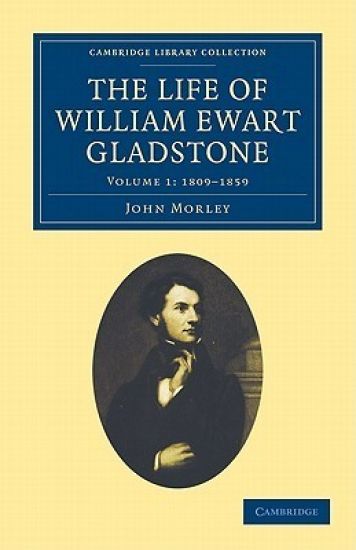
Morley's authorised biography of Gladstone (1809–1898) was published in 1903, and is a landmark of political biography. Four times Liberal Prime Minister between 1868 and 1894, Gladstone had left an enormous archive of letters, papers and diaries, which Morley (1838–1923), himself a noted Liberal politician and writer, spent five years distilling into three volumes. Although many other biographies and editions have since been published, Morley's work is still valuable for his use of primary sources, especially for the earlier part of Gladstone's career. Morley avoids overt party bias, but is understandably discreet in his treatment of more recent political events. He also ignores more private aspects of his subject's life and, as an agnostic, did not empathise with Gladstone's strong religious convictions. Volume 1 covers Gladstone's education, his election as a Tory, his first period as Chancellor of the Exchequer and his move towards the Liberals in 1859.
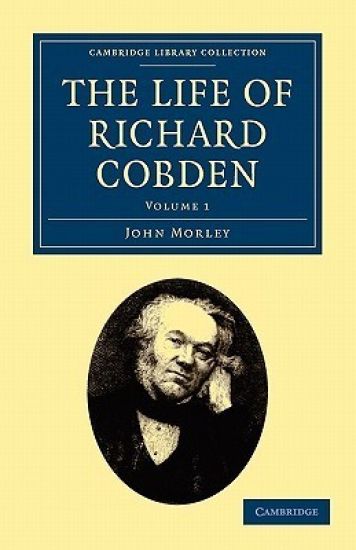
Richard Cobden (1804–1865) was a manufacturer and Liberal politician, campaigning for the repeal of the Corn Laws, and for a free market economy. His laissez-faire views on protectionism and the role of government intervention in economics had a lasting influence on British politics throughout the twentieth century as the antithesis of socialism. This Life, first published in 1881, set new standards for biographical documentation. Morley had the advantage of having not only Cobden's journals and letters to use, but access to those of many of his friends and political associates. Volume 1 considers his early life and the beginnings of his political involvement, then dealing in great detail with the Anti-Corn Law League. Morley examines the state of society in the 1840s, Cobden's role in the campaign, and particularly his influence on Sir Robert Peel. Cobden believed free trade was essential to equality and social progress.
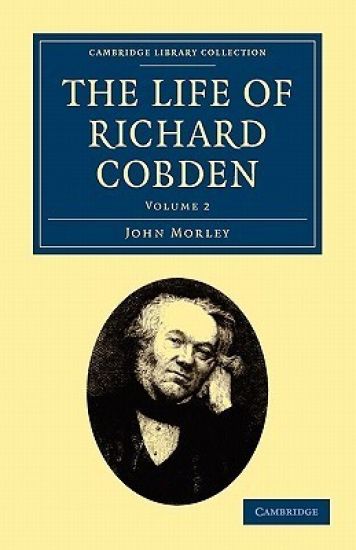
Richard Cobden (1804–1865) was a manufacturer and Liberal politician, campaigning for the repeal of the Corn Laws, and for a free market economy. His laissez-faire views on protectionism and the role of government intervention in economics had a lasting influence on British politics throughout the twentieth century as the antithesis of socialism. This Life, first published in 1881, set new standards for biographical documentation. Morley had the advantage of having not only Cobden's journals and letters to use, but access to those of many of his friends and political associates. Volume 2 deals with Cobden's career after the success of the Anti-Corn Law League, particularly his work on international relations between 1846 and his death. He spoke against Palmerston's foreign policy, and argued for closer ties with France at a time when Napoleon III's coup d'etat produced much anti-French feeling in England.
The Works of Voltaire
Tobias George Smollett; John Morley; Oliver Herbrand Gordon Leigh
Nabu Press
2010
pokkari
The Works of Voltaire
John Morley; Oliver Herbrand Gordon Leigh; 1694-1778 Voltaire
BIBLIOLIFE, LLC
2010
pokkari