Kirjailija
John O'Brien
Kirjat ja teokset yhdessä paikassa: 120 kirjaa, julkaisuja vuosilta 1973–2026, suosituimpiin kuuluu Red Team. Vertaile teosten hintoja ja tarkista saatavuus suomalaisista kirjakaupoista.
Nimi esiintyy myös muodoissa: John O´Brien, John O’Brien
120 kirjaa
Kirjojen julkaisuvuodet: 1973–2026.
Opportunities Beyond Carbon presents climate change as potentially the 'best crisis we ever had'. It maps the many opportunities for communities large and small, local and international, making the transition to a low carbon economy. John O'Brien has compiled essays by key politicians, investors, business people, activists and academics on how to make the most of the current predicament. This fresh, lucid and practical optimism for the future offers a foundation for an entirely new and proactive attitude to climate change.
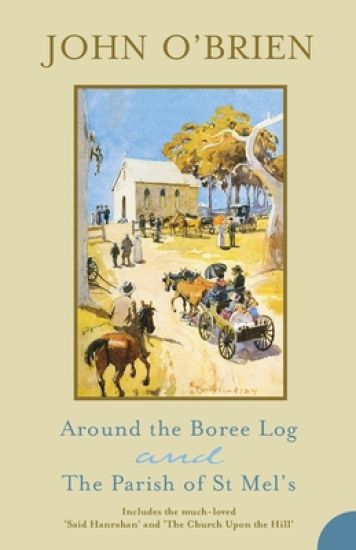
Around the Boree Log and The Parish of St Mel's
John O'Brien
HARPERCOLLINS PUBLISHERS (AUSTRALIA) PTY LTD
2007
nidottu
'We'll all be rooned,' said Hanrahan, In accents most forlorn, Outside the church, ere Mass began, One frosty Sunday morn. 'We'll all be rooned,' said Hanrahan, In accents most forlorn, Outside the church, ere Mass began, One frosty Sunday morn. In his affectionate and gently humorous verses John O'Brien sang of farming life and of the life of Irish settlers in Australia - at home, on the land, and at the Church upon the Hill that is the centre of their lives. this volume combines O'Brien's two books of verse, Around the Boree Log and the Parish of St Mel's. It is verse that is simple and sincere and lit with a kindly understanding of the lives it chronicles. 'He is the Poet Laureate of the Irish settlers in Australia' the Advertiser, Adelaide For when the Holy Morning strung Its beads upon the grass, You'd see us driving - old and young - the tall white graceful trees among, On every road to Mass.
New Fiction from Catalonia
P. Ellen Malphrus, “William Eastlake” Ann Marie Fallon, “Julieta Campos” Alan Tinkler, “Jane Bowles”
History Of The Mass And Its Ceremonies In The Eastern And Western Church
John O'Brien
KESSINGER PUBLISHING CO
2006
pokkari
Susan Stewart, "The Bowerbirds" Robert Coover, "On Mrs. Willie Masters" Bradford Morrow, "A Girandole for Mr. Gass" Mary Caponegro "Lookin' with Gass" Rikki Ducornet "A Dream" Heide Ziegler "Three Encounters with Germany: Goethe, Holderlin, Rilke" Michael Eastman "Photographs" Joanna Scott "Homage to Bill Gass" John Barth "As Sinuous and Tough as Ivy" Ingo Schulze "Toast or Corn? Notes I made for This Speech and Then Discarded" Heather McHugh "To His Health" Richard Watson "Second Is Last" Diane Ackerman "One Beautiful Mind" Lorin Cuoco "Page 399?" Ethan Shaskan Bumas "William H. Gass Meets the -ba particle" Paul West "At-Swim among the Noble Gasses" Joan Elkin "Portrait" Walter Abish "Even Vienna could not forever endure this struggle" Walter Abish "Even Vienna could not forever endure this struggle" Michael Silverblatt "Review Essays: The Tunnel: A Small Apartment in Hell"
The Noh Theatre of Japan
Ernest Fenollsa; John O'Brien
Dover Publications Inc.
2004
nidottu
Halvin toimitettuna 22,90 €
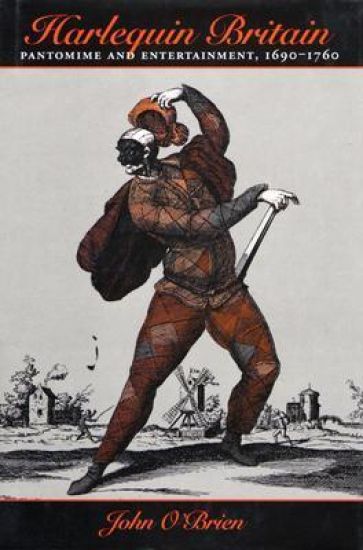
In the fall of 1723, two London theaters staged, almost simultaneously, pantomime performances of the Faust story. Unlike traditional five-act plays, pantomime-a bawdy hybrid of dance, music, spectacle, and commedia dell'arte featuring the familiar figure of the harlequin at its center-was a theatrical experience of unprecedented accessibility. The immediate popularity of this new genre created the first instance of youth culture in modern Europe, drawing theater apprentices to the cities to learn the new style, and pantomime became the subject of lively debate within British society. Alexander Pope and Henry Fielding, for example, bitterly opposed the intrusion into legitimate literary culture of what they regarded as fairground amusements, which appealed to sensation and passion over reason and judgment. In Harlequin Britain, literary scholar John O'Brien examines this new form of entertainment and the effect it had on British culture. Why did pantomime become so popular so quickly? Why was it perceived as culturally threatening and socially destabilizing? Among other factors cited by O'Brien, Robert Walpole's one-party rule, which increasingly dampened debate, created a vacuum in the public sphere. Pantomime filled that void with socially subversive commentary. At the same time, pantomime appealed to the abstracted taste of the mass audience. Its extraordinary popularity underscores the continuing centrality of live performance in a culture that is most typically seen as having shifted its attention to the written text, in particular to the novel. Written in a lively style rich with anecdotes, Harlequin Britain establishes the emergence of eighteenth-century English pantomime, with its promiscuous blending of genres and subjects, as a key moment in the development of modern entertainment culture.
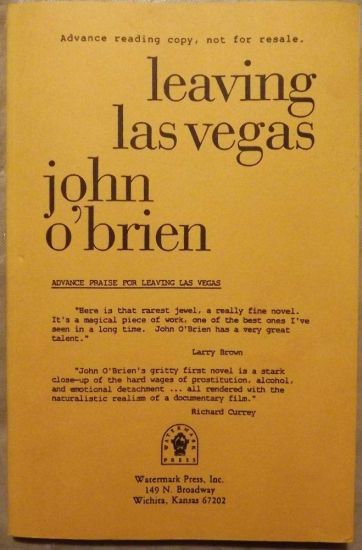
Tinkimätön kuvaus alkoholista, rakkaudesta ja kuolemasta. Ben on tullut juomaan itsensä hengiltä Las Vegasiin, Sera taas on yksi neon-helvetin huorista. Toivonsa menettäneet Ben ja Sera rakastuvat toisiinsa, ja jakavat pienen hetken käsistä valuvaa elämäänsä. Raaka ja kaunis tarina ihmisistä, joille vapaudella ja vapaalla pudotuksella ei ole eroa. Omaelämäkerrallinen Leaving Las Vegas jäi John 0’Brienin ainoaksi romaaniksi ja lopulta itsemurhaviestiksi. Mike Figgisin kirjasta tekemä elokuva sai kolme oscar-ehdokkuutta ja nosti Nicholas Cagen sekä Elisabeth Shuen näyttelijöiden raskaaseen sarjaan. ”O’Brienin yhden maailman lopun kuvaus on ihmistä syvältä kouraiseva romaani.” – Seppo Turunen, Kainuun Sanomat ”Kulttikirjaksi noussut Leaving Las Vegas on rankka rakkaustarina ja rajua luettavaa. -- Lukiessa tajuaa, että kirjailija on kirjoittanut sivut sydän vereslihalla.” – Antti Nisula, Savon Sanomat ”Leaving Las Vegas soi laitakatujen bluesin sävelellä, joka on täynnä hikeä, spermaa ja oksennusta. Siitä huolimatta rakkaus on tärkeä asia, se pitää toivon viimeistä liekkiä yllä.” – Ari Haasio, Aamulehti
The Philadelphia-born author describes how he returned to live near the West Virginia birthplace of his father--a difficult, disappointed, and defeated man who had left his home in the mountains in the wake of a family scandal--and discovered a world of great beauty whose inhabitants, despite hardship and exploitation, remain true to a traditional way of life. Reprint. 12,500 first printing.
This comprehensive and informative text has been restructured and brought fully up to date in order to explain international law as it stands at the beginning of the twenty-first century.
Dementia: Management of Behavioural and Psychological Symptoms
Clive Ballard; John O'Brien; Ian James; Alan Swann
Oxford University Press
2001
nidottu
Dementia is a syndrome characterized by cognitive and non-cognitive symptoms. This book focuses on the clinically distinct categories of non-cognitive symptoms. These are grouped together under the umbrella term Behavioural and Psychological Symptoms in Dementia (BPSD). BPSD include agitation (describing a cluster of related symptoms including anxiety, irritability and motor restlessness, often leading to behaviours such as wandering, pacing, aggression, shouting and night-time disturbances), psychosis (referring to three main categories of symptoms: hallucinations, delusions and delusional misidentification) and mood disorders (depression, anxiety and hypomania). Other symptoms include sexual disinhibition, eating problems and abnormal vocalizations (shouting, screaming and demanding attention). There are many reasons why a patient with dementia may develop BPSD. Because of these potential different aetiologies, a full and careful assessment of possible physical, psychological and environmental factors is essential. This book will inform all of those responsible for caring for the patient with dementia about the identification of BPSD, the nature of the symptoms, assessment of their severity and recommends a structured and sequential approach to management. The authors are internationally respected, combining expertise from the fields of clinical research, psychiatry and clinical psychology to provide an integrated approach to the topic.
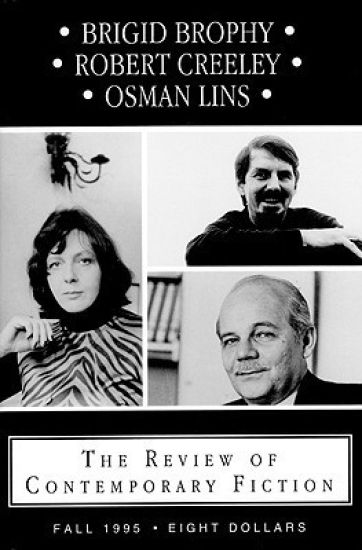
For nearly 20 years, the Review of Contemporary Fiction has celebrated and promoted the study of innovative fiction by featuring some of the most influential authors of the twentieth century. Recently the Review changed its format, and instead of several essays on the work of one or two authors the Review now features three or four authors with one long essay apiece devoted to the discussion of their writing careers. Still providing both an introduction to experimental fiction writers and interpretive strategies for reading their work, this new format allows for the inclusion of younger writers and those whose work has not been widely studied. Occasionally, the Review will feature special issues devoted to new fiction from around the world or to essays and fiction by important novelists and critics.
Brooke Horvath, "Introducing Edward Sanders"/Barry Miles, "An Interview with Ed Sanders--1 October 1968?/Brooke Horvath, "Edward Sanders on His Fiction: An Interview"/Edward Sanders, "From Tales of Beatnik Glory, Volume 3: The Psychedelicatessin"/Ann Charters, "Marching with the Fugs"/Barry Wallenstein, "Mr. Ed Sanders"/Tom Clark, "Ed Sanders and Black Sparrow Press"/Regina Weinreich, "Ed Sanders: The Un-Fuzzy Fug"/Robert Creeley, "Tell the Story"/Kasia Boddy, "Shards of God: An Epinician to the Heroes of the Peace swarm"/Thomas Myers, "Rerunning the Creepy-Crawl: Ed Sanders and Charles Manson"/Lance Olsen, "Divining the Avant-Pop Afterburn: Fame & Love in New York"/Joseph Dewey, "Helter Shelter: Strategic Interment in Tales of Beatnik Glory"/M. L. Liebler, "A Terrible Beauty is Born: Edward Sanders, the Techniques of Investigative Writing, and 1968?/David Herd, "'After All What Else Is There to Say?' Ed Sanders and the Beat Aesthetic"/Brooke Horvath, "An Edward Sanders Checklist"
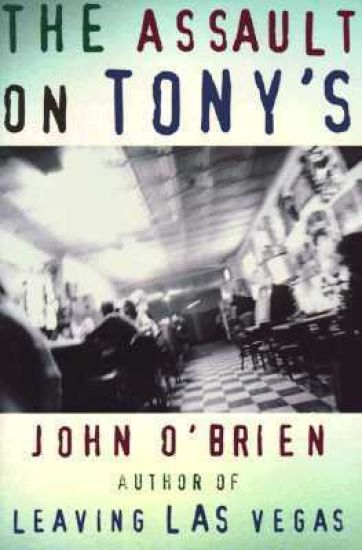
Trapped for days inside a bar by a race riot, five heavy drinkers find their relationships changing as the supply of alcohol dwindles
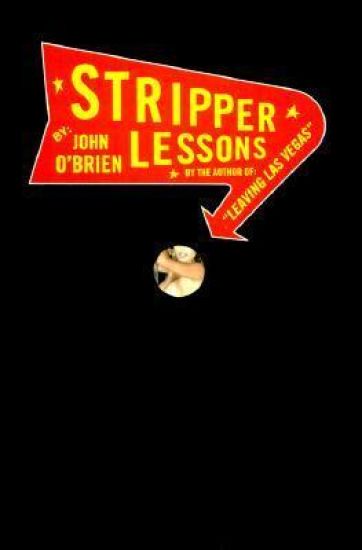
Carroll Mine, a lonely man who has difficulty relating to people, hangs out at Indiscretions, a strip club in Southern California, in hopes of making some kind of connection
Tinkimätön kuvaus alkoholista, rakkaudesta ja kuolemasta. Ben on tullut juomaan itsensä hengiltä Las Vegasiin, Sera taas on yksi neon-helvetin huorista. Toivonsa menettäneet Ben ja Sera rakastuvat toisiinsa ja jakavat pienen hetken käsistä valuvaa elämäänsä. Raaka ja kaunis tarina ihmisistä, joille vapaudella ja vapaalla pudotuksella ei ole eroa. Omaelämäkerrallinen Leaving Las Vegas jäi John 0’Brienin ainoaksi romaaniksi ja lopulta itsemurhaviestiksi. Mike Figgisin kirjasta tekemä elokuva sai kolme oscar-ehdokkuutta ja nosti Nicholas Cagen sekä Elisabeth Shuen näyttelijöiden raskaaseen sarjaan. Kolmas painos. ”O’Brienin yhden maailman lopun kuvaus on ihmistä syvältä kouraiseva romaani.” – Seppo Turunen, Kainuun Sanomat ”Kulttikirjaksi noussut Leaving Las Vegas on rankka rakkaustarina ja rajua luettavaa. -- Lukiessa tajuaa, että kirjailija on kirjoittanut sivut sydän vereslihalla.” – Antti Nisula, Savon Sanomat ”Leaving Las Vegas soi laitakatujen bluesin sävelellä, joka on täynnä hikeä, spermaa ja oksennusta. Siitä huolimatta rakkaus on tärkeä asia, se pitää toivon viimeistä liekkiä yllä.” – Ari Haasio, Aamulehti
Brigid Brophy/Robert Creely/Osman Lins
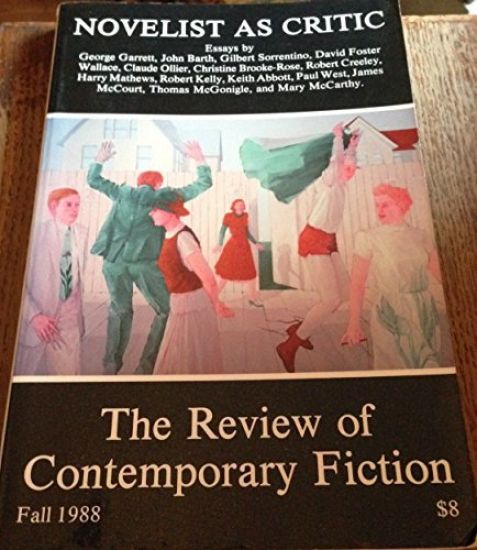
George Garrett, "'Once More unto the Breach, Dear Friends, Once More': The Publishing Scene and American Literary Art"/John Barth, "Postmodernism Revisited"/Gilbert Sorrentino, "Writing and Writers: Disjecta Membra"/David Foster Wallace, "Fictional Futures and the Conspicuously Young"/Claude Ollier, "Conflictual Inscriptions"/Christine Brooke-Rose, "Ill Locutions"/Robert Creeley, "Thinking of You"/Harry Mathews, "Notes on the Threshold of a Book"/Harry Mathews, "Les Marveilleux Nuages"/Robert Kelly, "Poundian Romance: Investigating Thomas McEvilley's Novel, North of Yesterday"/Keith Abbott, "Shadows and Marble: Richard Brautigan"/Paul West, "Inspector Javert's Moment of Pure Aeschylus"/James McCourt, "Strange Attractions: Exaltation and Calculation in the Poetry of James Schuyler"/Thomas McGonigle, "Reactionary"/Mary McCarthy, "Felipe Alfau's Locos"
Julio Ortega, "An Interview with Juan Goytisolo"/ Juan Goytisolo, "A Cervantine Reading of Three Trapped Tigers"/Juan Goytisolo, "Literature Pursued by Politics"/Juan Goytisolo, "Language, Ideal Beauty, and Effective Reality"/Juan Goytisolo, "Vicissitudes of Mudejarism: Juan Ruiz, Cervantes, Galdos"/Luigi Luccarelli, "Goytisolo's The Fields of Nijar and La Chanca"/Juan Goytisolo, "Selection from La Chanca"/Carlos Fuentes, "Juan Goytisolo or the Novel as Exile"/Gonzalo Diaz-Migoyo, "Juan Goytisolo's Novel Trilogy: A Reader's Personal Memory"/Bernardo A. Gonzalez, "Mimesis and Narrative Discourse: Juan Goytisolo's Search for Immediacy"/Kessel Schwartz, "The Literary Criticism of Juan Goytisolo"/Genaro J. Perez, "Fugal Form in Fin de Fiesta (The Party's Over)"/Severo Sarduy, "Deterritorialization"/Juan Goytisolo, "From Count Julian to Makbara: A Possible Orientalist Reading"/Maryellen Bieder, "La Carcel Verbal: Narrative Discourse in Makbara"/Julian Rios, "The Apocalypse According to Juan Goytisolo"/Luce Lopez-Baralt, "Makbara: Juan Goytisolo's Fictionalized Version of 'Orientalism'"/Aline Schulman, "Marks of Identity: Identity and Discourse"/Annie Perrin, "Makbara: The Space of Phantasm"/Reginald Martin, "An Interview with Ishmael Reed"/Franco La Polla, "The Free-Lance Pallbearers, Or: No More Proscenium Arch"/Jerry H. Bryant, "Old Gods and New Demons--Ishmael Reed and His Fiction"/W. C. Bamberger, "The Waxing and Waning of Cab Calloway"/Joe Weixlmann, "Ishmael Reed's Raven"/Peter Nazareth, "Heading Them Off at the Pass: The Fiction of Ishmael Reed"/James R. Lindroth, "From Krazy Kat to Hoodoo: Aesthetic Discourse in the Fiction of Ishmael Reed"/Geoffrey Green, "Reality as Art: The Last Days of Louisiana Red"/Jack Byrne, "White Men with Three Names (Or) If Sam Has Kidnapped Checkers, Then Who is in the John?--Reed's Journey from Scat to Scatology"