
Kirjojen hintavertailu – 12 859 819 kirjaa ja 27 kauppaa

Kirjailija

John Obee

Kirjat ja teokset yhdessä paikassa: 3 kirjaa, julkaisuja vuosilta 2018–2026, suosituimpiin kuuluu Mississippi's Black Cotton. Vertaile teosten hintoja ja tarkista saatavuus suomalaisista kirjakaupoista.

3 kirjaa

Kirjojen julkaisuvuodet: 2018–2026.

Mississippi's Black Cotton

Mississippi's Black Cotton

John Obee; MacArthur Cotton; Nikole Hannah-Jones

UNIVERSITY OF GEORGIA PRESS
2026
pokkari
The literature of the civil rights movement is replete with stories about the major actors in the movement, including, for example, Martin Luther King, but there is little focus on the MacArthur Cottons of the era: the young Black men and women who at great risk to their physical and mental health chose to become involved in the movement when so many others chose not to. Without these young Black people there would have been no movement, and what was accomplished with the Civil Rights Acts of the 1960s would never have happened. This was particularly true in Mississippi, the most repressive of all fifty states, and one that had sponsored state terrorism to ensure that white supremacy reigned supreme. Despite having no real reason to believe that change could happen, MacArthur Cotton and those like him believed that they had to act. In MacArthur’s case, his actions were in the tradition of his activist family, and he relates his involvement with many of the important figures in the Mississippi movement, such as Medgar Evers and Fannie Lou Hamer. Importantly, he also honors others like him, who are largely unknown to history, such as the Greenes and McGees in Greenwood, who were waging their own war against their oppressive state. While having been imprisoned many times and having lived in a constant state of terror, Cotton persisted as a foot soldier in a war and, as with all veterans of wars, was left with emotional and psychological scars. Despite the toll that it took on him as a person, however, he remains a committed activist to this day.
Mississippi's Black Cotton

Mississippi's Black Cotton

John Obee; MacArthur Cotton; Nikole Hannah-Jones

UNIVERSITY OF GEORGIA PRESS
2025
sidottu
The literature of the civil rights movement is replete with stories about the major actors in the movement, including, for example, Martin Luther King, but there is little focus on the MacArthur Cottons of the era: the young Black men and women who at great risk to their physical and mental health chose to become involved in the movement when so many others chose not to. Without these young Black people there would have been no movement, and what was accomplished with the Civil Rights Acts of the 1960s would never have happened. This was particularly true in Mississippi, the most repressive of all fifty states, and one that had sponsored state terrorism to ensure that white supremacy reigned supreme. Despite having no real reason to believe that change could happen, MacArthur Cotton and those like him believed that they had to act. In MacArthur’s case, his actions were in the tradition of his activist family, and he relates his involvement with many of the important figures in the Mississippi movement, such as Medgar Evers and Fannie Lou Hamer. Importantly, he also honors others like him, who are largely unknown to history, such as the Greenes and McGees in Greenwood, who were waging their own war against their oppressive state. While having been imprisoned many times and having lived in a constant state of terror, Cotton persisted as a foot soldier in a war and, as with all veterans of wars, was left with emotional and psychological scars. Despite the toll that it took on him as a person, however, he remains a committed activist to this day.
Mississippi's Exiled Daughter

Mississippi's Exiled Daughter

J. Randall O'Brien; Brenda Travis; John Obee; Bob Moses

UNIVERSITY OF GEORGIA PRESS
2018
nidottu
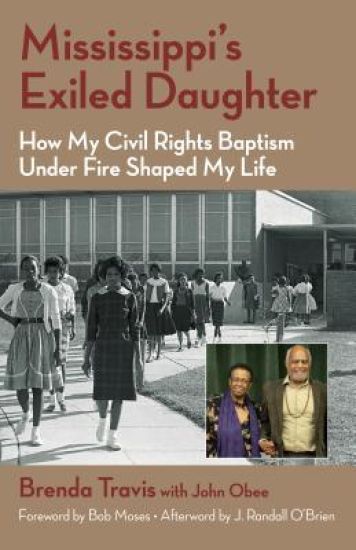
In 1961, 16-year-old Brenda Travis was a youth leader of the NAACP branch in her hometown of McComb, Mississippi. She joined in the early stages of voter registration, and when the Freedom Rides and direct action reached McComb, she and two SNCC workers sat-in at the local bus station. That led to her first arrest and jailing, which resulted in her being expelled and leading a protest walkout from her high school. Thrown in jail for a second time, she was eventually released on the condition that she leave the state. Her poignant memoir describes what gave her the courage at such a young age to fight segregation, how the movement unfolded in Mississippi, and what happened after she was forced to leave her family, friends, and fellow activists. One of the civil rights workers who befriended her in McComb was the legendary activist Bob Moses, who contributed the Foreword to her book. A white educator and Vietnam war hero, J. Randall O’Brien, was deeply inspired by learning about her courage, and he contributed the Afterword.