Kirjojen hintavertailu – 12 903 735 kirjaa ja 27 kauppaa

Kirjailija

John Palfrey

Kirjat ja teokset yhdessä paikassa: 16 kirjaa, julkaisuja vuosilta 2010–2025, suosituimpiin kuuluu Academical Lectures on the Jewish Scriptures and Antiquities. Vertaile teosten hintoja ja tarkista saatavuus suomalaisista kirjakaupoista.

16 kirjaa

Kirjojen julkaisuvuodet: 2010–2025.

Advanced Introduction to Law and Digital Technologies

Advanced Introduction to Law and Digital Technologies

Urs Gasser; John Palfrey

EDWARD ELGAR PUBLISHING LTD
2025
sidottu
Elgar Advanced Introductions are stimulating and thoughtful introductions to major fields in the social sciences, business and law, expertly written by the world’s leading scholars. Designed to be accessible yet rigorous, they offer concise and lucid surveys of the substantive and policy issues associated with discrete subject areas. This book provides a pathway for understanding the law in relation to emerging digital technologies. Examining how rights, processes, institutions, and methods interact with emerging technologies, Urs Gasser and John Palfrey argue that digital innovation must evolve in step with legal advancements. They address the challenges posed by the interplay between law and technology, and present a framework for understanding and shaping law in the face of transformative changes in the digital field. Key Features:Introduces relevant case studies from across Africa, Asia, Europe, and North AmericaSituates current debates on technological innovation and law in the context of legal history and philosophyAnalyses different ways of regulating AI, blockchain technologies, quantum computing, and further technological advancesThe Advanced Introduction to Law and Digital Technologies is an essential resource for scholars and students of technology law and policy, public international law, and information and media law. It is also beneficial to legal researchers and practitioners, as well as teachers of computer science policy and practice.

Advanced Introduction to Law and Digital Technologies

Advanced Introduction to Law and Digital Technologies

Urs Gasser; John Palfrey

EDWARD ELGAR PUBLISHING LTD
2025
nidottu
Elgar Advanced Introductions are stimulating and thoughtful introductions to major fields in the social sciences, business and law, expertly written by the world’s leading scholars. Designed to be accessible yet rigorous, they offer concise and lucid surveys of the substantive and policy issues associated with discrete subject areas. This book provides a pathway for understanding the law in relation to emerging digital technologies. Examining how rights, processes, institutions, and methods interact with emerging technologies, Urs Gasser and John Palfrey argue that digital innovation must evolve in step with legal advancements. They address the challenges posed by the interplay between law and technology, and present a framework for understanding and shaping law in the face of transformative changes in the digital field. Key Features:Introduces relevant case studies from across Africa, Asia, Europe, and North AmericaSituates current debates on technological innovation and law in the context of legal history and philosophyAnalyses different ways of regulating AI, blockchain technologies, quantum computing, and further technological advancesThe Advanced Introduction to Law and Digital Technologies is an essential resource for scholars and students of technology law and policy, public international law, and information and media law. It is also beneficial to legal researchers and practitioners, as well as teachers of computer science policy and practice.

Wired Wisdom

Wired Wisdom

Eszter Hargittai; John Palfrey

THE UNIVERSITY OF CHICAGO PRESS
2025
nidottu
A surprising window into the online lives of people sixty and over—offering essential insights, no matter your age. Many popular accounts say the older you are, the greater your tech struggles. And it’s worrying to think of loved ones emailing cringe-worthy misinformation, falling for phishing attacks, or becoming lonelier with increasing time spent online. But in their eye-opening book on the internet’s fastest-growing demographic, researchers Eszter Hargittai and John Palfrey offer a more nuanced picture—debunking common myths about older adults’ internet use to offer hope and a necessary call to action. Incorporating original interviews and survey results from thousands of people sixty and over, Wired Wisdom shows that many, in fact, use technology in ways that put younger peers to shame. Over-sixties are often nimble online and quicker to abandon social media platforms that don’t meet their needs. Despite being targeted more often, they also may be less likely to fall for scams than younger peers. And fake news actually fools fewer people over sixty, who have far more experience evaluating sources and detecting propaganda. Still, there are unseen risks and missed opportunities for this group. Hargittai and Palfrey offer practical advice and show that our stereotypes can be hurdles that keep us from building intergenerational support communities, helping loved ones adopt new technology that may improve their lives, and thriving together online.
Wired Wisdom

Wired Wisdom

Eszter Hargittai; John Palfrey

THE UNIVERSITY OF CHICAGO PRESS
2025
sidottu
A surprising window into the online lives of people sixty and over—offering essential insights, no matter your age. Many popular accounts say the older you are, the greater your tech struggles. And it’s worrying to think of loved ones emailing cringe-worthy misinformation, falling for phishing attacks, or becoming lonelier with increasing time spent online. But in their eye-opening book on the internet’s fastest-growing demographic, researchers Eszter Hargittai and John Palfrey offer a more nuanced picture—debunking common myths about older adults’ internet use to offer hope and a necessary call to action. Incorporating original interviews and survey results from thousands of people sixty and over, Wired Wisdom shows that many, in fact, use technology in ways that put younger peers to shame. Over-sixties are often nimble online and quicker to abandon social media platforms that don’t meet their needs. Despite being targeted more often, they also may be less likely to fall for scams than younger peers. And fake news actually fools fewer people over sixty, who have far more experience evaluating sources and detecting propaganda. Still, there are unseen risks and missed opportunities for this group. Hargittai and Palfrey offer practical advice and show that our stereotypes can be hurdles that keep us from building intergenerational support communities, helping loved ones adopt new technology that may improve their lives, and thriving together online.
The Connected Parent

The Connected Parent

John Palfrey; Urs Gasser

Basic Books
2020
sidottu
Today's teenagers spend an average of nine hours per day with their noses immersed in the glow of their screens. Tweens are not far behind, at six hours a day. Parents of this new, ultra-connected generation struggle with decisions completely new to parenting: Should they limit a child's screen time? Should an eight-year old be allowed to go on social media? What about playing video games with strangers? How can we keep them safe from harm when they go online? Are they going to grow up less socially able if their friendships are mostly conducted via text and emojis? In The Connected Parent, acclaimed childhood development and technology experts John Palfrey and Urs Gasser tackle these and other concerns of parents in the digital age. The book is organized by the topics parents have asked about most often, from screen time and safety to addiction and aggressive behaviour. But rather than pretending to have the only-or even the best-advice for every child and every family, the authors share the evidence as well as their own (sometimes strong) point of view, all in order to empower parents with ground-breaking insights that they can use to inform their approach for their own unique situations. The outcome of over a decade of research on children and technology conducted at the Berkman Klein Center for Internet & Society at Harvard Law School, The Connected Parent is required reading for any parent trying to help their kids safely navigate the fast-changing, uncharted territory our hyper-connected world.
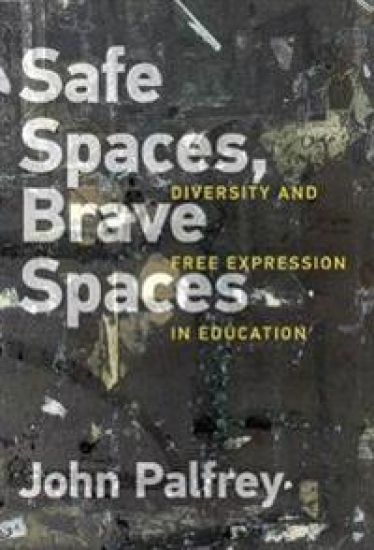
Safe Spaces, Brave Spaces

Safe Spaces, Brave Spaces

John Palfrey; Alberto Ibargüen

MIT Press
2018
pokkari
How the essential democratic values of diversity and free expression can coexist on campus. Safe spaces, trigger warnings, microaggressions, the disinvitation of speakers, demands to rename campus landmarks-debate over these issues began in lecture halls and on college quads but ended up on op-ed pages in the New York Times and the Wall Street Journal, on cable news, and on social media. Some of these critiques had merit, but others took a series of cheap shots at "crybullies" who needed to be coddled and protected from the real world. Few questioned the assumption that colleges must choose between free expression and diversity. In Safe Spaces, Brave Spaces, John Palfrey argues that the essential democratic values of diversity and free expression can, and should, coexist on campus. Palfrey, currently Head of School at Phillips Academy, Andover, and formerly Professor and Vice Dean at Harvard Law School, writes that free expression and diversity are more compatible than opposed. Free expression can serve everyone-even if it has at times been dominated by white, male, Christian, heterosexual, able-bodied citizens. Diversity is about self-expression, learning from one another, and working together across differences; it can encompass academic freedom without condoning hate speech. Palfrey proposes an innovative way to support both diversity and free expression on campus: creating safe spaces and brave spaces. In safe spaces, students can explore ideas and express themselves with without feeling marginalized. In brave spaces-classrooms, lecture halls, public forums-the search for knowledge is paramount, even if some discussions may make certain students uncomfortable. The strength of our democracy, says Palfrey, depends on a commitment to upholding both diversity and free expression, especially when it is hardest to do so.
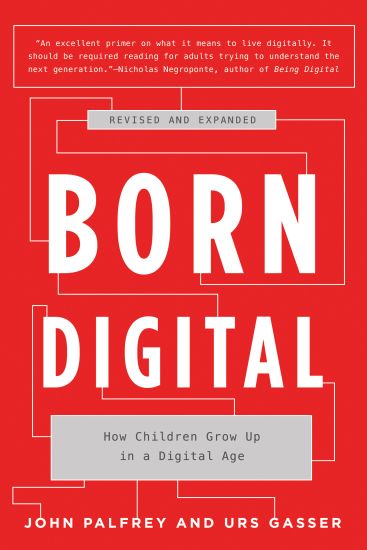
Born Digital

Born Digital

John Palfrey; Urs Gasser

Basic Books
2016
pokkari
The first generation of children who were born into and raised in the digital world are coming of age and reshaping the world in their image. Our economy, our politics, our culture, and even the shape of our family life are being transformed. But who are these wired young people? And what is the world they're creating going to look like? In this revised and updated edition, leading Internet and technology experts John Palfrey and Urs Gasser offer a cutting-edge sociological portrait of these young people, who can seem, even to those merely a generation older, both extraordinarily sophisticated and strangely narrow. Exploring a broad range of issues,privacy concerns, the psychological effects of information overload, and larger ethical issues raised by the fact that young people's social interactions, friendships, and civic activities are now mediated by digital technologies, Born Digital is essential reading for parents, teachers, and the myriad of confused adults who want to understand the digital present and shape the digital future.
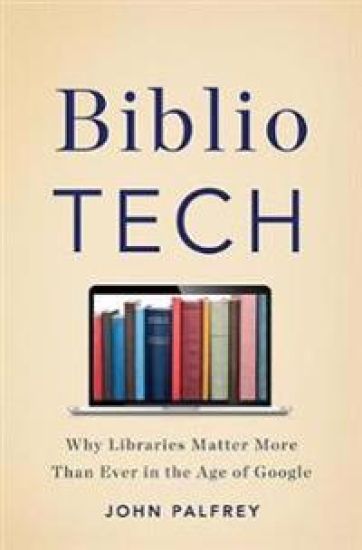
BiblioTech

BiblioTech

John Palfrey

Basic Books
2015
sidottu
Libraries today are more important than ever. More than just book repositories, libraries can become bulwarks against some of the most crucial challenges of our age: unequal access to education, jobs, and information. In BiblioTech , educator and technology expert John Palfrey argues that anyone seeking to participate in the 21st century needs to understand how to find and use the vast stores of information available online. And libraries, which play a crucial role in making these skills and information available, are at risk. In order to survive our rapidly modernizing world and dwindling government funding, libraries must make the transition to a digital future as soon as possible,by digitizing print material and ensuring that born-digital material is publicly available online. Not all of these changes will be easy for libraries to implement. But as Palfrey boldly argues, these modifications are vital if we hope to save libraries and, through them, the American democratic ideal.
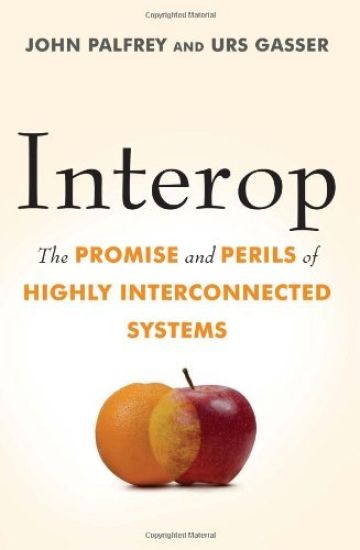
Interop

Interop

John Palfrey; Urs Gasser

Basic Books
2012
sidottu
In Interop , technology experts John Palfrey and Urs Gasser explore the immense importance of interoperability,the standardization and integration of technology,and show how this simple principle will hold the key to our success in the coming decades and beyond. The practice of standardization has been facilitating innovation and economic growth for centuries. The standardization of the railroad gauge revolutionized the flow of commodities, the standardization of money revolutionized debt markets and simplified trade, and the standardization of credit networks has allowed for the purchase of goods using money deposited in a bank half a world away. These advancements did not eradicate the different systems they affected instead, each system has been transformed so that it can interoperate with systems all over the world, while still preserving local diversity. As Palfrey and Gasser show, interoperability is a critical aspect of any successful system,and now it is more important than ever. Today we are confronted with challenges that affect us on a global scale: the financial crisis, the quest for sustainable energy, and the need to reform health care systems and improve global disaster response systems. The successful flow of information across systems is crucial if we are to solve these problems, but we must also learn to manage the vast degree of interconnection inherent in each system involved. Interoperability offers a number of solutions to these global challenges, but Palfrey and Gasser also consider its potential negative effects, especially with respect to privacy, security, and co-dependence of states indeed, interoperability has already sparked debates about document data formats, digital music, and how to create successful yet safe cloud computing. Interop demonstrates that, in order to get the most out of interoperability while minimizing its risks, we will need to fundamentally revisit our understanding of how it works, and how it can allow for improvements in each of its constituent parts. In Interop , Palfrey and Gasser argue that there needs to be a nuanced, stable theory of interoperability,one that still generates efficiencies, but which also ensures a sustainable mode of interconnection. Pointing the way forward for the new information economy, Interop provides valuable insights into how technological integration and innovation can flourish in the twenty-first century.
Intellectual Property Strategy

Intellectual Property Strategy

John Palfrey

MIT Press
2011
pokkari
How a flexible and creative approach to intellectual property can help an organization accomplish goals ranging from building market share to expanding an industry. Most managers leave intellectual property issues to the legal department, unaware that an organization's intellectual property can help accomplish a range of management goals, from accessing new markets to improving existing products to generating new revenue streams. In this book, intellectual property expert and Harvard Law School professor John Palfrey offers a short briefing on intellectual property strategy for corporate managers and nonprofit administrators. Palfrey argues for strategies that go beyond the traditional highly restrictive "sword and shield" approach, suggesting that flexibility and creativity are essential to a profitable long-term intellectual property strategy-especially in an era of changing attitudes about media. Intellectual property, writes Palfrey, should be considered a key strategic asset class. Almost every organization has an intellectual property portfolio of some value and therefore the need for an intellectual property strategy. A brand, for example, is an important form of intellectual property, as is any information managed and produced by an organization. Palfrey identifies the essential areas of intellectual property-patent, copyright, trademark, and trade secret-and describes strategic approaches to each in a variety of organizational contexts, based on four basic steps. The most innovative organizations employ multiple intellectual property approaches, depending on the situation, asking hard, context-specific questions. By doing so, they achieve both short- and long-term benefits while positioning themselves for success in the global information economy.