Kirjojen hintavertailu – 12 859 828 kirjaa ja 27 kauppaa
Kirjailija
John Palmer
Kirjat ja teokset yhdessä paikassa: 68 kirjaa, julkaisuja vuosilta 2003–2026, suosituimpiin kuuluu Rudyard Kipling. Vertaile teosten hintoja ja tarkista saatavuus suomalaisista kirjakaupoista.
It is true that Mr Kipling is lawless and contemptuous of literary formality; and that whenever he talks of "Art," as in certain pages of The Light That Failed, he tries to talk as though there were really no such thing. But Mr Kipling's cheerful contempt of all that is pedantic and magisterial in "Art" does not imply that he is innocent of literary discipline. It is true that Mr Kipling is lawless in the sense that all good work is more than a conscious adherence to formula. It is not true in the sense that Mr Kipling is more lawless than Tennyson or Walter Scott. Readers of Mr Kipling's stories must not be misled by his buccaneering contempt for formal art. Mr Kipling's art is as formal as the art of Wilde, or the art of Baudelaire, which he helped to send out of fashion.
We have in this Rudyard Kipling biography an important clue to Mr Kipling and his work. Mr Kipling writes of the heroic life. He writes of men who do visible and measurable things. His theme has usually to do with the world's work. He writes of the locomotive and the engineer; of the mill-wheel and the miller; of the bolts, bars and planks of a ship and the men who sail it. He writes, in short, of any creature which has work to do and does it well. Joseph Rudyard Kipling (30 December 1865 - 18 January 1936) was an English journalist, short-story writer, poet, and novelist. Rudyard Kipling's works of fiction include The Jungle Book (1894), Kim (1901), and many short stories, including "The Man Who Would Be King" (1888). 2] His poems include "Mandalay" (1890), "Gunga Din" (1890), "The Gods of the Copybook Headings" (1919), "The White Man's Burden" (1899), and "If" (1910). He is regarded as a major innovator in the art of the short story; his children's books are classics of children's literature, and one critic described his work as exhibiting "a versatile and luminous narrative gift". Rudyard Kipling was one of the most popular writers in the United Kingdom, in both prose and verse, in the late 19th and early 20th centuries. Henry James said: "Kipling strikes me personally as the most complete man of genius, as distinct from fine intelligence, that I have ever known." In 1907, at the age of 42, he was awarded the Nobel Prize in Literature, making him the first English-language writer to receive the prize and its youngest recipient to date. He was also sounded out for the British Poet Laureateship and on several occasions for a knighthood, both of which he declined. Rudyard Kipling's subsequent reputation has changed according to the political and social climate of the age and the resulting contrasting views about him continued for much of the 20th century. George Orwell saw Rudyard Kipling as "a jingo imperialist", who was "morally insensitive and aesthetically disgusting". Literary critic Douglas Kerr wrote: " Kipling] is still an author who can inspire passionate disagreement and his place in literary and cultural history is far from settled. But as the age of the European empires recedes, he is recognised as an incomparable, if controversial, interpreter of how empire was experienced. That, and an increasing recognition of his extraordinary narrative gifts, make him a force to be reckoned with.
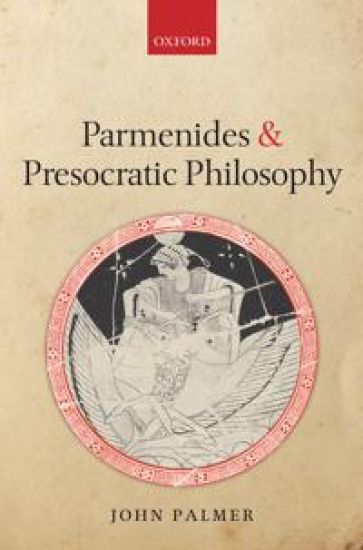
John Palmer develops and defends a modal interpretation of Parmenides, according to which he was the first philosopher to distinguish in a rigorous manner the fundamental modalities of necessary being, necessary non-being or impossibility, and non-necessary or contingent being. This book accordingly reconsiders his place in the historical development of Presocratic philosophy in light of this new interpretation. Careful treatment of Parmenides' specification of the ways of inquiry that define his metaphysical and epistemological outlook paves the way for detailed analyses of his arguments demonstrating the temporal and spatial attributes of what is and cannot not be. Since the existence of this necessary being does not preclude the existence of other entities that are but need not be, Parmenides' cosmology can straightforwardly be taken as his account of the origin and operation of the world's mutable entities. Later chapters reassess the major Presocratics' relation to Parmenides in light of the modal interpretation, focusing particularly on Zeno, Melissus, Anaxagoras, and Empedocles. In the end, Parmenides' distinction among the principal modes of being, and his arguments regarding what what must be must be like, simply in virtue of its mode of being, entitle him to be seen as the founder of metaphysics or ontology as a domain of inquiry distinct from natural philosophy and theology. An appendix presents a Greek text of the fragments of Parmenides' poem with English translation and textual notes.
Title: The History of the Siege of Manchester by the King's Forces ... 1642 ... To which is added the Complaint of Lieutenant Colonel J. Rosworm against the inhabitants of Manchester, relative to that event, etc. L. P. Publisher: British Library, Historical Print EditionsThe British Library is the national library of the United Kingdom. It is one of the world's largest research libraries holding over 150 million items in all known languages and formats: books, journals, newspapers, sound recordings, patents, maps, stamps, prints and much more. Its collections include around 14 million books, along with substantial additional collections of manuscripts and historical items dating back as far as 300 BC. The GENERAL HISTORICAL collection includes books from the British Library digitised by Microsoft. This varied collection includes material that gives readers a 19th century view of the world. Topics include health, education, economics, agriculture, environment, technology, culture, politics, labour and industry, mining, penal policy, and social order. ++++The below data was compiled from various identification fields in the bibliographic record of this title. This data is provided as an additional tool in helping to insure edition identification: ++++ British Library Palmer, John; Marcoleta, Domingo; 1822. iii, 107 p.; 4 . G.4961.
Title: Journal of Travels in the United States of North America and Lower Canada performed in the year 1817, etc. Publisher: British Library, Historical Print EditionsThe British Library is the national library of the United Kingdom. It is one of the world's largest research libraries holding over 150 million items in all known languages and formats: books, journals, newspapers, sound recordings, patents, maps, stamps, prints and much more. Its collections include around 14 million books, along with substantial additional collections of manuscripts and historical items dating back as far as 300 BC. The HISTORY OF TRAVEL collection includes books from the British Library digitised by Microsoft. This collection contains personal narratives, travel guides and documentary accounts by Victorian travelers, male and female. Also included are pamphlets, travel guides, and personal narratives of trips to and around the Americas, the Indies, Europe, Africa and the Middle East. ++++The below data was compiled from various identification fields in the bibliographic record of this title. This data is provided as an additional tool in helping to insure edition identification: ++++ British Library Palmer, John; 1818. 8 . 1431.e.19.
John Palmer develops and defends a modal interpretation of Parmenides, according to which he was the first philosopher to distinguish in a rigorous manner the fundamental modalities of necessary being, necessary non-being or impossibility, and non-necessary or contingent being. This book accordingly reconsiders his place in the historical development of Presocratic philosophy in light of this new interpretation. Careful treatment of Parmenides' specification of the ways of inquiry that define his metaphysical and epistemological outlook paves the way for detailed analyses of his arguments demonstrating the temporal and spatial attributes of what is and cannot not be. Since the existence of this necessary being does not preclude the existence of other entities that are but need not be, Parmenides' cosmology can straightforwardly be taken as his account of the origin and operation of the world's mutable entities. Later chapters reassess the major Presocratics' relation to Parmenides in light of the modal interpretation, focusing particularly on Zeno, Melissus, Anaxagoras, and Empedocles. In the end, Parmenides' distinction among the principal modes of being, and his arguments regarding what what must be must be like, simply in virtue of its mode of being, entitle him to be seen as the founder of metaphysics or ontology as a domain of inquiry distinct from natural philosophy and theology. An appendix presents a Greek text of the fragments of Parmenides' poem with English translation and textual notes.