

Kirjailija
John Panteleimon Manoussakis
Kirjat ja teokset yhdessä paikassa: 15 kirjaa, julkaisuja vuosilta 2006–2026, suosituimpiin kuuluu The Fenwick Lectures. Vertaile teosten hintoja ja tarkista saatavuus suomalaisista kirjakaupoista.
15 kirjaa
Kirjojen julkaisuvuodet: 2006–2026.
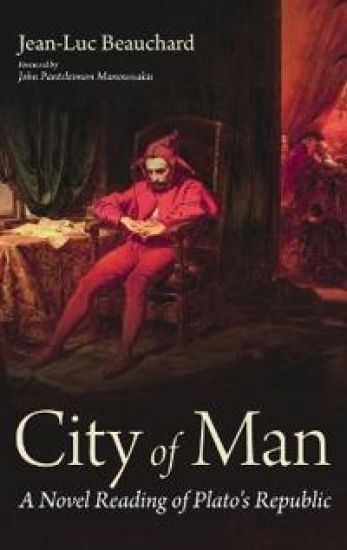
Why does life in society make us so unhappy? Why has civilization always been marked with social unrest? From the time of Plato, our greatest thinkers have understood that in order to confront the ills of the city, one must first look to the individual, to the maladies and discontents of the human soul. In this novel reading of Plato's Republic, the insights of Nietzsche and Freud are brought to bear on one of western civilization's most important texts. But what is at stake is far more than our interpretation of the Republic. City of Man will leave readers better equipped to face the crises that confront us today by reintroducing the import of that oft-quoted but rarely practiced Delphic maxim: know thyself.
Why does life in society make us so unhappy? Why has civilization always been marked with social unrest? From the time of Plato, our greatest thinkers have understood that in order to confront the ills of the city, one must first look to the individual, to the maladies and discontents of the human soul. In this novel reading of Plato's Republic, the insights of Nietzsche and Freud are brought to bear on one of western civilization's most important texts. But what is at stake is far more than our interpretation of the Republic. City of Man will leave readers better equipped to face the crises that confront us today by reintroducing the import of that oft-quoted but rarely practiced Delphic maxim: know thyself.
This book brings together a world-renowned collection of philosophers and theologians to explore the ways in which the resurgence of eschatological thought in contemporary theology and the continued relevance of phenomenology in philosophy can illuminate each other. Through a series of phenomenological analyses of key eschatological concepts and detailed readings in some of the key figures of both disciplines, this text reveals that phenomenology and eschatology cannot be fully understood without each other: without eschatology, phenomenology would not have developed the ethical and futural aspects that characterize it today; without phenomenology, eschatology would remain relegated to the sidelines of serious theological discourse. Along the way, such diverse themes as time, death, parousia, and the call are re-examined and redefined. Containing new contributions from Jean-Yves Lacoste, Claude Romano, Richard Kearney, Kevin Hart and others, this book is necessary reading for anyone interested in the intersection of contemporary philosophy and theology.
The Ethics of Time
John Panteleimon Manoussakis
Bloomsbury Academic
2018
nidottu
Halvin toimitettuna 57,80 €
The Ethics of Time utilizes the resources of phenomenology and hermeneutics to explore this under-charted field of philosophical inquiry. Its rigorous analyses of such phenomena as waiting, memory, and the body are carried out phenomenologically, as it engages in a hermeneutical reading of such classical texts as Augustine’s Confessions and Sophocles’s Oedipus Rex, among others. The Ethics of Time takes seriously phenomenology’s claim of a consciousness both constituting time and being constituted by time. This claim has some important implications for the “ethical” self or, rather, for the ways in which such a self informed by time, might come to understand anew the problems of imperfection and ethical goodness. Even though a strictly philosophical endeavour, this book engages knowledgeably and deftly with subjects across literature, theology and the arts and will be of interest to scholars throughout these disciplines.
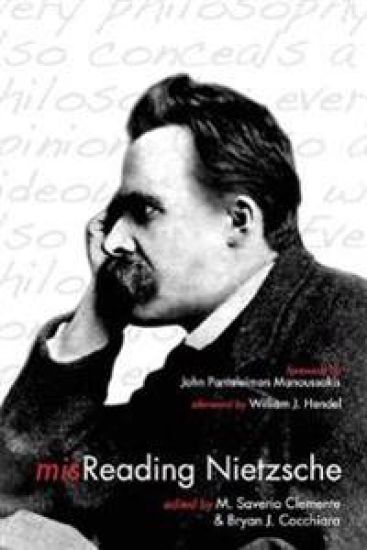
misReading Nietzsche
John Panteleimon Manoussakis; William J Hendel
Pickwick Publications
2018
pokkari
Perhaps more than any philosophy written in the past few centuries, the work of Friedrich Nietzsche has given rise to controversy, misunderstanding, and dissent. Today Nietzsche is remembered as the revolutionary author of such polemical ideas as the death of God, the revaluation of values, the will to untruth, and the Ubermensch. Yet is Nietzsche's philosophy as atheistic, relativistic, nihilistic, and immoral as some commentators have claimed? Or ought we perhaps to give more credence to Nietzsche's own assertion that one writes books ""precisely to conceal what one harbors"" (BGE, 9, 289)? If ""whatever is profound loves masks"" (BGE, 2, 40) then might Nietzsche's more daring claims be interpreted as clever masks behind which he conceals a deeper philosophy and on which he reveals a hidden truth? Is it not possible that the standard readings of Nietzsche are in fact misreadings--that his work invites misreading, that it is intentionally unclear, deceptive, disguised? The goal of this volume is to reread Nietzsche for all that he shows and all that he hides. It is to dig deeper into his work in order to challenge misreadings of old and invite misreadings anew--as, indeed, his work itself calls for and demands. ""That the essays in this volume challenge us not only to reevaluate our understanding of Nietzsche but also to consider how we have misunderstood him and, more importantly, why we have misunderstood him, makes this collection both a compelling work of scholarship and an original work of philosophy."" --Richard Kearney, Boston College M. Saverio Clemente is a husband and father of three. He lives in Massachusetts where he writes, studies, and teaches philosophy. He is the author of Out of the Storm: a Novella (Resource, 2016). Bryan J. Cocchiara is an adjunct professor of philosophy at Brookdale Community College. He received his MA from Boston College in 2014, where he was a research fellow at The Lonergan Institute.
The Ethics of Time utilizes the resources of phenomenology and hermeneutics to explore this under-charted field of philosophical inquiry. Its rigorous analyses of such phenomena as waiting, memory, and the body are carried out phenomenologically, as it engages in a hermeneutical reading of such classical texts as Augustine’s Confessions and Sophocles’s Oedipus Rex, among others. The Ethics of Time takes seriously phenomenology’s claim of a consciousness both constituting time and being constituted by time. This claim has some important implications for the “ethical” self or, rather, for the ways in which such a self informed by time, might come to understand anew the problems of imperfection and ethical goodness. Even though a strictly philosophical endeavour, this book engages knowledgeably and deftly with subjects across literature, theology and the arts and will be of interest to scholars throughout these disciplines.

For the Unity of All
John Panteleimon Manoussakis; Ecumenical Patriarch Bartholomew
Cascade Books
2015
sidottu
For the Unity of All
John Panteleimon Manoussakis; Ecumenical Patriarch Bartholomew
Cascade Books
2015
pokkari
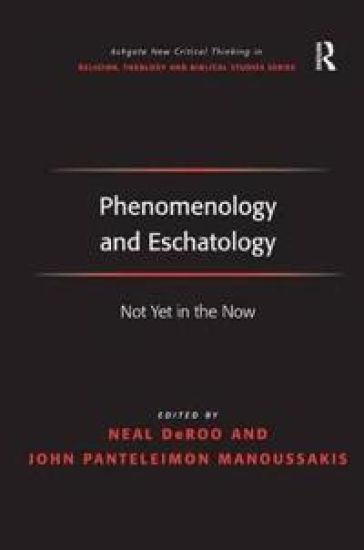
This book brings together a world-renowned collection of philosophers and theologians to explore the ways in which the resurgence of eschatological thought in contemporary theology and the continued relevance of phenomenology in philosophy can illuminate each other. Through a series of phenomenological analyses of key eschatological concepts and detailed readings in some of the key figures of both disciplines, this text reveals that phenomenology and eschatology cannot be fully understood without each other: without eschatology, phenomenology would not have developed the ethical and futural aspects that characterize it today; without phenomenology, eschatology would remain relegated to the sidelines of serious theological discourse. Along the way, such diverse themes as time, death, parousia, and the call are re-examined and redefined. Containing new contributions from Jean-Yves Lacoste, Claude Romano, Richard Kearney, Kevin Hart and others, this book is necessary reading for anyone interested in the intersection of contemporary philosophy and theology.
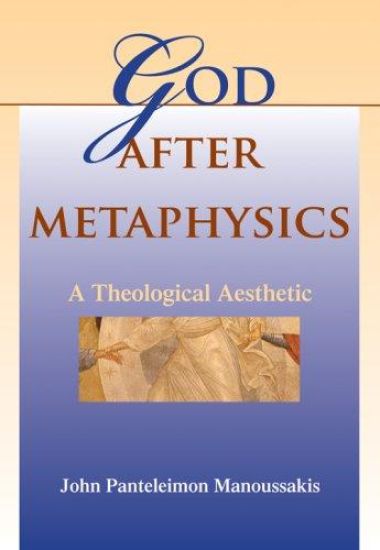
While philosophy believes it is impossible to have an experience of God without the senses, theology claims that such an experience is possible, though potentially idolatrous. In this engagingly creative book, John Panteleimon Manoussakis ends the impasse by proposing an aesthetic allowing for a sensuous experience of God that is not subordinated to imposed categories or concepts. Manoussakis draws upon the theological traditions of the Eastern Church, including patristic and liturgical resources, to build a theological aesthetic founded on the inverted gaze of icons, the augmented language of hymns, and the reciprocity of touch. Manoussakis explores how a relational interpretation of being develops a fuller and more meaningful view of the phenomenology of religious experience beyond metaphysics and onto-theology.
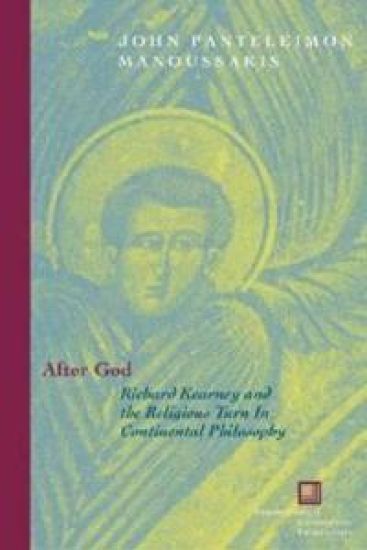
Who or what comes after God? In the wake of God, as the last fifty years of philosophy has shown, God comes back again, otherwise: Heidegger's last God, Levinas's God of Infinity, Derrida's and Caputo's tout autre, Marion's God without Being, Kearney's God who may be.
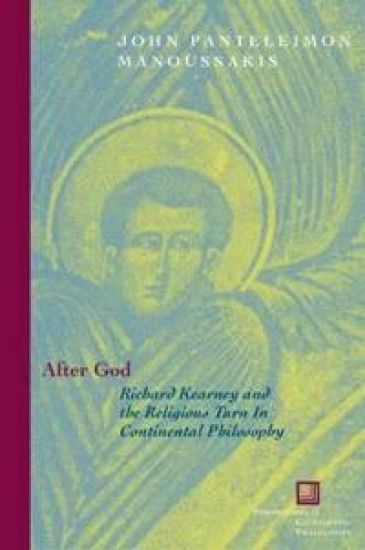
Who or what comes after God? In the wake of God, as the last fifty years of philosophy has shown, God comes back again, otherwise: Heidegger's last God, Levinas's God of Infinity, Derrida's and Caputo's tout autre, Marion's God without Being, Kearney's God who may be.