Kirjojen hintavertailu – 12 903 725 kirjaa ja 27 kauppaa

Kirjailija

John Pastor

Kirjat ja teokset yhdessä paikassa: 4 kirjaa, julkaisuja vuosilta 2008–2023, suosituimpiin kuuluu What Should a Clever Moose Eat?. Vertaile teosten hintoja ja tarkista saatavuus suomalaisista kirjakaupoista.

4 kirjaa

Kirjojen julkaisuvuodet: 2008–2023.

White Pine

White Pine

John Pastor

ISLAND PRESS
2023
pokkari
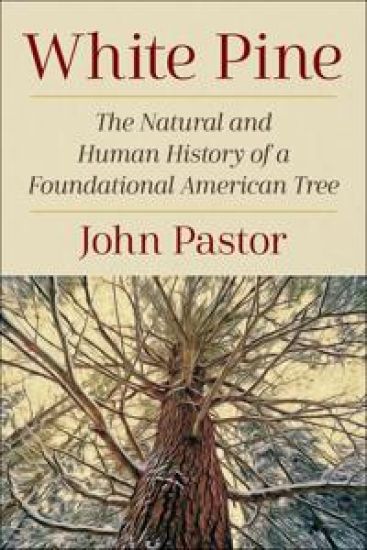
America was built on white pine. From the 1600s through the Civil War and beyond, it was used to build the nation’s ships and houses, barns, and bridges. It became a symbol of independence, adorning the Americans’ flag at Bunker Hill, and an economic engine, generating three times more wealth than the California gold rush. Yet this popularity came at a cost: by the end of the 19th century, clear cutting had decimated much of America’s white pine forests. In White Pine: The Natural and Human History of a Foundational American Tree, ecologist and writer John Pastor takes readers on walk through history, connecting the white pine forests that remain today to a legacy of destruction and renewal. Since the clear-cutting era, naturalists, foresters, and scientists have taken up the quest to restore the great white pine forests. White Pine follows this centuries-long endeavour, illuminating how the efforts shaped Americans’ understanding of key scientific ideas, from forest succession to the importance of fire. With his keen naturalist’s eye, Pastor shows us why restoring the vitality of these forests has not been simple: a host of other creatures depend on white pine and white pine depends on them. In weaving together cultural and natural history, White Pine celebrates the way humans are connected to the forest, and to the larger natural world. Today, white pine forests have begun to recover, but face the growing threat of climate change. White Pine shows us that hope for healthy forests lies in understanding the lessons of history, so that iconic species survive as a touchstone for future generations.
What Should a Clever Moose Eat?

What Should a Clever Moose Eat?

John Pastor; Bernd Heinrich

Island Press
2016
nidottu
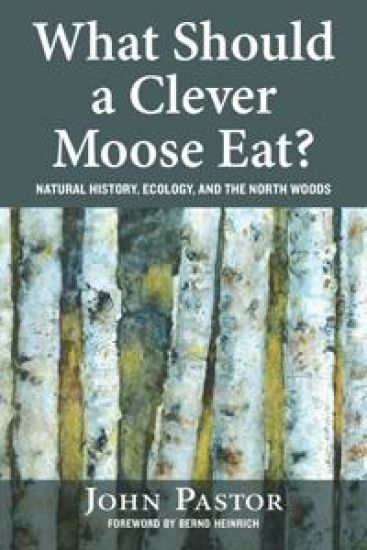
How long should a leaf live? When should blueberries ripen? And what should a clever moose eat? Questions like these may seem simple or downright strange, yet they form the backbone of natural history, a discipline that fostered some of our most important scientific theories, from natural selection to glaciation. Through careful, patient observations of the organisms that live in an area, their distributions, and how they interact with other species, we gain a more complete picture of the world around us, and our place in it. In What Should a Clever Moose Eat?, John Pastor explores the natural history of the North Woods, an immense and complex forest that stretches from the western shore of Lake Superior to the far coast of Newfoundland. The North Woods is one of the most ecologically and geologically interesting places on the planet, with a host of natural history questions arising from each spruce or sugar maple. From the geological history of the region to the shapes of leaves and the relationship between aspens, caterpillars, and predators, Pastor delves into a captivating range of topics as diverse as the North Woods themselves. Through his meticulous observations of the natural world, scientists and non-scientists alike learn to ask natural history questions and form their own theories, gaining a greater understanding of and love for the North Woods, and other natural places precious to them. In the tradition of Charles Darwin and Henry David Thoreau, John Pastor is a joyful observer of nature who makes sharp connections and moves deftly from observation to theory. Take a walk in John Pastor's North Woods, you'll come away with a new appreciation for details, for the game trails, beaver ponds, and patterns of growth around you, and won't look at the natural world in the same way again.
Mathematical Ecology of Populations and Ecosystems

Mathematical Ecology of Populations and Ecosystems

John Pastor

Wiley-Blackwell (an imprint of John Wiley Sons Ltd)
2008
sidottu
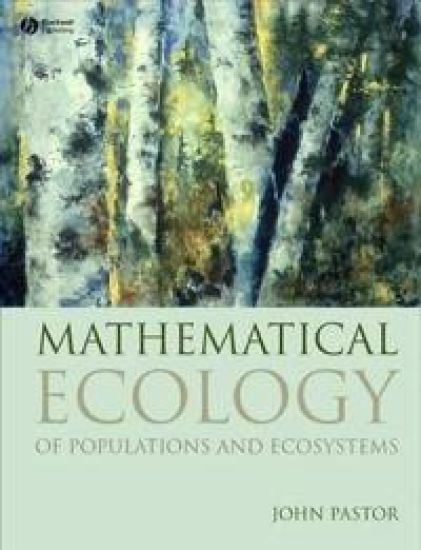
MATHEMATICAL ECOLOGY Population ecologists study how births and deaths affect the dynamics of populations and communities, while ecosystem ecologists study how species control the flux of energy and materials through food webs and ecosystems. Although all these processes occur simultaneously in nature, the mathematical frameworks bridging the two disciplines have developed independently. Consequently, this independent development of theory has impeded the cross-fertilization of population and ecosystem ecology. Using recent developments from dynamical systems theory, this advanced undergraduate/graduate level textbook shows how to bridge the two disciplines seamlessly. The book shows how bifurcations between the solutions of models can help understand regime shifts in natural populations and ecosystems once thresholds in rates of births, deaths, consumption, competition, nutrient inputs, and decay are crossed. Mathematical Ecology is essential reading for students of ecology who have had a first course in calculus and linear algebra or students in mathematics wishing to learn how dynamical systems theory can be applied to ecological problems.
Mathematical Ecology of Populations and Ecosystems

Mathematical Ecology of Populations and Ecosystems

John Pastor

Wiley-Blackwell (an imprint of John Wiley Sons Ltd)
2008
nidottu
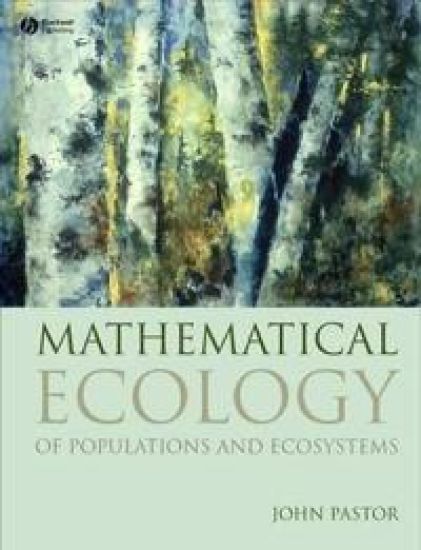
MATHEMATICAL ECOLOGY Population ecologists study how births and deaths affect the dynamics of populations and communities, while ecosystem ecologists study how species control the flux of energy and materials through food webs and ecosystems. Although all these processes occur simultaneously in nature, the mathematical frameworks bridging the two disciplines have developed independently. Consequently, this independent development of theory has impeded the cross-fertilization of population and ecosystem ecology. Using recent developments from dynamical systems theory, this advanced undergraduate/graduate level textbook shows how to bridge the two disciplines seamlessly. The book shows how bifurcations between the solutions of models can help understand regime shifts in natural populations and ecosystems once thresholds in rates of births, deaths, consumption, competition, nutrient inputs, and decay are crossed. Mathematical Ecology is essential reading for students of ecology who have had a first course in calculus and linear algebra or students in mathematics wishing to learn how dynamical systems theory can be applied to ecological problems.