Kirjojen hintavertailu – 12 903 724 kirjaa ja 27 kauppaa
Kirjailija
John Paul Lederach
Kirjat ja teokset yhdessä paikassa: 10 kirjaa, julkaisuja vuosilta 1996–2022, suosituimpiin kuuluu Vom Konflikt zur Versöhnung. Vertaile teosten hintoja ja tarkista saatavuus suomalaisista kirjakaupoista.
En guide til «konflikttransformasjon» som understreker viktigheten av å bygge relasjoner og sosiale strukturer gjennom en radikal respekt for menneskerettigheter og liv. John Paul Lederach utforsker i denne boka hvorfor «konflikttransformasjon» er en mer passende beskrivelse enn «konfliktløsning» eller «konflikthåndtering». Konflikttransformasjon er en idé med bred rekkevidde. Dens praksis, sier Lederach, krever «både løsninger og sosial endring.» Den spør ikke bare «hvordan avslutter vi noe som ikke er ønsket?», men «hvordan avslutter vi noe destruktivt og bygger noe ønsket?». Hvordan håndterer vi den umiddelbare krisen, så vel som den langsiktige situasjonen? Kapitlene inkluderer blant annet: - Definisjon av konflikttransformasjon - Konflikt og endring - Koble løsninger til transformasjon - Kartlegging av konflikt - Utvikling av egen kapasitet
Reconcile contains practical ideas for transforming conflict in everyday life from an internationally renowned mediator, who has worked in war zones and entrenched conflicts across five continents. The author challenges Christians to renew their commitment to reconciliation as the heart of the gospel message.
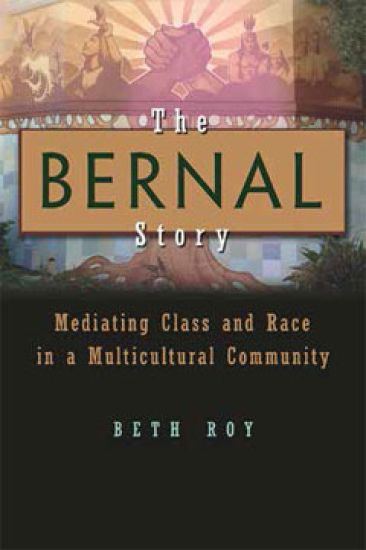
For eight years, the San Francisco neighborhood of Bernal Heights was mired in controversy. Traditionally a working-class neighborhood known for political activism and attention to community concerns, Bernal housed a diverse population of Latino, Filipino, and European heritage. The branch library, beloved in the community, was being renovated, raising the issue of whether to restore or paint over a thirty-year-old mural on its exterior wall. To some of the residents the artwork represented their culture and their entitlement to live on the hill. To others, the mural blighted a beautiful building. To resolve this seemingly intractable conflict, area officials convened a mediation led by Roy, an experienced mediator and Bernal resident. The group, which reflected the wide range of ethnic and socioeconomic backgrounds in the community, ultimately came to a strong consensus, resulting in the reinterpretation of the artwork to reflect changing times and to honor the full population of the neighborhood. The Bernal Story recounts in detail how the process was designed, who took part, how the group of twelve community representatives came to a consensus, and how that agreement was carried into the larger community and implemented. Roy's firsthand account offers an essential tool for training community leaders and professional mediators, a valuable case history for use in sociology and conflict resolution courses, and a compelling narrative.
Around the world communities that have suffered the trauma of unspeakable violence--in Liberia, Somalia, West Africa, Columbia, and elsewhere--are struggling to recover and reconcile, searching for ways not just to survive but to heal. In When Blood and Bones Cry Out, John Paul Lederach, a pioneer of peace-building, and his daughter, Angela Jill Lederach, show how communities can recover and reconnect through the power of making music, creating metaphors, and telling their extraordinary stories of suffering and survival. Instead of relying on more common linear explanations of healing and reconciliation, the Lederachs demonstrate how healing is circular, dynamic, and continuing, even in the midst of ongoing violence. They explore the concept of "social healing," a profoundly important intermediary step between active warfare and reconciliation. Social healing focuses on the lived experience of those who have suffered protracted violence and their need to give voice to that experience, both individually and collectively. Giving voice, speaking the unspeakable, in words and sounds that echo throughout traumatized communities, can have enormous healing power. Indeed, the Lederachs stress the remarkable effects of sound and vibration through tales of Tibetan singing bowls, Van Morrison's transcendent lyrics, the voices of mothers in West Africa, and their own personal journeys. And they include inspiring stories of transformation: a mass women's protest movement in Liberia that forces leaders to keep negotiating until a peace agreement is signed; elders in Somalia who walk between warring clans year after year to encourage dialogue; former child soldiers who run drum workshops and grow gardens in refugee camps; and rape victims in Sierra Leone who express their pain in poetry. With equal measures of insight and compassion, When Blood and Bones Cry Out offers a promising new approach to healing traumatized communities.
All over the world, poverty is gradually giving way to cooperative economic activity. At the same time, there are signs that standard competitive "free" markets are failing. Empirical evidence shows that cooperation works better than competition and that cooperatives succeed more often than standard corporations. Assumptions underlying the competitive system are that competition results in equity for all and that poverty can be eliminated through the market. These assumptions simply are not true. On the contrary, the rich get richer; the poor, poorer. Cooperatives, where each member holds one share and one vote, are more democratic than hierarchical corporations. Poverty is actually eliminated through a combination of microfinance and cooperation. Examples include Muhammed Yunus' Grameen Bank, Indonesia's People's Bank, and the cooperative adventure of Mondragon in Spain. These examples provide a vision of true globalization from below, a vision of a just and sustainable world. The "how-to" is right here.
John Paul Lederach's work in the field of conciliation and mediation is internationally recognized. As founding Director of the Conflict Transformation Program and Institute of Peacebuilding at Eastern Mennonite University, he has provided consultation and direct mediation in a range of situations from the Miskito/Sandinista conflict in Nicaragua to Somalia, Northern Ireland, the Basque Country, and the Philippines. His influential 1997 book Building Peace has become a classic in the discipline. This book represents his thinking and learning over the past several years. He explores the evolution of his understanding of peacebuilding by reflecting on his own experiences in the field. Peacebuilding, in his view, is both a learned skill and an art. Finding this art, he says, requires a worldview shift. Conflict professionals must envision their work as a creative act - an exercise of what Lederach terms the "moral imagination."
John Paul Lederach's work in the field of conciliation and mediation is internationally recognized. As founding Director of the Conflict Transformation Program and Institute of Peacebuilding at Eastern Mennonite University, he has provided consultation and direct mediation in a range of situations from the Miskito/Sandinista conflict in Nicaragua to Somalia, Northern Ireland, the Basque Country, and the Philippines. His influential 1997 book Building Peace has become a classic in the discipline. This new book represents his thinking and learning over the past several years. He explores the evolution of his understanding of peacebuilding by reflecting on his own experiences in the field. Peacebuilding, in his view, is both a learned skill and an art. Finding this art, he says, requires a worldview shift. Conflict professionals must envision their work as a creative act - an exercise of what Lederach terms the 'moral imagination.'
Since the early 1950s, John Paul Lederach has traveled worldwide as a mediation trainer and conflict resolution consultant. He has worked with governments, justice departments, and youth programs in Latin America, the Philippines, Cambodia, Somalia, and Africa. Drawing on his experience, Lederach explains the process and key variables used in teaching conflict resolution. Lederach uses anecdotes and pertinent experiences to demonstrate his resolution techniques. The book will appeal to those involved in resolution activities through development, relief, and nongovernmental agencies.