Kirjojen hintavertailu – 12 903 725 kirjaa ja 27 kauppaa

Kirjailija

John Perkins

Kirjat ja teokset yhdessä paikassa: 33 kirjaa, julkaisuja vuosilta 1994–2026, suosituimpiin kuuluu The Art of the Steal. Vertaile teosten hintoja ja tarkista saatavuus suomalaisista kirjakaupoista.

33 kirjaa

Kirjojen julkaisuvuodet: 1994–2026.

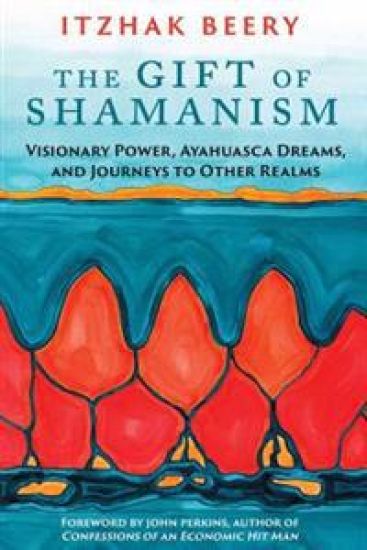
The Gift of Shamanism

The Gift of Shamanism

Itzhak Beery; John Perkins

Destiny Books,U.S.
2015
pokkari
Each and every one of us has shamanic powers. Glimpses of them can arise at any age in the form of intuitive dreams, deja vu, spontaneous visions, and out-of-body experiences. Most people dismiss these experiences. However, by embracing these gifts, we can unlock our shamanic potential to change ourselves and the world around us. Revealing his transformation from skeptic to respected shamanic healer, Itzhak Beery explains how, after countless prescient dreams and visions throughout his life that he brushed off, a series of synchronistic events led to his first shamanism workshop with Michael Harner, renowned shamanism scholar and teacher. Beery shares his experiences with ayahuasca rituals in the Amazon, messages from power animals and plant spirits, dreams that foretold future events, and holographic sightings of past lives and spiritual entities, both evil and benign. He details his shamanic way of "seeing" to diagnose spiritual, emotional, and physical ailments via candle readings and remote viewing. Explaining how we are always surrounded by spirits, he recounts helping people communicate with loved ones who have passed on and shares powerful stories of soul retrieval during shamanic journeys to other worlds. Through his true stories of visions that manifested in reality, Beery reveals that we are all shamans. By igniting our natural intuition and developing trust for our inner powers, we can each connect to the oneness of nature where all knowledge is found.
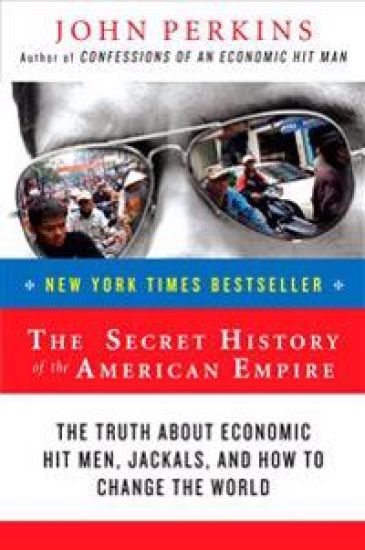
The Secret History of the American Empire
New York Times bestsellerFrom the author of the phenomenal New York Times bestseller, Confessions of an Economic Hit Man, comes an exposé of international corruption, and an inspired plan to turn the tide for future generationsWith a presidential election around the corner, questions of America's military buildup, environmental impact, and foreign policy are on everyone's mind. Former Economic Hit Man John Perkins goes behind the scenes of the current geopolitical crisis and offers bold solutions to our most pressing problems. Drawing on interviews with other EHMs, jackals, CIA operatives, reporters, businessmen, and activists, Perkins reveals the secret history of events that have created the current American Empire, including: • How the defeats in Vietnam and Iraq have benefited big business • The role of Israel as Fortress America in the Middle East • Tragic repercussions of the IMF's Asian Economic Collapse • The current Latin American revolution and its lessons for democracy • U. S. blunders in Tibet, Congo, Lebanon, and VenezuelaFrom the U. S. military in Iraq to infrastructure development in Indonesia, from Peace Corps volunteers in Africa to jackals in Venezuela, Perkins exposes a conspiracy of corruption that has fueled instability and anti-Americanism around the globe, with consequences reflected in our daily headlines. Having raised the alarm, Perkins passionately addresses how Americans can work to create a more peaceful and stable world for future generations.
Compassion, Justice, and the Christian Life – Rethinking Ministry to the Poor

Compassion, Justice, and the Christian Life – Rethinking Ministry to the Poor

Robert D. Lupton; John Perkins

Baker Academic, Div of Baker Publishing Group
2007
nidottu
The urban landscape is changing and, as a result, urban ministries are at a crossroads. If the Church is to be an effective agent of compassion and justice, Robert Lupton notes, we must change our mission strategies. In this compelling book, Lupton asks the tough questions about service providing and community building to help ministries enhance their effectiveness. What are the dilemmas that caring people encounter to faithfully carry out the teachings of Scripture and become personally involved with "the least of these?" What are some possible alternatives to the ways we have traditionally attempted to care for the poor? How do people, programs, and neighborhoods move towards reciprocal, interdependent relationships? To effect these types of changes will require new skill sets and resources, but the possibilities for good are great.
Radical Chemistry: The Fundamentals

Radical Chemistry: The Fundamentals

John Perkins

Oxford University Press
2000
nidottu
It is exactly 100 years since Moses Gomberg claimed that he had observed a substance containing a trivalent carbon atom i.e. a carbon-centred 'free radical' (nowadays, simply a carbon-centred 'radical'). The subsequent development of radical chemistry was at first very slow, but blossomed with the development of synthetic polymers, especially during and after World War II. In what is now generally understood by radical chemistry we are dealing with reactive, short-lived species which are electrically neutral. By the late 1960s, the essential features of the subject were well understood, and quantitative data on the energetics and kinetics of reactive radicals were rapidly accumalating. This short text sets out to present that basic understanding in a modern context, in which extensive use of radical reactions is now being made in organic synthesis, and where, in the life sciences, reactive radicals are being recognised both as mediators of many disease conditions, and frequently as key players in mechanisms of enzyme action.
Shapeshifting

Shapeshifting

John Perkins

Destiny Books,U.S.
1997
pokkari
The New York Times bestseller Confessions of an Economic Hit Man documents John Perkins' extraordinary career as a globe-trotting economic hit man. Perkins' insider's view leads him to crisis of conscience--to the realization that he must devote himself to work which will foster a world-wide awareness of the sanctity of indigenous peoples, their cultures, and their environments. Perkins' books demonstrate how the age-old shamanic techniques of some of the world's most primitive peoples have sparked a revolution in modern concepts about healing, the subconscious, and the powers each of us has to alter individual and communal reality. Many indigenous cultures practice shapeshifting. Native American hunters take on the spirit of their prey to ensure a successful hunt; Asian medicine men "ingest" a sickness to heal the one afflicted; Amazon warriors become jaguars to soundlessly travel the jungle. Those who shapeshift understand that all of life is energy and that by focusing your intent you can change energetic patterns, rendering a new form. Shapeshifting can occur on three levels: cellular--transforming from human to plant or animal; personal--becoming a new self or leaving an addiction behind; and institutional--creating a new business or cultural identity. Since 1968, master shamans in Africa, Asia, the Middle East, and the Americas have been training John Perkins to teach the industrial world about the powerful techniques involved in shapeshifting. His groundbreaking book takes you to deserts and jungles, mountains and oceans, medical research centers and corporate board rooms to learn the step-by-step methods of this practice that integrates ancient and modern techniques to bring about profound healing.
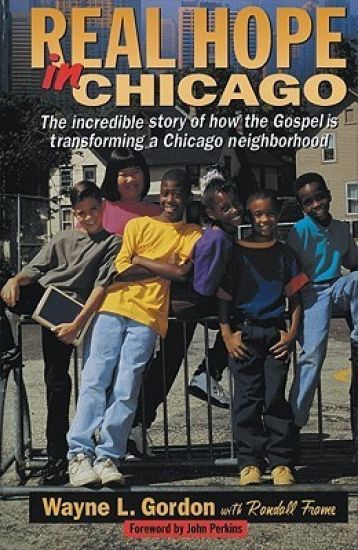
Real Hope in Chicago

Real Hope in Chicago

Wayne L. Gordon; John Perkins

Zondervan
1995
nidottu
When Wayne Gordon and his wife started a Bible study for high school kids in North Lawndale, Chicago, people warned them that a white couple moving into a black neighborhood as a recipe for disaster. That was twenty-five years ago. Today, what began as the Gordons' seedling Bible study has become the Lawndale Community Church. It has a staff of 150, has renovated more than 100 local apartments, has helped more than 50 young people graduate from college, runs a medical clinic that treated 50,000 patients in 1994, and has become a vital part of rebuilding an inner-city neighborhood into a community of faith and hope. Real Hope in Chicago is Wayne Gordon's inspiring account of how people, white and black, rich and poor, old and young, worked together to transform a decaying neighborhood into a place where love is lived out in practical and miraculous ways. It offers an exciting model for interracial cooperation, urban-suburban church partnering--and real hope for the inner cities of our nation.