Kirjojen hintavertailu – 12 903 724 kirjaa ja 27 kauppaa

Kirjailija

John Plant

Kirjat ja teokset yhdessä paikassa: 15 kirjaa, julkaisuja vuosilta 2007–2022, suosituimpiin kuuluu British Tank Warfare. Vertaile teosten hintoja ja tarkista saatavuus suomalaisista kirjakaupoista.

15 kirjaa

Kirjojen julkaisuvuodet: 2007–2022.

The Roman Campaigns in Germany

The Roman Campaigns in Germany

John Plant

New Generation Publishing
2022
pokkari
In 1851 Sir Edward Creasy included the 'Victory of Arminius over the Roman legions under Varus, A. D. 9' in his 'The Fifteen Decisive Battles of The World'. He wrote that 'That victory secured at once and for ever the independence of the Teutonic race'. This has been the accepted interpretation ever since. It is, though, unlikely that any one battle, however successful, could halt the expansion of the Roman Empire, and a broader view is called for. This will require a study of the entire period between Augustus's first decision, in 16 BC, to attack Germany to 90 AD, when Domitian finally admitted that conquest was impossible. This book is an attempt to provide this study. The first chapter is a study of the Roman army and describes some basic Roman military procedures in particular those involved in marching and camp construction, then the campaigns involved are analysed in terms of these procedures. The result if this analysis is an entirely new interpretation of Roman motivation and of the 'Battle of the Teutoburg Wald', an interpretation dramatically different from that reached by other authors.
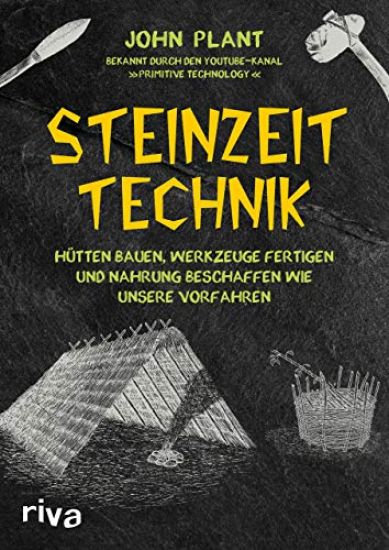
Primitive Technology

Primitive Technology

John Plant

Ebury Publishing
2019
sidottu

Halvin toimitettuna 26,00 €

THE PERFECT GIFT FOR SURVIVALISTS, OUTDOOR LOVERS AND ARMCHAIR ADMIRERS OF PRIMITIVE TECHNOLOGY. Reconnect with the earth and learn how to build things by hand from scratch, guided by the creator of the world's most popular primitive technology YouTube channel, John Plant.
Primitive Technology: A Survivalist's Guide to Building Tools, Shelters, and More in the Wild
From the craftsman behind the popular YouTube channel Primitive Technology comes a practical guide to building huts and tools using only natural materials from the wild. John Plant, the man behind the channel, Primitive Technology, is a bonafide YouTube star. With almost 10 million subscribers and an average of 5 million views per video, John's channel is beloved by a wide-ranging fan base, from campers and preppers to hipster woodworkers and craftsmen. Now for the first time, fans will get a detailed, behind-the-scenes look into John's process. Featuring 50 projects with step-by-step instructions on how to make tools, weapons, shelters, pottery, clothing, and more, Primitive Technology is the ultimate guide to the craft. Each project is accompanied by illustrations as well as mini-sidebars with the history behind each item, plus helpful tips for building, material sourcing, and so forth. Whether you're a wilderness aficionado or just eager to spend more time outdoors, Primitive Technology has something for everyone's inner nature lover.
Managing Finance, Premises and Health & Safety

Managing Finance, Premises and Health & Safety

David Miller; John Plant; Paul Scaife

Routledge
2016
sidottu
This book covers the most important aspects of these essential issues, such as:how and when to budgethow to audit your school's facilitieshow to manage, maintain and improve your premisesways to gain extra funding for your premiseswhat are the main Health and Safety issues, what are the common pitfalls, and what are the policies you really need.
British Tank Warfare

British Tank Warfare

John Plant

New Generation Publishing
2015
pokkari
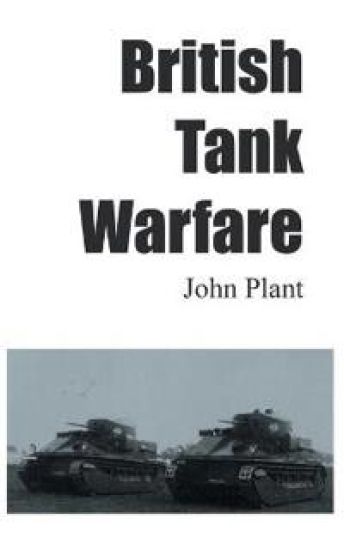
This book covers the British experience of Tank Warfare from its inception in 1916 until its final tactical developments in BAOR. It is a tactical study, covering the training, organisation and deployment of armoured formations. It looks at the design of tanks, the manuals for their use and examples of actions they were used in. It contains short excerpts from the author's 'Cruiser Tank Warfare' and 'Infantry Tank Warfare'. Naturally the emphasis if the book is on the Second World War. In this conflict Tank Warfare had three main strands based on Cruiser Tanks, Infantry Tanks, and Light Tanks. These three themes are handled in separate chapters and one of the conclusions drawn is that Light Tanks were not the failures they were taken to be, but could perform important battlefield functions. The final chapter considers equipment and organisational changes during the Cold War, when most British tanks were stationed in Germany preparing for a cataclysmic battle with Warsaw Pact forces.
Infantry Tank Warfare (revised and enlarged)

Infantry Tank Warfare (revised and enlarged)

John Plant

New Generation Publishing
2014
pokkari
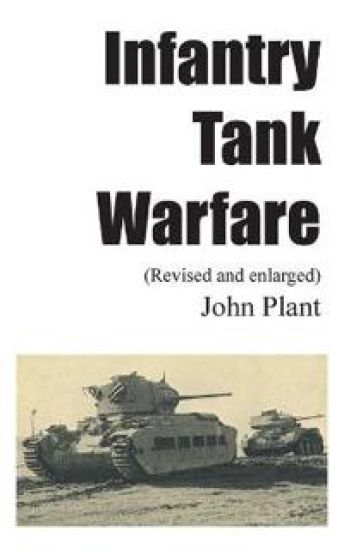
'Infantry Tank Warfare' is the term used in this book to describe the use of armoured vehicles to support infantry in the attack. Although there are chapters covering the experience of armour in the Great War, and inter-war developments, the greater part of the book covers the Second World War. Within the main theme there are three topics: infantry tanks, specialised armour and armoured personnel carriers. Each topic is studied separately by considering the vehicles involved, the manuals for their use, and the actions they were involved in. The result is an appreciation of the fine achievements of the British armoured forces. It is important to note that the book restricts itself to a detailed investigation of the British experience, only occasionally referring to foreign armies and then purely for comparison. This book, in style and content, has been written as a companion volume to the author's 'Cruiser Tank Warfare'.
German Anti-Tank Warfare

German Anti-Tank Warfare

John Plant

New Generation Publishing
2014
pokkari
This short study follows German Anti-Tank Warfare from 1916 to 1945. During its early days in the Great War German Anti-Tank Warfare quickly achieved a surprising degree of sophistication but throughout most of the inter-war period it was largely ignored. As the Second World War approached it was regarded as a matter for specialist teams but as it progressed though the desert campaigns it became a matter for AT guns, with mines increasingly important. In its final stage in Europe every soldier was expected to play his part, with mines and Panzerfausts, in the fight against tanks. The book looks at the equipment available, particularly self-propelled guns, and at trends in permanent fortification. In particular it considers the Mareth Line and the Siegfried Line and the British and American assaults of these Lines. The book is not long, being 55,000 words. As with any subject as vast as the subject of this study, it is impossible to guarantee a proper balance and proportion in the way it is described, but an attempt has been made and it is hoped that the reader will find this study informative and useful. Although this book has been written to stand alone, it also forms a companion piece to the author's 'British Anti-Tank Warfare' and a kind of counterpoise to some of his other books about tanks.
British Anti-Tank Warfare

British Anti-Tank Warfare

John Plant

New Generation Publishing
2014
pokkari
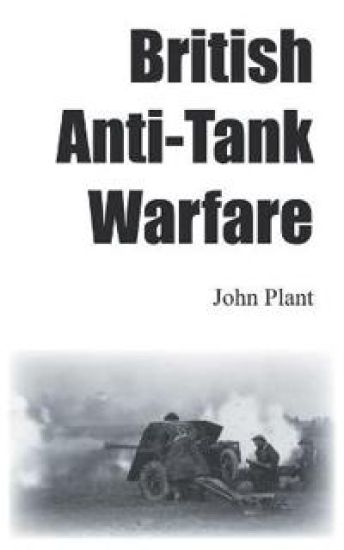
This book is an attempt to describe the British army's approach to Anti-Tank Warfare from its inception during the Great War until 1945. During the Great War the army found little reason to study anti-tank warfare and after the war what little anti-tank awareness there was slowly faded away. This was inevitable because of the 'ten year rule' which proclaimed that there would be no major war in that period, and it was only in the second half of the thirties that the British army started to take the subject seriously. In 1939 the British anti-tank armament and tactics were inadequate, this became a major worry after Dunkirk and this book gives particular emphasis to the anti-tank defences built in England against the expected German invasion. Under the pressure of necessity tactics and equipment improved reaching a high point of effectiveness at Medenine in 1943. After that, although equipment improved slightly, the threat was never again so great and the British army could confidently handle whatever Axis armour came its way. There must be some doubt if anti-tank warfare should be regarded as a subject in its own right, mostly because it is purely a reaction to the invention and progress of the tank. The writer of this book believes it should be, and this book should support this view.
Cruiser Tank Warfare

Cruiser Tank Warfare

John Plant

New Generation Publishing
2014
pokkari
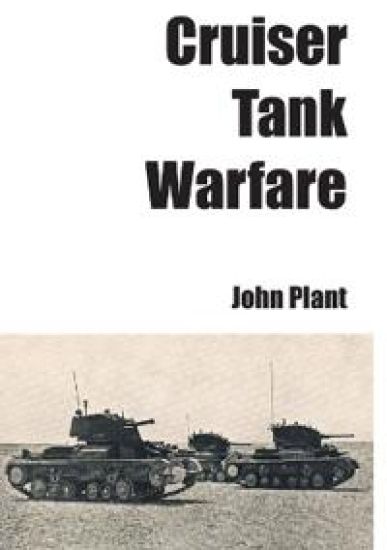
Cruiser Tank Warfare is a term used to describe the British concept of armoured warfare based on fast, thinly armoured tanks. The book traces the history of this concept from the publication of 'Mechanised and Armoured Formations' in 1929 up to the end of the war. It does this by following the British understanding of the subject in manuals, 'Modern Formations' being extensively quoted, by considering the development of Cruiser tank design, and by looking at the major actions that Cruisers were involved in. The conclusion drawn is that the Cruiser Tank Warfare concept was fundamentally flawed. It is important to note that the book restricts itself to a detailed investigation of the British experience of tank warfare, only occasionally referring to foreign armies and then purely for comparison. It is confidently planned to publish a companion volume titled 'Infantry Tank Warfare'.
The Roman Legionary in Battle (Second Revision)
This book is an account of how the Roman legions fought, based on the point-of-view of the ordinary legionary, the man who actually did the fighting. The fighting soldier is, of course, the most important man in any army and yet, so often, the least understood. The book shows how he was deployed within his cohort, and how he functioned in contact with the enemy, by considering his weapons and reconstructing the drills for their use. It takes a historic approach. Starting with a discussion of Greek warfare, it considers the development of the Roman army throughout the Republican period, in particular it looks at the Battle of Cannae to see why the legionary system failed there. The main part of this book considers the legionaries of the fully developed Imperial army, and how they handled a variety of foes such as barbarians, cavalry, the Macedonian phalanx and other legions. Probably most significantly the book offers the reader the only reasonable account in print of the Teutoburg Wald disaster, and it considers other disasters in order to probe weaknesses in the Roman system. Finally the book considers how the legions finally became obsolete. The overall result is a totally original account of Roman warfare. References are given for each chapter, as much as possible they are easily accessed Penguin Classics or Loeb editions.
Tarquin Mathematical Challenges

Tarquin Mathematical Challenges

John Plant

Tarquin Publications
2014
nidottu
The challenges in this book are mainly designed for able mathematicians in upper primary or lower secondary although many of the tasks are appropriate for a much wider range of ages. Extensively trialled through the author's work as a Mathematics Advisor in Kent. Each task has a Task Sheet describing the challenge and Explanatory Notes that include learning objectives, resources implications, advice, answers and possible further study. Teachers and parents will find it invaluable. The challenges are graded in terms of their accessibility to a wide range of ability (rather than in terms of difficulty). Many of the challenges are presented as practical problems to help pupils develop their mathematical thinking.
War

War

John Plant

Legend Press Ltd
2014
pokkari
This book is the result of its author's determination to understand the phenomenon of war, a determination which has been one of the driving forces of his life for over half a century. It has taken well over ten years to write. In this book two basic types of conflict are defined, primary and secondary warfare. The study mostly covers secondary warfare which is considered in terms of the army/government/people triad, both in the context of conventional war between countries, and guerrilla insurrections within countries. Each aspect of warfare is illustrated, and each conclusion is backed up, with copious examples. The final conclusion of the endemic nature of warfare will not please many people who read it, but if it has the effect of causing them to be much more critical of various government policies then this book can be regarded as a success.
The 1st Armoured Division

The 1st Armoured Division

John Plant

Legend Press Ltd
2013
pokkari
The 1st Armoured Division saw more action than any other British armoured division from its deployment in France in 1940 until its disbandment in Italy in 1944. Despite its impressive record this division has been almost ignored by historians and this book is an attempt to rectify this. It follows the division through its disastrous campaign in France, then to North Africa to follow its retreat to Gazala and its part in that defeat. It looks closely at the division's actions around Ruweisat Ridge where the reputation of British armour reached an all-time low. This is followed by an account of the division's part in Alamein and its triumphant march across North Africa to Tunisia. Finally the division's part in the Italian campaign, specifically the assault of the Gothic Line, is studied, then the circumstances of its disbandment. Hopefully the publication of this book will go some way to reinstating the reputation of this fine division.
Managing Finance, Premises and Health & Safety

Managing Finance, Premises and Health & Safety

David Miller; John Plant; Paul Scaife

David Fulton Publishers Ltd
2007
nidottu
This book covers the most important aspects of these essential issues, such as:how and when to budgethow to audit your school's facilitieshow to manage, maintain and improve your premisesways to gain extra funding for your premiseswhat are the main Health and Safety issues, what are the common pitfalls, and what are the policies you really need.