Kirjojen hintavertailu – 12 903 725 kirjaa ja 27 kauppaa

Kirjailija

John R. Maass

Kirjat ja teokset yhdessä paikassa: 12 kirjaa, julkaisuja vuosilta 2013–2026, suosituimpiin kuuluu George Washington's Virginia. Vertaile teosten hintoja ja tarkista saatavuus suomalaisista kirjakaupoista.

Nimi esiintyy myös muodoissa: John R Maass

12 kirjaa

Kirjojen julkaisuvuodet: 2013–2026.

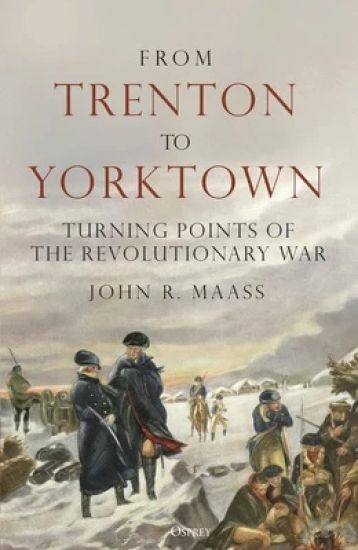
From Trenton to Yorktown

From Trenton to Yorktown

John R. Maass

BLOOMSBURY PUBLISHING PLC
2026
nidottu
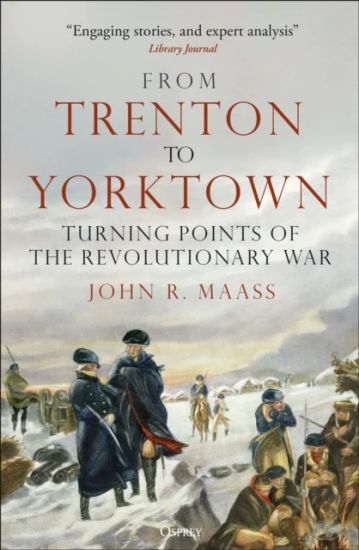
This sweeping narrative is an astute exploration of the five critical military events that changed the outcome of the Revolutionary war. For eight grueling years, American and British military forces struggled in a bloody war over colonial independence. This conflict also ensnared Native American warriors and the armies and navies of France, Spain, the Dutch Republic, and several German principalities. From frozen Canada to tropical Florida and as far west as the Mississippi River, the Revolutionary War included hundreds of campaigns, battles, and skirmishes on land and sea in which soldiers and sailors fought and died for causes, crowns, and comrades. In this masterful, yet accessible narrative of America's fight for liberty, John R. Maass identifies the five decisive events that secured independence for the 13 hard-pressed but determined colonies. These turning points, not all of them triumphs on the battlefield, delivered a victory for the new United States. By challenging conventional interpretations of what ensures victory in warfare, From Trenton to Yorktown offers a fresh perspective on the Revolutionary War.

The U.S. Army, 1783–1811

The U.S. Army, 1783–1811

John R. Maass

Casemate Publishers
2025
nidottu
From the closing days of the Revolutionary War in 1783 to the beginning of the War of 1812, the United States Army faced one of its most challenging periods. During this era, American soldiers confronted threats from Great Britain, France, and Spain. On the western frontier, hostile warriors from American Indian nations battled U. S. Army and militia troops north of the Ohio River, as white settlers’ insatiable demands for land provoked conflict with Indian communities. The Army suppressed civil unrest, built roads, and conducted explorations, including the transcontinental expedition led by Army officers Meriwether Lewis and William Clark. The post-revolutionary years also saw the Army in a process of frequent reorganization, from the disbanding of the Continental Army at the end of the Revolutionary War to the establishment of Maj. Gen. Anthony Wayne’s Legion of the United States, followed by President Thomas Jefferson’s efforts at reforming the Army into a Republican institution. These structural changes increased during James Madison’s first presidential term, as Americans prepared for war with Great Britain over maritime rights, free trade, and territorial expansion in a conflict that became known as the War of 1812. Illustrated with photographs, artwork and maps, this explains how the United States’ Army was transformed in its first four decades.
From Trenton to Yorktown

From Trenton to Yorktown

John R. Maass

BLOOMSBURY PUBLISHING PLC
2025
sidottu
Published to coincide with the 250th anniversary, this sweeping narrative is an astute exploration of the five critical military events that changed the outcome of the Revolutionary war. For eight grueling years, American and British military forces struggled in a bloody war over colonial independence. This conflict also ensnared Native American warriors and the armies and navies of France, Spain, the Dutch Republic, and several German principalities. From frozen Canada to tropical Florida and as far west as the Mississippi River, the Revolutionary War included hundreds of campaigns, battles, and skirmishes on land and sea in which soldiers and sailors fought and died for causes, crowns, and comrades. In this masterful, yet accessible narrative of America’s fight for liberty, John R. Maass identifies the five decisive events that secured independence for the 13 hard-pressed but determined colonies. These include not only the obvious military victories such as Trenton, Princeton, and Yorktown but also the leadership and reforms that ensured Washington’s forces were capable of enduring the harsh conditions of the winter of 1778. Similarly, King Louis XVI’s decision to supply Continental troops during the Saratoga Campaign with desperately needed soldiers, arms, money, and fleets is also detailed as a key factor. These turning points, not all of them triumphs on the battlefield, delivered a victory for the new United States. By challenging conventional interpretations of what ensures victory in warfare, From Trenton to Yorktown offers a fresh perspective on the Revolutionary War.
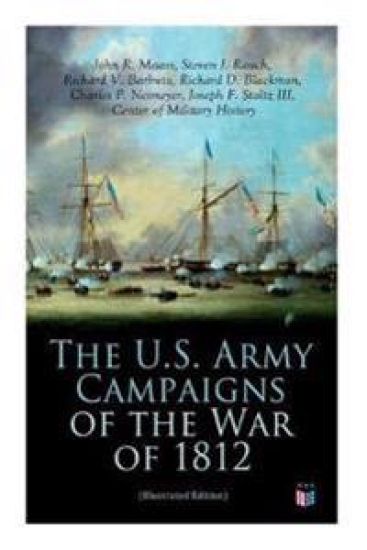
The U.S. Army Campaigns of the War of 1812 (Illustrated Edition)

The U.S. Army Campaigns of the War of 1812 (Illustrated Edition)

Center of Military History; John R. Maass; Steven J. Rauch; Richard V. Barbuto; Richard D. Blackmon; Charles P. Neimeyer; Joseph F. Stoltz

E-Artnow
2019
nidottu
The War of 1812 is perhaps the United States' least known conflict. Other than Andrew Jackson's 1815 victory at New Orleans and Francis Scott Key's poem "The Star-Spangled Banner" written in 1814 during the British attack on Baltimore, most Americans know little about the country's second major war. This book will give you a full insight into the second largest military conflict that took place on the soil of North America. Contents: Defending a New Nation 1783-1811 The Campaign of 1812 The Canadian Theater, 1813 The Creek War of 1813–1814 The Chesapeake Campaign, 1813–1814 The Canadian Theater, 1814 The Gulf Theater, 1813-1815
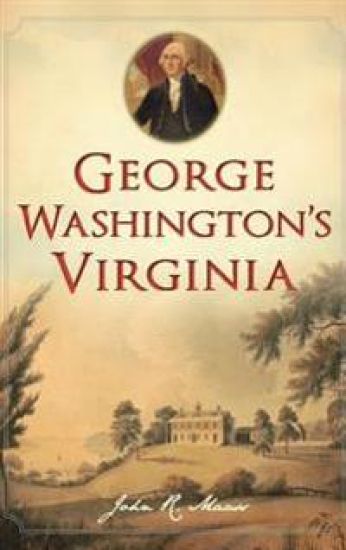
George Washington's Virginia

George Washington's Virginia

John R. Maass

History Press Library Editions
2017
sidottu
George Washington was first and foremost a Virginian. Born in the state's Tidewater region, he was reared near Fredericksburg and took up residence at Mount Vernon along the Potomac River. As a young surveyor, he worked in Virginia's backcountry. He began his military career as a Virginia militia officer on the colony's frontier. The majority of his widespread landholdings were in his native state, and his entrepreneurial endeavors ranged from the swamplands of the Southeast to the upper Potomac River Valley. Historian John Maass explores the numerous sites all over the Commonwealth associated with Washington and demonstrates their lasting importance.
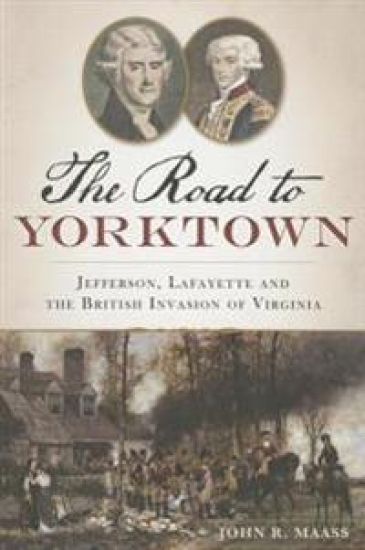
The Road to Yorktown: Jefferson, Lafayette and the British Invasion of Virginia
In 1781, Virginia was invaded by formidable British forces that sought to subdue the Old Dominion. Lieutenant General Charles, Lord Cornwallis, led thousands of enemy troops from Norfolk to Charlottesville, burning and pillaging. Many of Virginia's famed Patriots--including George Washington, Thomas Jefferson, Patrick Henry and Nathanael Greene--struggled to defend the commonwealth. Only by concentrating a small band of troops under energetic French general the Marquis de Lafayette were American forces able to resist British operations. With strained support from Governor Jefferson's administration, Lafayette fought a campaign against the veteran soldiers of Lord Cornwallis that eventually led to the famed showdown at Yorktown. Historian John R. Maass traces this often overlooked Revolutionary struggle for Virginia and details each step on the road to Yorktown.
The French & Indian War in North Carolina: The Spreading Flames of War
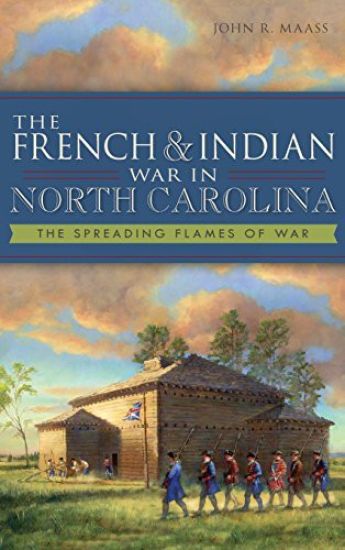
Though most of the events in the French and Indian War took place hundreds of miles away, North Carolina was not exempt from its impact. As the European forces of France, Spain, Great Britain and their American Indian allies brought war to the New World, the colony mobilized troops, raised money, built forts and participated in several arduous military campaigns. The war had a huge influence on the colony, including a dramatic conflict between the colonial Governor Arthur Dobbs and the colonial legislature over how many troops to raise and how it would be funded. This led to an increasing sense of independence from Britain that would continue to build after the war was over. Join historian and author John R. Maass as he chronicles a significant yet often overlooked North Carolina history..