Kirjojen hintavertailu – 12 859 818 kirjaa ja 27 kauppaa

Kirjailija

John R. Nofsinger

Kirjat ja teokset yhdessä paikassa: 15 kirjaa, julkaisuja vuosilta 2012–2026, suosituimpiin kuuluu Sustainable Investing. Vertaile teosten hintoja ja tarkista saatavuus suomalaisista kirjakaupoista.

15 kirjaa

Kirjojen julkaisuvuodet: 2012–2026.

The Psychology of Investing

The Psychology of Investing

John R. Nofsinger

TAYLOR FRANCIS LTD
2026
sidottu
While traditional finance focuses on the tools used to optimize return and minimize risk, this book shows how psychology can explain our decisions more than financial theory. Analyzing how investors behave in the real world, this classic text delves into the ways biases influence investment behavior, and how overcoming these biases can increase financial success. Now in its eighth edition, the book features: • an easy-to-understand structure, illustrating psychological biases as everyday behavior; analyzing their effect on investment decisions; and concluding with academic studies that show real-life investors making choices that hurt their wealth • fully updated content to reflect the latest research in the field • a new chapter on FinTech and behavioral finance, as well as coverage of AI considerations • experiential examples, chapter summaries, and end-of-chapter discussion questions to help readers test their practical understanding • online supplements comprising PowerPoint slides for both students and lecturers. The Psychology of Investing will prove fascinating and educational for advanced students in behavioral finance, investment and portfolio management classes, as well as investors, financial planners and aspiring finance professionals.
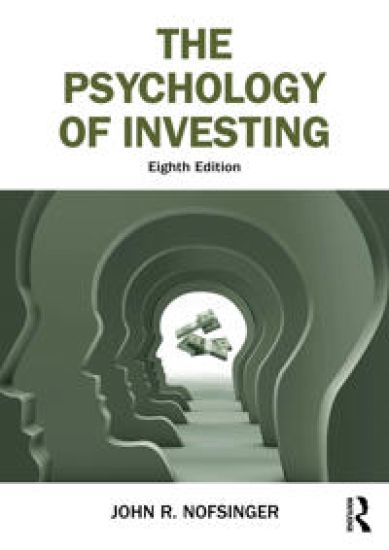
The Psychology of Investing

The Psychology of Investing

John R. Nofsinger

TAYLOR FRANCIS LTD
2026
nidottu
While traditional finance focuses on the tools used to optimize return and minimize risk, this book shows how psychology can explain our decisions more than financial theory. Analyzing how investors behave in the real world, this classic text delves into the ways biases influence investment behavior, and how overcoming these biases can increase financial success. Now in its eighth edition, the book features: • an easy-to-understand structure, illustrating psychological biases as everyday behavior; analyzing their effect on investment decisions; and concluding with academic studies that show real-life investors making choices that hurt their wealth • fully updated content to reflect the latest research in the field • a new chapter on FinTech and behavioral finance, as well as coverage of AI considerations • experiential examples, chapter summaries, and end-of-chapter discussion questions to help readers test their practical understanding • online supplements comprising PowerPoint slides for both students and lecturers. The Psychology of Investing will prove fascinating and educational for advanced students in behavioral finance, investment and portfolio management classes, as well as investors, financial planners and aspiring finance professionals.
The Psychology of Investing

The Psychology of Investing

John R. Nofsinger

TAYLOR FRANCIS LTD
2022
sidottu
While traditional finance focuses on the tools used to optimize return and minimize risk, this book shows how psychology can explain our decisions more than financial theory. Analyzing how investors behave in the real world, this is the first book of its kind to delve into the ways biases influence investment behavior, and how overcoming these biases can increase financial success. Now in its seventh edition, this classic text features: An easy-to-understand structure, illustrating psychological biases as everyday behavior; analyzing their effect on investment decisions; and concluding with academic studies that show real-life investors making choices that hurt their wealth New content on fintech and cryptocurrencies, the role of social media in investing, generational biases, and the COVID-19 pandemic Experiential examples, chapter summaries, and end-of-chapter discussion questions to help readers test their practical understanding Online supplements comprising PowerPoint slides for both students and lecturersFully updated with the latest research in the field, The Psychology of Investing will prove fascinating and educational for advanced students in behavioral finance, investment and portfolio management classes, as well as investors and financial planners.
The Psychology of Investing

The Psychology of Investing

John R. Nofsinger

TAYLOR FRANCIS LTD
2022
nidottu
While traditional finance focuses on the tools used to optimize return and minimize risk, this book shows how psychology can explain our decisions more than financial theory. Analyzing how investors behave in the real world, this is the first book of its kind to delve into the ways biases influence investment behavior, and how overcoming these biases can increase financial success. Now in its seventh edition, this classic text features: An easy-to-understand structure, illustrating psychological biases as everyday behavior; analyzing their effect on investment decisions; and concluding with academic studies that show real-life investors making choices that hurt their wealth New content on fintech and cryptocurrencies, the role of social media in investing, generational biases, and the COVID-19 pandemic Experiential examples, chapter summaries, and end-of-chapter discussion questions to help readers test their practical understanding Online supplements comprising PowerPoint slides for both students and lecturersFully updated with the latest research in the field, The Psychology of Investing will prove fascinating and educational for advanced students in behavioral finance, investment and portfolio management classes, as well as investors and financial planners.
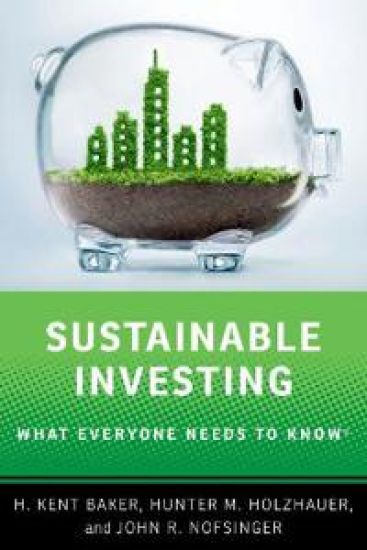
Sustainable Investing

Sustainable Investing

H. Kent Baker; Hunter M. Holzhauer; John R. Nofsinger

OXFORD UNIVERSITY PRESS INC
2022
sidottu
An accessible introduction to sustainable investing for investors Can investors do well financially and do good for the world? Should they try? A common assumption about investors is that they don't care who wins as long as they're making money. For some investors, this mindset still rings true. Yet, many investors today want to make money and do good. Sustainable investing has gained considerable momentum in the last few decades. It delivers value by balancing traditional investing with environmental, social, and governance-related (ESG) insights to improve long-term outcomes. Sustainable Investing: What Everyone Needs to Know ® demystifies sustainable investing for investors. Using a user-friendly question-and-answer format and insights from noted investment professionals, this book explores some of sustainable investing's most critical questions in a clear and concise manner. The book explains how this approach involves investing in sustainable companies or funds and can include any investment approach that considers ESG criteria when selecting and managing investments. It demystifies sustainable investing specifically for average investors and examines whether such investments have a place in their portfolios. By covering everything from the changing investment landscape and the roles of social and religious values in finance to how to build a portfolio with purpose, H. Kent Baker, Hunter M. Holzhauer, and John R. Nofsinger provide an essential introduction to sustainable investing.
Sustainable Investing

Sustainable Investing

H. Kent Baker; Hunter M. Holzhauer; John R. Nofsinger

OXFORD UNIVERSITY PRESS INC
2022
nidottu
An accessible introduction to sustainable investing for investors Can investors do well financially and do good for the world? Should they try? A common assumption about investors is that they don't care who wins as long as they're making money. For some investors, this mindset still rings true. Yet, many investors today want to make money and do good. Sustainable investing has gained considerable momentum in the last few decades. It delivers value by balancing traditional investing with environmental, social, and governance-related (ESG) insights to improve long-term outcomes. Sustainable Investing: What Everyone Needs to Know ® demystifies sustainable investing for investors. Using a user-friendly question-and-answer format and insights from noted investment professionals, this book explores some of sustainable investing's most critical questions in a clear and concise manner. The book explains how this approach involves investing in sustainable companies or funds and can include any investment approach that considers ESG criteria when selecting and managing investments. It demystifies sustainable investing specifically for average investors and examines whether such investments have a place in their portfolios. By covering everything from the changing investment landscape and the roles of social and religious values in finance to how to build a portfolio with purpose, H. Kent Baker, Hunter M. Holzhauer, and John R. Nofsinger provide an essential introduction to sustainable investing.
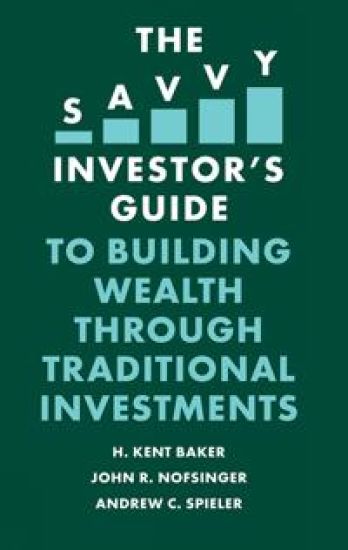
The Savvy Investor's Guide to Building Wealth Through Traditional Investments

The Savvy Investor's Guide to Building Wealth Through Traditional Investments

H. Kent Baker; John R. Nofsinger; Andrew C. Spieler

Emerald Publishing Limited
2020
nidottu
Would you like to be a millionaire? If you're like most people, your answer is "yes". But unlike popular opinion, this goal is not beyond your reach. Building wealth is more common sense than secret formula. You need to invest wisely. This easy-to-read guide focuses on traditional investments - stocks, bonds, and cash or cash equivalents. Stocks and bonds are the heartbeat of Wall Street. Finance experts H. Kent Baker, John R. Nofsinger, and Andrew C. Spieler take you through how to invest in a single security, as well as mutual funds and exchange-traded funds (ETFs), which offer many potential benefits to individual investors. This practical and straightforward book is written for novice investors. It takes an innovative question-and-answer format to help you learn about traditional investments and to become a better investor. If you want to become a millionaire, and don't have the luck of buying a winning lottery ticket, this guide is for you.
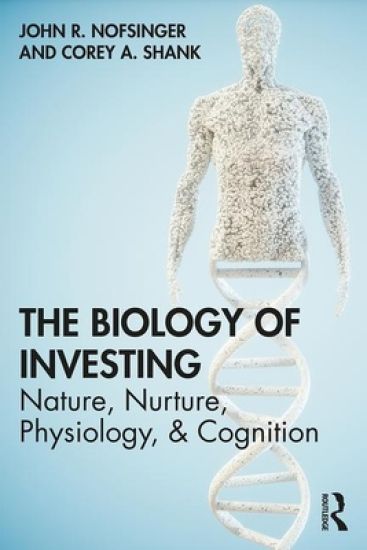
The Biology of Investing

The Biology of Investing

John R. Nofsinger; Corey A. Shank

Routledge
2020
nidottu
Why do people’s financial and economic preferences vary so widely? ‘Nurture’ variables such as socioeconomic factors partially explain these differences, but scientists have been discovering that ‘nature’ also plays an important role. This is the first book to bring together these scientific insights for a holistic view of the role of human biology in financial decision-making. Geneticists are now examining which genetic markers are associated with financial and economic preferences. Neuroscientists are now determining where in the brain financial decisions are made and how that varies between people. Endocrinologists relate the level of different hormones circulating in the body to financial risk-taking. Researchers are exploring how physiology and environmental conditions influence investment decisions, and how three types of cognitive ability play essential roles in investment success. This exciting and relevant work being done in these academic silos has generally not been transmitted among the scientific areas, or to industry. For the first time, this book integrates all these areas, explaining the myriad ways in which a person’s biology influences their investing decisions. Financial analysts, advisors, market participants, and upper-level undergraduate and postgraduate students of behavioral finance, behavioral economics, and investing will find this book invaluable, enabling a deeper understanding of investors’ decision-making processes. To further ensure this new material is accessible to students, PowerPoint slides are available online for instructors’ use.
The Biology of Investing

The Biology of Investing

John R. Nofsinger; Corey A. Shank

Routledge
2020
sidottu
Why do people’s financial and economic preferences vary so widely? ‘Nurture’ variables such as socioeconomic factors partially explain these differences, but scientists have been discovering that ‘nature’ also plays an important role. This is the first book to bring together these scientific insights for a holistic view of the role of human biology in financial decision-making. Geneticists are now examining which genetic markers are associated with financial and economic preferences. Neuroscientists are now determining where in the brain financial decisions are made and how that varies between people. Endocrinologists relate the level of different hormones circulating in the body to financial risk-taking. Researchers are exploring how physiology and environmental conditions influence investment decisions, and how three types of cognitive ability play essential roles in investment success. This exciting and relevant work being done in these academic silos has generally not been transmitted among the scientific areas, or to industry. For the first time, this book integrates all these areas, explaining the myriad ways in which a person’s biology influences their investing decisions. Financial analysts, advisors, market participants, and upper-level undergraduate and postgraduate students of behavioral finance, behavioral economics, and investing will find this book invaluable, enabling a deeper understanding of investors’ decision-making processes. To further ensure this new material is accessible to students, PowerPoint slides are available online for instructors’ use.
The Savvy Investor's Guide to Avoiding Pitfalls, Frauds, and Scams

The Savvy Investor's Guide to Avoiding Pitfalls, Frauds, and Scams

H. Kent Baker; John R. Nofsinger; Vesa Puttonen

Emerald Publishing Limited
2020
nidottu
Are you an investor facing an obstacle you don’t know how to overcome? Are you ready to invest, but not sure how to reduce your risks? There are two important things you must do to be a savvy investor: make good investment decisions and avoid costly mistakes. As important as good investments are, one bad mistake can ruin the result of all your good decisions. In the second book in The H. Kent Baker Investments Series, investing experts H. Kent Baker, John R. Nofsinger, and Vesa Puttonen offer an insightful guide on avoiding those detrimental missteps. The Savvy Investor's Guide to Avoiding Pitfalls, Frauds and Scams explores the common pitfalls that investors face. Highlighting important issues when investing especially in common stocks and mutual funds, they explore the psychological biases of investors that can cause you to be your own worst enemy. Finally, they look at frauds and scams, and how to protect yourself from dishonest people wanting to profit at your expense. If you feel unprepared to face the risks of investing, Baker, Nofsinger, and Puttonen provide this essential guide to arming yourself against devastation on your path to becoming a savvy investor.
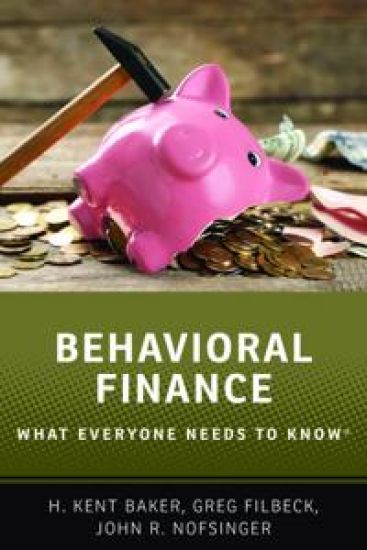
Behavioral Finance

Behavioral Finance

H. Kent Baker; Greg Filbeck; John R. Nofsinger

Oxford University Press Inc
2019
sidottu
People tend to be penny wise and pound foolish and cry over spilt milk, even though we are taught to do neither. Focusing on the present at the expense of the future and basing decisions on lost value are two mistakes common to decision-making that are particularly costly in the world of finance. People are also tempted to throw good money after bad. Behavioral finance is the field that sheds light on how people make decisions and make predictable mistakes due to mental and emotional characteristics. It also provides insights into how markets operate. Having a better understanding of both can mitigate mistakes. Behavioral Finance: What Everyone Needs to Know® provides an overview of common shortcuts and mistakes people make in managing their finances that can affect their wealth. An extensive discussion sets forth the cognitive biases or errors in thinking that occur when people are collecting, processing, and interpreting information. Emotional biases that can create distortions in cognition and decision-making are also covered, as are the influence of social factors, from culture to the behavior of one's peers. These effects vary during one's life, reflecting differences in cognitive ability due to age, experience, and gender effects. Of great importance is framing, how the presentation of a choice affects people's forecasts about the stock market, claiming social security benefits, savings behavior, mortgage choice, charitable contributions, and more. Throughout the authors combine discussions of concepts, insights from research, and examples from recent events. Among the questions to be addressed are: How did the financial crisis of 2007-2008 spur understanding human behavior? What are market anomalies and how do they relate to behavioral biases? What role does overconfidence play in financial decision- making? And how does getting older affect risk tolerance?
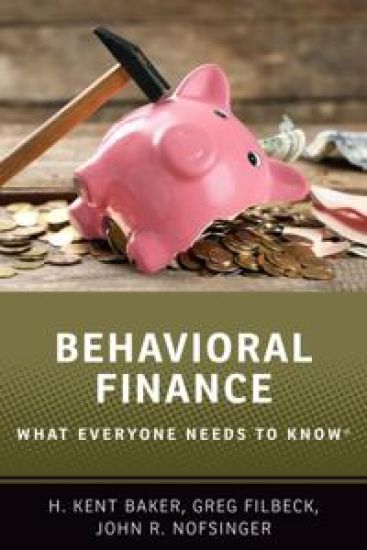
Behavioral Finance

Behavioral Finance

H. Kent Baker; Greg Filbeck; John R. Nofsinger

Oxford University Press Inc
2019
nidottu
People tend to be penny wise and pound foolish and cry over spilt milk, even though we are taught to do neither. Focusing on the present at the expense of the future and basing decisions on lost value are two mistakes common to decision-making that are particularly costly in the world of finance. Behavioral Finance: What Everyone Needs to KnowR provides an overview of common shortcuts and mistakes people make in managing their finances. It covers the common cognitive biases or errors that occur when people are collecting, processing, and interpreting information. These include emotional biases and the influence of social factors, from culture to the behavior of one's peers. These effects vary during one's life, reflecting differences in due to age, experience, and gender. Among the questions to be addressed are: How did the financial crisis of 2007-2008 spur understanding human behavior? What are market anomalies and how do they relate to behavioral biases? What role does overconfidence play in financial decision- making? And how does getting older affect risk tolerance?
Socially Responsible Finance and Investing

Socially Responsible Finance and Investing

H. Kent Baker; John R. Nofsinger

John Wiley Sons Inc
2012
sidottu
A detailed look at the role of social responsibility in finance and investing The concept of socially responsible finance and investing continues to grow, especially in the wake of one of the most devastating financial crises in history. This includes responsibility from the corporate side (corporate social responsibility) as well as the investor side (socially responsible investing) of the capital markets. Filled with in-depth insights and practical advice, Socially Responsible Finance and Investing offers an important basis of knowledge regarding both the theory and practice of this ever-evolving area of finance. As part of the Robert W. Kolb Series in Finance, this book showcases contributed chapters from professionals and academics with extensive expertise on this particular subject. It provides a comprehensive view of socially responsible foundations and their applications to finance and investing as determined by the current state of research. Discusses many important issues associated with socially responsible finance and investing, like moral hazard and the concept of "too big to fail"Contains contributed chapters from numerous thought-leaders in the field of financePresents comprehensive coverage starting with the basics and bringing you through to cutting-edge, current theory and practice Now more than ever, we need to be mindful of the social responsibilities of all investment practices. The recent financial crisis and recession has changed the financial landscape for years to come and Socially Responsible Finance and Investing is a timely guide to help us navigate this difficult terrain.