Kirjojen hintavertailu – 12 859 828 kirjaa ja 27 kauppaa

Kirjailija

John R. Thelin

Kirjat ja teokset yhdessä paikassa: 17 kirjaa, julkaisuja vuosilta 1996–2026, suosituimpiin kuuluu American Higher Education. Vertaile teosten hintoja ja tarkista saatavuus suomalaisista kirjakaupoista.

17 kirjaa

Kirjojen julkaisuvuodet: 1996–2026.

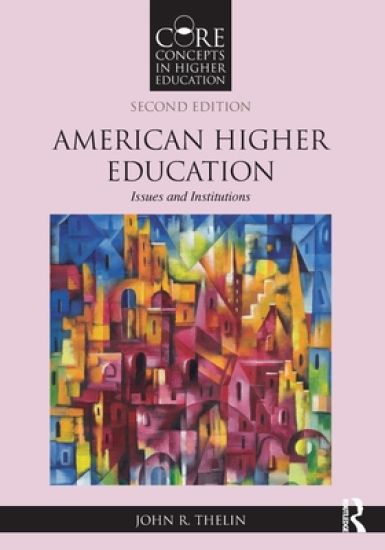
American Higher Education

American Higher Education

John R. Thelin

TAYLOR FRANCIS LTD
2022
nidottu
The latest book in the Core Concepts in Higher Education series brings to life issues of governance, organization, teaching and learning, student life, faculty, finances, college sports, public policy, fundraising and innovations in higher education today. Written by renowned author John R. Thelin, each chapter bridges research, theory and practice and discusses a range of institutions – including the often overlooked for-profits, community colleges and minority serving institutions. In the book’s second edition, Thelin analyzes growing trends in American higher education over the last five years, shedding light on the effects of the COVID-19 pandemic. He covers reconsideration of the rights of student-athletes, provides fresh analysis of the brick-and-mortar campus, and includes a new chapter exploring school admissions, recruitment and retention. Rich end-of-chapter "Additional Readings" and "Questions for Discussion" help engage students in critical thinking. A blend of stories and analysis, this book challenges present and future higher education practitioners to be informed and active participants, capable of improving their institutions.
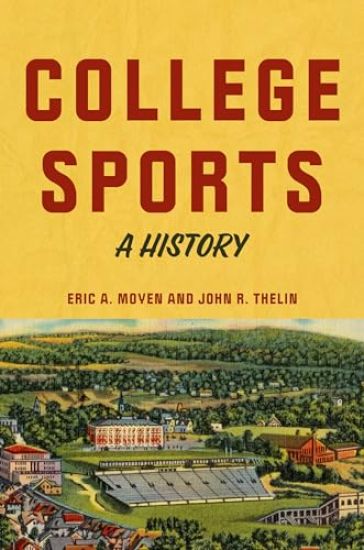
College Sports

College Sports

Eric A. Moyen; John R. Thelin

Johns Hopkins University Press
2025
sidottu
A bold and foundational history of the inception and evolution of intercollegiate athletics in the United States. In College Sports, historians Eric A. Moyen and John R. Thelin tell the intriguing story of the success—and excess—of American college sports from their inception to today. Arguing that the modern American university's structure spurred the growth of big-time sports, Moyen and Thelin also highlight the treatment of marginalized groups in athletics and the role that commercialization and the media have played in shaping college sports. Using a wealth of secondary resources, archival records, newspaper articles, and oral histories, Moyen and Thelin offer a chronological account of the popularity, success, and continued challenges of college sports. Most scholarship has portrayed athletics as an anomaly within higher education, but history reveals that college sports enjoy a symbiotic relationship with universities. Reform and a return to a purely amateur model have rarely been a compelling option for those institutions that are successful in commercialized big-time college sports. At the same time, most student-athletes compete in a very different model. And despite their progressive posturing, colleges have been slow to fully adopt civil rights and social justice issues. When full participation was finally extended to women and minorities, it generally meant a move away from the amateur model into a commercial enterprise. By examining key events at specific universities, athletic conferences, and the NCAA, Moyen and Thelin trace how the media and sports marketing have created an incredibly successful financial model for schools in big-time conferences. Yet this model has also created a precarious fiscal situation for hundreds of other institutions. This provocative and refreshing take on sports in American universities provides the context in which to understand—and improve upon—the current landscape of intercollegiate athletics.
American Higher Education

American Higher Education

John R. Thelin

TAYLOR FRANCIS LTD
2022
sidottu
The latest book in the Core Concepts in Higher Education series brings to life issues of governance, organization, teaching and learning, student life, faculty, finances, college sports, public policy, fundraising and innovations in higher education today. Written by renowned author John R. Thelin, each chapter bridges research, theory and practice and discusses a range of institutions – including the often overlooked for-profits, community colleges and minority serving institutions. In the book’s second edition, Thelin analyzes growing trends in American higher education over the last five years, shedding light on the effects of the COVID-19 pandemic. He covers reconsideration of the rights of student-athletes, provides fresh analysis of the brick-and-mortar campus, and includes a new chapter exploring school admissions, recruitment and retention. Rich end-of-chapter "Additional Readings" and "Questions for Discussion" help engage students in critical thinking. A blend of stories and analysis, this book challenges present and future higher education practitioners to be informed and active participants, capable of improving their institutions.
Essential Documents in the History of American Higher Education

Essential Documents in the History of American Higher Education

John R. Thelin

Johns Hopkins University Press
2021
pokkari
The thoroughly updated second edition of this dynamic and thoughtful collection focuses on the issues that have shaped American higher education in the past decade. Essential Documents in the History of American Higher Education, designed to be used alongside John R. Thelin's A History of American Higher Education or on its own, presents a rich collection of primary sources that chart the social, intellectual, political, and cultural history of American colleges and universities from the seventeenth century to the present. The documents are organized in sections that parallel the chapters in A History both chronologically and thematically, and sections are introduced with brief headnotes establishing the context for each source. This updated edition of Essential Documents focuses on the issues that have shaped American higher education in the past decade, from congressional investigations into endowments and court cases about paying student-athletes to accounts of campus protests over racial discrimination and adjuncts struggling in the "gig economy." From the successful fund-raising campaigns of 2014 to the closing of campuses because of the COVID-19 pandemic of 2020, the book also includes• a new tenth chapter, "Prominence and Problems: American Higher Education since 2010," and an updated introduction;• a number of landmark documents, including the charter for the College of Rhode Island (1764), the Morrill Land Grand Act (1862), the GI Bill (1944), and the Knight Commission Report on College Sports (2010); and • lively firsthand accounts by students and teachers that tell what it was like to be a Harvard student in the 1700s, to participate in the campus riots of the 1960s, to be a female college athlete in the 1970s, or to enroll at UCLA as an economically disadvantaged Latina in the 1990s. Thelin even stretches the usual bounds of documentary sources, incorporating popular pieces by Robert Benchley and James Thurber on their own college days as well as an excerpt from Groucho Marx's screwball film Horse Feathers. What emerges is a complex and nuanced collection that reflects the richness of more than three centuries of American higher education.
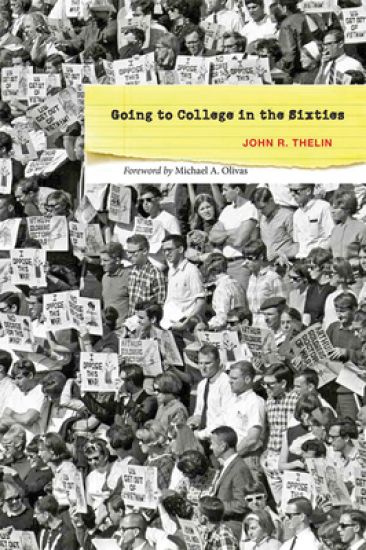
Going to College in the Sixties

Going to College in the Sixties

John R. Thelin; Michael A. Olivas

Johns Hopkins University Press
2021
pokkari
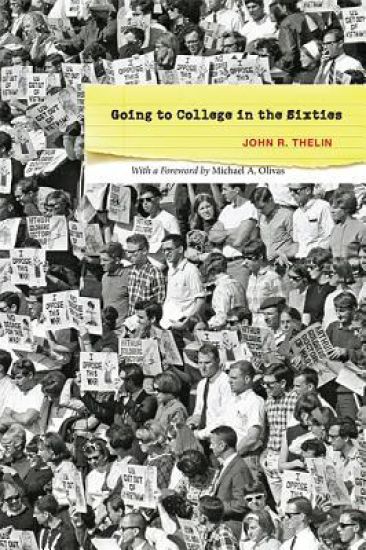
The 1960s was the most transformative decade in the history of American higher education—but not for the reasons you might think. Picture going to college in the sixties: the protests and marches, the teach-ins and sit-ins, the drugs, sex, and rock 'n' roll—hip, electric, psychedelic. Not so fast, says bestselling historian John R. Thelin. Even at radicalized campuses, volatile student demonstrations coexisted with the "business as usual" of a flagship state university: athletics, fraternities and sororities, and student government. In Going to College in the Sixties, Thelin reinterprets the campus world shaped during one of the most dramatic decades in American history. Reconstructing all phases of the college experience, Thelin explores how students competed for admission, paid for college in an era before Pell Grants, dealt with crowded classes and dormitories, voiced concerns about the curriculum, grappled with new tensions in big-time college sports, and overcame discrimination. Thelin augments his anecdotal experience with a survey of landmark state and federal policies and programs shaping higher education, a chronological look at media coverage of college campuses over the course of the decade, and an account of institutional changes in terms of curricula and administration. Combining student memoirs, campus publications, oral histories, and newsreels, along with archival sources and institutional records, the book goes beyond facile stereotypes about going to school in the sixties. Grounded in social and political history, with a scope that will appeal both to a new generation of scholars and to alumni of the era, this engaging book allows readers to consider "going to college" in both the past and the present.
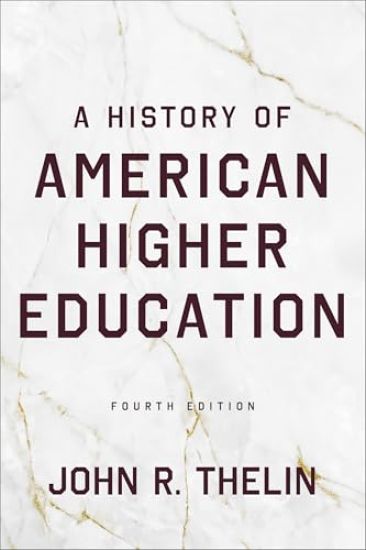
A History of American Higher Education

A History of American Higher Education

John R. Thelin

Johns Hopkins University Press
2019
sidottu
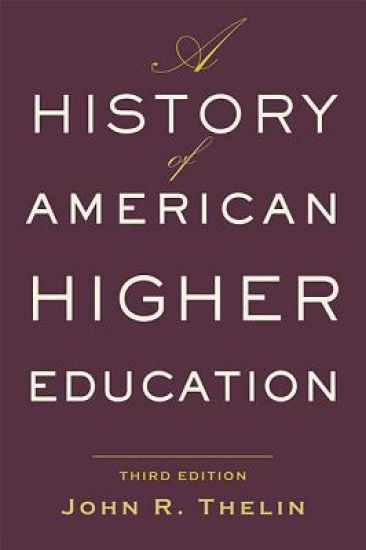
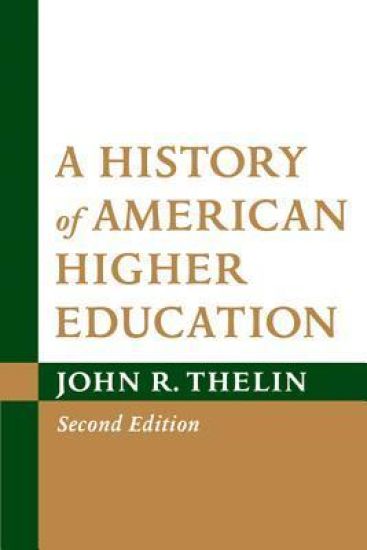
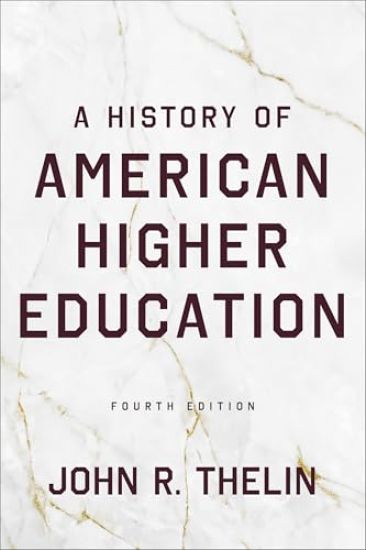
The definitive history of American higher education—now up to date. Colleges and universities are among the most cherished—and controversial—institutions in the United States. In this updated edition of A History of American Higher Education, John R. Thelin offers welcome perspective on the triumphs and crises of this highly influential sector in American life. Exploring American higher education from its founding in the seventeenth century to its struggle to innovate and adapt in the first decades of the twenty-first century, Thelin demonstrates that the experience of going to college has been central to American life for generations of students and their families. Drawing from archival research, along with the pioneering scholarship of leading historians, Thelin raises profound questions about what colleges are—and what they should be. Covering issues of social class, race, gender, and ethnicity in each era and chapter, this new edition showcases a fresh concluding chapter that focuses on both the opportunities and problems American higher education has faced since 2010. The essay on sources has been revised to incorporate books and articles published over the past decade. The book also updates the discussion of perennial hot-button issues such as big-time sports programs, online learning, the debt crisis, the adjunct crisis, and the return of the culture wars and addresses current areas of contention, including the changing role of governing boards and the financial challenges posed by the economic downturn. Anyone studying the history of this institution in America must read Thelin's classic text, which has distinguished itself as the most wide-ranging and engaging account of the origins and evolution of America's institutions of higher learning.
A History of American Higher Education

A History of American Higher Education

John R. Thelin

Johns Hopkins University Press
2019
pokkari
The definitive history of American higher education—now up to date. Colleges and universities are among the most cherished—and controversial—institutions in the United States. In this updated edition of A History of American Higher Education, John R. Thelin offers welcome perspective on the triumphs and crises of this highly influential sector in American life. Exploring American higher education from its founding in the seventeenth century to its struggle to innovate and adapt in the first decades of the twenty-first century, Thelin demonstrates that the experience of going to college has been central to American life for generations of students and their families. Drawing from archival research, along with the pioneering scholarship of leading historians, Thelin raises profound questions about what colleges are—and what they should be. Covering issues of social class, race, gender, and ethnicity in each era and chapter, this new edition showcases a fresh concluding chapter that focuses on both the opportunities and problems American higher education has faced since 2010. The essay on sources has been revised to incorporate books and articles published over the past decade. The book also updates the discussion of perennial hot-button issues such as big-time sports programs, online learning, the debt crisis, the adjunct crisis, and the return of the culture wars and addresses current areas of contention, including the changing role of governing boards and the financial challenges posed by the economic downturn. Anyone studying the history of this institution in America must read Thelin's classic text, which has distinguished itself as the most wide-ranging and engaging account of the origins and evolution of America's institutions of higher learning.
Going to College in the Sixties

Going to College in the Sixties

John R. Thelin; Michael A. Olivas

Johns Hopkins University Press
2019
sidottu
The 1960s was the most transformative decade in the history of American higher education—but not for the reasons you might think. Picture going to college in the sixties: the protests and marches, the teach-ins and sit-ins, the drugs, sex, and rock 'n' roll—hip, electric, psychedelic. Not so fast, says bestselling historian John R. Thelin. Even at radicalized campuses, volatile student demonstrations coexisted with the "business as usual" of a flagship state university: athletics, fraternities and sororities, and student government. In Going to College in the Sixties, Thelin reinterprets the campus world shaped during one of the most dramatic decades in American history. Reconstructing all phases of the college experience, Thelin explores how students competed for admission, paid for college in an era before Pell Grants, dealt with crowded classes and dormitories, voiced concerns about the curriculum, grappled with new tensions in big-time college sports, and overcame discrimination. Thelin augments his anecdotal experience with a survey of landmark state and federal policies and programs shaping higher education, a chronological look at media coverage of college campuses over the course of the decade, and an account of institutional changes in terms of curricula and administration. Combining student memoirs, campus publications, oral histories, and newsreels, along with archival sources and institutional records, the book goes beyond facile stereotypes about going to school in the sixties. Grounded in social and political history, with a scope that will appeal both to a new generation of scholars and to alumni of the era, this engaging book allows readers to consider "going to college" in both the past and the present.
Essential Documents in the History of American Higher Education

Essential Documents in the History of American Higher Education

John R. Thelin

Johns Hopkins University Press
2014
sidottu
John R. Thelin's A History of American Higher Education has become a standard in higher education studies. Designed to be used alongside this groundbreaking book or on its own, Essential Documents in the History of American Higher Education presents primary sources that chart the social, intellectual, political, and cultural history of American colleges and universities from the seventeenth century to the present. Documents are organized in sections that parallel the chapters in the first book both chronologically and thematically. Thelin introduces sections with brief headnotes establishing the context for each source. In addition to such landmark documents as the charter for the College of Rhode Island (1764), the Morrill Land Grand Act (1862), the GI Bill (1944), and the Knight Commission Report on College Sports (2010), Thelin includes lively firsthand accounts by students and teachers that tell what it was like to be a Harvard student in the 1700s, to participate in the campus riots of the 1960s, to be a female college athlete in the 1970s, or to enroll at UCLA as a economically disadvantaged Latina in the 1990s. Thelin also includes pieces by popular writers such as Robert Benchley and James Thurber on their own college days, as well as an excerpt from Groucho Marx's screwball film Horse Feathers that help illustrate how ingrained college life has become in American pop culture. Reflecting the richness of three centuries of American higher education, this complex and nuanced collection will be an essential resource for students of the history of education.
The Rising Costs of Higher Education
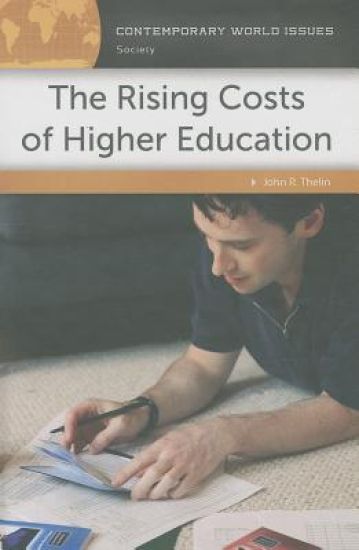
Providing a clear, logical guide to an illogical topic, this book provides an easy-to-understand guide for anyone who wants to successfully navigate the labyrinth of going to college—and paying for the experience.100 years ago, college tuition at prestigious Ivy League colleges such as Harvard and Brown was about $130 per year. Even when adjusted for inflation, today's cost of higher education has increased dramatically—to the point where a college education is shifting further out of reach for many Americans. This book explains the essential concepts in the debate regarding the staggering costs of higher education, supplying ten original essays by higher education policy experts, a lively historical narrative that provides context to current issues, and systematic guides to finding additional sources of information on the subject. Written from a historian's point of view, The Rising Costs of Higher Education: A Reference Handbook explains the economics of higher education in a manner that encourages readers to participate in the discussion on how to control ever-increasing tuition costs. Both college-bound students and parents will come to appreciate how complicated the problem of paying for college is, and grasp the crucial differences between "cost" and "price" in the specific economics of colleges and universities.
A History of American Higher Education

A History of American Higher Education

John R. Thelin

Johns Hopkins University Press
2011
pokkari
Colleges and universities are among the most cherished-and controversial-institutions in the United States. In this updated edition of A History of American Higher Education, John R. Thelin offers welcome perspective on the triumphs and crises of this highly influential sector in American life. Thelin's work has distinguished itself as the most wide-ranging and engaging account of the origins and evolution of America's institutions of higher learning. This edition brings the discussion of perennial hot-button issues such as big-time sports programs up to date and addresses such current areas of contention as the changing role of governing boards and the financial challenges posed by the economic downturn.
A History of American Higher Education

A History of American Higher Education

John R. Thelin

Johns Hopkins University Press
2004
pokkari
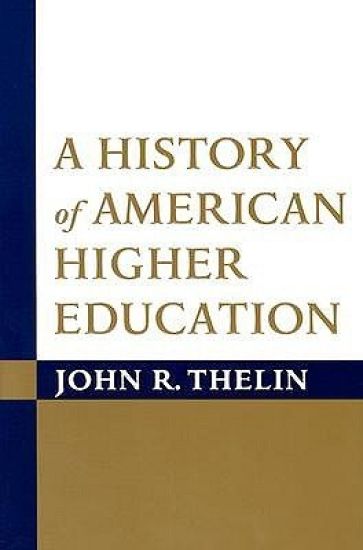
Colleges and universities are among the most cherished institutions in American society-and also among the most controversial. Yet affirmative action and skyrocketing tuition are only the most recent dissonant issues to emerge. Recounting the many crises and triumphs in the long history of American higher education, historian John Thelin provides welcome perspective on this influential aspect of American life. In A History of American Higher Education, Thelin offers a wide-ranging and engaging account of the origins and evolution of America's public and private colleges and universities, emphasizing the notion of saga-the proposition that institutions are heirs to numerous historical strands and numerous attempts to address such volatile topics as institutional cost and effectiveness, admissions and access, and the character of the curriculum. Thelin draws on both official institutional histories and the informal memories that constitute legends and lore to offer a fresh interpretation of an institutional past that reaches back to the colonial era and encompasses both well-known colleges and universities and such understudied institutions as community, women's, and historically black colleges, proprietary schools, and freestanding professional colleges. Thelin's lively history has particular relevance for a society still struggling to determine what constitutes a legitimate field of study, reminding readers that Harvard once used its medical school as a safe place to admit the sons of wealthy alumni who could not pass the undergraduate college admissions examination and that the University of Pennsylvania once considered the study of history, government, and economics unworthy of addition to the liberal arts curriculum. Thelin also addresses the role of local, state, and federal governments in colleges and universities, as well as the influence of private foundations and other organizations. And through imaginative interpretation of films, novels, and popular magazines, he illuminates the convoluted relationship between higher education and American culture. For anyone attempting to understand America's colleges and universities, A History of American Higher Education offers a much-needed challenge to conventional wisdom about how these institutions developed and functioned in the past.
A History of American Higher Education

A History of American Higher Education

John R. Thelin

Johns Hopkins University Press
2004
sidottu
Colleges and universities are among the most cherished institutions in American society-and also among the most controversial. Yet affirmative action and skyrocketing tuition are only the most recent dissonant issues to emerge. Recounting the many crises and triumphs in the long history of American higher education, historian John Thelin provides welcome perspective on this influential aspect of American life. In A History of American Higher Education, Thelin offers a wide-ranging and engaging account of the origins and evolution of America's public and private colleges and universities, emphasizing the notion of saga-the proposition that institutions are heirs to numerous historical strands and numerous attempts to address such volatile topics as institutional cost and effectiveness, admissions and access, and the character of the curriculum. Thelin draws on both official institutional histories and the informal memories that constitute legends and lore to offer a fresh interpretation of an institutional past that reaches back to the colonial era and encompasses both well-known colleges and universities and such understudied institutions as community, women's, and historically black colleges, proprietary schools, and freestanding professional colleges. Thelin's lively history has particular relevance for a society still struggling to determine what constitutes a legitimate field of study, reminding readers that Harvard once used its medical school as a safe place to admit the sons of wealthy alumni who could not pass the undergraduate college admissions examination and that the University of Pennsylvania once considered the study of history, government, and economics unworthy of addition to the liberal arts curriculum. Thelin also addresses the role of local, state, and federal governments in colleges and universities, as well as the influence of private foundations and other organizations. And through imaginative interpretation of films, novels, and popular magazines, he illuminates the convoluted relationship between higher education and American culture. For anyone attempting to understand America's colleges and universities, A History of American Higher Education offers a much-needed challenge to conventional wisdom about how these institutions developed and functioned in the past.