

Kirjailija
John Rapley
Kirjat ja teokset yhdessä paikassa: 11 kirjaa, julkaisuja vuosilta 1997–2026, suosituimpiin kuuluu Stürzende Imperien. Vertaile teosten hintoja ja tarkista saatavuus suomalaisista kirjakaupoista.
11 kirjaa
Kirjojen julkaisuvuodet: 1997–2026.

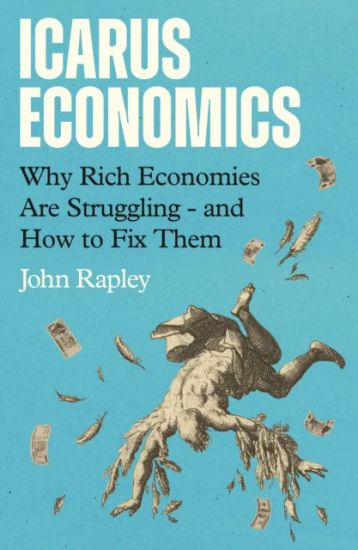
Every leader comes to power promising growth: think back to the campaigns of Boris, Truss, Sunak, Starmer, Trump. Yet real-term income hasn't improved in the UK since 2008. Across the West, growth has stagnated for well over a decade, leading to cost of living crises, political instability and rising social tensions. Is real economic growth still possible? And with the climate emergency accelerating beyond repair, should we still be pushing for it? In Icarus Economics, acclaimed economist John Rapley argues that the problem of growth is inherently tied up with the climate crisis. We often assume that poor countries will bear the brunt of climate change, pandemics, and other exogenous shocks, but this book argues the opposite: western societies have more wealth and capital to lose and are less inherently resilient. In this book, he shows us how rich countries can grow their own economies by helping poor countries to decarbonise - and in the process, mitigate the effects of climate change.
Why Empires Fall: Rome, America, and the Future of the West
Peter Heather; John Rapley
YALE UNIVERSITY PRESS
2024
nidottu
Halvin toimitettuna 20,70 €
A new perspective on parallels between ancient Rome and the modern world, and what comes next " A] provocative short book . . . with a novel twist."--The Economist Over the last three centuries, the West rose to dominate the planet. Then, around the start of the new millennium, history took a dramatic turn. Faced with economic stagnation and internal political division, the West has found itself in rapid decline compared to the global periphery it had previously colonized. This is not the first time we have seen such a rise and fall: the Roman Empire followed a similar arc, from dizzying power to disintegration. Historian Peter Heather and political economist John Rapley explore the uncanny parallels, and productive differences, between ancient Rome and the modern West, moving beyond the tropes of invading barbarians and civilizational decay to unearth new lessons. From 399 to 1999, they argue, through the unfolding of parallel, underlying imperial life cycles, both empires sowed the seeds of their own destruction. Has the era of Western global domination indeed reached its end? Heather and Rapley contemplate what comes next.

Why Empires Fall
John Rapley; Peter Heather
PENGUIN BOOKS LTD
2024
pokkari
Halvin toimitettuna 17,00 €
What can the fall of Rome teach us about the decline of the West today? A historian and a political economist, both experts in their field, investigateOver the last three centuries, the West rose to dominate the planet. Then, suddenly, around the turn of the millennium, history reversed. Faced with economic stagnation and internal political division, the West has found itself in rapid decline. This is not the first time the global order has witnessed such a dramatic rise and fall. The Roman Empire followed a similar arc from dizzying power to disintegration - a fact that is more than a strange historical coincidence. In Why Empires Fall, historian Peter Heather and political economist John Rapley use this Roman past to think anew about the contemporary West, its state of crisis, and what paths we could take out of it. In this exceptional, transformative intervention, Heather and Rapley explore the uncanny parallels - and productive differences - between the two cases, moving beyond the familiar tropes of invading barbarians and civilizational decay to learn new lessons from ancient history. From 399 to 1999, the life cycles of empires, they argue, sow the seeds of their inevitable destruction. The era of western global domination has reached its end - so what comes next?
Why Empires Fall: Rome, America, and the Future of the West
Peter Heather; John Rapley
YALE UNIVERSITY PRESS
2023
sidottu
A new perspective on parallels between ancient Rome and the modern world, and what comes next " A] provocative short book . . . with a novel twist."--The Economist Over the last three centuries, the West rose to dominate the planet. Then, around the start of the new millennium, history took a dramatic turn. Faced with economic stagnation and internal political division, the West has found itself in rapid decline compared to the global periphery it had previously colonized. This is not the first time we have seen such a rise and fall: the Roman Empire followed a similar arc, from dizzying power to disintegration. Historian Peter Heather and political economist John Rapley explore the uncanny parallels, and productive differences, between ancient Rome and the modern West, moving beyond the tropes of invading barbarians and civilizational decay to unearth new lessons. From 399 to 1999, they argue, through the unfolding of parallel, underlying imperial life cycles, both empires sowed the seeds of their own destruction. Has the era of Western global domination indeed reached its end? Heather and Rapley contemplate what comes next.
First published in 1997. An introduction to the theory and practices of development in the third world, tracing the evolution of development theory over 40 years, and examining why so many of the benefits of development are still not shared by millions.
The Tay Railway Bridge was the longest bridge in the world - a true wonder of the time - but within a year it had collapsed. When the bridge came crashing down on that fateful night in December 1878 it brought down its designer Thomas Bouch as well. With the loss of the Tay Bridge, he became a recluse and died in October 1880.
First published in 1997. An introduction to the theory and practices of development in the third world, tracing the evolution of development theory over 40 years, and examining why so many of the benefits of development are still not shared by millions.