Kirjojen hintavertailu – 12 859 829 kirjaa ja 27 kauppaa

Kirjailija

John Ravenhill

Kirjat ja teokset yhdessä paikassa: 7 kirjaa, julkaisuja vuosilta 1985–2024, suosituimpiin kuuluu Pacific Cooperation. Vertaile teosten hintoja ja tarkista saatavuus suomalaisista kirjakaupoista.

7 kirjaa

Kirjojen julkaisuvuodet: 1985–2024.

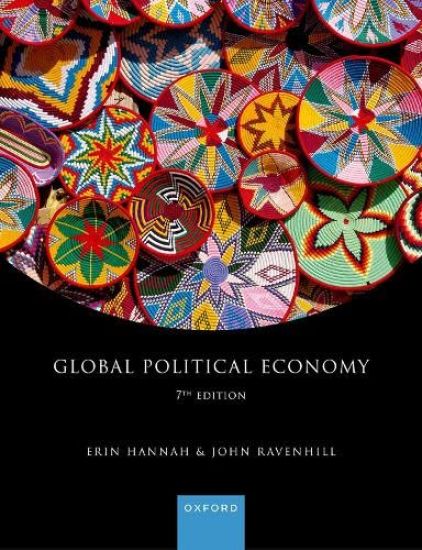
Global Political Economy

Global Political Economy

Erin Hannah; John Ravenhill

Oxford University Press
2024
nidottu

Halvin toimitettuna 59,40 €

What constitutes Global Political Economy? In whose interest is GPE constructed, and by whom? How can injustices in GPE best be redressed? These are some of the key questions addressed in the 7th edition of this highly regarded highly regarded textbook. As an ever-evolving field subject to constant changes and developments, the new edition provides a comprehensive introduction to the subject written by leading experts in the field. Edited by Dr Erin Hannah,the 7th edition surveys major contemporary issues and debates in GPE while being attuned to the silences, marginalizations, and exclusions that predominate the field. By integrating a wide range of theoretical approaches, rich empirical material, non-western viewpoints and diversity of contributors, the 7th edition provides enhanced coverage of the central axes of inequality in GPE and centers topics such as colonialism, race, gender, North-South divides and everyday life.
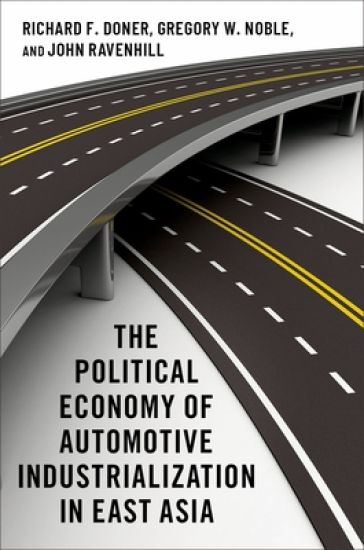
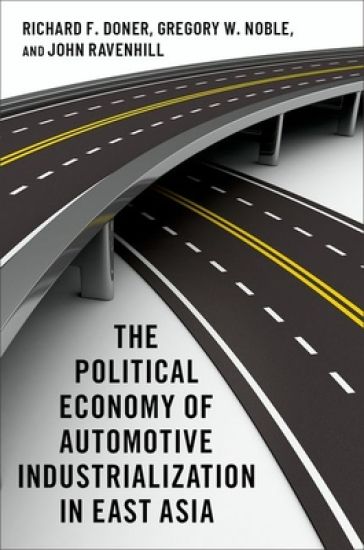
The Political Economy of Automotive Industrialization in East Asia

The Political Economy of Automotive Industrialization in East Asia

Richard F. Doner; Gregory W. Noble; John Ravenhill

Oxford University Press Inc
2022
sidottu
East Asia is a powerhouse of automobile production. Yet, across the region, national automobile industries have had strikingly different patterns of development. Despite starting from equally low levels of performance and initially similar strategies, countries have experienced vastly different results. From Thailand's success as an assembly hub for foreign automakers and China's unexpected achievements in building its own car industry, to South Korea's impressive development of an integrated industry, to the Philippines' persistent weakness, these divergent paths offer a fascinating window into the determinants of economic growth. The Political Economy of Automotive Industrialization in East Asia provides a political explanation for why development strategies and performance have been so uneven within one of the world's most important regions. Utilizing interviews and original-language research from multiple nations, this book explains that factors such as market size and neoclassical economic policies alone cannot explain these patterns of development. Richard F. Doner, Gregory W. Noble, and John Ravenhill instead highlight the significance of two sets of factors: countries' very different capabilities for implementing policies and the political forces that help to explain the emergence of effective institutions. Through cross-national analyses of China, Taiwan, South Korea, Indonesia, Malaysia, the Philippines, and Thailand, the book sets up a clear structure for understanding industrial development and how it enables or constrains the capabilities of domestic firms. Brief comparisons with Brazil, Mexico, and other developing countries confirm the utility of the analytic framework and demonstrate how it is superior both to accounts in mainstream economics and much of political science, which fail to give sufficient emphasis to the role of public and public-private institutions, or provide an explanation of the political bases of those institutions. In a world where auto assemblers and suppliers are facing new challenges in an ever-evolving industry--such as the transition to electric and autonomous vehicles--this book offers a crucial perspective on the centrality of institutional capacities and political economy. By tracing the divergent trajectories of seven nations, The Political Economy of Automotive Industrialization in East Asia offers lessons beyond the automobile industry that illustrate the broader importance of institutions to economic growth.
The Political Economy of Automotive Industrialization in East Asia

The Political Economy of Automotive Industrialization in East Asia

Richard F. Doner; Gregory W. Noble; John Ravenhill

Oxford University Press Inc
2021
nidottu
East Asia is a powerhouse of automobile production. Yet, across the region, national automobile industries have had strikingly different patterns of development. Despite starting from equally low levels of performance and initially similar strategies, countries have experienced vastly different results. From Thailand's success as an assembly hub for foreign automakers and China's unexpected achievements in building its own car industry, to South Korea's impressive development of an integrated industry, to the Philippines' persistent weakness, these divergent paths offer a fascinating window into the determinants of economic growth. The Political Economy of Automotive Industrialization in East Asia provides a political explanation for why development strategies and performance have been so uneven within one of the world's most important regions. Utilizing interviews and original-language research from multiple nations, this book explains that factors such as market size and neoclassical economic policies alone cannot explain these patterns of development. Richard F. Doner, Gregory W. Noble, and John Ravenhill instead highlight the significance of two sets of factors: countries' very different capabilities for implementing policies and the political forces that help to explain the emergence of effective institutions. Through cross-national analyses of China, Taiwan, South Korea, Indonesia, Malaysia, the Philippines, and Thailand, the book sets up a clear structure for understanding industrial development and how it enables or constrains the capabilities of domestic firms. Brief comparisons with Brazil, Mexico, and other developing countries confirm the utility of the analytic framework and demonstrate how it is superior both to accounts in mainstream economics and much of political science, which fail to give sufficient emphasis to the role of public and public-private institutions, or provide an explanation of the political bases of those institutions. In a world where auto assemblers and suppliers are facing new challenges in an ever-evolving industry--such as the transition to electric and autonomous vehicles--this book offers a crucial perspective on the centrality of institutional capacities and political economy. By tracing the divergent trajectories of seven nations, The Political Economy of Automotive Industrialization in East Asia offers lessons beyond the automobile industry that illustrate the broader importance of institutions to economic growth.
Pacific Cooperation

Pacific Cooperation

Andrew Mack; John Ravenhill; Vinod Aggarwal; Paul M Evans; Pauline Kerr

Routledge
2021
nidottu
Long divided by cultural, economic, and political differences, the Asia-Pacific region has little history of multilateral cooperation. Alliances that once linked individual countries with one or the other superpower fostered deep mistrust among neighbouring states. The end of the Cold War, however, has created new opportunities for multilateral coo
Pacific Cooperation

Pacific Cooperation

Andrew Mack; John Ravenhill; Vinod Aggarwal; Paul M Evans; Pauline Kerr

Routledge
2019
sidottu
Long divided by cultural, economic, and political differences, the Asia-Pacific region has little history of multilateral cooperation. Alliances that once linked individual countries with one or the other superpower fostered deep mistrust among neighbouring states. The end of the Cold War, however, has created new opportunities for multilateral coo
Middle Power Dreaming: Middle Power Dreaming

Middle Power Dreaming: Middle Power Dreaming

James Cotton; John Ravenhill

OUP Australia and New Zealand
2011
nidottu
This volume is the eleventh in a series initiated and sponsored by the Australian Institute of International Affairs, which has reviewed and analysed Australian foreign policy from 1950 onward. Australian foreign policy is an extremely important area of ongoing change which has direct impact on Australia's national interests in all dimensions. This series (released in a new edition every 5 years) captures the key characteristics, policy decisions and activities of the Australian government and its diplomatic staff during the preceeding 5 year period. The book provides a review of the most significant features of Australian foreign policy within its chosen time frame, the past five years. As with previous volumes in this series, in addition to commissioning chapters on Australia's major bilateral relationships and central questions in policy-making and execution, the editors have also included coverage of emerging or developing issues: in this volume, these chapters cover relations with Africa and with India, and innovations in the management of policy-making.