Kirjailija
John Reader
Kirjat ja teokset yhdessä paikassa: 17 kirjaa, julkaisuja vuosilta 1998–2018, suosituimpiin kuuluu Theology and New Materialism. Vertaile teosten hintoja ja tarkista saatavuus suomalaisista kirjakaupoista.
17 kirjaa
Kirjojen julkaisuvuodet: 1998–2018.
This book argues that identified weaknesses in recent theological engagement with New Materialism can be successfully addressed by incorporating insights from Relational Christian Realism. Central themes are those of the relational and the apophatic as they represent different but essential strands of a materialist theology. The relational refers to the work of Deleuze and its influence upon key New Materialist thinkers such as De Landa, Bryant, and Braidotti but supplemented from Relational Christian Realism by Latour and Badiou and with reference to the concept of the apophatic as found in Keller and Kearney. Examining the concepts of transcendence, human agency, and a New Enlightenment, the book moves into more practical areas of aesthetics and technology concluding with a response to the contemporary apocalyptic of climate change. Being “beyond in the midst” requires developing spaces of faithful dissent and holding the tension between the relational and the apophatic in theology.
A Philosophy of Christian Materialism
Christopher Baker; Thomas A. James; John Reader
Routledge
2018
nidottu
A Philosophy of Christian Materialism offers a new religious engagement with the public sphere via means of interdisciplinary analysis and empirical examples, developing what the authors call a Relational Christian Realism building upon interaction with contemporary Philosophy of Religion. The book argues that the current discourse on public religion is inadequate in addressing the issues now to be faced, including: material religious practice in the sphere of education; the growth of alternative political movements and the developing awareness of environmental concerns and urban social justice. Key concepts that support this strategic analysis are: entangled fidelities (the form of a materialist religious practice); the possibility of a relational Christian realism (including new developments in how we interpret key categories of doctrine including God and creation, salvation and humanity), and the post-secular public sphere (including the emerging phenomenon of postsecular rapprochement - namely the coming together of both religious and secular actors in methodologies and politics of pragmatism as well as ethical discourse for the sake of the public commons). Co-authored by theologians in both the USA and the UK, this book represents an exciting contribution to philosophy and practice of religion on both sides of the Atlantic and aspires to be sufficiently interdisciplinary to also appeal to readerships engaged in the study of modern political and social trends.
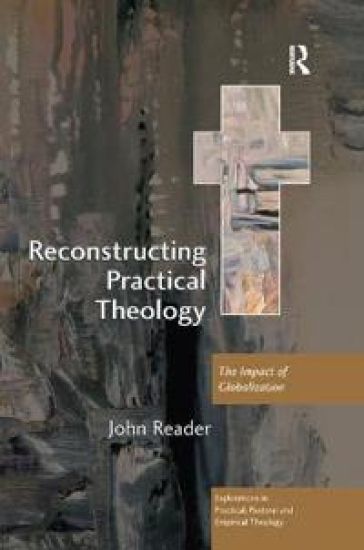
This book argues that the discipline of practical theology needs to be re-shaped in the light of the impact of various influences created through the encounter with globalization. Essential to this is an engagement with the insights of other disciplines, e.g. sociology, politics, economics and philosophy. The content and authority of the Christian tradition is being challenged by the blurred encounters with more fluid lifestyles, alternative spiritualities and indeed other faiths as mediated through information technology and the breakdown of attachments to all forms of institutional life. Traditional ways of 'belonging' and relating to places and structures are being eroded leaving the established patterns of ministry, worship, church organisation the province of an ageing population, while those who are now more inclined to search for 'communities of interest' avoid being drawn into the practices and structures of formal religion. What is the future for practical theology in this rapidly changing context? By examining the familiar concerns of the subject John Reader shows how it is in danger of operating with 'zombie categories' - still alive but only just - and presents the possibilities for a reflexive spirituality grounded in the Christian tradition as a way into the future.
This book argues that identified weaknesses in recent theological engagement with New Materialism can be successfully addressed by incorporating insights from Relational Christian Realism. Central themes are those of the relational and the apophatic as they represent different but essential strands of a materialist theology. The relational refers to the work of Deleuze and its influence upon key New Materialist thinkers such as De Landa, Bryant, and Braidotti but supplemented from Relational Christian Realism by Latour and Badiou and with reference to the concept of the apophatic as found in Keller and Kearney. Examining the concepts of transcendence, human agency, and a New Enlightenment, the book moves into more practical areas of aesthetics and technology concluding with a response to the contemporary apocalyptic of climate change. Being “beyond in the midst” requires developing spaces of faithful dissent and holding the tension between the relational and the apophatic in theology.
This book presents theological reflections on the changing nature of church mission and Christian identity within a theology of 'blurred encounter' - a physical, social, political and spiritual space where once solid hierarchies and patterns are giving way to more fluid and in many ways unsettling exchanges. The issues raised and dynamics explored apply to all socially-produced space, thus tending to 'blur' that most fundamental of theological categories - namely urban vs. rural theology. Engaging in a sharper way with some of the helpful but inevitably broad-brush conclusions raised by recent church-based reports (Mission-shaped Church, Faithful Cities), the authors examine some of the practical and theological implications of this research for the issue of effective management and therefore church leadership generally. Speaking to practitioners in the field of practical theology as well as those engaged in theological and ministerial training, key voices encompass dimensions of power and conflict, and identify some of the present and future opportunities and challenges to church/faith-based engagement and leadership arising from blurred encounters. Contributors - practitioners and theorists - cover a wide spectrum of interdisciplinary professional contexts and academic/denominational interests. Contributors include: John Atherton, John Reader, Helen Cameron, Martyn Percy, Malcolm Brown, Karen Lord, Clare McBeath and Margaret Goodall.
A Philosophy of Christian Materialism
Christopher Baker; Thomas A. James; John Reader
Routledge
2015
sidottu
A Philosophy of Christian Materialism offers a new religious engagement with the public sphere via means of interdisciplinary analysis and empirical examples, developing what the authors call a Relational Christian Realism building upon interaction with contemporary Philosophy of Religion. The book argues that the current discourse on public religion is inadequate in addressing the issues now to be faced, including: material religious practice in the sphere of education; the growth of alternative political movements and the developing awareness of environmental concerns and urban social justice. Key concepts that support this strategic analysis are: entangled fidelities (the form of a materialist religious practice); the possibility of a relational Christian realism (including new developments in how we interpret key categories of doctrine including God and creation, salvation and humanity), and the post-secular public sphere (including the emerging phenomenon of postsecular rapprochement - namely the coming together of both religious and secular actors in methodologies and politics of pragmatism as well as ethical discourse for the sake of the public commons). Co-authored by theologians in both the USA and the UK, this book represents an exciting contribution to philosophy and practice of religion on both sides of the Atlantic and aspires to be sufficiently interdisciplinary to also appeal to readerships engaged in the study of modern political and social trends.
Heterotopia – Alternative pathways to social justice
Caroline Baillie; John Reader
John Hunt Publishing
2013
nidottu
Many of us are concerned with the structures, systems and values that we meet on a day-to-day basis. We seem to be rushing headlong to a destination not of our choosing. How did we get here and what can we do about it? This book is the result of an exploration into the ideas of transformation. What does it mean to transform the way we live, to something that we value? In this book we take on the challenge of exploring a potential transformation in one professional field, that of engineering, as an example of how we might break free of common dysfunctional discourses and enter what we call a counter hegemonic 'Heterotopia' - a space or place where we might dream alternative futures. The text is a unique collaboration spanning the disciplines of engineering education, philosophy and social theory.
Theological Reflection for Human Flourishing
Helen Cameron; John Reader; Victoria Slater; Christopher Rowland
SCM Press
2012
nidottu
This book is aimed at those training for ministry, those in ministry and lay people wishing to reflect upon their work. It seeks to enable those in pastoral ministry to reflect upon their institutional encounters and to enable lay people who work in institutions as professionals or managers to reflect upon their pastoral encounters. By generating shared encounters of theological reflection between these two groups the authors identify points of solidarity and tension between them. The book seeks to address the commonly voiced concern that clergy and laity talk past each other and don't engage on the issues that they find perplexing. Readers of the book will gain an increased confidence in reflecting upon their own practice and engaging with others in theological reflection.
This book presents theological reflections on the changing nature of church mission and Christian identity within a theology of 'blurred encounter' - a physical, social, political and spiritual space where once solid hierarchies and patterns are giving way to more fluid and in many ways unsettling exchanges. The issues raised and dynamics explored apply to all socially-produced space, thus tending to 'blur' that most fundamental of theological categories - namely urban vs. rural theology. Engaging in a sharper way with some of the helpful but inevitably broad-brush conclusions raised by recent church-based reports (Mission-shaped Church, Faithful Cities), the authors examine some of the practical and theological implications of this research for the issue of effective management and therefore church leadership generally. Speaking to practitioners in the field of practical theology as well as those engaged in theological and ministerial training, key voices encompass dimensions of power and conflict, and identify some of the present and future opportunities and challenges to church/faith-based engagement and leadership arising from blurred encounters. Contributors - practitioners and theorists - cover a wide spectrum of interdisciplinary professional contexts and academic/denominational interests. Contributors include: John Atherton, John Reader, Helen Cameron, Martyn Percy, Malcolm Brown, Karen Lord, Clare McBeath and Margaret Goodall.
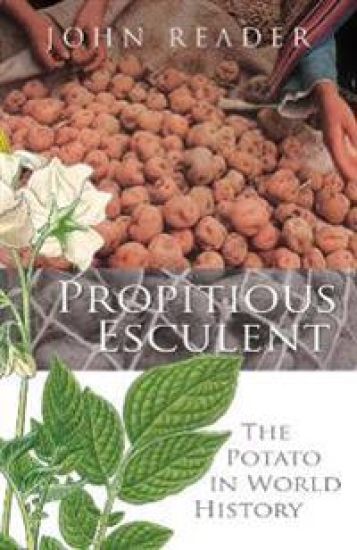
The story of one of the world's most important crops From the gold potatoes at the Sun Temple in Cuzco, Peru, the muddy ones in Ireland and those grown in China for McDonald's chips, the story of the spud is both satisfying and fascinating.
This book argues that the discipline of practical theology needs to be re-shaped in the light of the impact of various influences created through the encounter with globalization. Essential to this is an engagement with the insights of other disciplines, e.g. sociology, politics, economics and philosophy. The content and authority of the Christian tradition is being challenged by the blurred encounters with more fluid lifestyles, alternative spiritualities and indeed other faiths as mediated through information technology and the breakdown of attachments to all forms of institutional life. Traditional ways of 'belonging' and relating to places and structures are being eroded leaving the established patterns of ministry, worship, church organisation the province of an ageing population, while those who are now more inclined to search for 'communities of interest' avoid being drawn into the practices and structures of formal religion. What is the future for practical theology in this rapidly changing context? By examining the familiar concerns of the subject John Reader shows how it is in danger of operating with 'zombie categories' - still alive but only just - and presents the possibilities for a reflexive spirituality grounded in the Christian tradition as a way into the future.
Mr Potato Head. But the story of the solanum tuberosum is darker - one of struggle, disease, dirt and survival. Before domestication thousands of years ago, high up on the Andean antiplano, the high alkaloid content of potatoes made them poisonous to humans.
Globalization, Engineering, and Creativity
John Reader
Springer International Publishing AG
2007
nidottu
The text addresses the impact of globalization within engineering, particularly on working practices and prospects for creativity. It suggests that accepted norms of economic activity create enclosures and thresholds within the profession, which—as engineers increase their awareness (reflexivity)—will shape the future of engineering, and the values which underpin it. It is aimed at practicing engineers and those in training and is an introduction to the social and political context currently setting new challenges for the profession.
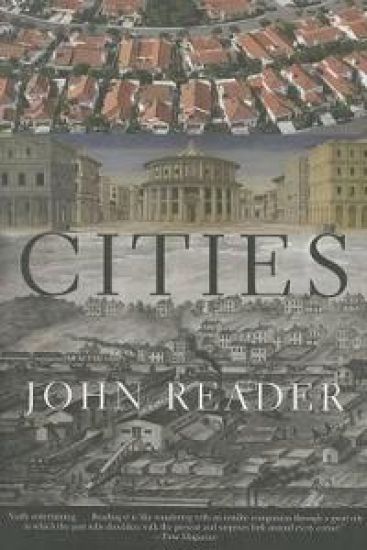
In Cities, the acclaimed historian John Reader takes us on a journey of the city--from its earliest example in the Ancient Near East to today's teeming centers of compressed existence, such as Mumbai and Tokyo. Cities are home to half the planet's population and consume nearly three-quarters of its natural resources. For Reader, they are our most natural artifacts, the civic spirit of our collective ingenuity. He gives us the ecological and functional context of how cities evolved throughout human history--the connection between pottery making and childbirth in ancient Anatolia, plumbing and politics in ancient Rome, and revolution and street planning in nineteenth-century Paris. This illuminating study helps us to understand how urban centers thrive, decline, and rise again--and prepares us for the role cities will play in the future.
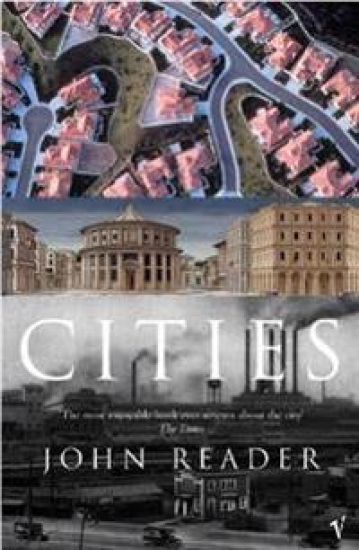
Cities is a fascinating exploration of the nature of the city and city life, of its structures, development and inhabitants. From the ruins of the earliest cities to the present, Reader explores how cities coalesce, develop and thrive, how they can decline and die, how they remake themselves.
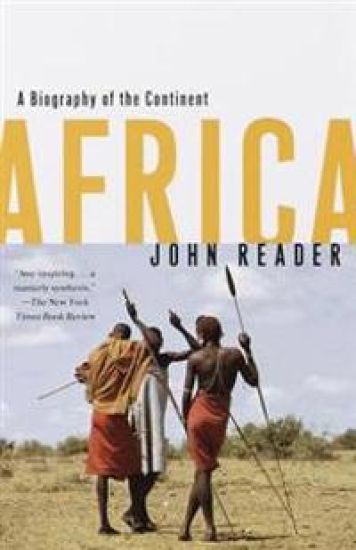
In 1978, paleontologists in East Africa discovered the earliest evidence of our divergence from the apes: three pre-human footprints, striding away from a volcano, were preserved in the petrified surface of a mudpan over three million years ago. Out of Africa, the world's most ancient and stable landmass, Homo sapiens dispersed across the globe. And yet the continent that gave birth to human history has long been woefully misunderstood and mistreated by the rest of the world. In a book as splendid in its wealth of information as it is breathtaking in scope, British writer and photojournalist John Reader brings to light Africa's geology and evolution, the majestic array of its landforms and environments, the rich diversity of its peoples and their ways of life, the devastating legacies of slavery and colonialism as well as recent political troubles and triumphs. Written in simple, elegant prose and illustrated with Reader's own photographs, Africa: A Biography of the Continent is an unforgettable book that will delight the general reader and expert alike.
Drawing on many years of African experience, John Reader has written a book of startling grandeur and scope that recreates the great panorama of African history, from the primeval cataclysms that formed the continent to the political upheavals facing much of the continent today. Reader tells the extraordinary story of humankind's adaptation to the ferocious obstacles of forest, river and desert, and to the threat of debilitating parasites, bacteria and viruses unmatched elsewhere in the world. He also shows how the world's richest assortment of animals and plants has helped - or hindered - human progress in Africa.