Kirjojen hintavertailu – 12 903 725 kirjaa ja 27 kauppaa

Kirjailija

John Reeves

Kirjat ja teokset yhdessä paikassa: 47 kirjaa, julkaisuja vuosilta 2003–2026, suosituimpiin kuuluu A History of the Law of Shipping and Navigation. Vertaile teosten hintoja ja tarkista saatavuus suomalaisista kirjakaupoista.

47 kirjaa

Kirjojen julkaisuvuodet: 2003–2026.

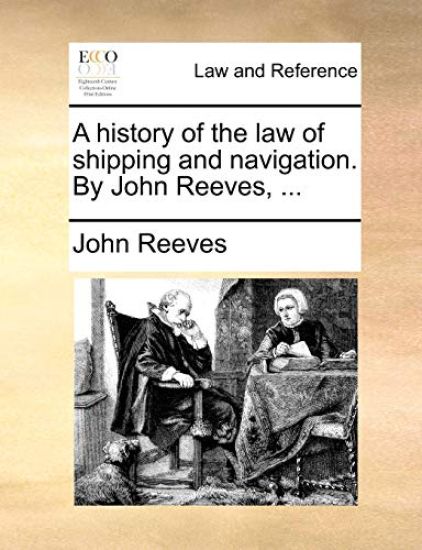
A History of the law of Shipping and Navigation. By John Reeves,
The 18th century was a wealth of knowledge, exploration and rapidly growing technology and expanding record-keeping made possible by advances in the printing press. In its determination to preserve the century of revolution, Gale initiated a revolution of its own: digitization of epic proportions to preserve these invaluable works in the largest archive of its kind. Now for the first time these high-quality digital copies of original 18th century manuscripts are available in print, making them highly accessible to libraries, undergraduate students, and independent scholars. This collection reveals the history of English common law and Empire law in a vastly changing world of British expansion. Dominating the legal field is the Commentaries of the Law of England by Sir William Blackstone, which first appeared in 1765. Reference works such as almanacs and catalogues continue to educate us by revealing the day-to-day workings of society.++++The below data was compiled from various identification fields in the bibliographic record of this title. This data is provided as an additional tool in helping to insure edition identification: ++++British LibraryT109777The last thirteen leaves contain the appendix and the index. Sigs. F4, G6, K1, K2 and K4, O4, T8 and Aa4 are cancels. London: printed for E. and R. Brooke; and J. Sewell, 1792. 10],547, 27]p.; 8

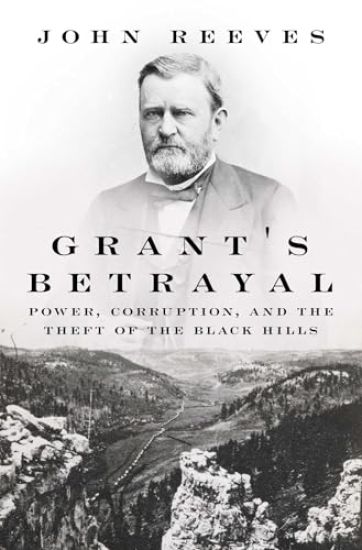
Grant's Betrayal

Grant's Betrayal

John Reeves

Pegasus Books
2026
sidottu
The controversial story of the secret conspiracy inside Ulysses S. Grant’s White House that led to the theft of the sacred Black Hills from the Lakota people, set against a backdrop of brazen corruption, Lakota resistance, and Gilded Age greed. A riveting account of the secret, rapacious conspiracy that led to the theft of the sacred Black Hills, Grant’s Betrayal is set against a backdrop of brazen corruption, Lakota resistance, and Gilded Age greed. This unfamiliar story is about capitalism and fraud at the time of America’s first centennial. It’s also about loss. Over a period of several decades, the Lakota people lost most of their land, their bison herds, and their liberty to roam over their once-expansive territory. After initially pursuing a “Peace Policy,” the Grant administration dramatically reversed course, choosing to pressure the Lakota people into relinquishing the Black Hills after the discovery of gold there in 1874. Referring to the unjust land grab by the Grant administration, a U. S. Court of Claims declared, a century later in 1975: “The duplicity of President Grant’s course and the duress practiced on the starving Sioux, speak for themselves. A more ripe and rank case of dishonorable dealings will never, in all probability, be found in our history.” Grant’s Betrayal sheds new light on the shocking dispossession of Indigenous lands by corrupt politicians, aggressive military commanders, and Gilded Age capitalists hungry for gold. The heroic resistance offered by Sitting Bull, Crazy Horse, and other Native American luminaries is central to the story as well. This poignant narrative helps us better understand what it means to be an American by reconsidering an unjust and regrettable chapter of our history.
The Rothschilds the Financial Rulers of Nations

The Rothschilds the Financial Rulers of Nations

John Reeves

Double 9 Books LLP
2025
nidottu

Halvin toimitettuna 23,70 €

The Rothschilds: The Financial Rulers Of Nations explores the rise and influence of the Rothschild banking family, examining their impact on global finance and politics. The book highlights how the family's financial empire shaped the economies of various nations through strategic investments, loans, and business dealings. It delves into the family's history, tracing their origins, and documents their ability to navigate complex political landscapes, cementing their position as powerful financial figures. Through detailed accounts of their business ventures and interactions with political leaders, the work showcases the Rothschilds' role in shaping the economic foundations of several countries. The story of the family's rise to prominence is intertwined with broader historical events, revealing how their financial strategies contributed to shaping the modern financial system. The book also reflects on the influence that wealth and power have on global events, providing a critical perspective on the intertwining of money and politics. It offers insight into how the Rothschilds' legacy continues to influence financial and political spheres even today.
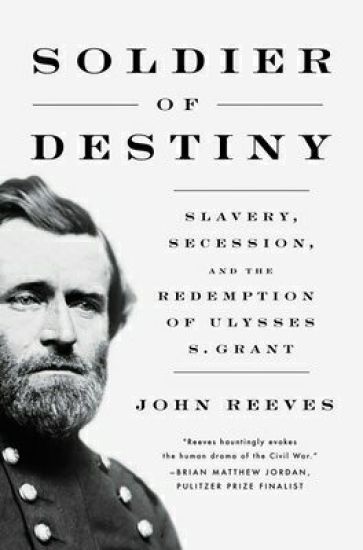
Soldier of Destiny: Slavery, Secession, and the Redemption of Ulysses S. Grant
Presenting an original, thought-provoking look at Ulysses S. Grant, Soldier of Destiny evokes the life of the general through his conflicted connection to slavery, allowing readers a clearer understanding of this great American. Captain Ulysses S. Grant, an obscure army officer who was expelled for alcohol abuse in 1854, rose to become general-in-chief of the United States Army in 1864. What accounts for this astonishing turn-around during this extraordinary decade? Was it destiny? Or was he just an ordinary man, opportunistically benefiting from the turmoil of the Civil War to advance to the highest military rank? Soldier of Destiny reveals that Grant always possessed the latent abilities of a skilled commander--and he was able to develop these skills out West without the overwhelming pressure faced by more senior commanders in the Eastern theater at the beginning of the Civil War. Grant was a true Westerner himself and it was his experience in the West--before and during the Civil War--that was central to his rise. From 1861 to 1864, Grant went from being ambivalent about slavery to becoming one of the leading individuals responsible for emancipating the slaves. Before the war, he lived in a pro-slavery community near St. Louis, where there were very few outright abolitionists. During the war, he gradually realized that Emancipation was the only possible outcome of the war that would be consistent with America's founding values and future prosperity. Soldier of Destiny tells the story of Grant's connection to slavery in far more detail than has been done in previous biographies. Grant's life story is an almost inconceivable tale of redemption within the context of his fraught relationships with his antislavery father and his slaveholding wife. This narrative explores the poverty, inequality, and extraordinary vitality of the American West during a crucial time in our nation's history. Writers on Grant have tended to overlook his St. Louis years (1854-1860), even though they are essential for understanding his later triumphs. Walt Whitman described Grant as "a common trader, money-maker, tanner, farmer of Illinois--general for the republic, in its terrific struggle with itself, in the war of attempted secession. Nothing heroic, as the authorities put it--and yet the greatest hero. The gods, the destinies, seem to have concentrated upon him."
A Fire in the Wilderness: The First Battle Between Ulysses S. Grant and Robert E. Lee
The riveting account of the first bloody showdown between Ulysses S. Grant and Robert E. Lee--a battle that sealed the fate of the Confederacy and changed the course of American history. In the spring of 1864, President Lincoln feared that he might not be able to save the Union. The Army of the Potomac had performed poorly over the previous two years, and many Northerners were understandably critical of the war effort. Lincoln assumed he'd lose the November election, and he firmly believed a Democratic successor would seek peace immediately, spelling an end to the Union. A Fire in the Wilderness tells the story of that perilous time when the future of the United States depended on the Union Army's success in a desolate forest roughly sixty-five miles from the nation's capital. At the outset of the Battle of the Wilderness, General Lee's Army of Northern Virginia remained capable of defeating the Army of the Potomac. But two days of relentless fighting in dense Virginia woods, Robert E. Lee was never again able to launch offensive operations against Grant's army. Lee, who faced tremendous difficulties replacing fallen soldiers, lost 11,125 men--or 17% of his entire force. On the opposing side, the Union suffered 17,666 casualties. The alarming casualties do not begin to convey the horror of this battle, one of the most gruesome in American history. The impenetrable forest and gunfire smoke made it impossible to view the enemy. Officers couldn't even see their own men during the fighting. The incessant gunfire caused the woods to catch fire, resulting in hundreds of men burning to death. "It was as though Christian men had turned to fiends, and hell itself had usurped the place of the earth," wrote one officer. When the fighting finally subsided during the late evening of the second day, the usually stoical Grant threw himself down on his cot and cried.
The Rothschilds

The Rothschilds

John Reeves

Alpha Edition
2020
pokkari
This book has been considered by academicians and scholars of great significance and value to literature. This forms a part of the knowledge base for future generations. So that the book is never forgotten we have represented this book in a print format as the same form as it was originally first published. Hence any marks or annotations seen are left intentionally to preserve its true nature.
Variations

Variations

John Reeves

Anywhere But Here Publications
2018
nidottu
The three novellas in this book are linked by a common theme, criminality. In two of them, there is a murder investigation; and in another, there is wrongdoing both in the private world and on the international scene. "Jane" is the story of a young woman who hires a private detective to prove the innocence of her father, who has been convicted of a murder he did not commit. "Sargent," in a documentary style, follows the fortunes and misfortunes of an English family, variously active in religion and literature and warfare. "Final Lap" reintroduces Inspector Coggin and Sergeant Sump, featured in previous novels: they investigate the murder of a shady character connected to organized crime; and on the side they look into drug-fuelled corruption in track-and-field. Two of the novels are set in Toronto, where the author worked for thirty-four years. And one is set in an English village like the one he lived in during boyhood, and in Germany, which he visited often during his radio career.
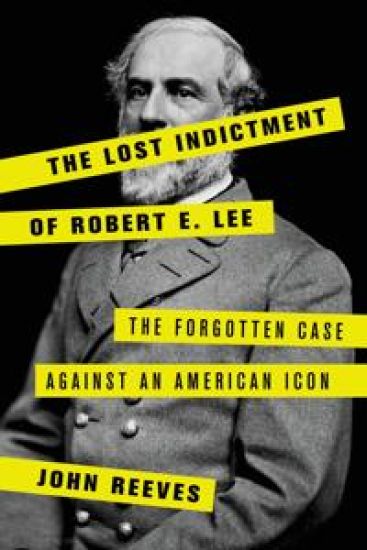
The Lost Indictment of Robert E. Lee

The Lost Indictment of Robert E. Lee

John Reeves

Rowman Littlefield
2018
sidottu
History has been kind to Robert E. Lee. Woodrow Wilson believed General Lee was a “model to men who would be morally great.” Douglas Southall Freeman, who won a Pulitzer Prize for his four-volume biography of Lee, described his subject as “one of a small company of great men in whom there is no inconsistency to be explained, no enigma to be solved.” Winston Churchill called him “one of the noblest Americans who ever lived.” Until recently, there was even a stained glass window devoted to Lee's life at the National Cathedral in Washington, D. C. Immediately after the Civil War, however, many northerners believed Lee should be hanged for treason and war crimes. Americans will be surprised to learn that in June of 1865 Robert E. Lee was indicted for treason by a Norfolk, Virginia grand jury. In his instructions to the grand jury, Judge John C. Underwood described treason as “wholesale murder,” and declared that the instigators of the rebellion had “hands dripping with the blood of slaughtered innocents.” In early 1866, Lee decided against visiting friends while in Washington, D. C. for a congressional hearing, because he was conscious of being perceived as a “monster” by citizens of the nation’s capital. Yet somehow, roughly fifty years after his trip to Washington, Lee had been transformed into a venerable American hero, who was highly regarded by southerners and northerners alike. Almost a century after Appomattox, Dwight D. Eisenhower had Lee’s portrait on the wall of his White House office. The Lost Indictment of Robert E. Lee tells the story of the forgotten legal and moral case that was made against the Confederate general after the Civil War. The actual indictment went missing for 72 years. Over the past 150 years, the indictment against Lee after the war has both literally and figuratively disappeared from our national consciousness. In this book, Civil War historian John Reeves illuminates the incredible turnaround in attitudes towards the defeated general by examining the evolving case against him from 1865 to 1870 and beyond.
The art of Farriery Both in Theory and Practice; Containing the Causes, Symptoms, and Cure of all Diseases Incident to Horses. With Anatomical Descriptions, Illustrated With Cuts
The 18th century was a wealth of knowledge, exploration and rapidly growing technology and expanding record-keeping made possible by advances in the printing press. In its determination to preserve the century of revolution, Gale initiated a revolution of its own: digitization of epic proportions to preserve these invaluable works in the largest archive of its kind. Now for the first time these high-quality digital copies of original 18th century manuscripts are available in print, making them highly accessible to libraries, undergraduate students, and independent scholars. Western literary study flows out of eighteenth-century works by Alexander Pope, Daniel Defoe, Henry Fielding, Frances Burney, Denis Diderot, Johann Gottfried Herder, Johann Wolfgang von Goethe, and others. Experience the birth of the modern novel, or compare the development of language using dictionaries and grammar discourses. ++++The below data was compiled from various identification fields in the bibliographic record of this title. This data is provided as an additional tool in helping to insure edition identification: ++++British LibraryT063321An eminent surgeon = Dale Ingram. Dublin: printed for Hulton Bradley, 1759. 8],363, 1]p., plates; 12
History of the English Law, from the Time of the Saxons, to the End of the Reign of Philip and Mary. by John Reeves, ... the Second Edition. in Four Volumes. ... of 4; Volume 4
The 18th century was a wealth of knowledge, exploration and rapidly growing technology and expanding record-keeping made possible by advances in the printing press. In its determination to preserve the century of revolution, Gale initiated a revolution of its own: digitization of epic proportions to preserve these invaluable works in the largest archive of its kind. Now for the first time these high-quality digital copies of original 18th century manuscripts are available in print, making them highly accessible to libraries, undergraduate students, and independent scholars. This collection reveals the history of English common law and Empire law in a vastly changing world of British expansion. Dominating the legal field is the Commentaries of the Law of England by Sir William Blackstone, which first appeared in 1765. Reference works such as almanacs and catalogues continue to educate us by revealing the day-to-day workings of society.++++The below data was compiled from various identification fields in the bibliographic record of this title. This data is provided as an additional tool in helping to insure edition identification: ++++British LibraryT109172A fifth volume extending the period to the end of the reign of Elizabeth was published in 1829. London: printed for E. Brooke, 1787. 4v.; 8
History of the English Law, from the Time of the Saxons, to the End of the Reign of Philip and Mary. by John Reeves, ... the Second Edition. in Four Volumes. ... of 4; Volume 3
The 18th century was a wealth of knowledge, exploration and rapidly growing technology and expanding record-keeping made possible by advances in the printing press. In its determination to preserve the century of revolution, Gale initiated a revolution of its own: digitization of epic proportions to preserve these invaluable works in the largest archive of its kind. Now for the first time these high-quality digital copies of original 18th century manuscripts are available in print, making them highly accessible to libraries, undergraduate students, and independent scholars. This collection reveals the history of English common law and Empire law in a vastly changing world of British expansion. Dominating the legal field is the Commentaries of the Law of England by Sir William Blackstone, which first appeared in 1765. Reference works such as almanacs and catalogues continue to educate us by revealing the day-to-day workings of society.++++The below data was compiled from various identification fields in the bibliographic record of this title. This data is provided as an additional tool in helping to insure edition identification: ++++British LibraryT109172A fifth volume extending the period to the end of the reign of Elizabeth was published in 1829. London: printed for E. Brooke, 1787. 4v.; 8
History of the English Law, from the Time of the Saxons, to the End of the Reign of Philip and Mary. by John Reeves, ... the Second Edition. in Four Volumes. ... of 4; Volume 1
The 18th century was a wealth of knowledge, exploration and rapidly growing technology and expanding record-keeping made possible by advances in the printing press. In its determination to preserve the century of revolution, Gale initiated a revolution of its own: digitization of epic proportions to preserve these invaluable works in the largest archive of its kind. Now for the first time these high-quality digital copies of original 18th century manuscripts are available in print, making them highly accessible to libraries, undergraduate students, and independent scholars. This collection reveals the history of English common law and Empire law in a vastly changing world of British expansion. Dominating the legal field is the Commentaries of the Law of England by Sir William Blackstone, which first appeared in 1765. Reference works such as almanacs and catalogues continue to educate us by revealing the day-to-day workings of society.++++The below data was compiled from various identification fields in the bibliographic record of this title. This data is provided as an additional tool in helping to insure edition identification: ++++British LibraryT109172A fifth volume extending the period to the end of the reign of Elizabeth was published in 1829. London: printed for E. Brooke, 1787. 4v.; 8
History of the English law, From the Time of the Saxons, to the end of the Reign of Philip and Mary. By John Reeves, ... The Second Edition. In Four Volumes. ... of 4; Volume 2
The 18th century was a wealth of knowledge, exploration and rapidly growing technology and expanding record-keeping made possible by advances in the printing press. In its determination to preserve the century of revolution, Gale initiated a revolution of its own: digitization of epic proportions to preserve these invaluable works in the largest archive of its kind. Now for the first time these high-quality digital copies of original 18th century manuscripts are available in print, making them highly accessible to libraries, undergraduate students, and independent scholars. This collection reveals the history of English common law and Empire law in a vastly changing world of British expansion. Dominating the legal field is the Commentaries of the Law of England by Sir William Blackstone, which first appeared in 1765. Reference works such as almanacs and catalogues continue to educate us by revealing the day-to-day workings of society.++++The below data was compiled from various identification fields in the bibliographic record of this title. This data is provided as an additional tool in helping to insure edition identification: ++++British LibraryT109172A fifth volume extending the period to the end of the reign of Elizabeth was published in 1829. London: printed for E. Brooke, 1787. 4v.; 8