Kirjojen hintavertailu – 12 859 828 kirjaa ja 27 kauppaa

Kirjailija

John Rodgaard

Kirjat ja teokset yhdessä paikassa: 4 kirjaa, julkaisuja vuosilta 2005–2024, suosituimpiin kuuluu A Call to the Sea. Vertaile teosten hintoja ja tarkista saatavuus suomalaisista kirjakaupoista.

4 kirjaa

Kirjojen julkaisuvuodet: 2005–2024.

A Hard Fought Ship

A Hard Fought Ship

John Rodgaard

PEN SWORD BOOKS LTD
2024
nidottu
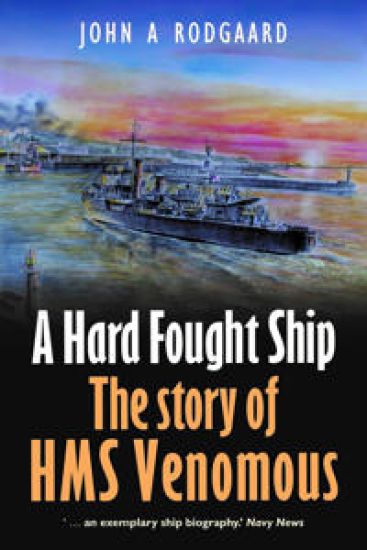
Here is the exhaustive and exhilarating story of HMS _Venomous_, one of sixty-seven V&W destroyers built at the end of the Great War that were to play a key role in the struggle to keep the sea lanes open in the Atlantic, Home Waters and the Mediterranean during the following war. Her story was perhaps the most memorable of all her class. When war broke out she was to find herself in the front line as the German blitzkrieg swept across Europe in 1940 and the V&Ws made high speed dashes across the Channel to bring troops and civilians back from Calais, Boulogne and Dunkirk, and prepared for the expected invasion. Later that year she and her sister-ships escorted the Atlantic convoys which supplied our Russian allies with the weapons to halt the German advance. She returned to the Mediterranean and took part in Operation Pedestal to save Malta, and as the allies prepared for the landings in North Africa she was ordered to escort the destroyer depot ship, HMS _Hecla_ to the invasion beaches. When _Hecla_ was torpedoed off the coast off Morocco _Venomous_ fought the attacking U-boat and rescued 500 survivors. She escorted convoys along the coast of North Africa including the first-through convoy from Gibraltar to Alexandria. and she joined the invasion force to Sicily during Operation Husky. In October 1943 she returned to Britain for a major refit at Falmouth when she was converted to an air target ship for training Barracuda torpedo bombers based at Douglas, Isle of Man, and then, after being transferred to the east coast, she was nearly lost in a hurricane before being sent to Kristiansand to accept the surrender of German naval forces. _Venomous_ and her sister-ships were all scrapped after the War, but her extraordinary career, during which she fought without cessation, is brought to life in this rousing and beautifully told ship biography, a fitting memorial to the V&Ws and the men who served in them. ‘I would rate this as being in the same class as _The Cruel Sea_ for a picture of small ship life in World War Two.’ _The Naval Review_ ‘A portrayal of life on a wartime destroyer with a depth and insight that is possible unequalled by any previously published work.’ _Warship Annual_ This book is outstanding for its detailed insight into the life on not just a single destroyer but, by extension, life at sea aboard and Royal Navy destroyer.’ _The Northern Mariner_ ‘_A Hard Fought Ship_ is a vivid portrait of a fighting vessel and the men who operated her.’ _Warships International Fleet Review_ ‘Highly recommended to both naval historians and the general public.’ _Mariner’s Mirror_ ‘It is an exemplary ship biography where a detailed narrative of the destroyer’s exploits are brought to life by a wealth of first-hand accounts.’ _Navy News_ This book is a detailed and thrilling account of the life of a typical V&W class destroyer.’ _Sea Breezes_
Tailships

Tailships

John Rodgaard

Helion Company
2023
nidottu

Halvin toimitettuna 28,40 €

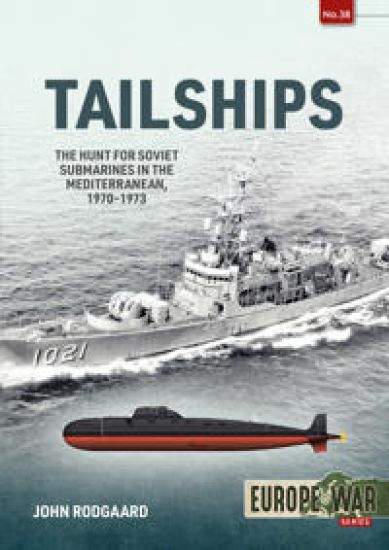
Obsolete, except for the experimental anti-submarine warfare sensor they carried, the USS Hammerberg, DE-1015, the USS Courtney, DE-1021 and the USS Lester, DE-1022 went to the Mediterranean to demonstrate the potential of a technology that relied on a passive towed array detection system; what the Navy officially designated as the Interim Towed Array Surveillance System (ITASS). These 'Tailships' entered the Med in 1970. It was then that the US and NATO navies operated in a naval environment characterised by the most intense concentration of Soviet submarines and surface ships outside of Soviet home waters. The Mediterranean was the focal point in the great naval rivalry of the United States, with its NATO Allies, against the Soviet Union's Voyenno-morskoi flot. When deployed as Tailships, these DEs proved successful against Soviet submarines that the US Navy committed additional resources to refining the capability of passive towed array sonars. The development of the Towed Array Surveillance System (TASS), the Surveillance Towed Array Sonar System (SURTASS) and the Tactical Towed Array Sonar (TACTASS) deployable systems were direct follow-ons to ITASS. The ships' deployment occurred during a time when the United States was torn apart by the war in Vietnam. Although far away, the effect of Vietnam on the ships' crews as well as the Sixth Fleet reflected the greater turmoil within the society they served. The turmoil was evident in the competition for resources to keep the ships steaming and in personnel tensions among the crews. Additionally, the ships and men operated in a sea surrounded by increasing tensions in the Middle East. While stationed in Naples, Italy, the Palestinian Black September Organisation created terror across Europe during the summer of 1972, with the massacre of the Israeli Olympic athletes in Munich, West Germany. That summer would see these sailors spending nights in Naples standing anti-terrorist watches with loaded weapons, whilst the pinging of an active sonar system would echo throughout the hulls of the moored ships. It was thought this would discourage swimmers wanting to plant explosive devices on ship hulls. The objective of this book is simply to tell the story of these three ships and their men within the context of the greater events of the Cold War at sea in the Mediterranean; the successes and failures of operating in the Mediterranean, and life for those who call Naples their temporary home.
A Call to the Sea

A Call to the Sea

Claude Berube; John Rodgaard

Potomac Books Inc
2006
pokkari
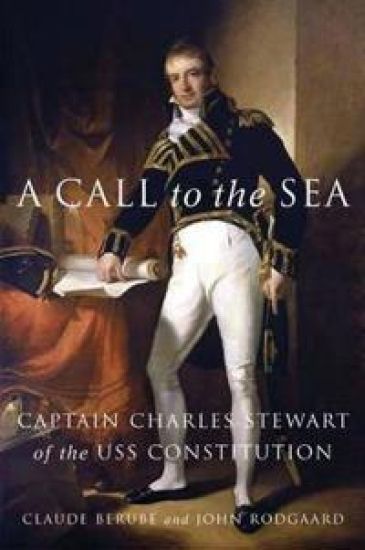
Charles Stewart's life of sailing and combat on the high seas rivals that of Patrick O'Brien's fictional hero, Jack Aubrey. Stewart held more sea commands (11) than any other U. S. Navy captain and served longer (63 years) than any officer in American naval history. He commanded every type of warship, from sloop to ship-of-the-line, and served every president from John Adams to Abraham Lincoln. Born in Philadelphia during the American Revolution, Stewart met President Washington and went to sea as a cabin boy on a merchantman before age thirteen. In March 1798, at age nineteen, he received a naval commission one month before the Department of the Navy was established. Stewart went on to an illustrious naval career: Thomas Jefferson recognized his Mediterranean exploits during the Barbary Wars, Stewart advised James Madison at the outset of the War of 1812, and Stewart trained many future senior naval officers—including David Porter, David Dixon Porter, and David G. Farragut—in three wars. He served as a pallbearer at President Lincoln's funeral. Stewart cemented his reputation as commander of the Navy's most powerful frigate, the USS Constitution. No other captain commanded this ship for a longer wartime period or through more naval engagements. Undefeated in battle, including defeating the British warships Cyane and Levant simultaneously, both ship and captain came to be known as "Old Ironsides."
A Call to the Sea

A Call to the Sea

Claude Berube; John Rodgaard

Potomac Books Inc
2005
sidottu
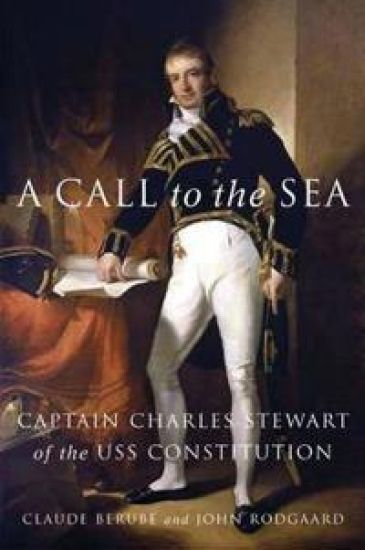
Charles Stewart's life of sailing and combat on the high seas rivals that of Patrick O'Brien's fictional hero, Jack Aubrey. Stewart held more sea commands (11) than any other U. S. Navy captain and served longer (63 years) than any officer in American naval history. He commanded every type of warship, from sloop to ship-of-the-line, and served every president from John Adams to Abraham Lincoln. Born in Philadelphia during the American Revolution, Stewart met President Washington and went to sea as a cabin boy on a merchantman before age thirteen. In March 1798, at age nineteen, he received a naval commission one month before the Department of the Navy was established. Stewart went on to an illustrious naval career: Thomas Jefferson recognized his Mediterranean exploits during the Barbary Wars, Stewart advised James Madison at the outset of the War of 1812, and Stewart trained many future senior naval officers—including David Porter, David Dixon Porter, and David G. Farragut—in three wars. He served as a pallbearer at President Lincoln's funeral. Stewart cemented his reputation as commander of the Navy's most powerful frigate, the USS Constitution. No other captain commanded this ship for a longer wartime period or through more naval engagements. Undefeated in battle, including defeating the British warships Cyane and Levant simultaneously, both ship and captain came to be known as "Old Ironsides."