Kirjailija
John Ruskin
Kirjat ja teokset yhdessä paikassa: 1 233 kirjaa, julkaisuja vuosilta 1849–2026, suosituimpiin kuuluu The Harbours of England. with Thirteen Illustrations by J. M. W. Turner, R.A. Edited by T. J. Wise.. Vertaile teosten hintoja ja tarkista saatavuus suomalaisista kirjakaupoista.
1 233 kirjaa
Kirjojen julkaisuvuodet: 1849–2026.
The Poems of John Ruskin - Vol. 1 is an unchanged, high-quality reprint of the original edition of 1891. Hansebooks is editor of the literature on different topic areas such as research and science, travel and expeditions, cooking and nutrition, medicine, and other genres. As a publisher we focus on the preservation of historical literature. Many works of historical writers and scientists are available today as antiques only. Hansebooks newly publishes these books and contributes to the preservation of literature which has become rare and historical knowledge for the future.
Letters Addressed to a College Friend During the Years 1840-1845
John Ruskin
Hansebooks
2017
pokkari
The state of Venice existed Thirteen Hundred and Seventy-six years, from the first establishment of a consular government on the island of the Rialto, Footnote: Appendix I., "Foundations of Venice."] to the moment when the General-in-chief of the French army of Italy pronounced the Venetian republic a thing of the past. Of this period, Two Hundred and Seventy-six years Footnote: Appendix II., "Power of the Doges."] were passed in a nominal subjection to the cities of old Venetia, especially to Padua, and in an agitated form of democracy, of which the executive appears to have been entrusted to tribunes, Footnote: Sismondi, Hist. des R p. Ital., vol. i. ch. v.] chosen, one by the inhabitants of each of the principal islands. For six hundred years, Footnote: Appendix III., "Serrar del Consiglio.

One of the greatest political essays in English history, and a revolutionary critique of economics and society.
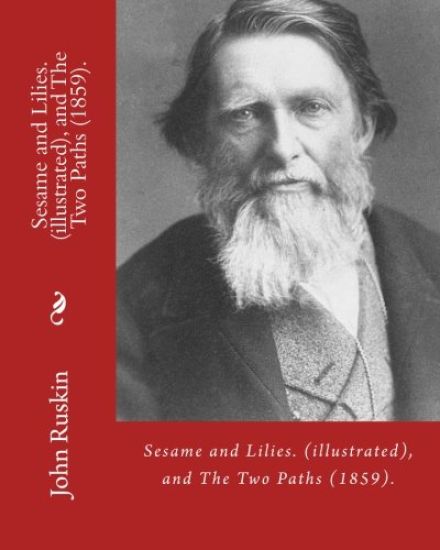
Sesame and Lilies. By: John Ruskin (illustrated), and The Two Paths (1859). By: John Ruskin: Lectures delivered in 1858 and 1859.: (World's classic's)
John Ruskin
Createspace Independent Publishing Platform
2016
nidottu
John Ruskin (8 February 1819 - 20 January 1900) was the leading English art critic of the Victorian era, as well as an art patron, draughtsman, watercolourist, a prominent social thinker and philanthropist. He wrote on subjects as varied as geology, architecture, myth, ornithology, literature, education, botany and political economy. His writing styles and literary forms were equally varied. Ruskin also penned essays and treatises, poetry and lectures, travel guides and manuals, letters and even a fairy tale. The elaborate style that characterised his earliest writing on art was later superseded by a preference for plainer language designed to communicate his ideas more effectively. In all of his writing, he emphasised the connections between nature, art and society. He also made detailed sketches and paintings of rocks, plants, birds, landscapes, and architectural structures and ornamentation. He was hugely influential in the latter half of the 19th century, and up to the First World War. After a period of relative decline, his reputation has steadily improved since the 1960s with the publication of numerous academic studies of his work. Today, his ideas and concerns are widely recognised as having anticipated interest in environmentalism, sustainability and craft. Ruskin first came to widespread attention with the first volume of Modern Painters (1843), an extended essay in defence of the work of J. M. W. Turner in which he argued that the principal role of the artist is "truth to nature". From the 1850s he championed the Pre-Raphaelites who were influenced by his ideas. His work increasingly focused on social and political issues. Unto This Last (1860, 1862) marked the shift in emphasis. In 1869, Ruskin became the first Slade Professor of Fine Art at the University of Oxford, where he established the Ruskin School of Drawing. In 1871, he began his monthly "letters to the workmen and labourers of Great Britain", published under the title Fors Clavigera (1871-1884). In the course of this complex and deeply personal work, he developed the principles underlying his ideal society. As a result, he founded the Guild of St George, an organisation that endures today. Ruskin was the only child of first cousins. His father, John James Ruskin (1785-1864), was a sherry and wine importer founding partner and de facto business manager of Ruskin, Telford and Domecq (see Allied Domecq). John James was born and brought up in Edinburgh, Scotland, to a mother from Glenluce and a father originally from Hertfordshire. His wife, Margaret Cox, n e Cock (1781-1871), was the daughter of an aunt on the English side of the family and a publican in Croydon. She had joined the Ruskin household when she became companion to John James's mother, Catherine. John James had hoped to practice law, but was instead articled as a clerk in London. His father, John Thomas Ruskin, described as a grocer (but apparently an ambitious wholesale merchant), was an inadequate businessman. To save the family from bankruptcy, John James, whose prudence and success were in stark contrast to his father, took on all debts, settling the last of them in 1832. John James and Margaret were engaged in 1809, but opposition to the union from John Thomas, and the issue of the debt, delayed their wedding which was finally conducted without celebration in 1818....
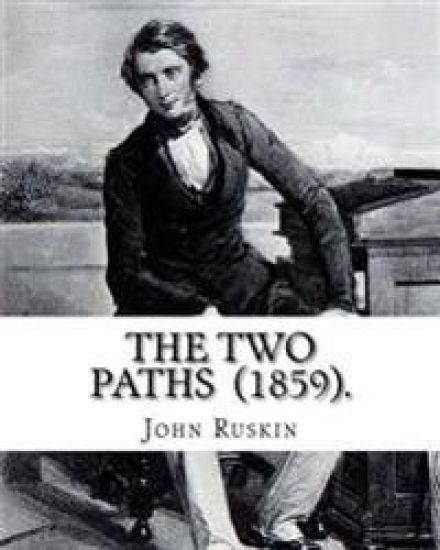
The Two Paths (1859). By: John Ruskin: Lectures delivered in 1858 and 1859.
John Ruskin
Createspace Independent Publishing Platform
2016
nidottu
John Ruskin (8 February 1819 - 20 January 1900) was the leading English art critic of the Victorian era, as well as an art patron, draughtsman, watercolourist, a prominent social thinker and philanthropist. He wrote on subjects as varied as geology, architecture, myth, ornithology, literature, education, botany and political economy. His writing styles and literary forms were equally varied. Ruskin also penned essays and treatises, poetry and lectures, travel guides and manuals, letters and even a fairy tale. The elaborate style that characterised his earliest writing on art was later superseded by a preference for plainer language designed to communicate his ideas more effectively. In all of his writing, he emphasised the connections between nature, art and society. He also made detailed sketches and paintings of rocks, plants, birds, landscapes, and architectural structures and ornamentation. He was hugely influential in the latter half of the 19th century, and up to the First World War. After a period of relative decline, his reputation has steadily improved since the 1960s with the publication of numerous academic studies of his work. Today, his ideas and concerns are widely recognised as having anticipated interest in environmentalism, sustainability and craft. Ruskin first came to widespread attention with the first volume of Modern Painters (1843), an extended essay in defence of the work of J. M. W. Turner in which he argued that the principal role of the artist is "truth to nature". From the 1850s he championed the Pre-Raphaelites who were influenced by his ideas. His work increasingly focused on social and political issues. Unto This Last (1860, 1862) marked the shift in emphasis. In 1869, Ruskin became the first Slade Professor of Fine Art at the University of Oxford, where he established the Ruskin School of Drawing. In 1871, he began his monthly "letters to the workmen and labourers of Great Britain", published under the title Fors Clavigera (1871-1884). In the course of this complex and deeply personal work, he developed the principles underlying his ideal society. As a result, he founded the Guild of St George, an organisation that endures today. Ruskin was the only child of first cousins. His father, John James Ruskin (1785-1864), was a sherry and wine importer founding partner and de facto business manager of Ruskin, Telford and Domecq (see Allied Domecq). John James was born and brought up in Edinburgh, Scotland, to a mother from Glenluce and a father originally from Hertfordshire. His wife, Margaret Cox, n e Cock (1781-1871), was the daughter of an aunt on the English side of the family and a publican in Croydon. She had joined the Ruskin household when she became companion to John James's mother, Catherine. John James had hoped to practice law, but was instead articled as a clerk in London. His father, John Thomas Ruskin, described as a grocer (but apparently an ambitious wholesale merchant), was an inadequate businessman. To save the family from bankruptcy, John James, whose prudence and success were in stark contrast to his father, took on all debts, settling the last of them in 1832. John James and Margaret were engaged in 1809, but opposition to the union from John Thomas, and the issue of the debt, delayed their wedding which was finally conducted without celebration in 1818....
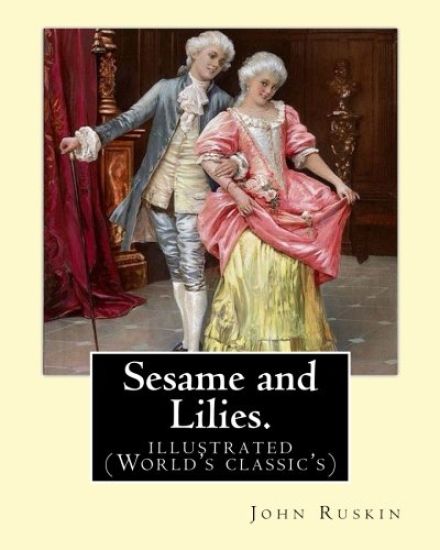
Sesame and Lilies. By: John Ruskin (illustrated): (World's classic's)
John Ruskin
Createspace Independent Publishing Platform
2016
nidottu
John Ruskin (8 February 1819 - 20 January 1900) was the leading English art critic of the Victorian era, as well as an art patron, draughtsman, watercolourist, a prominent social thinker and philanthropist. He wrote on subjects as varied as geology, architecture, myth, ornithology, literature, education, botany and political economy. His writing styles and literary forms were equally varied. Ruskin also penned essays and treatises, poetry and lectures, travel guides and manuals, letters and even a fairy tale. The elaborate style that characterised his earliest writing on art was later superseded by a preference for plainer language designed to communicate his ideas more effectively. In all of his writing, he emphasised the connections between nature, art and society. He also made detailed sketches and paintings of rocks, plants, birds, landscapes, and architectural structures and ornamentation. He was hugely influential in the latter half of the 19th century, and up to the First World War. After a period of relative decline, his reputation has steadily improved since the 1960s with the publication of numerous academic studies of his work. Today, his ideas and concerns are widely recognised as having anticipated interest in environmentalism, sustainability and craft. Ruskin first came to widespread attention with the first volume of Modern Painters (1843), an extended essay in defence of the work of J. M. W. Turner in which he argued that the principal role of the artist is "truth to nature". From the 1850s he championed the Pre-Raphaelites who were influenced by his ideas. His work increasingly focused on social and political issues. Unto This Last (1860, 1862) marked the shift in emphasis. In 1869, Ruskin became the first Slade Professor of Fine Art at the University of Oxford, where he established the Ruskin School of Drawing. In 1871, he began his monthly "letters to the workmen and labourers of Great Britain", published under the title Fors Clavigera (1871-1884). In the course of this complex and deeply personal work, he developed the principles underlying his ideal society. As a result, he founded the Guild of St George, an organisation that endures today.
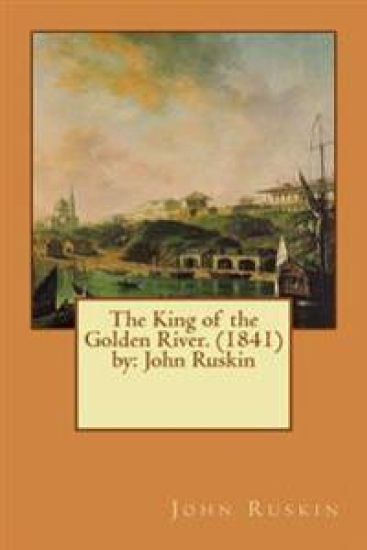
The King of the Golden River. (1841) by: John Ruskin
John Ruskin
Createspace Independent Publishing Platform
2016
nidottu
The King of the Golden River or the Black Brothers, a Legend of Styria
John Ruskin
Hansebooks
2016
pokkari
Wayside flowers in England and Scotland is an unchanged, high-quality reprint of the original edition of 1886. Hansebooks is editor of the literature on different topic areas such as research and science, travel and expeditions, cooking and nutrition, medicine, and other genres. As a publisher we focus on the preservation of historical literature. Many works of historical writers and scientists are available today as antiques only. Hansebooks newly publishes these books and contributes to the preservation of literature which has become rare and historical knowledge for the future.