Kirjojen hintavertailu – 12 903 735 kirjaa ja 27 kauppaa

Kirjailija

John Schostak

Kirjat ja teokset yhdessä paikassa: 10 kirjaa, julkaisuja vuosilta 2002–2019, suosituimpiin kuuluu Interviewing and Representation in Qualitative Research. Vertaile teosten hintoja ja tarkista saatavuus suomalaisista kirjakaupoista.

10 kirjaa

Kirjojen julkaisuvuodet: 2002–2019.

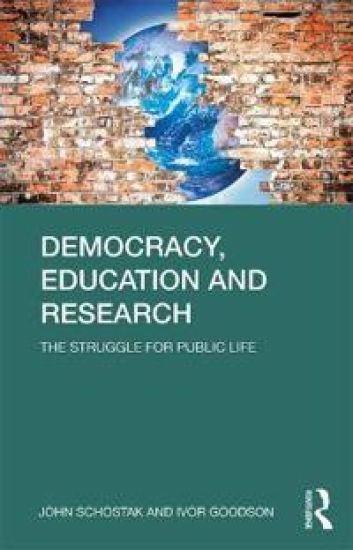
Democracy, Education and Research

Democracy, Education and Research

John Schostak; Ivor F. Goodson

Routledge
2019
nidottu
Considering how practices and processes of research and education can create fundamental, radical social change, Democracy, Education and Research assesses the meaning of ‘public impact‘ by rethinking what is meant by ‘public‘ and how it is essential to the methodologies of education and research. Focusing on empirical illustrations of the use of research and educational processes in contemporary and emergent forms of social organisation, this book: Covers the traditional forms to be found in education, health systems, community, business and public institutions, as well as emergent forms arising from innnovation in technologies. Explores the forms of learning and knowledge creation that take place across the everyday interactions in places of learning, communities or workplaces Discusses how learning and knowledge can be intentionally shaped by individuals and groups to effect social and political change Considers the research strategies required to forge new practices, new ways of working and living for a more socially just worldIncluding practical examples of research that has created real change, Democracy, Education and Research will be a vital resource to professional researchers in their roles as teachers, educators and activists as well as students of education, sociology, politics, cultural studies.
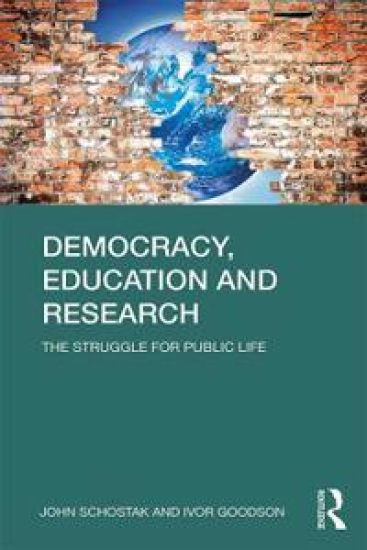
Democracy, Education and Research

Democracy, Education and Research

John Schostak; Ivor F. Goodson

Routledge
2019
sidottu
Considering how practices and processes of research and education can create fundamental, radical social change, Democracy, Education and Research assesses the meaning of ‘public impact‘ by rethinking what is meant by ‘public‘ and how it is essential to the methodologies of education and research. Focusing on empirical illustrations of the use of research and educational processes in contemporary and emergent forms of social organisation, this book: Covers the traditional forms to be found in education, health systems, community, business and public institutions, as well as emergent forms arising from innnovation in technologies. Explores the forms of learning and knowledge creation that take place across the everyday interactions in places of learning, communities or workplaces Discusses how learning and knowledge can be intentionally shaped by individuals and groups to effect social and political change Considers the research strategies required to forge new practices, new ways of working and living for a more socially just worldIncluding practical examples of research that has created real change, Democracy, Education and Research will be a vital resource to professional researchers in their roles as teachers, educators and activists as well as students of education, sociology, politics, cultural studies.
Maladjusted Schooling (RLE Edu L)

Maladjusted Schooling (RLE Edu L)

John Schostak

Routledge
2014
nidottu
The problems this book discusses are the same now as they were 25 years ago: unemployment, poor housing, inadequate facilities, poverty, racism, violence. What is the function of a school in such a situation? Although many schools hold reformist ideals, their practice is constrained by organisational demands. School organisation is based upon a coercive theory of social control which is intolerant of expressions of individuality by teachers and pupils. Needs for individuality may be mistaken for deviance, and deviance is at least in part produced by, or exacerbated by, school organisation. The author maintains that schooling is therefore largely maladjusted to the needs of individuals.
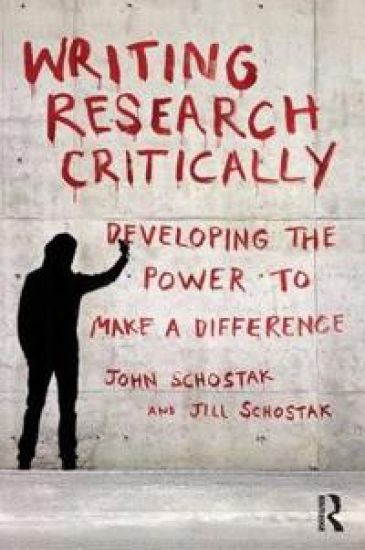
Writing Research Critically

Writing Research Critically

John Schostak; Jill Schostak

Routledge
2012
nidottu
This is not a standard guide to writing a dissertation, thesis, project report, journal article or book. Rather, this book will help researchers who are dissatisfied with the typical recipe approaches to standardised forms of writing-up and want to explore how academic writing can be used to greater effect. Writing Research Critically shows that writing up is not just about ‘presenting findings’ as if the facts would speak for themselves. As the authors show there are certain vital skills that any writer needs to develop within their academic writing, such as the ability to: develop critical understanding and a personal academic voice question assumptions and the status quo frame the background and transgress the frame read between the lines when reviewing the literature strengthen interpretations and conctruct persuasive arguments challenge and develop theory and explanations develop ideas that create possibilities for realistic actionPacked with examples from a range of writing projects (papers, dissertations, theses, reports, journal articles and books), this book provides a practical and refreshing way to approach and present research. Through case studies the authors offer a step-by-step guide from the early stages of planning a writing project, whether an undergraduate paper or a professional publication, to the polishing processes that make the difference between a merely descriptive account to an argument that intends to be critical and persuasive. Written in a clear accessible style this book will inspire a wide range of researchers from undergraduates to postgraduates, early career researchers and experienced professionals working across a wide range of fields, and demonstrate how research can have more impact in the real world.
Writing Research Critically

Writing Research Critically

John Schostak; Jill Schostak

Routledge
2012
sidottu
This is not a standard guide to writing a dissertation, thesis, project report, journal article or book. Rather, this book will help researchers who are dissatisfied with the typical recipe approaches to standardised forms of writing-up and want to explore how academic writing can be used to greater effect. Writing Research Critically shows that writing up is not just about ‘presenting findings’ as if the facts would speak for themselves. As the authors show there are certain vital skills that any writer needs to develop within their academic writing, such as the ability to: develop critical understanding and a personal academic voice question assumptions and the status quo frame the background and transgress the frame read between the lines when reviewing the literature strengthen interpretations and conctruct persuasive arguments challenge and develop theory and explanations develop ideas that create possibilities for realistic actionPacked with examples from a range of writing projects (papers, dissertations, theses, reports, journal articles and books), this book provides a practical and refreshing way to approach and present research. Through case studies the authors offer a step-by-step guide from the early stages of planning a writing project, whether an undergraduate paper or a professional publication, to the polishing processes that make the difference between a merely descriptive account to an argument that intends to be critical and persuasive. Written in a clear accessible style this book will inspire a wide range of researchers from undergraduates to postgraduates, early career researchers and experienced professionals working across a wide range of fields, and demonstrate how research can have more impact in the real world.
Maladjusted Schooling (RLE Edu L)

Maladjusted Schooling (RLE Edu L)

John Schostak

Routledge
2011
sidottu
The problems this book discusses are the same now as they were 25 years ago: unemployment, poor housing, inadequate facilities, poverty, racism, violence. What is the function of a school in such a situation? Although many schools hold reformist ideals, their practice is constrained by organisational demands. School organisation is based upon a coercive theory of social control which is intolerant of expressions of individuality by teachers and pupils. Needs for individuality may be mistaken for deviance, and deviance is at least in part produced by, or exacerbated by, school organisation. The author maintains that schooling is therefore largely maladjusted to the needs of individuals.
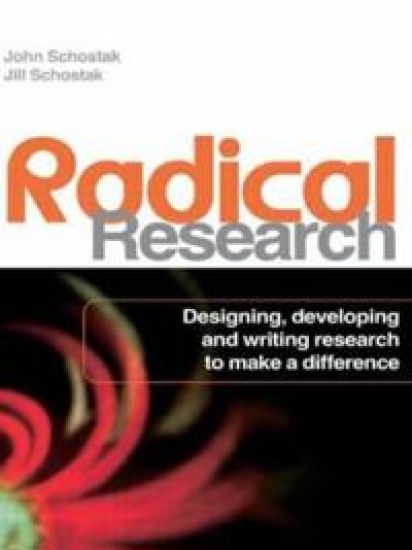
Radical Research

Radical Research

John Schostak; Jill Schostak

Routledge
2007
sidottu
Radical Research explores the view that research is not a neutral tool to be employed without bias in the search for truth. Rather the radical roots of research are to be seen in the focus on freedom and emancipation from blind allegiance to tradition, ‘common sense’, religion, or powerful individuals and organisations. Radical Research introduces and draws upon leading contemporary debates and data gathered from a diversity of funded projects in; health, education, police training, youth and community, schools, business, and the use of information technology. This book presents a radical view of research in a way that enables both beginner and the experienced professional researcher to explore its approaches in the formation of their own views and practices. It progressively leads the reader from discussions of case studies to critical explorations of the philosophical and methodological concepts, theories and arguments that are central to contemporary debates. In essence, this book shows how to design, develop and write radical research under conditions where ‘normal’ research rules apply and it offers a ground-breaking and proven alternative to traditional research techniques.
Radical Research

Radical Research

John Schostak; Jill Schostak

Routledge
2007
nidottu
Radical Research explores the view that research is not a neutral tool to be employed without bias in the search for truth. Rather the radical roots of research are to be seen in the focus on freedom and emancipation from blind allegiance to tradition, ‘common sense’, religion, or powerful individuals and organisations. Radical Research introduces and draws upon leading contemporary debates and data gathered from a diversity of funded projects in; health, education, police training, youth and community, schools, business, and the use of information technology. This book presents a radical view of research in a way that enables both beginner and the experienced professional researcher to explore its approaches in the formation of their own views and practices. It progressively leads the reader from discussions of case studies to critical explorations of the philosophical and methodological concepts, theories and arguments that are central to contemporary debates. In essence, this book shows how to design, develop and write radical research under conditions where ‘normal’ research rules apply and it offers a ground-breaking and proven alternative to traditional research techniques.
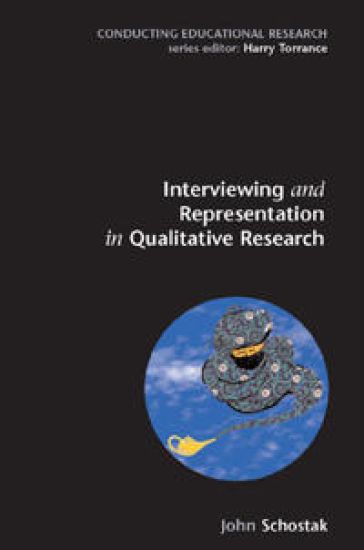
Interviewing and Representation in Qualitative Research
Too often interviewing is seen as simply a tool for data collection, while in reality it is a complex, subtle process that cannot be separated from the dynamic of the project or from the multiple and changing contexts of everyday life. In posing the question, “what is research for?”, Interviewing and Representation in Qualitative Research explores the processes of interviewing as itself a project intimately involved in contemporary debates around knowledge, freedom, power, ethics, modernism postmodernism, and globalisation. What makes the book distinctive is its focus on interviewing not just as a tool to be used within other frameworks such as case study, action research, evaluation and surveys, but as an approach to organise a project as a whole, to provide frameworks for organising perspectives on the multiple ‘worlds’ of everyday life. It is argued that every project, every methodology, every theoretical perspective has its own rhetorical framework that interacts with the ‘world’ as subject of study or focus for intervention. The interview, as defined in this book, is both the process of constituting and de-constructing world views – it is the inter-view, the place between worlds. Without the ‘inter-view’ no dialogue and no alternatives as a basis for difference, change, and development would be possible. The inter-view as conceived in the book is fundamental to qualitative research as an emancipatory project. Research practice is thus placed in the context of philosophical, theoretical and methodological debates, taking the reader beyond many introductory texts, making it suitable for all students and researchers who wish to advance the frontiers of their research and engage with contemporary social and political realities.
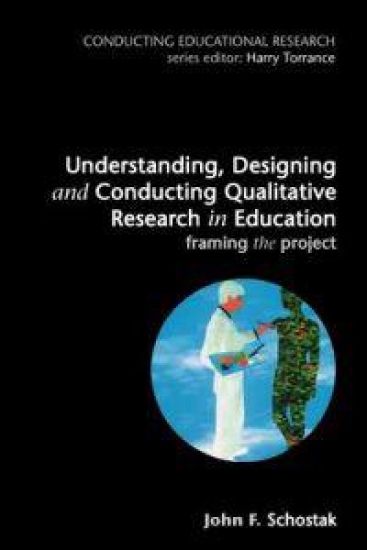
Understanding, Designing and Conducting Qualitative Research in Education
How do I get my research off the ground and ensure that it is 'new', 'novel' and 'important'? How do I make sense of data, build theories and write a compelling thesis? How can my research bring about change? This book is more than an introduction to doing research - it helps readers identify what is new and important about their project, how their research relates to previous work and how it may be used to bring about change at individual, community, national or even international levels. A total strategy is offered focussing on the notion of the 'project' as an organising framework that ensures that the methods chosen are appropriate to the subject and aim of the study. The intention throughout is to help readers move from being able to apply methods to being able to interrogate the theoretical underpinnings of particular perspectives so that they can feel confident about the particular kinds of knowledge claim they are making. The book is important reading for students at Masters and doctoral level and will be particularly helpful for professionals from education, health, social work, criminal justice and business who carry out research in their workplace and who need to reflect upon the consequences and possibilities for action and change.