Kirjojen hintavertailu – 12 903 735 kirjaa ja 27 kauppaa

Kirjailija

John Shannon Hendrix

Kirjat ja teokset yhdessä paikassa: 11 kirjaa, julkaisuja vuosilta 2003–2024, suosituimpiin kuuluu La Splendeur de l’architecture gothique anglaise. Vertaile teosten hintoja ja tarkista saatavuus suomalaisista kirjakaupoista.

11 kirjaa

Kirjojen julkaisuvuodet: 2003–2024.

Architecture and the Unconscious

Architecture and the Unconscious

John Shannon Hendrix; Lorens Eyan Holm

Routledge
2017
nidottu
There are a number of recent texts that draw on psychoanalytic theory as an interpretative approach for understanding architecture, or that use the formal and social logics of architecture for understanding the psyche. But there remains work to be done in bringing what largely amounts to a series of independent voices, into a discourse that is greater than the sum of its parts, in the way that, say, the architect Peter Eisenman was able to do with the architecture of deconstruction or that the historian Manfredo Tafuri was able to do with the Marxist critique of architecture. The discourse of the present volume focuses specifically for the first time on the subject of the unconscious in relation to the design, perception, and understanding of architecture. It brings together an international group of contributors, who provide informed and varied points of view on the role of the unconscious in architectural design and theory and, in doing so, expand architectural theory to unexplored areas, enriching architecture in relation to the humanities. The book explores how architecture engages dreams, desires, imagination, memory, and emotions, how architecture can appeal to a broader scope of human experience and identity. Beginning by examining the historical development of the engagement of the unconscious in architectural discourse, and the current and historical, theoretical and practical, intersections of architecture and psychoanalysis, the volume also analyses the city and the urban condition.
Architecture and the Unconscious

Architecture and the Unconscious

John Shannon Hendrix; Lorens Eyan Holm

Routledge
2016
sidottu
There are a number of recent texts that draw on psychoanalytic theory as an interpretative approach for understanding architecture, or that use the formal and social logics of architecture for understanding the psyche. But there remains work to be done in bringing what largely amounts to a series of independent voices, into a discourse that is greater than the sum of its parts, in the way that, say, the architect Peter Eisenman was able to do with the architecture of deconstruction or that the historian Manfredo Tafuri was able to do with the Marxist critique of architecture. The discourse of the present volume focuses specifically for the first time on the subject of the unconscious in relation to the design, perception, and understanding of architecture. It brings together an international group of contributors, who provide informed and varied points of view on the role of the unconscious in architectural design and theory and, in doing so, expand architectural theory to unexplored areas, enriching architecture in relation to the humanities. The book explores how architecture engages dreams, desires, imagination, memory, and emotions, how architecture can appeal to a broader scope of human experience and identity. Beginning by examining the historical development of the engagement of the unconscious in architectural discourse, and the current and historical, theoretical and practical, intersections of architecture and psychoanalysis, the volume also analyses the city and the urban condition.
Unconscious Thought in Philosophy and Psychoanalysis

Unconscious Thought in Philosophy and Psychoanalysis

John Shannon Hendrix

Palgrave Macmillan
2015
sidottu
The book explores concepts throughout the history of philosophy that suggest the possibility of unconscious thought and lay the foundation for ideas of unconscious thought in modern philosophy and psychoanalysis. The focus is on the workings of unconscious thought and the role it plays in thinking, language, perception, and human identity.
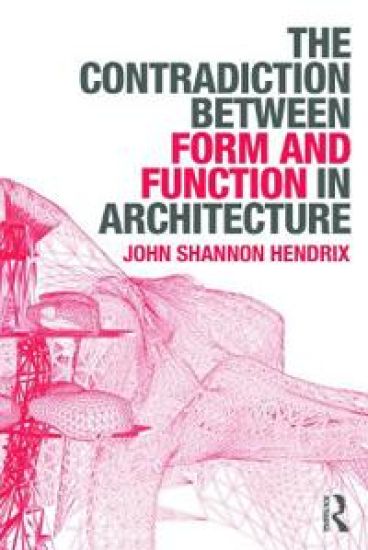
The Contradiction Between Form and Function in Architecture
Continuing the themes that have been addressed in The Humanities in Architectural Design and The Cultural Role of Architecture, this book illustrates the important role that a contradiction between form and function plays in compositional strategies in architecture. The contradiction between form and function is seen as a device for poetic expression, for the expression of ideas, in architecture. Here the role of the terms "form" and "function" are analyzed throughout the history of architecture and architectural theory, from Vitruvius to the present, with particular emphasis on twentieth-century functionalism. Historical examples are given from Ancient, Classical, Islamic, Christian, Byzantine, Gothic, Renaissance, Mannerist, and Neoclassical architecture, and from movements in the twentieth century to the present. In addition philosophical issues such as lineamenti, Vorstellung, différance, dream construction, deep structure and surface structure, topology theory, self-generation, and immanence are explored in relation to the compositions and writings of architects throughout history. This book contributes to the project of re-establishing architecture as a humanistic discipline, to re-establish an emphasis on the expression of ideas, and on the ethical role of architecture to engage the intellect of the observer and to represent human identity.

The Contradiction Between Form and Function in Architecture
Continuing the themes that have been addressed in The Humanities in Architectural Design and The Cultural Role of Architecture, this book illustrates the important role that a contradiction between form and function plays in compositional strategies in architecture. The contradiction between form and function is seen as a device for poetic expression, for the expression of ideas, in architecture. Here the role of the terms "form" and "function" are analyzed throughout the history of architecture and architectural theory, from Vitruvius to the present, with particular emphasis on twentieth-century functionalism. Historical examples are given from Ancient, Classical, Islamic, Christian, Byzantine, Gothic, Renaissance, Mannerist, and Neoclassical architecture, and from movements in the twentieth century to the present. In addition philosophical issues such as lineamenti, Vorstellung, différance, dream construction, deep structure and surface structure, topology theory, self-generation, and immanence are explored in relation to the compositions and writings of architects throughout history. This book contributes to the project of re-establishing architecture as a humanistic discipline, to re-establish an emphasis on the expression of ideas, and on the ethical role of architecture to engage the intellect of the observer and to represent human identity.

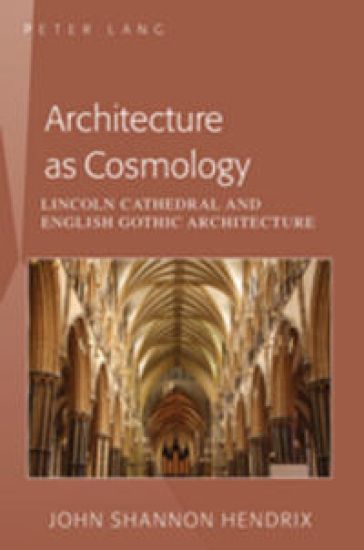
Architecture as Cosmology

Architecture as Cosmology

John Shannon Hendrix

Peter Lang Publishing Inc
2010
nidottu
Architecture as Cosmology examines the precedents, interpretations, and influences of the architecture of one of the great buildings in the history of architecture, Lincoln Cathedral. It analyzes the origin and development of its architectural forms, which were to a great extent unprecedented and were very influential in the development of English Gothic architecture and in conceptions of architecture to the present day. Architecture as Cosmology emphasizes the relation of the architectural forms to medieval philosophy, focusing on the writings of Robert Grosseteste, Bishop of Lincoln (1235-53). The architecture is seen as a text of the philosophy, cosmology, and theology of medieval English culture. This book should be useful to anyone interested in architecture, architectural history, architectural theory, Gothic architecture, and medieval philosophy.
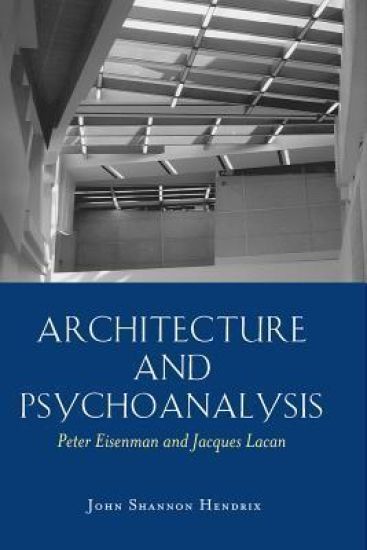
Architecture and Psychoanalysis

Architecture and Psychoanalysis

John Shannon Hendrix; Peter Eisenman; Jacques Lacan

Peter Lang Publishing Inc
2006
nidottu
Architecture and Psychoanalysis is an analysis of the relation between psychoanalytic theory and compositional strategies in architecture. In psychoanalysis it focuses on the writing of Jacques Lacan as well as theories of the structure of the psyche, linguistics, and perception. In architecture it focuses on the writings and projects of Peter Eisenman. There are extended discussions on the thought of figures such as Sigmund Freud, Ferdinand de Saussure, and Jacques Derrida, and of the architecture of figures such as Leon Battista Alberti, Francesco Borromini, Giuseppe Terragni, and Ludwig Mies van der Rohe.
Aesthetics & the Philosophy of Spirit

Aesthetics & the Philosophy of Spirit

John Shannon Hendrix

Peter Lang Publishing Inc
2005
nidottu
Aesthetics & the Philosophy of Spirit examines the aesthetics of Plotinus, Friedrich Wilhelm Joseph von Schelling, and Georg Wilhelm Friedrich Hegel. It discusses the Platonic bases of the aesthetics of Plotinus and the Plotinian bases of the aesthetics of Schelling and Hegel in the philosophy of spirit, identity philosophy, and transcendental idealism. Examining the notion of art as philosophy, as a product of mind, and as an instrument of intellect in the relation between reason and perception, the book involves concepts of the universal and particular, freedom and necessity, the beautiful and sublime, allegory and symbolism, consciousness and self-consciousness, subjective and objective spirit, and forms of artistic representation.
History and Culture in Italy

History and Culture in Italy

John Shannon Hendrix

University Press of America
2003
nidottu
History and Culture in Italy is a scholarly, introductory survey of the history and culture of Italy, focusing on art and architecture, literature and philosophy, politics and historical events, and observations of daily life in modern Italy. The book is based on lectures and tours given over the course of four years to American students in Italy. It is written as a narrative, which readers have found makes it enjoyable to read. Chapters are identified according to subject. The book emphasizes the importance of the history and culture of Italy to modern life and identity in Western culture.