Kirjojen hintavertailu – 12 859 818 kirjaa ja 27 kauppaa

Kirjailija

John Sharp

Kirjat ja teokset yhdessä paikassa: 49 kirjaa, julkaisuja vuosilta 1995–2026, suosituimpiin kuuluu Primary Science: Knowledge and Understanding. Vertaile teosten hintoja ja tarkista saatavuus suomalaisista kirjakaupoista.

49 kirjaa

Kirjojen julkaisuvuodet: 1995–2026.

A Sermon Preached Before the Right Honourable the Lord Mayor,
A Sermon Preached Before the Right Honourable the Lord Mayor, - and Aldermen of London, at Bow Church. is an unchanged, high-quality reprint of the original edition of 1676. Hansebooks is editor of the literature on different topic areas such as research and science, travel and expeditions, cooking and nutrition, medicine, and other genres. As a publisher we focus on the preservation of historical literature. Many works of historical writers and scientists are available today as antiques only. Hansebooks newly publishes these books and contributes to the preservation of literature which has become rare and historical knowledge for the future.
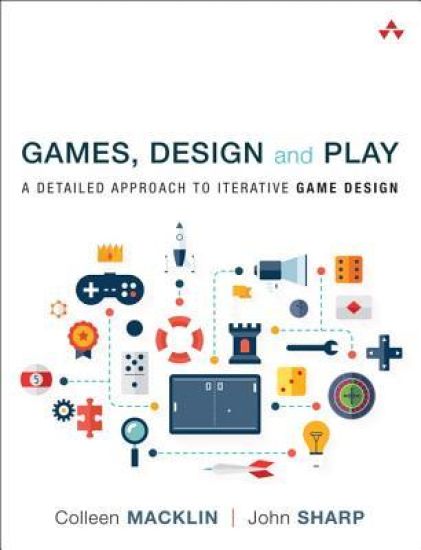
Games, Design and Play

Games, Design and Play

Colleen Macklin; John Sharp

Addison Wesley
2016
nidottu
The play-focused, step-by-step guide to creating great game designs This book offers a play-focused, process-oriented approach for designing games people will love to play. Drawing on a combined 35 years of design and teaching experience, Colleen Macklin and John Sharp link the concepts and elements of play to the practical tasks of game design. Using full-color examples, they reveal how real game designers think and work, and illuminate the amazing expressive potential of great game design. Focusing on practical details, this book guides you from idea to prototype to playtest and fully realized design. You’ll walk through conceiving and creating a game’s inner workings, including its core actions, themes, and especially its play experience. Step by step, you’ll assemble every component of your “videogame,” creating practically every kind of play: from cooperative to competitive, from chance-based to role-playing, and everything in between. Macklin and Sharp believe that games are for everyone, and game design is an exciting art form with a nearly unlimited array of styles, forms, and messages. Cutting across traditional platform and genre boundaries, they help you find inspiration wherever it exists. Games, Design and Play is for all game design students, and for beginning-to-intermediate-level game professionals, especially independent game designers. Bridging the gaps between imagination and production, it will help you craft outstanding designs for incredible play experiences! Coverage includes: Understanding core elements of play design: actions, goals, rules, objects, playspace, and playersMastering “tools” such as constraint, interaction, goals, challenges, strategy, chance, decision, storytelling, and contextComparing types of play and player experiencesConsidering the demands videogames make on playersEstablishing a game’s design valuesCreating design documents, schematics, and tracking spreadsheetsCollaborating in teams on a shared design visionBrainstorming and conceptualizing designsUsing prototypes to realize and playtest designsImproving designs by making the most of playtesting feedbackKnowing when a design is ready for productionLearning the rules so you can break them!

Microsoft Visual C# Step by Step

Microsoft Visual C# Step by Step

John Sharp

MICROSOFT PRESS
2015
nidottu
Your hands-on guide to Microsoft Visual C# fundamentals with Visual Studio 2015 Expand your expertise--and teach yourself the fundamentals of programming with the latest version of Visual C# with Visual Studio 2015. If you are an experienced software developer, you'll get all the guidance, exercises, and code you need to start building responsive, scalable Windows 10 and Universal Windows Platform applications with Visual C#. Discover how to: Quickly start creating Visual C# code and projects with Visual Studio 2015 Work with variables, operators, expressions, and methods Control program flow with decision and iteration statements Build more robust apps with error, exception, and resource management Master the essentials of Visual C# object-oriented programming Use enumerations, structures, generics, collections, indexers, and other advanced features Create in-memory data queries with LINQ query expressions Improve application throughput and response time with asynchronous methods Decouple application logic and event handling Streamline development with new app templates Implement the Model-View-ViewModel (MVVM) pattern Build Universal Windows Platform apps that smoothly adapt to PCs, tablets, and Windows phones Integrate Microsoft Azure cloud databases and RESTful web services About You For software developers who are new to Visual C# or who are upgrading from older versions Readers should have experience with at least one programming language No prior Microsoft . NET or Visual Studio development experience required
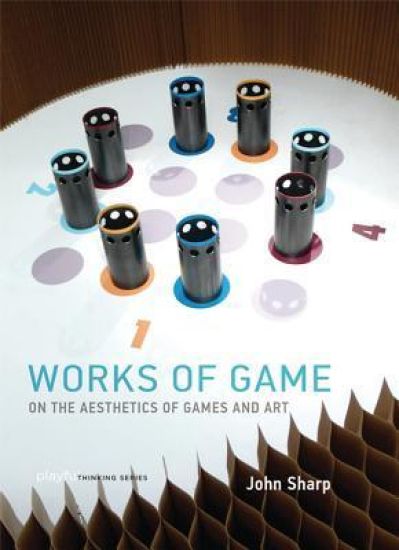
Works of Game

Works of Game

John Sharp

MIT Press
2015
sidottu
An exploration of the relationship between games and art that examines the ways that both gamemakers and artists create game-based artworks. Games and art have intersected at least since the early twentieth century, as can be seen in the Surrealists' use of Exquisite Corpse and other games, Duchamp's obsession with Chess, and Fluxus event scores and boxes-to name just a few examples. Over the past fifteen years, the synthesis of art and games has clouded for both artists and gamemakers. Contemporary art has drawn on the tool set of videogames, but has not considered them a cultural form with its own conceptual, formal, and experiential affordances. For their part, game developers and players focus on the innate properties of games and the experiences they provide, giving little attention to what it means to create and evaluate fine art. In Works of Game, John Sharp bridges this gap, offering a formal aesthetics of games that encompasses the commonalities and the differences between games and art. Sharp describes three communities of practice and offers case studies for each. "Game Art," which includes such artists as Julian Oliver, Cory Arcangel, and JODI (Joan Heemskerk and Dirk Paesmans) treats videogames as a form of popular culture from which can be borrowed subject matter, tools, and processes. "Artgames," created by gamemakers including Jason Rohrer, Brenda Romero, and Jonathan Blow, explore territory usually occupied by poetry, painting, literature, or film. Finally, "Artists' Games"-with artists including Blast Theory, Mary Flanagan, and the collaboration of Nathalie Pozzi and Eric Zimmerman-represents a more synthetic conception of games as an artistic medium. The work of these gamemakers, Sharp suggests, shows that it is possible to create game-based artworks that satisfy the aesthetic and critical values of both the contemporary art and game communities.
Primary Science Audit and Test

Primary Science Audit and Test

Jenny Byrne; Andri Christodoulou; John Sharp

Learning Matters Ltd
2014
sidottu
If you are a primary trainee, you must demonstrate a knowledge of science to be recommended for QTS. This popular, widely recommended, text helps you audit your knowledge of science and understand what learning you need to pass your course. A rigorous test helps you identify your strengths and weaknesses and can be revisited at key stages in your course as a tool to monitor and evaluate progress. The fourth edition has been updated in line with the new National Curriculum, includes more information on expanding and developing your knowledge of science and is linked to the 2012 Teachers’ Standards.
Primary Science Audit and Test

Primary Science Audit and Test

Jenny Byrne; Andri Christodoulou; John Sharp

Learning Matters Ltd
2014
nidottu
If you are a primary trainee, you must demonstrate a knowledge of science to be recommended for QTS. This popular, widely recommended, text helps you audit your knowledge of science and understand what learning you need to pass your course. A rigorous test helps you identify your strengths and weaknesses and can be revisited at key stages in your course as a tool to monitor and evaluate progress. The fourth edition has been updated in line with the new National Curriculum, includes more information on expanding and developing your knowledge of science and is linked to the 2012 Teachers’ Standards.
Success with your Education Research Project

Success with your Education Research Project

John Sharp

Learning Matters Ltd
2012
sidottu
Success with Your Education Research Project is a practical, user-friendly text on research methods aimed specifically at undergraduate students on education courses. Research projects are carried out in schools and non-school settings by nearly all undergraduates in teacher training, Education Studies and other educational disciplines, and this book makes clear references to these courses and contexts throughout. All chapters include learning outcomes, worked examples, practical and reflective tasks and summaries of key points. Topics such as using the Net and plagiarism are covered with up to date information, while key content on literature searches, critical thinking and the development of argument provides clear guidance and ensures deeper understanding. This new edition has been updated throughout to provide greater depth on many topics. Study Skills in Education This series addresses key study skills in the context of education courses, helping students indentify their strenghts and weaknesses, increase their confidence and realise their academic potential. The books are suitable for students on: - any course of Initial Teacher Training leading to the award of QTS (primary or secondary) - degree course in Education or Education Studies with or without QTS - degree courses in Early Years or Early Childhood Studies; - foundation degrees in Education or any education-related subject discipline
Success with your Education Research Project

Success with your Education Research Project

John Sharp

Learning Matters Ltd
2012
nidottu
Success with Your Education Research Project is a practical, user-friendly text on research methods aimed specifically at undergraduate students on education courses. Research projects are carried out in schools and non-school settings by nearly all undergraduates in teacher training, Education Studies and other educational disciplines, and this book makes clear references to these courses and contexts throughout. All chapters include learning outcomes, worked examples, practical and reflective tasks and summaries of key points. Topics such as using the Net and plagiarism are covered with up to date information, while key content on literature searches, critical thinking and the development of argument provides clear guidance and ensures deeper understanding. This new edition has been updated throughout to provide greater depth on many topics. Study Skills in Education This series addresses key study skills in the context of education courses, helping students indentify their strenghts and weaknesses, increase their confidence and realise their academic potential. The books are suitable for students on: - any course of Initial Teacher Training leading to the award of QTS (primary or secondary) - degree course in Education or Education Studies with or without QTS - degree courses in Early Years or Early Childhood Studies; - foundation degrees in Education or any education-related subject discipline
Mathematical Form - John Pickering and the Architecture of The Inversion Principle

Mathematical Form - John Pickering and the Architecture of The Inversion Principle

George Legendre; John Sharp; Chris Wise

Architectural Association Publications
2011
nidottu
John Pickering has been described as a modern-day alchemist who hews his sculptures from pure mathematical principles. His technique is to conjugate a numerical sequence and to cast its form in space. As the form unfolds, it invites us to explore surfaces as sculpture, and to interpret volumes and spaces as architecture. Because of the mathematical rigour that underpins the form, it is already potent, engineered, rational and ultimately, buildable. "The Inversion Principle" conveys, through photographs, the full impact of Pickering's sculptures. But equally it describes the meticulous process of making them. It defines the inspirations behind the works (which include Naum Gabo, space probes, satellites and Stockhausen). It dicusses their engineering implications. Finally, it places them within the architectural tradition of the visionary form.