Kirjojen hintavertailu – 12 867 603 kirjaa ja 27 kauppaa

Kirjailija

John Skinner

Kirjat ja teokset yhdessä paikassa: 50 kirjaa, julkaisuja vuosilta 1992–2026, suosituimpiin kuuluu Prophecy & Religion. Vertaile teosten hintoja ja tarkista saatavuus suomalaisista kirjakaupoista.

50 kirjaa

Kirjojen julkaisuvuodet: 1992–2026.

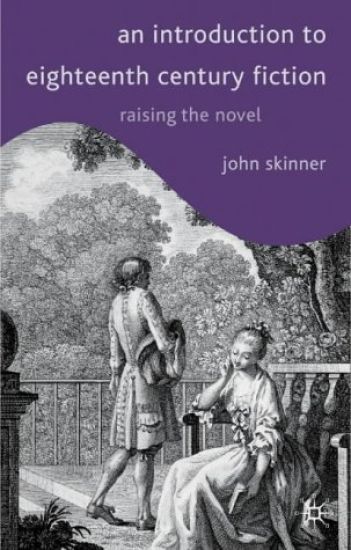
An Introduction to Eighteenth-Century Fiction
The formal and expressive range of canonic eighteenth-century fiction is enourmous: between them Defoe, Richardson, Fielding, Smollett and Sterne seem to have anticipated just about every question confronting the modern novelist; and Aphra Behn even raises a number of issues overlooked by her male successors. But one might also reverse the coin: much of what is present in these writers will today seem remote and bizarre. There is, in fact, only one novelist from the 'long' eighteenth century who is not an endangered species outside the protectorates of university English departments: Jane Austen. Plenty of people read her, moreover, without the need for secondary literature. These reservations were taken into account in the writing of this book. An Introduction to Eighteenth Century Fiction is a comprehensive and accessible introduction to English fiction from Aphra Behn to Jane Austen. It deals with novel criticism, canon formation and relations between genre and gender. The second part of the book contains an extensive discussion of Richardson and Fielding, followed by paired readings of major eighteenth-century novels, juxtaposing texts by Behn and Defoe, Sterne and Smollett, Lennox and Burney among others. The various sections of the book, and even the individual chapters, may be read independently or in any order. Works are discussed in a way intended to help students who have not read them, and even engage with some who never will. The author consumes eighteenth-century fiction avidly, but has tried to write a reader-friendly survey for those who may not.
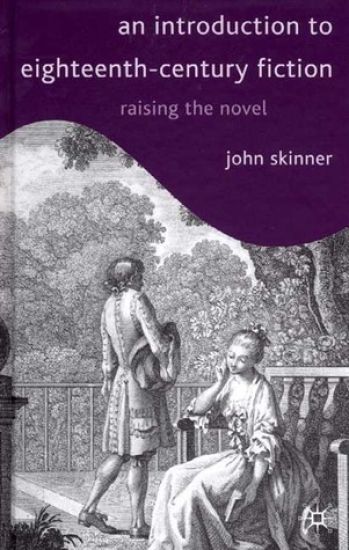
An Introduction to Eighteenth-Century Fiction
The formal and expressive range of canonic eighteenth-century fiction is enourmous: between them Defoe, Richardson, Fielding, Smollett and Sterne seem to have anticipated just about every question confronting the modern novelist; and Aphra Behn even raises a number of issues overlooked by her male successors. But one might also reverse the coin: much of what is present in these writers will today seem remote and bizarre. There is, in fact, only one novelist from the 'long' eighteenth century who is not an endangered species outside the protectorates of university English departments: Jane Austen. Plenty of people read her, moreover, without the need for secondary literature. These reservations were taken into account in the writing of this book. An Introduction to Eighteenth Century Fiction is a comprehensive and accessible introduction to English fiction from Aphra Behn to Jane Austen. It deals with novel criticism, canon formation and relations between genre and gender. The second part of the book contains an extensive discussion of Richardson and Fielding, followed by paired readings of major eighteenth-century novels, juxtaposing texts by Behn and Defoe, Sterne and Smollett, Lennox and Burney among others. The various sections of the book, and even the individual chapters, may be read independently or in any order. Works are discussed in a way intended to help students who have not read them, and even engage with some who never will. The author consumes eighteenth-century fiction avidly, but has tried to write a reader-friendly survey for those who may not.

The Wisdom of the Cloister

The Wisdom of the Cloister

John Skinner

Bantam Doubleday Dell Publishing Group
1999
pokkari
The 365 daily readings from "Wisdom of the Cloister "offer the serenity of monastic life to a wide audience. Especially intended to serve the general reader, this collection surveys the whole of Christian monasticism. Included here are a full range of writings, from the earliest desert mothers and fathers to contemporary monastics. John Skinner, author and translator of many texts of spirituality, invites the reader to peruse these varied writings using the immediately accessible style of reading known as "lectio divina." This custom, traditionally favored by monks, works on the idea that inspired texts should be approached as a means for hearing God speaking through and within the text. By way of this prayerful, openhearted method, readers may glean personal insights that are uniquely relevant and meaningful to their lives. "Wisdom of the Cloister" is both a resource for daily inspiration and an overview of the world of monasticism.
The Stepmother Tongue

The Stepmother Tongue

John Skinner

Red Globe Press
1998
nidottu
There are numerous twentieth century writers in English who are not technically native speakers of the language, and whose relation to it is ambivalent, problematic or even hostile: by a simple kinship analogy one may often speak of the 'stepmother tongue'. Whilst fully aware of the current debates in postcolonial theory, John Skinner is also conscious of its sometimes unhelpful complexities and contradictions. The focus of this study is thus firmly on the fictional practice of the writers discussed. He offers the reader an insight into the diversity and rewards of contemporary anglophone fiction, whilst analysing some eighty individual texts. A uniquely comprehensive guide, the book will be welcomed by students and teachers of postcolonial literature.
The Confession of Saint Patrick

The Confession of Saint Patrick

John Skinner

Bantam Doubleday Dell
1998
pokkari
The autobiography of one of the most popular saints in history, now available in a new translation. Beyond being recognized as the patron saint of Ireland (perhaps for having chased some nonexistent snakes off the Emerald Isle), little else is popularly known about Saint Patrick. And yet, Patrick left behind a unique document, his Confession, which tells us much about both his life and his beliefs. This autobiography, originally written in the fifth century, and short by modern standards, is nonetheless a work that fascinates with its glimpse into the life of an intriguing man, and inspires with its testament of faith. Here, in this new edition from internationally acclaimed translator John Skinner, the character of Patrick, his era, and his world vividly come to life. Also included in this volume is the only other document known to have been written by Patrick, a letter he wrote to the soldiers of Coroticus--also Christians--who had raided parts of Ireland and taken away prisoners who were then sold into slavery. This letter is a wonderful demonstration of Patrick's rhetorical fire. Quite irate, Patrick harangues his fellow Christians, and the results are every bit as autobiographically revealing as the Confession. John O'Donohue, author of Anam Cara, provides an insightful foreword that re-creates the unique spirituality of Patrick and of the Irish people, and shows how it applies to our lives today.
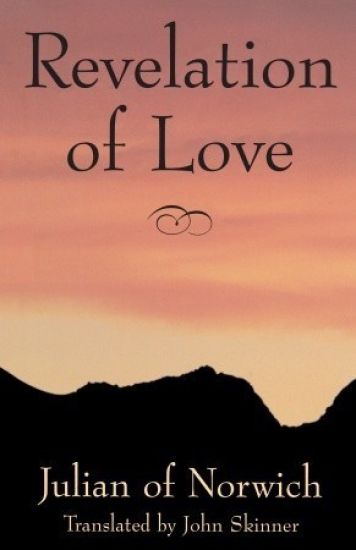
Revelation of Love

Revelation of Love

John Skinner

Bantam Doubleday Dell
1997
pokkari
"I have been reading Lady Julian of Norwich," declares C. S. Lewis in a letter to his former pupil, the Benedictine mystic Bede Griffiths. "A dangerous book, clearly. I'm glad I didn't read it much earlier." Thomas Merton wrote simply, "There can be no doubt that Julian is the greatest of the English mystics." Few texts have had held such interest or been the object of such enduring devotion as has Julian of Norwich's 14th-century classic A Revelation of Love. This great work--along with The Cloud of Unknowing and Teresa of Avila's The Interior Castle--form the very heart of Western mysticism, and each generation has cherished its beautiful poetry and profound account of a soul's quest for the divine. This new translation of Julian's mystical writings offers today's reader immediate access to this most powerful spiritual of books written in English. Julian's message of God's intimate and enabling love is revealed as both beguiling and inescapable. The poetry and rhythmic structure of the original Middle English text are respected, yet it is given fresh immediacy since it is now rendered in inclusive language for the first time ever. Moreover Julian's key ideas are easily identified-even by newcomers to her unique system of thought-by means of an original and authoritative linking commentary at the head of each key chapter, as well as continuing support from highly informative footnotes and a detailed glossary of the main terms used.
The Fictions of Anita Brookner

The Fictions of Anita Brookner

John Skinner

Palgrave Macmillan
1992
nidottu
The Fiction of Anita Brookner is the first full-length study of this controversial contemporary writer. After discussing critical assessments of Brookner, and attempts to relate her to various classics and contemporaries, Dr Skinner skilfully combines insights from recent narrative theory with close analyses of nine novels. Moving from the first novels, and their close relations to French literary models, he goes on to trace the increased sophistication of Hotel du Lac and the technical innovations of its successors.
The Fictions of Anita Brookner

The Fictions of Anita Brookner

John Skinner

Palgrave Macmillan
1992
sidottu
The Fiction of Anita Brookner is the first full-length study of this controversial contemporary writer. After discussing critical assessments of Brookner, and attempts to relate her to various classics and contemporaries, Dr Skinner skilfully combines insights from recent narrative theory with close analyses of nine novels. Moving from the first novels, and their close relations to French literary models, he goes on to trace the increased sophistication of Hotel du Lac and the technical innovations of its successors.