Kirjailija
John Stewart
Kirjat ja teokset yhdessä paikassa: 106 kirjaa, julkaisuja vuosilta 1992–2026, suosituimpiin kuuluu Wilson's Official Guide to the Islands of Staffa and Iona.. Vertaile teosten hintoja ja tarkista saatavuus suomalaisista kirjakaupoista.
106 kirjaa
Kirjojen julkaisuvuodet: 1992–2026.
Nordic Classicism presents the first English-language survey of an important yet short-lived movement in modern architectural history. It was through the Nordic classical movement that Scandinavian architecture first attracted international attention. It was the Nordic Pavilions, rather than Le Corbusier’s modernism, which generated most admiration at the 1925 World Fair, and it was the Nordic classical architects – including Gunnar Asplund, Sigurd Lewerentz, and Alvar Aalto – who went on to establish Scandinavia’s reputation for modern design. Yet this brief classsical movement was quickly eclipsed by the rise of international modernism, and has often been overlooked in architectural studies. The book explores the lives and works of various key contributors to Nordic classicism – with eleven chapters each focussing on a different architect and on one of the period’s outstanding works (including the Stockholm Central Library, the Resurrection Chapel, and the Woodland Cemetery). Famous architects and their works are examined alongside many lesser-known examples, to provide a comprehensive and in-depth account. As we approach the centenary of many of the events to which the book refers, now is a timely opportunity to explore the key themes of the Nordic classical movement, its architects, their buildings and the social and cultural changes to which they were responding.

Hattie Lawton was a young Pinkerton detective who with her partner, Timothy Webster, spied for the U. S. Secret Service during the Civil War. Working in Richmond, the two posed as husband and wife. A dazzling blonde from New York and a handsome Englishman, both with checkered pasts, they were matched in charm, cunning, duplicity and boldness. Betrayed by their own spymaster, Allan Pinkerton, they fell into the hands of the dictator of Richmond, the notorious General John H. "Hog" Winder. This lively history, scrupulously researched from all available sources, corrects the record on many points and definitively answers the long-standing question of Hattie Lawton's true identity.
First published in 1999, this is the first scholarly study of the Socialist Medical Association (SMA), an organisation of left-wing medical practitioners founded in 1930 and affiliated to the Labour Party in the following year. The SMA’s aim was a free, comprehensive, and universal state medical service, democratically controlled and with all personnel, including doctors, working as salaried employees. In the 1930s and early 1940s the organisation gained increasing influence over Labour Party health policy, and consequently saw its activities as central to the creation of the National Health Service (NHS). However, once Labour was actually in power, the SMA became more and more marginalised, in part because of its difficult relationship with the Minister of Health, Aneurin Bevan. Bevan, while inaugurating a service which had many features desired by the Association, none the less also felt obliged to make compromises with the medical profession. The SMA’s activities are therefore of historical interest in providing a further view of the creation of the NHS, while its ideas and proposals continue to raise serious questions about issues such as the nature and control of social welfare and the possibility of achieving a truly socialised health service.
This book shows that contemporary biology is focused almost exclusively on genes and molecules. This approach, despite giving rise to exciting developments, such as DNA sequencing and genetic engineering, does not take into account the living organisms themselves. This text redresses this imbalance: firstly, by providing a sketch of a fully-fledged theory of what living organisms are; and then putting this theory to work by recounting the story of the evolution of living organisms on Earth.
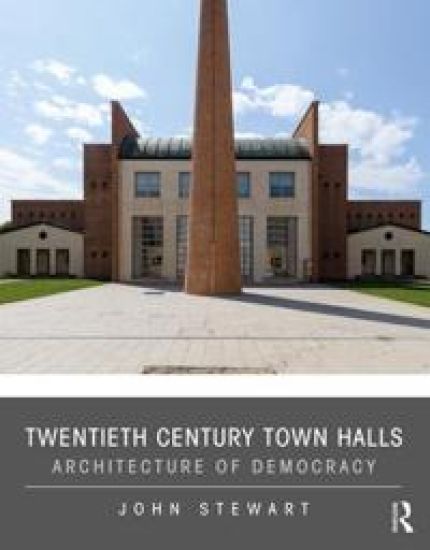
This is the first book to examine the development of the town hall during the twentieth century and the way in which these civic buildings have responded to the dramatic political, social and architectural changes which took place during the period. Following an overview of the history of the town hall as a building type, it examines the key themes, variations and lessons which emerged during the twentieth century. This is followed by 20 case studies from around the world which include plans, sections and full-colour illustrations. Each of the case studies examines the town hall's procurement, the selection of its architect and the building design, and critically analyses its success and contribution to the type’s development. The case studies include:Copenhagen Town Hall, Denmark, Martin NyropStockholm City Hall, Sweden, Ragnar OstbergHilversum Town Hall, the Netherlands, Willem M. DudokWalthamstow Town Hall, Britain, Philip Dalton HepworthOslo Town Hall, Norway, Arnstein Arneberg and Magnus PoulssonCasa del Fascio, Como, Italy, Guiseppe TerragniAarhus Town Hall, Denmark, Arne Jacobsen with Eric MollerSaynatsalo Town Hall, Finland, Alvar AaltoKurashiki City Hall, Japan, Kenzo TangeToronto City Hall, Canada, Viljo RevellBoston City Hall, USA, Kallmann, McKinnell and KnowlesDallas City Hall, USA, IM PeiMississauga City Hall, Canada, Ed Jones and Michael KirklandBorgoricco Town Hall, Italy, Aldo RossiReykjavik City Hall, Iceland, Studio GrandaValdelaguna Town Hall, Spain, Victor Lopez Cotelo and Carlos Puente FernandezThe Hague City Hall, the Netherlands, Richard MeierIragna Town Hall, Switzerland, Raffaele CavadiniMurcia City Hall, Spain, Jose Rafael MoneoLondon City Hall, UK, Norman Foster
Nordic Classicism presents the first English-language survey of an important yet short-lived movement in modern architectural history. It was through the Nordic classical movement that Scandinavian architecture first attracted international attention. It was the Nordic Pavilions, rather than Le Corbusier’s modernism, which generated most admiration at the 1925 World Fair, and it was the Nordic classical architects – including Gunnar Asplund, Sigurd Lewerentz, and Alvar Aalto – who went on to establish Scandinavia’s reputation for modern design. Yet this brief classsical movement was quickly eclipsed by the rise of international modernism, and has often been overlooked in architectural studies. The book explores the lives and works of various key contributors to Nordic classicism – with eleven chapters each focussing on a different architect and on one of the period’s outstanding works (including the Stockholm Central Library, the Resurrection Chapel, and the Woodland Cemetery). Famous architects and their works are examined alongside many lesser-known examples, to provide a comprehensive and in-depth account. As we approach the centenary of many of the events to which the book refers, now is a timely opportunity to explore the key themes of the Nordic classical movement, its architects, their buildings and the social and cultural changes to which they were responding.

Written by a recognized leader in the manufacturing industry with nearly two decades of experience working for Toyota, this book supplies a firsthand account of the realities behind implementing the Toyota Production System (TPS). The Toyota Kaizen Continuum: A Practical Guide to Implementing Lean presents authoritative insight on how to use the TPS to drive operational value and improvement across all segments of an organization. Highlighting valuable lessons learned directly from the TPS masters at the Toyota factories in Japan, John Stewart provides a time-tested approach for implementing a process of continuous improvement. Delving into his wide-ranging experience that includes time as a team member on the assembly line and managing the vehicle assembly division for Toyota‘s largest European operation in the United Kingdom he explains how to get the process started, how to get senior management excited about the possibilities, and details a process for implementing the TPS in your organization. Written by an industry veteran named one of the Top 10 Automotive Executives by Automotive News in 2007 Unveils the methods used within the walls of the worlds premier manufacturing organization Illustrates valuable lessons learned with real-world examples of TPS implementations Describes five simple steps for executing change in any organization The book includes case studies that illustrate real-life successes and failures behind the walls of the worlds largest automobile manufacturing organization. Detailing a five-step process for executing improvement initiatives, it supplies you with the tools and understanding of the core principles of the TPS needed to implement and sustain a culture of continuous improvement in your organization.
On December 22, 1853, a new steamship left New York on its maiden voyage. The San Francisco--perhaps the finest ocean-going vessel of its time--had been chartered by the U. S. Government to transport the U. S. Army's Third Artillery Regiment to the Pacific Coast. Two days out, the ship ran into one of the great hurricanes of maritime history. Sails and stacks were blown away, the engine was wrecked and scores of people were washed overboard, as the men frantically worked the pumps to keep afloat. A few days later, cholera broke out. After two weeks adrift, the survivors were rescued by three ships. The nightmare was not over. Two of the vessels, damaged by the storm, were in no position to take on passengers. Provisions ran out. Fighting thirst, starvation, disease and mutiny, survivors barely made it back. Then came the aftermath--accusations, denials, revelations of government ineptitude and negligence, and a cover-up.
Attachment-Based Milieus for Healing Child and Adolescent Developmental Trauma
John Stewart; Dan Hughes
Jessica Kingsley Publishers
2017
sidottu
This book presents an innovative relational and community based therapeutic model to ensure children's essential attachment needs are catered for in intensive mental health care. The text combines an overview of theory relating to attachment and trauma before laying out a model for working with children and adolescents in an attachment-informed way. The approach applies to a diverse range of settings - from in-patient psychiatric settings, through to schools-based programs, and provides the reader with the knowledge and guidance they need to introduce the approach in their own service. It also addresses the complexities of working with specific clinical populations, including children with ADHD, ASD, RAD and psychosis. Accessible for entry level clinical caretakers, yet sophisticated enough for clinical supervisors, this book is essential reading for professionals looking to improve the effectiveness of child and adolescent treatment programs.
Attachment-Based Milieus for Healing Child and Adolescent Developmental Trauma
John Stewart; Dan Hughes
Jessica Kingsley Publishers
2017
pokkari
This book presents an innovative relational and community based therapeutic model to ensure children's essential attachment needs are catered for in intensive mental health care. The text combines an overview of theory relating to attachment and trauma before laying out a model for working with children and adolescents in an attachment-informed way. The approach applies to a diverse range of settings - from in-patient psychiatric settings, through to schools-based programs, and provides the reader with the knowledge and guidance they need to introduce the approach in their own service. It also addresses the complexities of working with specific clinical populations, including children with ADHD, ASD, RAD and psychosis. Accessible for entry level clinical caretakers, yet sophisticated enough for clinical supervisors, this book is essential reading for professionals looking to improve the effectiveness of child and adolescent treatment programs.
Based on a survey of probation work with almost 1400 young adult offenders, this book provides a unique insight into the realities of probation practice in a context of increasing poverty, drug use and community breakdown. Starting with an outline of the current policy environment, the book discusses the relevance of criminological theory to the harsh experience of young offenders in modern Britain. It goes on to develop a typology of offending behaviour on the basis of detailed and often disturbing accounts of the histories and troubles of young people afflicted by poverty, disruption of family relationships and long term unemployment. While much of the book is concerned with the difficulties young offenders experience, and the problems probation officers have in trying to help them change, the overall message of the book is not one of despair. The authors show that good probation practice can make a difference, and the book is written in a way which will be useful to practitioners and policy-makers involved with supervising offenders in the community. From the typology of offending the authors extract lessons for appropriate and relevant practice which should help to improve the quality and effectiveness of the probation service. Some of these implications are explored in the concluding chapter, by Cedric Fullwood, Chief Probation Officer of Greater Manchester. As well as criminal justice practitioners, students of criminology, probation trainees and other social work students will find in the book many vivid examples of how sociological theory can be used to understand and interpret practice. The book is likely to provoke much debate about what constitutes positive practice in a probation service facing the challenges of the future.
In the early 1990s North America was the vibrant centre of an increasingly democratic and revitalized western hemisphere. The United States and Canada were close allies working together to implement a bilateral free trade agreement and build an integrated manufacturing and export economy. By the late 2000s, the economic and diplomatic ties between the two countries were strained as policies stagnated or slipped backward and passports were needed to cross the border for the first time in history. By 2017 the US planned to wall off its border with Mexico and NAFTA was slated for renegotiation. In Strangers with Memories John Stewart combines an insider's knowledge, a mole's perspective, and a historian's consciousness to explain how two countries that spent the twentieth century building a world order together drifted so quickly apart in the early years of the twenty-first - and how that world order began its current shift. Assessing the major forces and events in North America's development between 1990 and 2010, this book also details changes at the US embassy in Ottawa during those years and its relationship with US consulates in Canada and with the State Department's Canada desk. Explaining how Canada's influence in the world depends on the US and the decline in the US diplomacy under presidents George W. Bush and Donald Trump, Stewart gives valuable advice on how Canada should handle its foreign policy in a much less stable world. From the viewpoint of a Canadian with a front-row seat to two decades of US-Canada relations, Strangers with Memories chronicles Canada at the apogee of American power.
Centralisation, Devolution and the Future of Local Government in England
Steve Leach; John Stewart; George Jones
Routledge
2017
sidottu
English local government is in a state of decline after 40 years of incremental but cumulative centralisation by central government. This book is the first to directly address this trend's impact upon the institution of local government, a crucial element in the democratic viability of a unitary state. The process of centralisation, and its corrosive effect on the status and responsibilities of local government, have been widely recognised and deplored among politicians and senior officers within local government, and by academics with an interest in this field. However, there has been no study exploring in detail its impact, and, equally important, suggesting ways in which the growing imbalance between the powers of central and local government should be rectified. This book fills this gap. This text will be of key interest to scholars, students and practitioners of local government, and more generally to those interested in what has been happening to British politics and governance.
Centralisation, Devolution and the Future of Local Government in England
Steve Leach; John Stewart; George Jones
Routledge
2017
nidottu
English local government is in a state of decline after 40 years of incremental but cumulative centralisation by central government. This book is the first to directly address this trend's impact upon the institution of local government, a crucial element in the democratic viability of a unitary state. The process of centralisation, and its corrosive effect on the status and responsibilities of local government, have been widely recognised and deplored among politicians and senior officers within local government, and by academics with an interest in this field. However, there has been no study exploring in detail its impact, and, equally important, suggesting ways in which the growing imbalance between the powers of central and local government should be rectified. This book fills this gap. This text will be of key interest to scholars, students and practitioners of local government, and more generally to those interested in what has been happening to British politics and governance.
Cyprus. 1979. One island, divided by the notorious Green Line. Greeks on one side, Turks on the other. To cross the Green Line means death and 342 men have found that out. John Reid, who grew up in Cyprus, is the first to cross the Green Line, and not once but several times. Certain Greek millionaires make him an offer he can't refuse, and this leads him into the clutches of The Professor, the head of the Turkish Cypriot Secret Service. Reid's desperate attempt at escape is threatened by Burt Zoffel, a CIA operative from his past, and by Zoffel's beautiful daughter, playing her own game. With the scent of the old Ottoman world wafting about, Reid moves fast over the sun-baked soil and through the Aleppo pines, along the golden beaches with kebabs and ouzo, up perilous mountain roads beneath ancient monasteries on craggy cliffs, and Crusader castles aloof above the world of killers and spies.
Personal Communicating and Racial Equity: A Humane Technology for Developing Anti-Stereotyping Relationships with People Who Are Different from You
John Stewart
Kendall/Hunt Publishing Co ,U.S.
2017
nidottu
Martin Luther King Jr. once said ""People fail to get along with each other because they fear each other. They fear each other because they don't know each other. They don't know each other because they have not properly communicated with each other."" Personal Communicating and Racial Equity: A Humane Technology for Building Anti-Stereotyping Relationships with People Who are Different from you explains how to ""properly communicate"" with people culturally different from you through a nine step process. This short manual is designed to empower social justice advocates, intercultural communication and race-class-gender students, multicultural competence workshop participants, and racial equity advocates by addressing one of U. S. culture's most serious 21st century challenges. The nine steps for proper communication included in Personal Communicating and Racial Equity: A Humane Technology for Building Anti-Stereotyping Relationships with People Who are Different from you, by John Stewart:Are ""humane"" and focus on what it means to be humanHelp build ""non-stereotyping"" relationships that are as personal as possibleMobilize curiosity, humility, and platinum empathy to help connect with others
Alvar Aalto: Architect
John Stewart; Richard Rogers
Merrell Publishers Ltd
2017
sidottu
Halvin toimitettuna 42,90 €
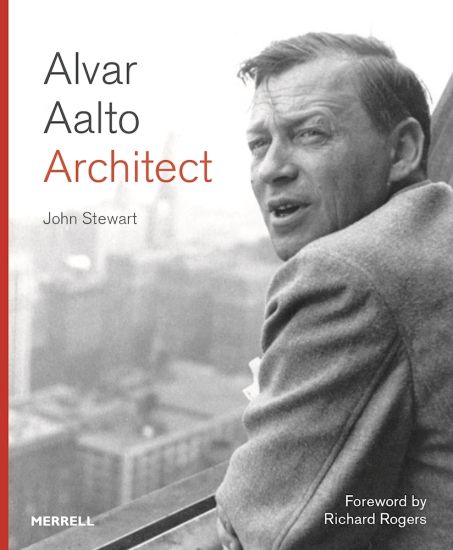
Alvar Aalto remains Finland's greatest architect, retains his place among the Modern Masters of twentieth-century architecture and is now recognized internationally as one of the world's greatest architects of all time. For Finland, Aalto, through his architecture, furniture, glassware and sculpture, contributed perhaps more than any other Finn to the creation of the cultural identity of the new independent Finland and its promotion around the world. His Finnish Pavilions in Paris and New York from the Thirties placed Finland centre-stage, establishing its identity as a modern, innovative country and generated huge interest in this northern land of lakes and forests. He went on to work in 18 countries around the world, as well as designing many of Finland's most important buildings of the 50s, 60s and 70s. This new biography of Aalto is the first to comprehensively cover his life, from the backwoods of Ostrabothnia to international fame and all of his buildings, from the early alterations and extensions to shops and houses in Jyvaskyla to Finlandia Hall. It draws on Aalto's archive, recollections of former employees and contemporaneous publications to fully explore Alvar Aalto the architect, rather than simply Alvar Aalto's architecture. For the first time, his life is set in the context of the events that surrounded and shaped it - the Finnish Civil War, the Great Depression, The Winter and Continuation Wars, the post-war boom in education, Finland's industrialisation and eventually the social revolution of the 60s which led to his characterization as a member of a Finnish elite and temporary unpopularity. It covers his life from his childhood, growing up in regional Jyvaskyla and Alajarvi, his architectural studies in Helsinki, combat in the Civil War through to the founding of his first office, his early neo-classical work and his international breakthrough with the completion of Paimio Sanatorium and Viipuri Library. It deals with his personal life, his marriage to Aino, what working life in his first office was like, the architectural competitions, his key friendships and continuous financial difficulties. As his career progressed, it explores the patrons who were so important to him - the Gullichsens and the founding of Artek, his new American friends, professorship at MIT. After the war, the death of Aino, marriage to Elissa and the period of his greatest architectural achievements - Saynatsalo Town Hall, Otaniemi University and Imatra Church. It considers the organisation of his new office in Helsinki, his expanding team, fame and eventually vanity. The book seeks to understand what drove him, the combination of skills, talents and character traits, which led to his extraordinary global success. As you will be aware, there is no shortage of books on Alvar Aalto, or to be more precise, there is no shortage of books on Alvar Aalto's Architecture. (Only one previous biography exists, published first in 1984 and now out of print). This book is about an architect and his architecture, written by another architect, not an architectural historian. It is the first, frank and fully-comprehensive biography of Alvar Aalto.
American History: The People & Events That Changed American History
John Stewart
Createspace Independent Publishing Platform
2016
nidottu