Kirjojen hintavertailu – 12 859 828 kirjaa ja 27 kauppaa
Kirjailija
John Stuart Mill
Kirjat ja teokset yhdessä paikassa: 889 kirjaa, julkaisuja vuosilta 1850–2027, suosituimpiin kuuluu Sosialismin hyödyt ja haitat. Vertaile teosten hintoja ja tarkista saatavuus suomalaisista kirjakaupoista.
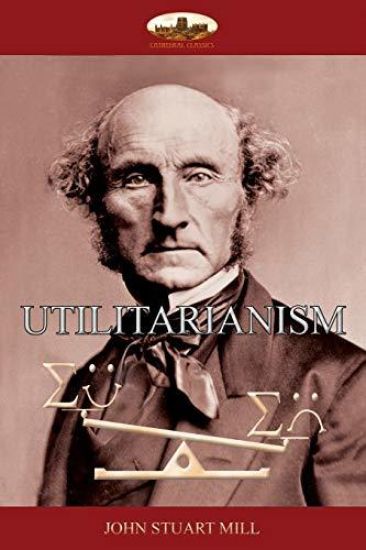
Born in 1806, John Stuart Mill was a prodigy: at six he had had written a history of Rome and by eight he was reading both Plato and Sophocles in the original Greek. Open-minded and magnanimous, in early adulthood John Stuart Mills was far ahead of his time, espousing just about every progressive ideal, from total sexual equality, through slave emancipation and votes for the working classes, to the absolute right to contraception. In 'Utilitarianism', Mill argues for the rightness of this philosophy, which is based on the principle that "actions are right in proportion as they tend to promote happiness, wrong as they tend to produce the reverse of happiness," and originates from the social nature of humanity. In five chapters he clearly sets forth a more nuanced and complex idea of this important moral and social theory.
Mill took many elements of his version of utilitarianism from Jeremy Bentham, the great nineteenth-century legal reformer, who along with William Paley were the two most influential English utilitarians prior to Mill. Like Bentham, Mill believed that happiness (or pleasure, which both Bentham and Mill equated with happiness) was the only thing humans do and should desire for its own sake. Since happiness is the only intrinsic good, and since more happiness is preferable to less, the goal of the ethical life is to maximize happiness. This is what Bentham and Mill call "the principle of utility" or "the greatest-happiness principle." Both Bentham and Mill thus endorse "classical" or "hedonistic" forms of utilitarianism. More recent utilitarians often deny that happiness is the sole intrinsic good, arguing that a variety of values and consequences should be considered in ethical decision making. Although Mill agreed with Bentham about many of the foundational principles of ethics, he also had some major disagreements. In particular, Mill tried to develop a more refined form of utilitarianism that would harmonize better with ordinary morality and highlight the importance in the ethical life of intellectual pleasures, self-development, high ideals of character, and conventional moral rules.
According to Mill's Autobiography, On Liberty was first conceived as a short essay in 1854. As the ideas developed, the essay was expanded, rewritten and "sedulously" corrected by Mill and his wife, Harriet Taylor. Mill, after suffering a mental breakdown and eventually meeting and subsequently marrying Harriet, changed many of his beliefs on moral life and women's rights. Mill states that On Liberty "was more directly and literally our joint production than anything else which bears my name." The final draft was nearly complete when his wife died suddenly in 1858. Mill suggests that he made no alterations to the text at this point and that one of his first acts after her death was to publish it and to "consecrate it to her memory." The composition of this work was also indebted to the work of the German thinker Wilhelm von Humboldt, especially his essay On the Limits of State Action. Finally published in 1858 On Liberty was one of Mill's two most influential books (the other being Utilitarianism).
This collection of essays by John Stuart Mill includes his masterwork of political philosophy On Liberty, together with other notable and acclaimed works. A famed philosopher, essayist and economist, John Stuart Mill has since the nineteenth century been revered for his succinct insights on matters of society. He developed the philosophy of utilitarianism, which remains a subject of serious study to this day. This compilation contains four principle works by Mill: On Liberty - the classic essay by Mill, and his most known. In this treatise Mill attempts to reconcile the need for civilized control and authority with the human need for personal liberty and expression. Individuality is, according to Mill, precursor to many of the higher pleasures of existence - a just society must therefore make provisions for such to occur, while remaining sufficiently ordered.
This collection of essays by John Stuart Mill includes his masterwork of political philosophy On Liberty, together with other notable and acclaimed works. A famed philosopher, essayist and economist, John Stuart Mill has since the nineteenth century been revered for his succinct insights on matters of society. He developed the philosophy of utilitarianism, which remains a subject of serious study to this day. This compilation contains four principle works by Mill: On Liberty - the classic essay by Mill, and his most known. In this treatise Mill attempts to reconcile the need for civilized control and authority with the human need for personal liberty and expression. Individuality is, according to Mill, precursor to many of the higher pleasures of existence - a just society must therefore make provisions for such to occur, while remaining sufficiently ordered.
In particular, Mill tried to develop a more refined form of utilitarianism that would harmonize better with ordinary morality and highlight the importance in the ethical life of intellectual pleasures, self-development, high ideals of character and conventional moral rules. People must have the freedom to establish what is what makes them happy and allows them to live well. Only in this way is it possible to create a moral system without there being a totalizing and imposed idea. Thus, Stuart Mill establishes the idea that each person is sovereign of his own body and mind. However, the body is not the only thing that creates a limit that can not be crossed.
Classic Books Library presents this brand new edition of John Stuart Mill's philosophical work, "On Liberty" (1859). This essay marks Mill's attempt to establish ethical standards for the liberties and rights of individuals in society, in balance with authoritarian rule and government intervention. It was, and remains, a highly influential text in the development of social theory and philosophical thought. John Stuart Mill (1806-1873) was a British philosopher concerned with politics, ethics and economics and is known for his support of freedom of speech and the rights of the individual in society, and for his contributions to liberalist political ideology.
The book presents the concept of representative government, the ideal form of government. Mill suggests that representative bodies such as parliaments and senates are best suited to be places of public debate on the various opinions held by the population and to act as watchdogs of the professionals who create and administer laws and policy.
On Liberty by John Stuart Mill. On Liberty is a philosophical work by the English philosopher John Stuart Mill, originally intended as a short essay. The work, published in 1859, applies Mill's ethical system of utilitarianism to society and the state. Mill attempts to establish standards for the relationship between authority and liberty. He emphasizes the importance of individuality, which he conceived as a prerequisite to the higher pleasures-the summum bonum of utilitarianism. Furthermore, Mill criticizes the errors of past attempts to defend individuality where, for example, democratic ideals resulted in the "tyranny of the majority". Among the standards established in this work are Mill's three basic liberties of individuals, his three legitimate objections to government intervention, and his two maxims regarding the relationship of the individual to society.
This expanded edition of John Stuart Mill's Utilitarianism includes the text of his 1868 speech to the British House of Commons defending the use of capital punishment in cases of aggravated murder. The speech is significant both because its topic remains timely and because its arguments illustrate the applicability of the principle of utility to questions of large-scale social policy.