

Kirjailija
John Stuart Mill
Kirjat ja teokset yhdessä paikassa: 889 kirjaa, julkaisuja vuosilta 1850–2027, suosituimpiin kuuluu Sosialismin hyödyt ja haitat. Vertaile teosten hintoja ja tarkista saatavuus suomalaisista kirjakaupoista.
889 kirjaa
Kirjojen julkaisuvuodet: 1850–2027.


System der deduktiven und induktiven Logik - Eine Darlegung der Prinzipien wissenschaftlicher Forschung, insbesondere der Naturforschung ist ein unver nderter, hochwertiger Nachdruck der Originalausgabe aus dem Jahr 1862. Hansebooks ist Herausgeber von Literatur zu unterschiedlichen Themengebieten wie Forschung und Wissenschaft, Reisen und Expeditionen, Kochen und Ern hrung, Medizin und weiteren Genres. Der Schwerpunkt des Verlages liegt auf dem Erhalt historischer Literatur. Viele Werke historischer Schriftsteller und Wissenschaftler sind heute nur noch als Antiquit ten erh ltlich. Hansebooks verlegt diese B cher neu und tr gt damit zum Erhalt selten gewordener Literatur und historischem Wissen auch f r die Zukunft bei.

On Liberty
John Stuart Mill
Createspace Independent Publishing Platform
2016
nidottu
Halvin toimitettuna 13,60 €
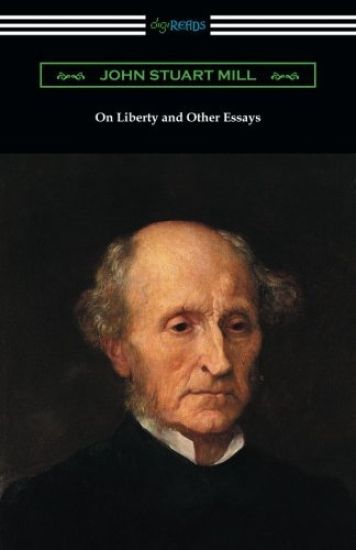
On Liberty and Other Essays (with an Introduction by A. D. Lindsay)
John Stuart Mill
Digireads.com
2016
pokkari
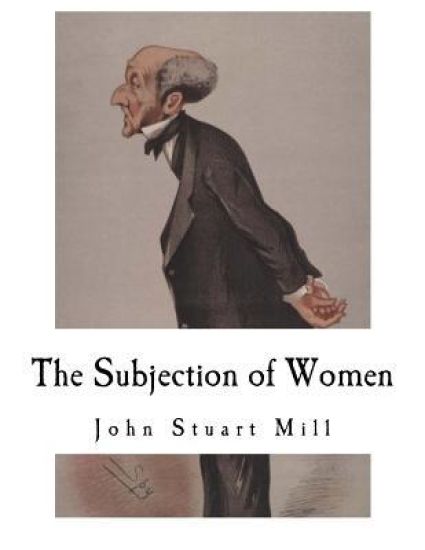
The Subjection of Women: John Stuart Mill
John Stuart Mill
Createspace Independent Publishing Platform
2016
nidottu
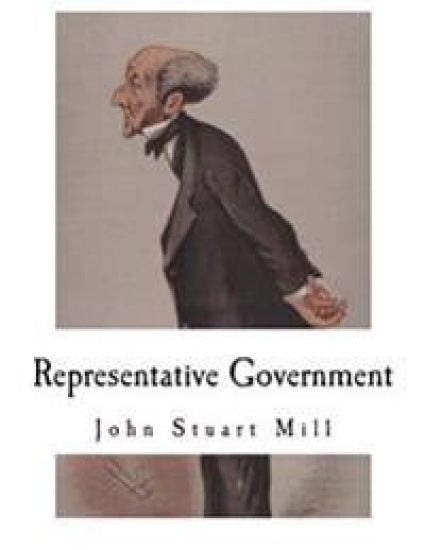
Representative Government: Considerations on Representative Government
John Stuart Mill
Createspace Independent Publishing Platform
2016
nidottu
Representative Government - John Stuart Mill
The Principles of Political Economy: John Stuart Mill
John Stuart Mill
Createspace Independent Publishing Platform
2016
nidottu
The Principles of Political Economy - with some of their applications to social philosophy - John Stuart Mill
On Liberty - John Stuart Mill.... On Liberty is a philosophical work by English philosopher John Stuart Mill, originally intended as a short essay. The work, published in 1859, applies Mill's ethical system of utilitarianism to society and the state. Mill attempts to establish standards for the relationship between authority and liberty. He emphasizes the importance of individuality which he conceived as a prerequisite to the higher pleasures


In his much quoted, seminal work, On Liberty, John Stuart Mill attempts to establish standards for the relationship between authority and liberty. He emphasizes the importance of individuality which he conceived as a prerequisite to the higher pleasures-the summum bonum of Utilitarianism. Published in 1859, On Liberty presents one of the most eloquent defenses of individual freedom and is perhaps the most widely-read liberal argument in support of the value of liberty.
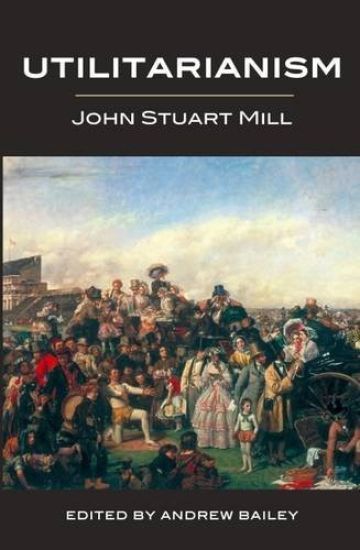
Utilitarianism is a classic work of ethical theory, arguably the most persuasive and comprehensible presentation of this widely infl uential position. Mill argues that it is pleasure and pain that ought to guide our decision-making-and not the pleasure and pain of any one person or group, but the summative experience of all who are affected by our actions. While he didn't invent utilitarianism, Mill offered its clearest expression and strongest defense, and expanded the theory to account for the variety in quality that we find among specifi c pleasures and pains. Today, Mill's version of the "Greatest Happiness Principle" is a standard premise in many moral arguments within the academy and in practical ethical and political deliberation. The complete text of the * edition of Utilitarianism is presented here, with footnote annotations added to clarify unfamiliar references and terminology. A detailed introduction by the editor is divided into brief digestible parts discussing the context of the text and offering guidelines on how to read it accurately and critically. This edition has its origin in the acclaimed Broadview Anthology of Social and Political Thought and adheres to the anthology's format and high standard of accuracy and accessibility.
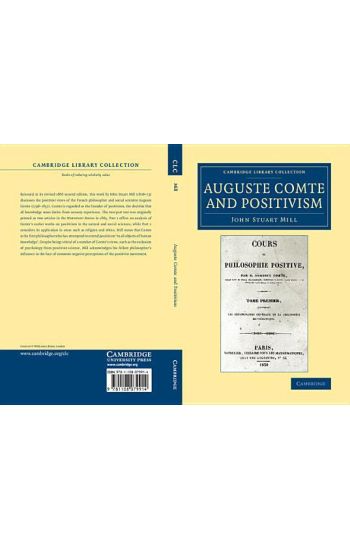
Reissued in its revised 1866 second edition, this work by John Stuart Mill (1806–73) discusses the positivist views of the French philosopher and social scientist Auguste Comte (1798–1857). Comte is regarded as the founder of positivism, the doctrine that all knowledge must derive from sensory experience. The two-part text was originally printed as two articles in the Westminster Review in 1865. Part 1 offers an analysis of Comte's earlier works on positivism in the natural and social sciences, while Part 2 considers its application in areas such as religion and ethics. Mill states that Comte is the first philosopher who has attempted to extend positivism 'to all objects of human knowledge'. Despite being critical of a number of Comte's views, such as the exclusion of psychology from positivist science, Mill acknowledges his fellow philosopher's influence in the face of common negative perceptions of the positivist movement.