Kirjailija
John Stuart Mill
Kirjat ja teokset yhdessä paikassa: 889 kirjaa, julkaisuja vuosilta 1850–2027, suosituimpiin kuuluu Sosialismin hyödyt ja haitat. Vertaile teosten hintoja ja tarkista saatavuus suomalaisista kirjakaupoista.
889 kirjaa
Kirjojen julkaisuvuodet: 1850–2027.


Three Books in One This collection combines three of John Stuart Mill's most recognized works into one convenient volume. Included in this book: On LibertyThe Subjection of WomenUtilitarianismOn Liberty presented one of the most eloquent defenses of individual freedom in nineteenth-century social and political philosophy and is today perhaps the most widely-read liberal argument in support of the value of liberty. Mill's passionate advocacy of spontaneity, individuality, and diversity, along with his contempt for compulsory uniformity and the despotism of popular opinion, has attracted both admiration and condemnation. On Liberty was a greatly influential and well-received work. The ideas presented in On Liberty have remained the basis of much political thought. In The Subjection of Women, John Stuart Mill attacks the argument that women are naturally worse at some things than men and should, therefore, be discouraged or forbidden from doing them. He says that we simply don't know what women are capable of, because we have never let them try - nobody can't make an authoritative statement without evidence. We can't stop women from trying things because they might not be able to do them. He also points out that while there may be physical differences between men and women, there is no evidence that they differ substantially in mental or moral capabilities. He regards gender inequality as part of an older social system in which matters were decided by use of force and makes a strong argument that modern society should operate on the basis of reason rather than force. In sum, Mill's The Subjection of Women is perhaps the finest essay of social and political philosophy produced in the modern era, and should be read by all interested in social justice, feminism, or ethics. Utilitarianism brilliantly expounds a pragmatic ethic based on one controversial proposition. Mill believed that happiness was the only thing humans do and should desire for its own sake. Since happiness is the only intrinsic good, and since more happiness is preferable to less, the goal of ethical life is to maximize happiness. How do we decide what is "good" and what is "bad"? According to the ethical theory of Utilitarianism, to do good is to "always perform that act, of those available, that will bring the most happiness or the least unhappiness." By far the most widely read introduction to this theory. Mill's Utilitarianism is one of the most important and controversial works of moral philosophy ever written. From common-day dilemmas to large-scale social decisions, this exposition remains as relevant today as it was to intellectual and moral dilemmas of the nineteenth century. John Stuart Mill was an English philosopher, political economist, Member of Parliament and civil servant. One of the most influential thinkers in the history of classical liberalism, he contributed widely to social theory, political theory, and political economy. A member of the Liberal Party and author of the early feminist work The Subjection of Women, Mill was also the second Member of Parliament to call for women's suffrage after Henry Hunt in 1832. His most important works include System of Logic, On Liberty, Utilitarianism, An Examination of Sir William Hamilton's Philosophy and The Subjection of Women.
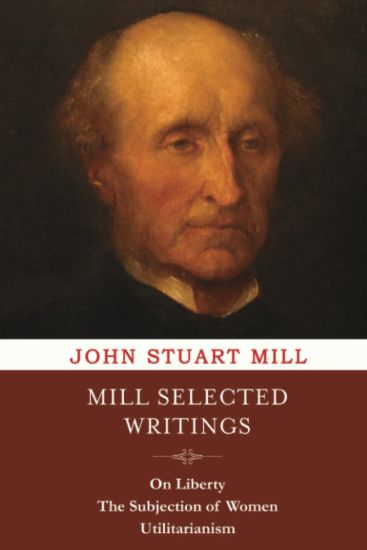
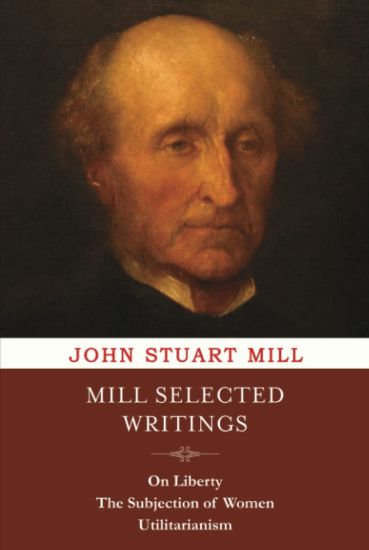
Three Books in One This collection combines three of John Stuart Mill's most recognized works into one convenient volume. Included in this book: - On Liberty - The Subjection of Women - Utilitarianism On Liberty presented one of the most eloquent defenses of individual freedom in nineteenth-century social and political philosophy and is today perhaps the most widely-read liberal argument in support of the value of liberty. Mill's passionate advocacy of spontaneity, individuality, and diversity, along with his contempt for compulsory uniformity and the despotism of popular opinion, has attracted both admiration and condemnation. On Liberty was a greatly influential and well-received work. The ideas presented in On Liberty have remained the basis of much political thought. In The Subjection of Women, John Stuart Mill attacks the argument that women are naturally worse at some things than men and should, therefore, be discouraged or forbidden from doing them. He says that we simply don't know what women are capable of, because we have never let them try - nobody can't make an authoritative statement without evidence. We can't stop women from trying things because they might not be able to do them. He also points out that while there may be physical differences between men and women, there is no evidence that they differ substantially in mental or moral capabilities. He regards gender inequality as part of an older social system in which matters were decided by use of force and makes a strong argument that modern society should operate on the basis of reason rather than force. In sum, Mill's The Subjection of Women is perhaps the finest essay of social and political philosophy produced in the modern era, and should be read by all interested in social justice, feminism, or ethics. Utilitarianism brilliantly expounds a pragmatic ethic based on one controversial proposition. Mill believed that happiness was the only thing humans do and should desire for its own sake. Since happiness is the only intrinsic good, and since more happiness is preferable to less, the goal of ethical life is to maximize happiness. How do we decide what is "good" and what is "bad"? According to the ethical theory of Utilitarianism, to do good is to "always perform that act, of those available, that will bring the most happiness or the least unhappiness." By far the most widely read introduction to this theory. Mill's Utilitarianism is one of the most important and controversial works of moral philosophy ever written. From common-day dilemmas to large-scale social decisions, this exposition remains as relevant today as it was to intellectual and moral dilemmas of the nineteenth century. John Stuart Mill was an English philosopher, political economist, Member of Parliament and civil servant. One of the most influential thinkers in the history of classical liberalism, he contributed widely to social theory, political theory, and political economy. A member of the Liberal Party and author of the early feminist work The Subjection of Women, Mill was also the second Member of Parliament to call for women's suffrage after Henry Hunt in 1832. His most important works include System of Logic, On Liberty, Utilitarianism, An Examination of Sir William Hamilton's Philosophy and The Subjection of Women.

"Autobiography" is a memoir written by John Stuart Mill, one of the most prominent philosophers and political economists of the 19th century. The book details Mill's life from his childhood through his adulthood and his intellectual development as a philosopher and economist. Mill begins the autobiography by discussing his upbringing and the education he received from his father. He goes on to describe his own experiences with education and his struggles with depression and a lack of purpose in his early adulthood. The book also delves into Mill's political and philosophical beliefs, including his advocacy for utilitarianism and his support for women's rights and social equality. Mill discusses his work as a member of parliament and his involvement in the debates over colonialism and the treatment of India by the British Empire. Throughout the autobiography, Mill reflects on the influences and experiences that shaped his intellectual development and his contributions to political and philosophical thought. "Autobiography" is a fascinating and insightful account of the life and intellectual development of one of the most influential philosophers and political economists of the 19th century.
'Over himself, over his own body and mind, the individual is sovereign.' -John Stuart Mill On Liberty presented one of the most eloquent defenses of individual freedom in nineteenth-century social and political philosophy and is today perhaps the most widely-read liberal argument in support of the value of liberty. Mill's passionate advocacy of spontaneity, individuality, and diversity, along with his contempt for compulsory uniformity and the despotism of popular opinion, has attracted both admiration and condemnation. On Liberty was a greatly influential and well-received work. The ideas presented in On Liberty have remained the basis of much political thought.
Utilitarianism brilliantly expounds a pragmatic ethic based on one controversial proposition. Mill believed that happiness was the only thing humans do and should desire for its own sake. Since happiness is the only intrinsic good, and since more happiness is preferable to less, the goal of ethical life is to maximize happiness. How do we decide what is "good" and what is "bad"? According to the ethical theory of Utilitarianism, to do good is to "always perform that act, of those available, that will bring the most happiness or the least unhappiness." By far the most widely read introduction to this theory. Mill's Utilitarianism is one of the most important and controversial works of moral philosophy ever written. From common-day dilemmas to large-scale social decisions, this exposition remains as relevant today as it was to intellectual and moral dilemmas of the nineteenth century.

The anxiety of mankind to interfere in behalf of nature, for fear lest nature should not succeed in effecting its purpose, is an altogether unnecessary solicitude. What women by nature can't do, it is quite superfluous to forbid them from doing. John Stuart Mill attacks the argument that women are naturally worse at some things than men and should, therefore, be discouraged or forbidden from doing them. He says that we simply don't know what women are capable of, because we have never let them try - nobody can't make an authoritative statement without evidence. We can't stop women from trying things because they might not be able to do them. He also points out that while there may be physical differences between men and women, there is no evidence that they differ substantially in mental or moral capabilities. He regards gender inequality as part of an older social system in which matters were decided by use of force and makes a strong argument that modern society should operate on the basis of reason rather than force. In sum, Mill's The Subjection of Women is perhaps the finest essay of social and political philosophy produced in the modern era, and should be read by all interested in social justice, feminism, or ethics.


Essays on Some Unsettled Questions of Political Economy
John Stuart Mill
Double 9 Books LLP
2023
nidottu
Halvin toimitettuna 19,90 €
"Essays on Some Unsettled Questions of Political Economy" is a collection of essays written by the famous British philosopher and economist, John Stuart Mill. In the first essay, Mill examines the concept of free trade and argues that it benefits both trading nations. The second essay explores the relationship between demand and supply and the role of consumption in promoting economic growth. The third essay debates the definitions of productive and unproductive labor, arguing that they are not clear-cut categories. The fourth essay delves into the question of why profits are necessary for a capitalist system and whether interest rates are determined by supply and demand. Finally, the fifth essay discusses the nature and scope of political economy, arguing that it should be considered a social science rather than a natural science. Overall, "Essays on Some Unsettled Questions of Political Economy" is an insightful book that continues to be studied and debated by economists and scholars today. Mill's ideas on free trade, consumption, labor, profits, and the nature of political economy remain relevant and influential in contemporary economic discourse.
"Auguste Comte and Positivism" is a critical essay written by John Stuart Mill, one of the most influential philosophers of the 19th century. The essay focuses on the ideas of Auguste Comte, a French philosopher and founder of the philosophy of positivism. In the essay, Mill examines Comte's belief that society can only be understood through scientific observation and that knowledge should be based on empirical evidence rather than speculation. Mill also critiques Comte's view that human beings should abandon the search for ultimate causes and instead focus on understanding the laws that govern social and natural phenomena. Despite his criticisms, Mill recognizes Comte's contributions to the development of the social sciences. Hereby, "Auguste Comte and Positivism" is a thought-provoking analysis of one of the most influential philosophers of the 19th century. Mill's essay continues to be studied and debated by scholars today as an important contribution to the ongoing discussion of the role of science in understanding society and the human experience.

John Stuart Mill analyzes the values and procedures of democracy and representative government in his work "Considerations on Representative Government". Since it enables citizens to engage in politics by electing representatives, Mill claims that representational government is the ideal form of government. However, he criticizes the democratic systems that were in place at the time, especially the British system, contending that it is not genuinely representative and urging the expansion of the right to vote to all adult citizens. In addition, Mill highlights the interdependence between the person and the state as well as the significance of press and speech freedoms in a democratic society. He thinks that as long as no one is harmed, everyone should be allowed to pursue their interests and happiness and that the state's job is to defend such rights without needlessly interfering with people's daily lives. In conclusion, "Considerations on Representative Government" is a significant book of political philosophy that is still pertinent to current discussions of democracy and government.


The Subjection of Women is an essay by English philosopher, political economist and civil servant John Stuart Mill published in 1869, with ideas he developed jointly with his wife Harriet Taylor Mill. Mill submitted the finished manuscript of their collaborative work On Liberty (1859) soon after her untimely death in late 1858, and then continued work on The Subjection of Women until its completion in 1861. At the time of its publication, the essay's argument for equality between the sexes was an affront to European conventional norms regarding the status of men and women. In his autobiography, Mill describes his indebtedness to his wife, and his daughter Helen Taylor for the creation of The Subjection of Women: As ultimately published it was enriched with some important ideas of my daughter's and some passages of her writing. But all that is most striking and profound in what was written by me belongs to my wife, coming from the fund of thought that had been made common to us both by our innumerable conversations and discussions on a topic that filled so large a place in our minds. While scholars generally agree that John Stuart Mill was the sole author, it is also noted that some of the arguments are similar to Harriet Taylor Mill's essay The Enfranchisement of Women, which was published in 1851. Mill was convinced that the moral and intellectual advancement of humankind would result in greater happiness for everybody. He asserted that the higher pleasures of the intellect yielded far greater happiness than the lower pleasure of the senses. He conceived of human beings as morally and intellectually capable of being educated and civilised. Mill believed everyone should have the right to vote, with the only exceptions being barbarians and uneducated people.