

Kirjojen hintavertailu – 12 903 736 kirjaa ja 27 kauppaa

Kirjailija

John Swenson-Wright

Kirjat ja teokset yhdessä paikassa: 2 kirjaa, julkaisuja vuosilta 2005–2008, suosituimpiin kuuluu Unequal Allies?. Vertaile teosten hintoja ja tarkista saatavuus suomalaisista kirjakaupoista.

2 kirjaa

Kirjojen julkaisuvuodet: 2005–2008.

Evidence

Evidence

Andrew Bell; John Swenson-Wright; Karin Tybjerg

Cambridge University Press
2008
pokkari
Eight distinguished experts from a wide range of disciplines consider the nature and the use of evidence in the modern world. Peter Lipton begins the book by analysing evidence in general philosophical terms. Carlo Ginzurg then examines the ambiguities of historical evidence. Vincent Courtillot analyses the evidence for cataclysmic geological change. Monica Grady considers the evidence for life in space. Brian Greene discusses superstring theory and the quest for a unified theory of the universe. Philip Dawid explores the uses and abuses of statistical evidence in landmark legal cases while Cherie Booth looks at the role of evidence in domestic and international law. In the final chapter Karen Armstrong considers the role of evidence in religious belief.
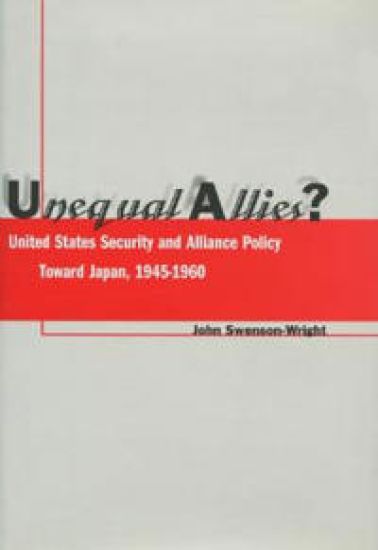
Unequal Allies?

Unequal Allies?

John Swenson-Wright

Stanford University Press
2005
sidottu
At a time when security and political relations between the United States and Japan are exhibiting renewed confidence and strength, this study provides a timely analysis and reassessment of the early Cold War's trans-Pacific bilateral alliance. Taking issue with studies that have characterized the United States as largely dismissive of Japanese national interests, the book reveals an engaged and pragmatic leadership working to develop an active partnership with America's former adversary. Drawing on the latest scholarship in both Japan and the United States, exhaustively reassessing the diplomatic record, and relying on a wealth of newly released archival material, the author offers a reinterpretation of key issues in the early Cold War relationship. The work also casts dramatic new light on Japan's importance as a target of covert diplomacy and Soviet espionage—and the significance, in this context, of Japan's internal conflict between progressive and conservative values and the wider debate over national identity and political legitimacy.