Kirjailija
John Tenniel
Kirjat ja teokset yhdessä paikassa: 37 kirjaa, julkaisuja vuosilta 2010–2025, suosituimpiin kuuluu Mother Goose's Nursery Rhymes. A Collection of Alphabets, Rhymes, Tales, and Jingles. Vertaile teosten hintoja ja tarkista saatavuus suomalaisista kirjakaupoista.
37 kirjaa
Kirjojen julkaisuvuodet: 2010–2025.

Through the Looking-Glass, and What Alice Found There (1871). by: Lewis Carroll, Illustrated By: John Tenniel (1820-1914): (Children's Book ), Illustr
John Tenniel; Lewis Carroll
Createspace Independent Publishing Platform
2017
nidottu
Through the Looking-Glass, and What Alice Found There (1871) is a novel by Lewis Carroll (Charles Lutwidge Dodgson), the sequel to Alice's Adventures in Wonderland (1865). Set some six months later than the earlier book, Alice again enters a fantastical world, this time by climbing through a mirror into the world that she can see beyond it. Through the Looking-Glass includes such celebrated verses as "Jabberwocky" and "The Walrus and the Carpenter", and the episode involving Tweedledum and Tweedledee. The mirror which inspired Carroll remains displayed in Charlton Kings. Plot summary: Chapter One - Looking-Glass House: Alice is playing with a white kitten (who she calls "Snowdrop") and a black kitten (who she calls "Kitty")-the offspring of Dinah, Alice's cat in Alice's Adventures in Wonderland-when she ponders what the world is like on the other side of a mirror's reflection. Climbing up onto the fireplace mantel, she pokes at the wall-hung mirror behind the fireplace and discovers, to her surprise, that she is able to step through it to an alternative world. In this reflected version of her own house, she finds a book with looking-glass poetry, "Jabberwocky", whose reversed printing she can read only by holding it up to the mirror. She also observes that the chess pieces have come to life, though they remain small enough for her to pick up. Chapter Two - The Garden of Live Flowers: Upon leaving the house (where it had been a cold, snowy night), she enters a sunny spring garden where the flowers can speak; they perceive Alice as being a "flower that can move about". Elsewhere in the garden, Alice meets the Red Queen, who is now human-sized, and who impresses Alice with her ability to run at breathtaking speeds. This is a reference to the chess rule that queens are able to move any number of vacant squares at once, in any direction, which makes them the most "agile" of pieces. Chapter Three - Looking-Glass Insects: The Red Queen reveals to Alice that the entire countryside is laid out in squares, like a gigantic chessboard, and offers to make Alice a queen if she can move all the way to the eighth rank/row in a chess match. This is a reference to the chess rule of Promotion. Alice is placed in the second rank as one of the White Queen's pawns, and begins her journey across the chessboard by boarding a train that literally jumps over the third row and directly into the fourth rank, thus acting on the rule that pawns can advance two spaces on their first move................. Charles Lutwidge Dodgson ( 27 January 1832 - 14 January 1898), better known by his pen name Lewis Carroll, was an English writer, mathematician, logician, Anglican deacon, and photographer. His most famous writings are Alice's Adventures in Wonderland, its sequel Through the Looking-Glass, which includes the poem "Jabberwocky", and the poem The Hunting of the Snark - all examples of the genre of literary nonsense. He is noted for his facility at word play, logic and fantasy. There are societies in many parts of the world dedicated to the enjoyment and promotion of his works and the investigation of his life. From a young age, Dodgson wrote poetry and short stories, contributing heavily to the family magazine Mischmasch and later sending them to various magazines, enjoying moderate success... Sir John Tenniel (28 February 1820 - 25 February 1914) was an English illustrator, graphic humourist, and political cartoonist prominent in the second half of the 19th century. He was knighted for his artistic achievements in 1893. Tenniel is remembered especially as the principal political cartoonist for Punch magazine for over 50 years, and for his illustrations to Lewis Carroll's Alice's Adventures in Wonderland (1865) and Through the Looking-Glass, and What Alice Found There (1871)....
Alice's Adventures in Wonderland is an unchanged, high-quality reprint of the original edition of 1867. Hansebooks is editor of the literature on different topic areas such as research and science, travel and expeditions, cooking and nutrition, medicine, and other genres. As a publisher we focus on the preservation of historical literature. Many works of historical writers and scientists are available today as antiques only. Hansebooks newly publishes these books and contributes to the preservation of literature which has become rare and historical knowledge for the future.
Benjamin Disraeli, Earl of Beaconsfield, K.G.
John Leech; Richard Doyle; John Tenniel
Hansebooks
2017
pokkari
Benjamin Disraeli, Earl of Beaconsfield, K. G. - In Upwards of 100 Cartoons From the Collection of Mr. Punch is an unchanged, high-quality reprint of the original edition of 1878. Hansebooks is editor of the literature on different topic areas such as research and science, travel and expeditions, cooking and nutrition, medicine, and other genres. As a publisher we focus on the preservation of historical literature. Many works of historical writers and scientists are available today as antiques only. Hansebooks newly publishes these books and contributes to the preservation of literature which has become rare and historical knowledge for the future.
Alice through the looking glass: Coloring book
John Tenniel
Createspace Independent Publishing Platform
2017
nidottu
Alice in Wonderland: Coloring Book
John Tenniel
Createspace Independent Publishing Platform
2017
nidottu
Be creative, be adventurous. You don't have to fall down the rabbit hole to enter the magical world of Alice in Wonderland. Just open this giant book and read, color, and remember when you first encountered Lewis Carroll's sublime nonsense and Sir John Tenniel's elegant engravings.
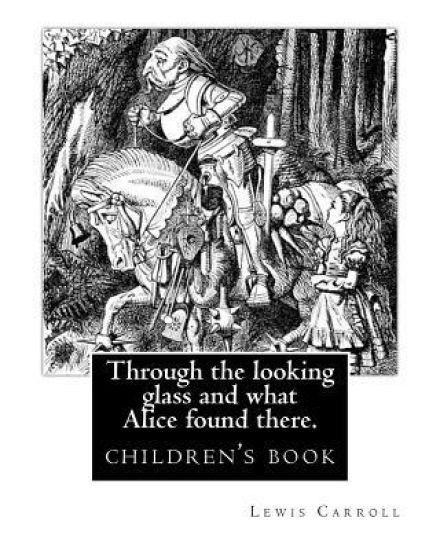
Through the Looking Glass and What Alice Found There. by: Lewis Carroll, Illustrated By: John Tenniel: Novel (Children's Book), Sir John Tenniel (27 J
Lewis Carroll; John Tenniel
Createspace Independent Publishing Platform
2016
nidottu
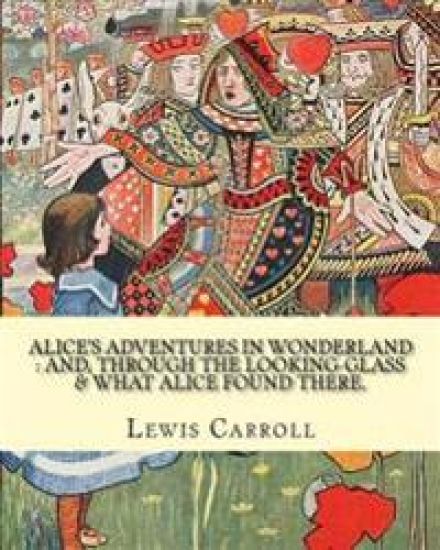
Alice's adventures in Wonderland: and, through the looking-glass & what Alice found there. By: Lewis Carroll, illustrations By: John Tenniel: (Childre
John Tenniel; Lewis Carroll
Createspace Independent Publishing Platform
2016
nidottu
Alice's Adventures in Wonderland (commonly shortened to Alice in Wonderland) is an 1865 novel written by English mathematician Charles Lutwidge Dodgson under the pseudonym Lewis Carroll. It tells of a girl named Alice falling through a rabbit hole into a fantasy world populated by peculiar, anthropomorphic creatures. The tale plays with logic, giving the story lasting popularity with adults as well as with children. It is considered to be one of the best examples of the literary nonsense genre. Its narrative course and structure, characters and imagery have been enormously influential in both popular culture and literature, especially in the fantasy genre..... Through the Looking-Glass, and What Alice Found There (1871) is a novel by Lewis Carroll (Charles Lutwidge Dodgson), the sequel to Alice's Adventures in Wonderland (1865). Set some six months later than the earlier book, Alice again enters a fantastical world, this time by climbing through a mirror into the world that she can see beyond it. Through the Looking-Glass includes such celebrated verses as "Jabberwocky" and "The Walrus and the Carpenter", and the episode involving Tweedledum and Tweedledee. The mirror which inspired Carroll remains displayed in Charlton Kings.............. Charles Lutwidge Dodgson (27 January 1832 - 14 January 1898), better known by his pen name Lewis Carroll, was an English writer, mathematician, logician, Anglican deacon, and photographer. His most famous writings are Alice's Adventures in Wonderland, its sequel Through the Looking-Glass, which includes the poem "Jabberwocky", and the poem The Hunting of the Snark, all examples of the genre of literary nonsense. He is noted for his facility at word play, logic and fantasy. There are societies in many parts of the world dedicated to the enjoyment and promotion of his works and the investigation of his life. Dodgson's family was predominantly northern English, with Irish connections, conservative and High Church Anglican. Most of Dodgson's male ancestors were army officers or Church of England clergy. His great-grandfather, also named Charles Dodgson, had risen through the ranks of the church to become the Bishop of Elphin. His paternal grandfather, another Charles, had been an army captain, killed in action in Ireland in 1803 when his two sons were hardly more than babies. The older of these sons - yet another Charles Dodgson - was Carroll's father. He went to Westminster School and then to Christ Church, Oxford. He reverted to the other family tradition and took holy orders. He was mathematically gifted and won a double first degree, which could have been the prelude to a brilliant academic career. Instead, he married his first cousin Frances Jane Lutwidge in 1827 and became a country parson. Dodgson was born in the small parsonage at Daresbury in Cheshire near the towns of Warrington and Runcorn, the eldest boy but already the third child of the four-and-a-half-year-old marriage. Eight more children followed. When Charles was, his father was given the living of Croft-on-Tees in North Yorkshire, and the whole family moved to the spacious rectory. This remained their home for the next 25 years. Charles's father was an active and highly conservative cleric of the Church of England who later became the Archdeacon of Richmond and involved himself, sometimes influentially, in the intense religious disputes that were dividing the church. He was High Church, inclining to Anglo-Catholicism, an admirer of John Henry Newman and the Tractarian movement, and did his best to instil such views in his children. Young Charles was to develop an ambiguous relationship with his father's values and with the Church of England as a whole............. Sir John Tenniel (27 July 1819 - 25 February 1914) was an English illustrator, graphic humourist, and political cartoonist whose work was prominent during the second half of the 19th century. Tenniel was knighted by Victoria for his artistic achievements in 1893
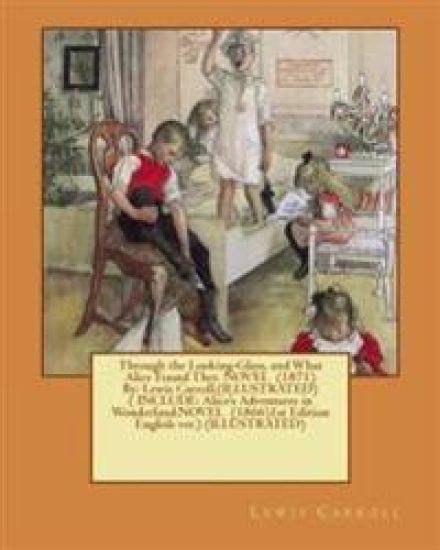
Through the Looking-Glass, and What Alice Found Ther. NOVEL (1871) By: Lewis Carroll.(ILLUSTRATED)( INCLUDE: Alice's Adventures in Wonderland.NOVEL (1
John Tenniel; Lewis Carroll
Createspace Independent Publishing Platform
2016
nidottu
Through the Looking-Glass, and What Alice Found There (1871) is a novel by Lewis Carroll (Charles Lutwidge Dodgson), the sequel to Alice's Adventures in Wonderland (1865). Set some six months later than the earlier book, Alice again enters a fantastical world, this time by climbing through a mirror into the world that she can see beyond it. Through the Looking-Glass includes such celebrated verses as "Jabberwocky" and "The Walrus and the Carpenter", and the episode involving Tweedledum and Tweedledee. The mirror which inspired Carroll remains displayed in Charlton Kings. Alice's Adventures in Wonderland (commonly shortened to Alice in Wonderland) is an 1865 novel written by English mathematician Charles Lutwidge Dodgson under the pseudonym Lewis Carroll. It tells of a girl named Alice falling through a rabbit hole into a fantasy world populated by peculiar, anthropomorphic creatures. The tale plays with logic, giving the story lasting popularity with adults as well as with children. It is considered to be one of the best examples of the literary nonsense genre. 1] 2] Its narrative course and structure, characters and imagery have been enormously influential in both popular culture and literature, especially in the fantasy genre.
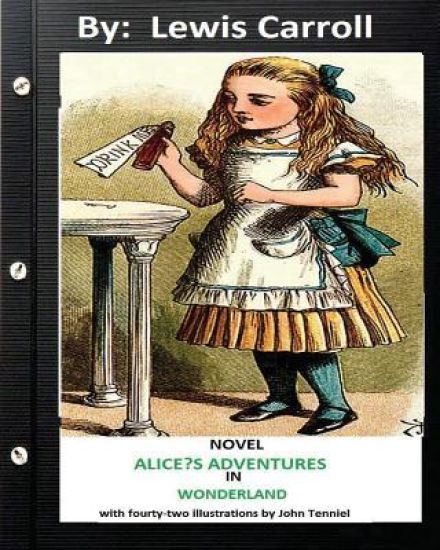
ALICE?S ADVENTURES IN WONDERLAND . NOVEL by Lewis Carroll (Children's Classics): with fourty-two illustrations by John Tenniel
John Tenniel; Lewis Carroll
Createspace Independent Publishing Platform
2016
nidottu
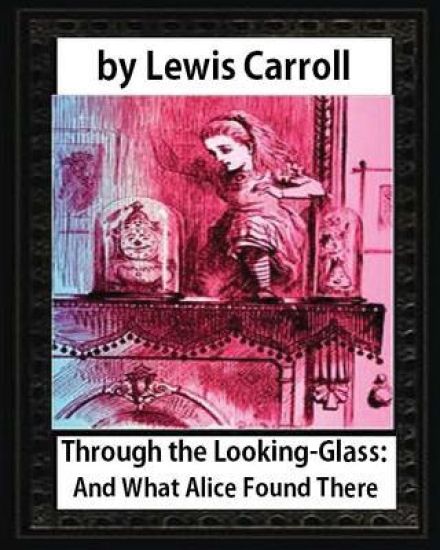
Through the Looking-Glass: And What Alice Found There, by Lewis Carroll(illustrated): Sir John Tenniel (28 February 1820 - 25 February 1914) Was
Lewis Carroll; John Tenniel
Createspace Independent Publishing Platform
2016
nidottu
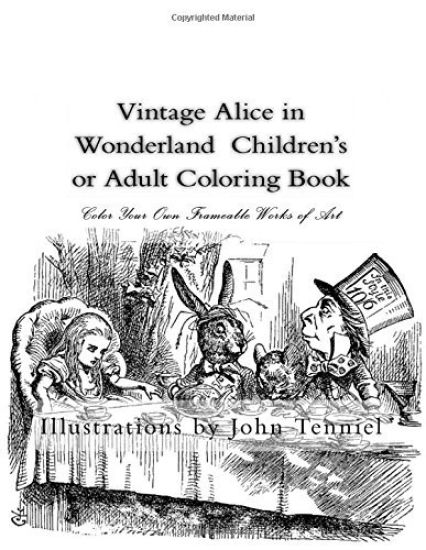
Vintage Alice in Wonderland Children's or Adult Coloring Book: Classic, Frameable Color Your Own Vintage Alice in Wonderland Illustrations
John Tenniel
Createspace Independent Publishing Platform
2015
nidottu
Halvin toimitettuna 19,30 €
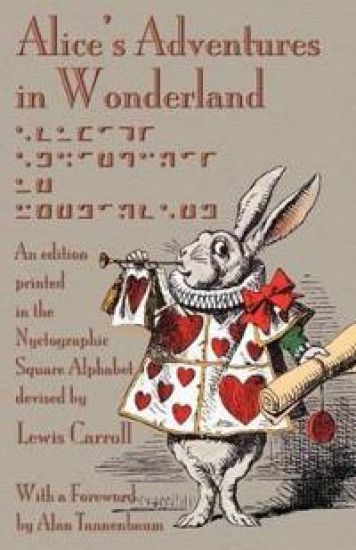
Alice's Abenteuer Im Wunderland
Lewis (Christ Church College Carroll; John Tenniel
Nabu Press
2011
pokkari
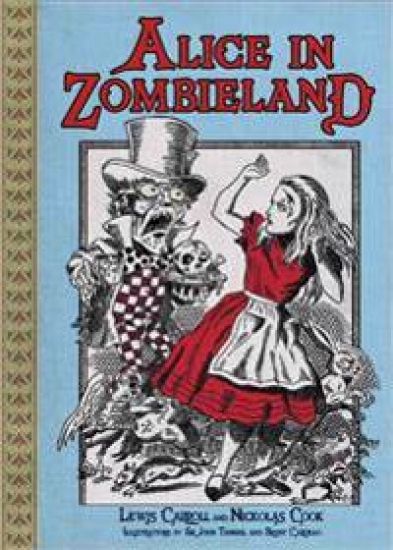
"They were indeed a queer-looking party that assembled on the bank-the birds with draggled feathers, the animals with their fur clinging close to them, and all dripping wet, cross, and uncomfortable. All of them were covered in Alice's now cold and congealed blood, which made them even tastier looking to poor hungry Alice." When little Alice follows the Black Rat down into the gaping darkness of an open grave, she falls and falls. And soon finds herself in an undead nightmare of rotting flesh and insanity. Venturing further into this land of zombies and monsters, she encounters characters both creepy and madcap along the way. But there's something else troubling poor Alice: her skin is rotting and her hair is falling out. She's cold. And she has the haunting feeling that if she remains in Zombieland any longer, she might never leave. Can Alice escape Zombieland before the Dead Red Queen catches up to her?