Kirjojen hintavertailu – 12 859 828 kirjaa ja 27 kauppaa
Kirjailija
John W. Dean
Kirjat ja teokset yhdessä paikassa: 15 kirjaa, julkaisuja vuosilta 2002–2025, suosituimpiin kuuluu The Day of Doom. Vertaile teosten hintoja ja tarkista saatavuus suomalaisista kirjakaupoista.
The Day of Doom - A poetical description of the great and last judgment is an unchanged, high-quality reprint of the original edition of 1867. Hansebooks is editor of the literature on different topic areas such as research and science, travel and expeditions, cooking and nutrition, medicine, and other genres. As a publisher we focus on the preservation of historical literature. Many works of historical writers and scientists are available today as antiques only. Hansebooks newly publishes these books and contributes to the preservation of literature which has become rare and historical knowledge for the future.
The Day of Doom - Sixth Edition, 1715 is an unchanged, high-quality reprint of the original edition of 1867. Hansebooks is editor of the literature on different topic areas such as research and science, travel and expeditions, cooking and nutrition, medicine, and other genres. As a publisher we focus on the preservation of historical literature. Many works of historical writers and scientists are available today as antiques only. Hansebooks newly publishes these books and contributes to the preservation of literature which has become rare and historical knowledge for the future.
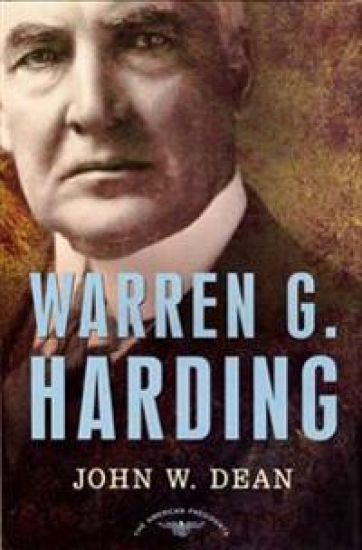
An incisive portrait of the life and tarnished political career of Warren G. Harding and his scandal-ridden presidency details the Teapot Dome affair, corruption in the Veterans Bureau and Justice Department, extramarital affair, policy decisions, and other important events that marked the administration of the twenty-ninth president. 25,000 first printing.
A bold new look at Watergate from a member of the Senate Watergate Committee who argues that the received wisdom about Nixon’s resignation is inaccurate. Written by assistant chief counsel of the Senate Watergate Committee, Reopening Watergate is an eye-opening reassessment of the Watergate scandal and an essential text for understanding this infamous political moment. With painstaking attention to detail and an intimate knowledge of the legal machinations behind the scenes, David M. Dorsen focuses on important aspects of the story of Watergate that have not received substantial—or, in some cases, any—publicity. The evidence amassed by Dorsen demonstrates that some of the most prominent people involved in pursuing Watergate had inappropriate ex parte contacts with Special Prosecutor Leon Jaworski, including Judge John J. Sirica, who presided over both the trial of the burglars and the trial of the leaders of the cover-up (John Mitchell, H. R. Haldeman, and John Ehrlichman). Dorsen further uncovers that Jaworski made inappropriate transfers of information to House Judiciary Committee Chairman Peter Rodino and counsel John Doar. Dorsen lays out compelling evidence for the inept legal representation given to President Richard M. Nixon, especially by his special Watergate Counsel, James D. St. Clair. Reopening Watergate draws on overlooked and ignored sources, including interviews by the Nixon Presidential Library, a number of which have not been previously published, and the notes of Bob Woodward and Carl Bernstein housed at the University of Texas at Austin. Dorsen shows that with competent and conscientious lawyers and advisors in the last year of his presidency, Nixon might have been able to survive his full term as president, instead of resigning, mired in shame and scandal. With a foreword by John W. Dean, Nixon’s White House counsel and the most pivotal (and knowledgeable) person in the Watergate scandal, Reopening Watergate will be the standard resource on this historic moment in American politics for decades to come.
Donald Trump may be gone from the White House, but the 75 million people who voted for him are still out there . . . Updated to reflect election results, this is a look at the enitrety of the Trump phenomenon, using psychological and social science studies, as well as polling analyses, to understand Donald Trump's followers, and what they will do now that he's gone. To find out, John Dean, of Watergate fame, joined with Bob Altemeyer, a professor of psychology with a unique area of expertise: Authoritarianism. Relying on social science findings and psychological diagnostic tools (such as the Power Mad Scale and the Con Man Scale), and including exclusive research and analysis from the Monmouth University Polling Institute (one of America's most respected public opinion research foundations), the authors provide us with an eye-opening understanding of the Trump phenomenon -- and how it may not go away, whatever becomes of Trump.
How did America end up with a leader who acts so crudely and despotically, and counter to our democratic principles? Why do his followers stick with him, even when he acts against their interests? To fully understand, John Dean, a man with a history of standing up to autocratic presidents, joins with Bob Altemeyer, a psychology professor with a unique area of expertise: authoritarianism. Together, using psychological diagnostic tools, as well as exclusive research and analysis from the Monmouth University Polling Institute -- one of America's most respected public opinion research foundations -- the authors provide us with an eye-opening understanding of the Trump phenomenon ... and what we may be able to do to stop it.
The Day of Doom - Or, a poetical description of the great and last judgement, with other poems: also, a memoir of the author, authobiography, and sketch of his funeral sermon is an unchanged, high-quality reprint of the original edition of 1867. Hansebooks is editor of the literature on different topic areas such as research and science, travel and expeditions, cooking and nutrition, medicine, and other genres. As a publisher we focus on the preservation of historical literature. Many works of historical writers and scientists are available today as antiques only. Hansebooks newly publishes these books and contributes to the preservation of literature which has become rare and historical knowledge for the future.
A six-month New York Times bestseller: “Not only the best Watergate book, but a very good book indeed” (The Sunday Times). As White House counsel to Richard Nixon, a young John W. Dean was one of the primary players in the Watergate scandal—and ultimately became the government’s key witness in the investigations that ended the Nixon presidency. After the scandal subsided, Dean rebuilt his career, first in business and then as a bestselling author and lecturer. But while the events were still fresh in his mind, he wrote this remarkable memoir about the operations of the Nixon White House and the crisis that led to the president’s resignation. Called “fascinating” by Commentary, which noted that “there can be little doubt of [Dean's] memory or his candor,” Blind Ambition offers an insider’s view of the deceptions and machinations that brought down an administration and changed the American people’s view of politics and power. It also contains Dean’s own unsparing reflections on the personal demons that drove him to participate in the sordid affair. Upon its original publication, Kirkus Reviews hailed it “the flip side of All the President’s Men—a document, a minefield, and prime entertainment.” Today, Dean is a respected and outspoken advocate for transparency and ethics in government, and the bestselling author of such books as The Nixon Defense, Worse Than Watergate, and Conservatives Without Conscience. Here, in Blind Ambition, he “paints a candid picture of the sickening moral bankruptcy which permeated the White House and to which he contributed. His memory of who said what and to whom is astounding” (Foreign Affairs).
Based on Nixon's overlooked recordings, New York Times bestselling author John W. Dean connects the dots between what we've come to believe about Watergate and what actually happened Watergate forever changed American politics, and in light of the revelations about the NSA's widespread surveillance program, the scandal has taken on new significance. Yet remarkably, four decades after Nixon was forced to resign, no one has told the full story of his involvement in Watergate. In The Nixon Defense, former White House Counsel John W. Dean, one of the last major surviving figures of Watergate, draws on his own transcripts of almost a thousand conversations, a wealth of Nixon's secretly recorded information, and more than 150,000 pages of documents in the National Archives and the Nixon Library to provide the definitive answer to the question: What did PresidentNixon know and when did he know it? Through narrative and contemporaneous dialogue, Dean connects dots that have never been connected, including revealing how and why the Watergate break-in occurred, what was on the mysterious 18 1/2 minute gap in Nixon's recorded conversations, and more. In what will stand as the most authoritative account of one of America's worst political scandals, The Nixon Defense shows how the disastrous mistakes of Watergate could have been avoided and offers a cautionary tale for our own time.
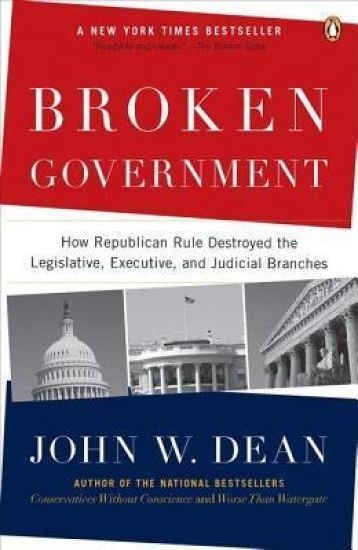
The concluding volume of The New York Times bestselling trilogyOne of today's most outspoken and respected political commentators asks: How can our democracy function when the key institutions of government no longer operate as intended by the Constitution? Stepping back to assess three decades of nearly continuous Republican rule, John W. Dean surveys the damage done to the three branches of government and traces their decline through the presidencies of Nixon, Ford, Reagan, Bush I, and Bush II. Speaking to what the average moderate citizen can do to combat extremism, authoritarianism, incompetence, and the Republicans' deliberate focus on polarizing social issues, Broken Government is a must-have book for voters this election year.
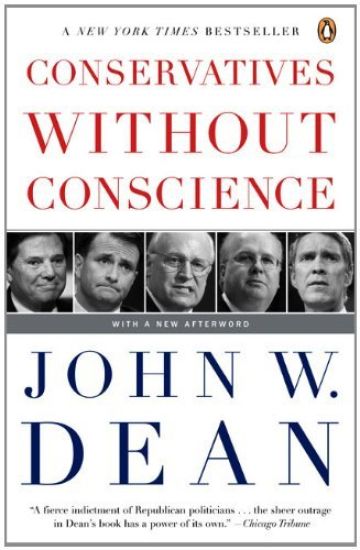
On the heels of his national bestseller Worse Than Watergate, John Dean takes a critical look at the current conservative movement In Conservatives Without Conscience, John Dean places the conservative movement's inner circle of leaders in the Republican Party under scrutiny. Dean finds their policies and mind- set to be fundamentally authoritarian, and as such, a danger to democracy. By examining the legacies of such old-line conservatives as J. Edgar Hoover, Spiro Agnew, and Phyllis Schlafly and of such current figures as Dick Cheney, Newt Gingrich, and leaders of the Religious Right, Dean presents an alarming record of abuses of power. His trenchant analysis of how conservatism has lost its bearings serves as a chilling warning and a stirring inspiration to safeguard constitutional principles.
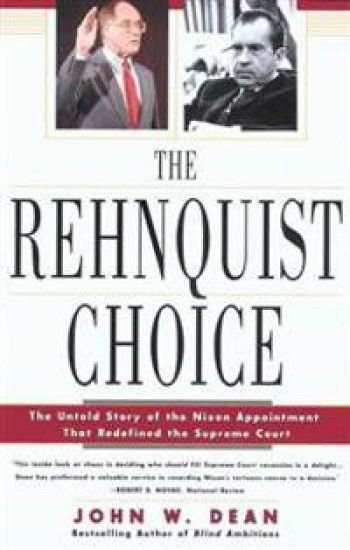
The explosive story of how William Rehnquist became a Supreme Court Justice, told by the only person who could have revealed this information—John W. Dean. In 1971, William Rehnquist seemed the perfect choice to fill a seat on the United States Supreme Court. He was a young, well-polished lawyer who shared many of President Richard Nixon's philosophies and faced no major objections from the Senate. But in truth, the nomination was anything but straightforward. Now, for the first time, former White House counsel John Dean tells the improbable story of Rehnquist's appointment. Dean weaves a gripping account packed with stunning new revelations: of a remarkable power play by Nixon to stack the court in his favor by forcing resignations; of Rehnquist himself, who played a role in the questionable ousting of Justice Abe Fortas; and of Nixon's failed impeachment attempt against William Douglas. In his initial confirmation hearings, Rehnquist provided outrageous and unbelievable responses to questions about his controversial activities in the '50s and '60s—yet he was confirmed with little opposition. It was only later, during his confirmation as Chief Justice, that his testimony would come under fire—raising serious questions as to whether he had perjured himself Using newly released tapes, his own papers, and documents unearthed from the National Archives, John Dean offers readers a place in the White House inner circle, providing an unprecedented look at a government process, and a stunning expose of the man who has influenced the United States Supreme Court for the last thirty years.