Kirjojen hintavertailu – 12 875 166 kirjaa ja 26 kauppaa
Kirjailija
John W Kleinig
Kirjat ja teokset yhdessä paikassa: 11 kirjaa, julkaisuja vuosilta 2008–2026, suosituimpiin kuuluu From Shame to Glory: God's Surprising Remedy for Injustice and Failure. Vertaile teosten hintoja ja tarkista saatavuus suomalaisista kirjakaupoista.
You receive Communion. But what does it mean? In The Lord's Supper: A Guide to the Heavenly Feast, John W. Kleinig awakens a hunger for meeting Jesus in the bread and wine. The Bible tells us that Jesus came from heaven to earth to give us himself, and his self-giving continues in the meal that he hosts. In the sacrament of Communion, Jesus offers believers nothing less than his holy, life-giving body and cleansing blood. He brings heaven to earth for us and gives us a foretaste of the heavenly supper of the Lamb. And by faith, we commune with him. In the Eucharist, Christians give thanks for God's gift of himself." My soul will be satisfied as with the richest of foods." --Psalm 63:5
Why do we have bodies? When it comes to thinking about our bodies, confusion reigns. In our secular age, there has been a loss of the body's goodness, purpose, and end. Many people, driven by shame and idolatry, abuse their body through self-harm or self-improvement. How can we renew our understanding and see our bodies the way God does? In Wonderfully Made, John Kleinig forms a properly biblical theology of our bodies. Through his keen sensitivity to Scripture's witness, Kleinig explains why bodies matter. While sin has corrupted our bodies and how we think of them, God's creation is still good. Thus, our bodies are good gifts. The Son took on a body to redeem our bodies. Kleinig addresses issues like shame, chastity, desire, gender dysphoria, and more, by integrating them into the biblical vision of creation. Readers of Wonderfully Made will not only be equipped to engage in current issues; they will gain a robust theology of the body and better appreciation of God's very good creation.
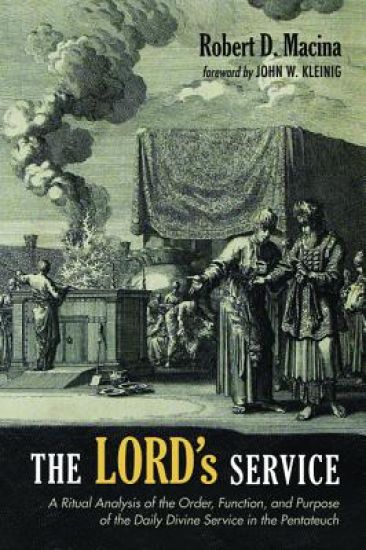
Worship in the Old Testament has been frequently misunderstood. Its rites and ceremonies are often perceived as legalistic works that were required by an angry God to gain his favor or avert his wrath. But is that really what the Bible teaches? To be sure, the LORD did institute the divine service in the Old Testament with all of its laws, rites, and ceremonies. Yet did God do this in order to be appeased or pleased by the ancient Israelites? When the priests enacted the offerings and sacrifices at the sanctuary, was it merely to do good works that God required but without meaning or purpose for his people? Was worship in the Old Testament always what the people did for the LORD or did God do anything that was beneficial to the Israelites? This book answers these questions and, furthermore, dispels the recurring misinterpretation of worship in the Old Testament. The LORD established the divine service in the Pentateuch not to receive what he demanded from the people of ancient Israel, but, on the contrary, to cleanse them from their sinful impurities, sanctify them to share in his holiness, and dwell among them with his blessing. ""Through detailed and methodical ritual analysis, Robert Macina leads his readers on an engaging tour of Israel's divine service with burnt offerings every morning and evening as prescribed and described in the Pentateuch. Macina helpfully unpacks its theological function as YHWH purifies and sanctifies his people, joining scholars of the caliber of Haran, Milgrom, and Kleinig in recovering this often-neglected yet theologically central subject of Old Testament study."" --Adam D. Hensley, Australian Lutheran College, University of Divinity ""Dr. Macina provides an exquisite analysis of neglected texts. His insightful exegesis of ritual legislation demonstrates that God instituted the daily service for the purpose of meeting his people to purify and sanctify them by the removal of their sin and the bestowal of his own holiness. This service was neither a mechanistic nor a meritorious human ritual, but the LORD's, proffering the same grace as the Divine Service in the Christian church."" --Christopher Mitchell, Saint Louis, Missouri Robert D. Macina is pastor at Risen Christ Lutheran Church in Arvada, Colorado. He studied at Clarendon College, Texas; Concordia University Texas, Austin; Concordia University Nebraska, Seward; Concordia Theological Seminary, Fort Wayne; Australian Lutheran College, Adelaide, SA; and University of Divinity, Kew, VIC, Australia. He has written articles and has taught seminary as an associated faculty. He and his wife, Tracy, have three children: Daniel, Mark, and Rebekah.
Worship in the Old Testament has been frequently misunderstood. Its rites and ceremonies are often perceived as legalistic works that were required by an angry God to gain his favor or avert his wrath. But is that really what the Bible teaches? To be sure, the LORD did institute the divine service in the Old Testament with all of its laws, rites, and ceremonies. Yet did God do this in order to be appeased or pleased by the ancient Israelites? When the priests enacted the offerings and sacrifices at the sanctuary, was it merely to do good works that God required but without meaning or purpose for his people? Was worship in the Old Testament always what the people did for the LORD or did God do anything that was beneficial to the Israelites? This book answers these questions and, furthermore, dispels the recurring misinterpretation of worship in the Old Testament. The LORD established the divine service in the Pentateuch not to receive what he demanded from the people of ancient Israel, but, on the contrary, to cleanse them from their sinful impurities, sanctify them to share in his holiness, and dwell among them with his blessing. ""Through detailed and methodical ritual analysis, Robert Macina leads his readers on an engaging tour of Israel's divine service with burnt offerings every morning and evening as prescribed and described in the Pentateuch. Macina helpfully unpacks its theological function as YHWH purifies and sanctifies his people, joining scholars of the caliber of Haran, Milgrom, and Kleinig in recovering this often-neglected yet theologically central subject of Old Testament study."" --Adam D. Hensley, Australian Lutheran College, University of Divinity ""Dr. Macina provides an exquisite analysis of neglected texts. His insightful exegesis of ritual legislation demonstrates that God instituted the daily service for the purpose of meeting his people to purify and sanctify them by the removal of their sin and the bestowal of his own holiness. This service was neither a mechanistic nor a meritorious human ritual, but the LORD's, proffering the same grace as the Divine Service in the Christian church."" --Christopher Mitchell, Saint Louis, Missouri Robert D. Macina is pastor at Risen Christ Lutheran Church in Arvada, Colorado. He studied at Clarendon College, Texas; Concordia University Texas, Austin; Concordia University Nebraska, Seward; Concordia Theological Seminary, Fort Wayne; Australian Lutheran College, Adelaide, SA; and University of Divinity, Kew, VIC, Australia. He has written articles and has taught seminary as an associated faculty. He and his wife, Tracy, have three children: Daniel, Mark, and Rebekah.
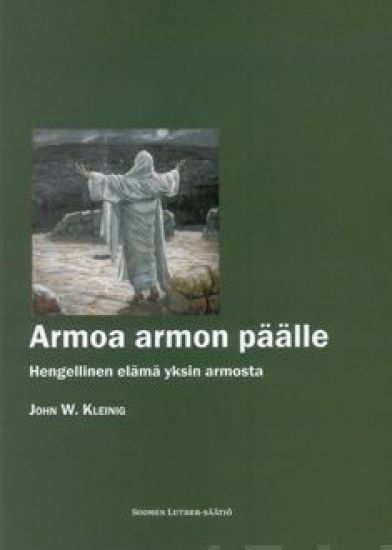
Mitä on kristillinen mietiskely? Miten lukea Raamattua? Miten hengellistä sodankäyntiä käydään? Pastori John Kleinigin kirja ei liiku korkeissa teologisissa sfääreissä, vaan laskeutuu hyvin käytännölliselle tasolle opettaessaan hengellisen elämän elämisestä ja uskonelämän hoitamisesta. Kirjassa ravistellaan yleisiä käsityksiä hengellisestä kasvusta ihmisen omana suorittamisena. Kleinig korostaa kristityn koko elämän olevan vastaanottamista Kristukselta: quot;Hengellinen elämämme on jotain, mikä on tarkoitettu vastaanotettavaksi, nautittavaksi ja juhlittavaksi. Meidän hengellisessä elämässämme on kyse vain siitä, että saamme Jumalan täyteydestä armoa armon päällequot;. Kirja on oiva apuväline kaikille, jotka kaipaavat uutta virkistymistä uskonelämäänsä ja uutta syvyyttä hartauselämäänsä. Kirjan kirjoittaja John W. Kleinig on väitellyt tohtoriksi Cambridgen yliopistossa ja tehnyt elämäntyönsä Australian luterilaisen kirkon eri oppilaitoksissa. Hän on opettanut pappisseminaari Luther Seminaryssä Vanhaa testamenttia, liturgiikkaa sekä saarnaoppia, ja lisäksi toiminut vierailevana luennoitsijana ympäri maailmaa. Opetustyönsä ohessa hän on palvellut pitkään Australian luterilaisen kirkon ekumeniaa ja jumalanpalveluselämää käsittelevissä työryhmissä. Tämä kirja jatkaa Suomen Luther-säätiön kustantamaa kirjasarjaa Hengen viisaus.
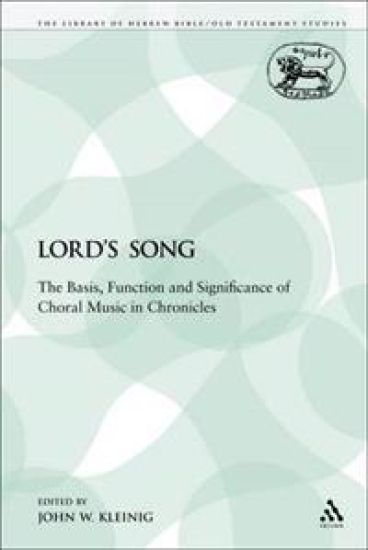
Why do the books of Chronicles regard the performance of choral music as an integral part of the sacrificial ritual at the temple, despite the lack of sanction for it in the Pentateuch? And why do they stress that it must be synchronized with the presentation of the regular public burnt offering at the temple? These and other questions are answered in this challenging new volume. After an introductory chapter defining the scope of the study as an analysis of the ritual function and theological significance of sacred song, the author examines the divine institution and royal establishment of the Levitical choir in Jerusalem. This is followed by an examination of the components of the Lord's song in terms of its contents, location, times, instruments and performers. A chapter on the function of sacred song as determined by its place within the sacrificial ritual follows, and the fifth chapter deals with its theological significance as the proclamation of the Lord's presence with his people.