Kirjojen hintavertailu – 12 859 828 kirjaa ja 27 kauppaa

Kirjailija

John W. Murphy

Kirjat ja teokset yhdessä paikassa: 24 kirjaa, julkaisuja vuosilta 1986–2025, suosituimpiin kuuluu AI and the Humanistic Organization. Vertaile teosten hintoja ja tarkista saatavuus suomalaisista kirjakaupoista.

Nimi esiintyy myös muodoissa: John W Murphy

24 kirjaa

Kirjojen julkaisuvuodet: 1986–2025.

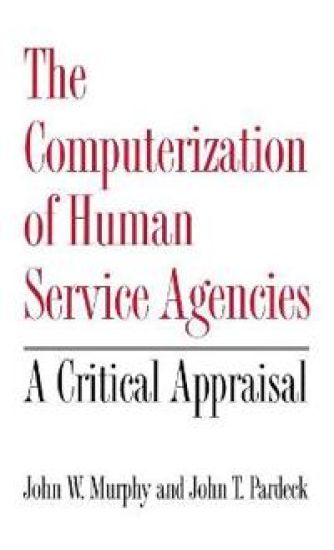
The Computerization of Human Service Agencies

The Computerization of Human Service Agencies

John W. Murphy

Praeger Publishers Inc
1991
sidottu
This work serves as an introduction to both the theoretical and practical aspects of using computers to improve the delivery of social services. Though many practitioners believe that computerization dehumanizes clients and should be avoided, John Murphy and John Pardeck demonstrate how, through a holistic approach to computer use, this problem, and others like it, can be averted. By providing practitioners the opportunity to sharpen their conceptual skills in computer technology, this book promotes a rational understanding of the possible uses and limitations of computers in social service agencies. Unlike other, technically-oriented works in this field, Murphy and Pardeck's work focuses on the philosophical justification of computer use, along with the conceptual or symbolic nature of computerization. They fully illustrate how to create the organizational conditions necessary for computers to improve social-service delivery, and they do so in a manner that is easily accessible for both general classroom and professional use. Among the topics addressed are the technological world-view, Western philosophy, and knowledge; computer mediated therapy; ethical issues related to computerized service delivery; and construction of a socially responsible technology. This work will be a unique and important resource for courses in computer applications, policy analysis, and social service administration, as well as a useful reference source for human service agencies and practitioners. Public and academic libraries will also find it to be a valuable addition to their collections.

Culture and the Restructuring of Community Mental Health

Culture and the Restructuring of Community Mental Health

John W. Murphy; William Vega

Praeger Publishers Inc
1990
sidottu
Examining the issues of treatment, organizational planning, and research, this multidimensional study offers a critique of both the theoretical and programmatic aspects of providing mental health services to traditionally underserved populations. Focusing on minority groups, the book uses the case of Hispanics to illustrate the largely unaddressed need for services that are relevant to social groups with diverse cultural and linguistic backgrounds. Vega and Murphy maintain that the present service system is socially insensitive, that mental health services in the United States were never designed to serve a multicultural population, and that, in general, those who dominate the current mental health system from administrator-clinicians to bureaucrats and politicians do not know how to direct their services to minority groups. Calling for fundamental reconceptualization and change, the book argues for community-based planning and intervention as an enlightened and necessary alternative, and provides a detailed description of such a program in terms of both philosophy and method. The eight chapters offer a reassessment based on understanding not only the rationale for these necessary services, but also the important philosophical and pragmatic issues that have resulted in the current, inadequate system; they provide the new thinking necessary to reframe the objectives of mental health services for cultural minorities. The early chapters explore some of the critical junctures in the community mental health movement between 1946 and 1981, the development of theory in the movement's early days, and the thrust of community-based intervention--the culture-specific methodology that has not been well-understood or implemented. Chapters 4 and 5 focus on the relationship between medicalization and the degradation of culture and on the reconceptualization of knowledge, order, illness, and intervention. The last three chapters analyze an example of community-based intervention in operation, and citizen involvement and the political aspects of community-based policies are reviewed. This timely discussion of the requirements for a socially responsible and community-based services delivery program lays the theoretical foundation for a future public mental health system. As such, it will prove invaluable and important reading for advanced undergraduate and graduate students in the health and human services areas, including social work, clinical psychology, and medical sociology; it also has much to offer professional administrators and planners. Culture and the Restructuring of Community Mental Health has been designed to meet the needs of both academics and practitioners.
Technology and Human Productivity

Technology and Human Productivity

John W. Murphy

Praeger Publishers Inc
1986
sidottu
The editors have assembled a collection of original essays offering a holistic view of how technology shapes the modern world. Consideration is given to several major issues, such as the dehumanizing effects of technology, which tends to objectify social life; the emphasis on productivity and the accumulation of material goods; and the intricacies involved in creating a responsible technology that would establish more socially sensitive principles, values, and beliefs. Technology is examined not simply as machinery, but as a procedure that can be used to define every aspect of social existence, and the book demonstrates how to bring about the changes that are necessary to remedy this alienating situation.
The Underside of High-Tech

The Underside of High-Tech

Algis Mickunas; John W. Murphy; Joseph J. Pilotta

Praeger Publishers Inc
1986
sidottu
This volume details the philosophical propositions of technology, illustrates its impact on various facets of social life, and demonstrates how the disruptive effects of technology can be reduced by providing it with a new philosophical base. Philosophical principles that will help to foster the responsible use of technology are developed. The contributors deal specifically with the ways in which technology shapes a person's view of politics, capital punishment, education, health and illness, work, communications, and the human body. They argue that technology tends to deanimate these aspects of life, thereby purging society of its creativity and spontaneity. Collectively, they suggest ways in which this trend can be reversed by the creation of a socially responsible technology.