Kirjailija
John Walter
Kirjat ja teokset yhdessä paikassa: 24 kirjaa, julkaisuja vuosilta 1999–2026, suosituimpiin kuuluu Voynich Manuscript. Vertaile teosten hintoja ja tarkista saatavuus suomalaisista kirjakaupoista.
24 kirjaa
Kirjojen julkaisuvuodet: 1999–2026.
Sniping Rifles in the War Against Japan 1941–45
John Walter
BLOOMSBURY PUBLISHING PLC
2024
nidottu
Halvin toimitettuna 21,20 €
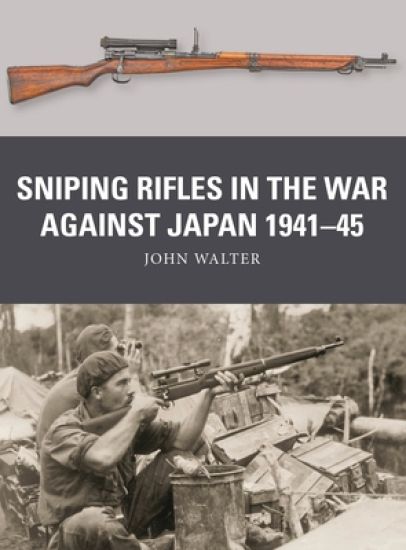
Fully illustrated, this absorbing study explores the evolving sniping technology and tactics employed by both sides in Asia and the Pacific during 1941–45. During World War II, both the Japanese and their Allied opponents made widespread use of snipers armed with a variety of rifles, scopes and accessories and prepared by widely differing levels of training and tactical doctrine. The challenges of fighting in a variety of harsh environments, from the Pacific islands to the vast expanses of China, prompted improvisation and innovation on both sides in the ongoing war between snipers and their adversaries. Often operating at relatively close ranges in restrictive terrain, snipers made particularly ingenious use of camouflage and deception as the fighting spread across Asia and the Pacific in the wake of the Pearl Harbor attack, while troops tasked with countering enemy marksmen had to learn the hard way how best to defeat a seemingly invisible enemy. Small arms expert John Walter considers the strengths and limitations of the rifles, scopes and accessories deployed by Japanese snipers and their Allied counterparts, as well as their different approaches to sniping tactics and training. Specially commissioned artwork and carefully chosen photographs illustrate this enthralling study of the sniping war in Asia and the Pacific during World War II.
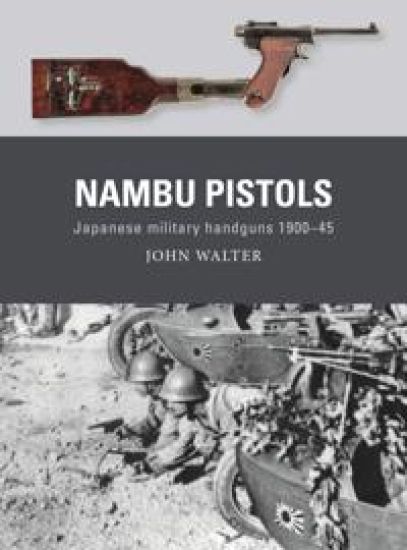
This is the absorbing story of the handguns credited to Nambu Kijiro, the principal personal-defence weapons of the Imperial forces. Featuring full-color artwork and carefully chosen photographs, this book charts the origins, development, combat use, and legacy of the Nambu pistols. Cutaway artwork reveals the inner workings of these important handguns, while specially commissioned battlescenes depict them in use in action. Influenced by the German C 96 and other semi-automatic pistols, the first Nambu model was never accepted for universal issue, being confined largely to purchase by Japanese officers. Adopted in 1925, the 14th Year Type was to become the best-known of these handguns, serving in every campaign undertaken by the Japanese in the 1930s and then throughout World War II. It served alongside the bizarrely conceived Type 94, intended as the weapon of airmen, tank crew, and anyone to whom its compact dimensions were useful. When World War II ended, thousands of Nambu pistols arrived in America with US veterans of World War II, while others were carried by insurgents and other armed groups across South East Asia for decades after 1945. Fully illustrated, this is the engrossing story of these distinctive pistols, from their origins to their legacy.
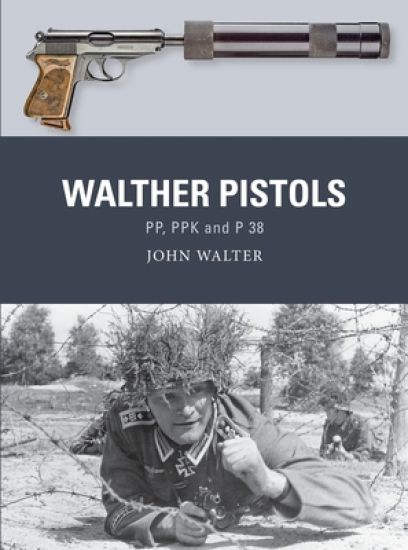
While the PP and PPK were intended for police work, the Walther P 38 was produced for the Germany military; all three pistols have garnered a formidable international reputation since the 1930s. The innovative Walther PP (Polizeipistole), a double-action semi-automatic pistol intended for the law-enforcement market, became available in 1929 and went on to arm the police of several European countries in the 1930s. Its smaller cousin the PPK, more readily concealed for undercover work but with reduced magazine capacity, was produced from 1931. Intended to replace the P 08 Luger, the Walther P 38 was issued from 1940 and equipped the armed forces of Germany and other countries during and after World War II, but never entirely replaced the Luger in German service. All three pistols went on to have lengthy and varied service across the world after 1945. Both the PP and the PPK remain in production today, while the P 38 re-emerged as the P1 and equipped West German forces from 1963 until 2004, when it was replaced by the P8. In this study, noted authority John Walter assesses the origins, development, use and legacy of these three high-profile semi-automatic pistols, alongside other Walther variants, such as the tiny .25 ACP Modell 9.
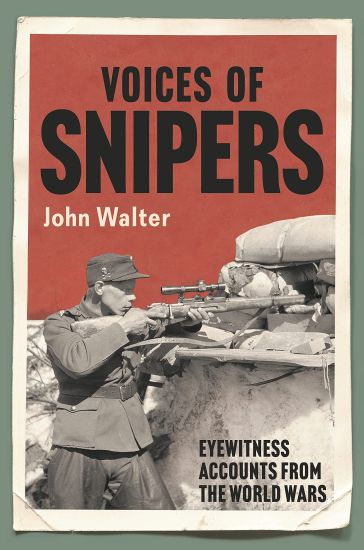
Based on an incredible breadth of first-hand testimony, this is a unique collection of eyewitness accounts from World War I and II. John Walter draws on meticulous research and the reminiscences of more than fifty snipers, tracing their journeys from recruitment and selection through training, combat and its aftermath to reveal a surprising commonality of experience, even across nationalities. Laying bare the triumphs and brutalities of sniping, the personalities and psychologies of those who found themselves doing it and considering the immediate implications on both the sniper and the wider theatre of war, this is a fascinating, detailed insight into frontline combat and the experience of sharpshooting in its historical context. The book is appended with the complete diary of Russian sniper Roza Shanina, who is still celebrated today for her remarkable shooting accuracy and astonishing bravery. Her diary offers a rare insight into the complexities of what it was to be both a sniper and a woman on the frontline.
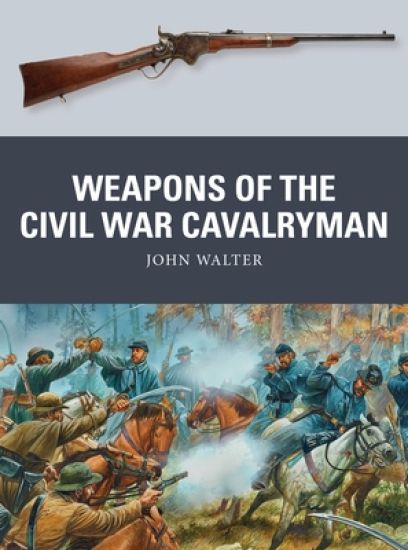
Weapons of the Civil War Cavalryman
John Walter
Osprey Publishing
2020
nidottu
Halvin toimitettuna 19,50 €
During the American Civil War, the mounted soldiers fighting on both sides of the conflict carried a wide array of weapons, from sabers and lances to carbines, revolvers, and other firearms. Though some sections of the cavalry placed their trust in the sabre, the advent of viable breechloading carbines -- especially repeaters such as the Spencer -- was to transform warfare within little more than a decade of General Lee’s final surrender at Appomattox. However, output struggled to keep up with unprecedented demands on manufacturing technology and distribution in areas where communication was difficult and in states whose primary aim was to equip their own men rather than contribute to the arming of Federal or Confederate regiments. In addition, the almost unparalleled losses of men and equipment ensured that almost any firearm, effectual or not, was pressed into service. Consequently, the sheer variety of weaponry carried reflected the mounted soldiers’ various roles in different theatres of operation, but also the availability -- or otherwise -- of weapons, notably on the Confederate side. Fully illustrated, this study assesses the effectiveness of the many different weapons arming the Civil War cavalryman and analyses the strengths and weaknesses of the decisions made after 1865 concerning the armament of the US cavalry.
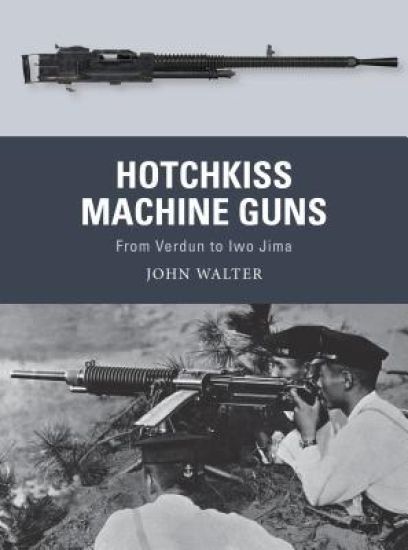
Created by a long-forgotten Austrian nobleman, Adolf Odkolek von Augezd, the air-cooled Hotchkiss machine gun was the first to function effectively by tapping propellant gas from the bore as the gun fired. Although the Hotchkiss would be overshadowed by the water-cooled Maxim and Vickers Guns, it proved its effectiveness during the Russo-Japanese War. The gun, quirky though it was, was successful enough to persuade Laurence Benét and Henri Mercié to develop the Modèle Portative: a man-portable version which, it was hoped, could move with infantrymen as they advanced. Later mounted on tanks and aircraft, it became the first automatic weapon to obtain a ‘kill’ in aerial combat. Though it served the French and US armies during World War I (and also the British in areas where French and British units fought alongside each other), the Odkolek-Hotchkiss system was to have its longest-term effect in Japan. Here, a succession of derivatives found favour in theatres of operations in which water-cooling could be more of a liability than an asset. When US forces landed on Saipan, Guam and Iwo Jima, battling their way from island to island across the Pacific, it was the ‘Woodpecker’ – the Type 92 Hotchkiss, with its characteristically slow rate of fire – which cut swathes through their ranks. Supported by contemporary photographs and full-colour illustrations, this title explores the exciting and eventful history of the first successful gas-operated machine gun.
An authoritative single-volume guide to everything connected with sniping. First 'alphabetical dictionary' published for sniper enthusiasts that subdivides the subject into accessible bite-size portions.

The distinctive look of the Luger and its role in German military history make it the world’s most famous handgun. In Luger, renowned gun expert John Walter traces the history of this semiautomatic pistol from an early design by Hugo Borchardt in the 1890s through its use in the trenches of the First World War to the final days of the Third Reich in WWII. Other books on the Parabellum-Pistole, as the Luger was also known, focus strictly on narrow subjects like manufacturing details or accessories. While still offering the technical details to satisfy the collector, Walter provides a comprehensive narrative history. Readers will learn of the initial collaboration between Borchardt and Georg J. Luger, who patented the design in 1898. Following initial adoption by the Swiss Army, design refinements convinced the Imperial German Navy to order the sidearm, while the US Army passed on it following field trials in favor of the Colt. Production ramped up for World War I and the gun became a prized trophy for Allied soldiers in both that conflict and World War II. (German soldiers, aware of their desirability, even used them as bait for booby traps.) Today, it is still desired by collectors both for its unique design and for its connection to the history of Nazi Germany, and Luger: The Story of the World’s Most Famous Handgun tells how it came to be.

Anecdotes of eminent painters in Spain during the sixteenth and seventeenth centuries
Richard Cumberland; John Walter
Hansebooks
2017
pokkari
Anecdotes of eminent painters in Spain during the sixteenth and seventeenth centuries - With cursory remarks upon the present state of arts in that kingdom. Vol. 1 is an unchanged, high-quality reprint of the original edition of 1782. Hansebooks is editor of the literature on different topic areas such as research and science, travel and expeditions, cooking and nutrition, medicine, and other genres. As a publisher we focus on the preservation of historical literature. Many works of historical writers and scientists are available today as antiques only. Hansebooks newly publishes these books and contributes to the preservation of literature which has become rare and historical knowledge for the future.

With the nineteenth-century enthusiasm for railways came a demand for everfaster locomotives that could haul greater loads than their predecessors. As different companies competed in what is now known as the ‘steam era’, the face of locomotives was changed forever. The Iron Horse is an accessible and illustrated study of the development of the steam railway locomotive, from Trevithick, Hedley, Blenkinsop, Séguin, Stevenson and other pioneers to the ground-breaking analytical work of Chapelon and his disciples. Here John Walter outlines the fascinating history of steam railway locomotives followed by a comprehensive and easy-to-understand directory based on the Whyte wheel classification system. Packed with images, diagrams and contemporary artworks, this well researched book will be indispensable to casual and serious enthusiasts alike.

Covenanting Citizens throws new light on the origins of the English civil war and on the radical nature of the English Revolution. An exercise in writing the 'new political history', the volume challenges the discrete categories of high and popular politics and the presumed boundaries between national and local history. It offers the first full study of the Protestation, the first state oath to be issued under parliamentary authority. The politics behind its introduction into Parliament, it argues, challenges the idea that the drift to civil war was unintended or accidental. Used as a loyalty oath to swear the nation, it required those who took it to defend king, church, parliament, and England's liberties. Despite these political commonplaces, the Protestation had radical intentions and radical consequences. It envisaged armed resistance against the king, and possibly more. It became a charter by which parliament felt able to fight a civil war and it was used to raise men, money, and political support. Requiring resistance against enemies that might include a king himself contemplating the use of political violence, the Protestation offered a radical extension of membership of the political nation to those hitherto excluded by class, age, or gender. In envisaging new forms of political mobilisation, the Protestation promoted the development of a parliamentary popular political culture and ideas of active citizenry. Covenanting Citizens demonstrates how the Protestation was popularly appropriated to legitimise an agency expressed in street politics, new forms of mass petitioning, and popular political violence.
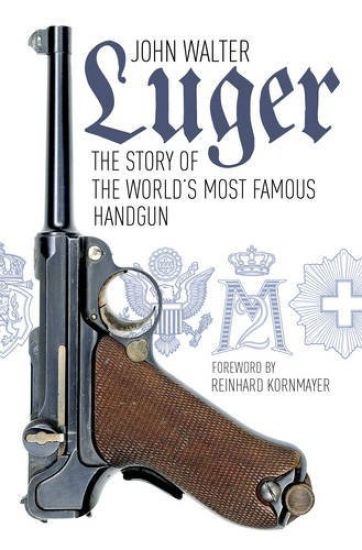
The elegant but menacing silhouette of the Luger is immediately recognisable. Nearly 2 million had been manufactured by the end of the First World War, and the gun remained in production right up until the last days of the Third Reich in 1945. Author and firearms expert John Walter has produced the most comprehensive one-volume guide to the world’s most famous pistol. An engaging history, not overly complicated by technical details, this updated edition will appeal to the collectors and readers of military history alike.
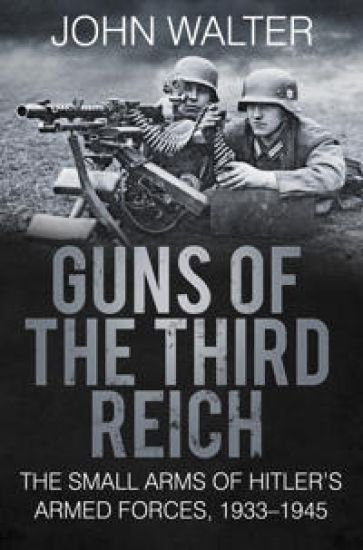
The armies of the Third Reich were a formidable foe for the Allied forces – largely thanks to the effectiveness of their equipment and weaponry. In this first-class book, renowned firearms expert John Walter examines the full range of guns used from the commercially successful Walter PP and PPK, to the double-action, personal defence pistols Mauser HSc and Sauer M38. Walter also considers the value of weapons that were captured and then used, by the Wehrmacht and the police. Thoroughly researched and illustrated with fascinating examples, this comprehensive reference book covers all significant aspects of design and employment, including data for each weapon on length, weight, barrel, magazine and muzzle velocity. This is an indispensable resource on a compelling subject.
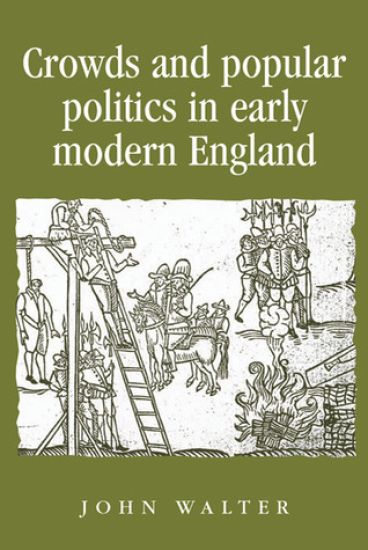
Crowds and Popular Politics in Early Modern England
John Walter
Manchester University Press
2010
nidottu
Early modern England was marked by profound changes in economy, society, politics and religion. It is widely believed that the poverty and discontent which these changes often caused resulted in major rebellion and frequent ‘riots’. Whereas the politics of the people have often been described as a ‘many-headed monster’; spasmodic and violent, and the only means by which the people could gain expression in a highly hierarchical society and a state that denied them a political voice, the essays in this collection argue for the inherently political nature of popular protest through a series of studies of acts of collective protest, up to and including the English Revolution. The work of John Walter has played a central role in defining current understanding of the field and has been widely read and cited by those working on the politics of subaltern groups. This collection of essays offers a radical re-evaluation of the nature of crowds and protests during the period, and it will make fascinating reading for historians of the period.