Kirjojen hintavertailu – 12 903 725 kirjaa ja 27 kauppaa
Kirjailija
John Weeks
Kirjat ja teokset yhdessä paikassa: 26 kirjaa, julkaisuja vuosilta 1989–2025, suosituimpiin kuuluu Wiregrass Moon. Vertaile teosten hintoja ja tarkista saatavuus suomalaisista kirjakaupoista.
A collection of seminal essays in the Marxist tradition from the renowned economist John Weeks. John Weeks (1941-2020) was one of the most prominent Marxist economists of his generation. His writings inspired many activists and socialist economists around the world. This book brings together a selection of his writings engaging with and developing the Marxist tradition. These essays examine theoretical issues, directly building on Karl Marx’s work, as well as practical and political issues, engaging with transformative and revolutionary activity. The essays included in this book are now made available to a new generation of critics of capitalism.
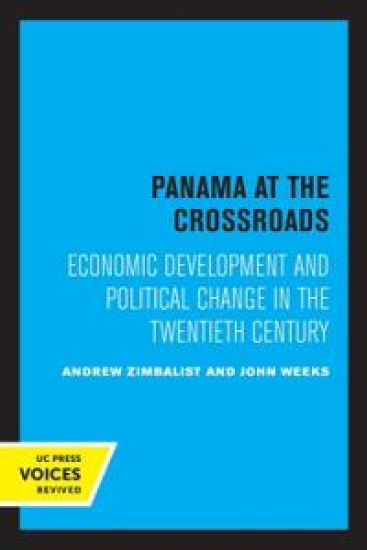
In December 1989, the United States invaded Panama, deposed its government, and established another in its place. While this act of violent intervention brought Panama to public attention, the justifications for it obscured the underlying instabilities that have plagued the country throughout its history. Although a stated purpose of the invasion was to remove one man, Manuel Noriega, from power, Panama at the Crossroads demonstrates that the crisis sweeping Panama in the late 1980s was not caused by one man, but in fact derived from the history of U. S. domination and the nature of Panamanian society itself. Panama is located at a crucial geographic crossroads, a fact that has greatly influenced the country's history since the sixteenth century. Labor scarcity and inhospitable terrain, joined with its location, contributed to the mercantile orientation of Panama's economy. Accordingly, the country's politics and economics have been consistently dominated by foreign trading interests, first from Spain, then Colombia and the United States. Now in the 1990s, Panama stands at a historical and economic crossroads, and according to Zimbalist and Weeks its traditional entrepôt institutions are no longer able to promote and sustain growth. Before building the basis for long-term economic expansion, Panama must first undo the devastating economic and political damage engendered by nearly three years of U. S. economic sanctions and the U. S. invasion. In this timely book, Zimbalist and Weeks document the origins and characteristics of this crossroads. Their analysis points the way to a more encompassing and equitable strategy for Panama's economic development. This title is part of UC Press's Voices Revived program, which commemorates University of California Press’s mission to seek out and cultivate the brightest minds and give them voice, reach, and impact. Drawing on a backlist dating to 1893, Voices Revived makes high-quality, peer-reviewed scholarship accessible once again using print-on-demand technology. This title was originally published in 1991.
In December 1989, the United States invaded Panama, deposed its government, and established another in its place. While this act of violent intervention brought Panama to public attention, the justifications for it obscured the underlying instabilities that have plagued the country throughout its history. Although a stated purpose of the invasion was to remove one man, Manuel Noriega, from power, Panama at the Crossroads demonstrates that the crisis sweeping Panama in the late 1980s was not caused by one man, but in fact derived from the history of U. S. domination and the nature of Panamanian society itself. Panama is located at a crucial geographic crossroads, a fact that has greatly influenced the country's history since the sixteenth century. Labor scarcity and inhospitable terrain, joined with its location, contributed to the mercantile orientation of Panama's economy. Accordingly, the country's politics and economics have been consistently dominated by foreign trading interests, first from Spain, then Colombia and the United States. Now in the 1990s, Panama stands at a historical and economic crossroads, and according to Zimbalist and Weeks its traditional entrepôt institutions are no longer able to promote and sustain growth. Before building the basis for long-term economic expansion, Panama must first undo the devastating economic and political damage engendered by nearly three years of U. S. economic sanctions and the U. S. invasion. In this timely book, Zimbalist and Weeks document the origins and characteristics of this crossroads. Their analysis points the way to a more encompassing and equitable strategy for Panama's economic development. This title is part of UC Press's Voices Revived program, which commemorates University of California Press’s mission to seek out and cultivate the brightest minds and give them voice, reach, and impact. Drawing on a backlist dating to 1893, Voices Revived makes high-quality, peer-reviewed scholarship accessible once again using print-on-demand technology. This title was originally published in 1991.
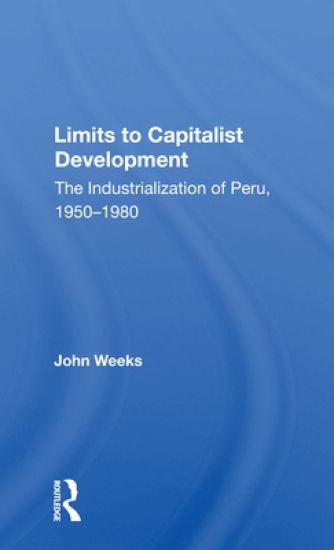
This book explains the dynamics of industrialization in Peru between 1950 and 1980 in the stage of capitalist development when the export of productive capital has become significant. It investigates the development of the Peruvian manufacturing sector and agricultural sector.
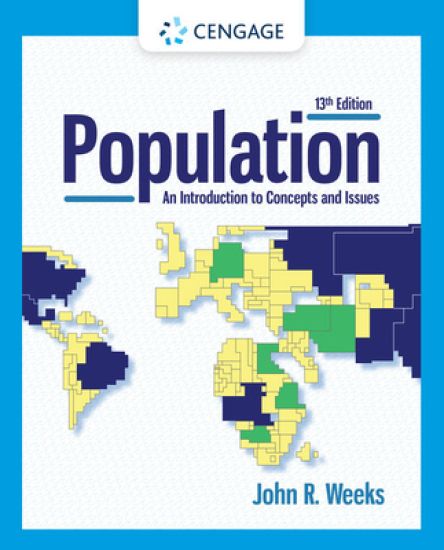
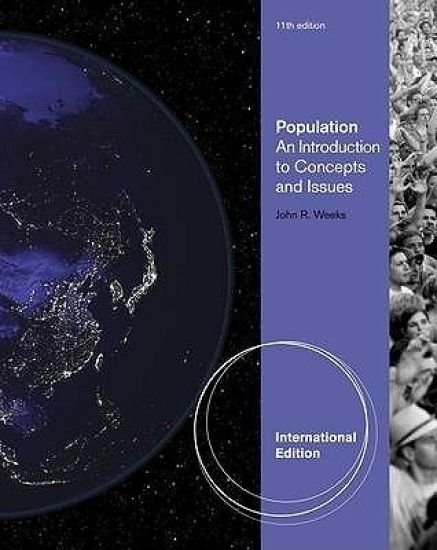
Any class in Population/Demography is a lot more interesting when you are using this book. POPULATION does more than give you information; it also shows you how to put it into practice. From the debates over how to manage population growth in some countries, and aging populations in others, to the issues of how amazingly different the world is when people are living in urban areas with considerable control over their own mortality and fertility, POPULATION helps you understand how the world really works and how population dynamics relate to socio-economic transitions and sustainable development. You'll find compelling writing, intriguing essays and built-in study aids that help you review and prepare for tests -- while also equipping you for the rest of your life on this planet.
Every good business owner has an operational plan-but only 17% create a fully articulated transition strategy. Even then, the focus is usually on monetary and legal concerns, ignoring the important emotional and lifestyle impact of the change. To take on your transition happily, successfully, and securely, you need a holistic plan that incorporates personal, family, and financial concerns. In Your Next Adventure, the team from The Colony Group shows you how to craft a robust transition strategy that considers your business, personal, familial, and community needs. From pre-sale to post-sale, Rowe, Fitts, and Weeks will help you plan ahead, assemble the right professional advisors, and incorporate your values, legacy, and loved ones into every choice you make. It's never too early to start planning for life after the sale of your business. Your Next Adventure will prepare you for a future filled with potential, purpose, and satisfaction for you and those you care about.
Dr. Weeks presents a detailed critique of dependency theory as an explanation of underdevelopment and offers an alternative theory based on the internal contradictions within underdeveloped countries and the competitive nature of international capitalism. Applying his theory to Peru, he shows how the country has been transformed over the last thirt
What does scientific research show about the effectiveness of chiropractic care? How are chiropractors trained and what do they do? When should one turn to chiropractic care, and how does one select a practitioner? This book answers all of these questions and more. Chiropractic is the most frequently used complementary and alternative medicine (CAM) practice in the United States, with nearly $4 billion spent out-of-pocket annually by chiropractic patients. In fact, as evidence for its effectiveness for common conditions such as back pain continues to mount and acceptance grows in a variety of health care settings, chiropractic could be considered more "mainstream" than many other forms of CAM. In this information-packed single-volume work, an expert team led by Cheryl Hawk—a well-known chiropractic researcher—explains chiropractic licensure, practice, and effectiveness to general readers researching chiropractic care options and to undergraduate students choosing a major or specialty. Readers will see the range of scientific evidence supporting the use of chiropractic health care for many common conditions, learn about the typical chiropractic clinical encounter and chiropractic procedures, and understand the criteria by which patients and other health professionals can use to select a chiropractic physician. This book also provides health care practitioners in other fields with current information that enables a greater understanding of the training and the roles of chiropractors in health care.
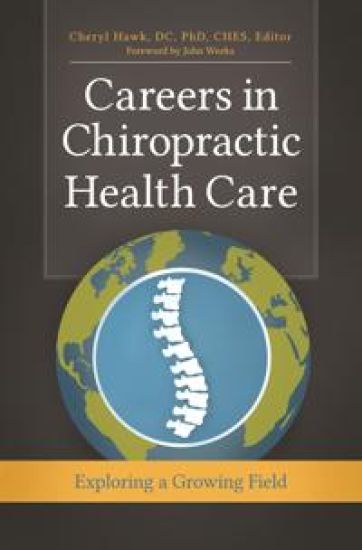
This book provides potential students of a chiropractic career path, as well as other health care practitioners, with vital information regarding the training required to enter the chiropractic field and the roles of chiropractors in modern health care. Chiropractic is the second largest physician-level health profession in the United States, with chiropractors providing care to at least 20 million patients annually. As chiropractic health care has been proven to be both effective and cost effective for many musculoskeletal conditions, particularly back pain, the inclusion of Doctors of Chiropractic (DCs) in a variety of health care settings is likely to continue to increase. Surprisingly, there is little readily accessible information on chiropractic as a career path. This book provides concise yet comprehensive information about career paths, training, and professional roles in chiropractic for students considering chiropractic as well as health care practitioners in the field. Written in an easy-to-read style, Careers in Chiropractic Health Care: Exploring a Growing Field serves students, those in non-chiropractic health fields, and general readers considering chiropractic as a career change option. The chapters explain the training and specific licensure requirements for chiropractors in all 50 U. S. states and provide information useful to health care professionals for referrals and management of patients using chiropractic care.
Professor Weeks proposes that the key to Marx's critique of capitalist society is the labor theory of value. A commodity-producing society, he argues, necessarily gives rise to a capitalist society, so that commodity production and the exploitation of labor are inseparably linked. Originally published in 1982. The Princeton Legacy Library uses the latest print-on-demand technology to again make available previously out-of-print books from the distinguished backlist of Princeton University Press. These editions preserve the original texts of these important books while presenting them in durable paperback and hardcover editions. The goal of the Princeton Legacy Library is to vastly increase access to the rich scholarly heritage found in the thousands of books published by Princeton University Press since its founding in 1905.
Professor Weeks proposes that the key to Marx's critique of capitalist society is the labor theory of value. A commodity-producing society, he argues, necessarily gives rise to a capitalist society, so that commodity production and the exploitation of labor are inseparably linked. Originally published in 1982. The Princeton Legacy Library uses the latest print-on-demand technology to again make available previously out-of-print books from the distinguished backlist of Princeton University Press. These editions preserve the original texts of these important books while presenting them in durable paperback and hardcover editions. The goal of the Princeton Legacy Library is to vastly increase access to the rich scholarly heritage found in the thousands of books published by Princeton University Press since its founding in 1905.
In 2008 the capitalist world was swept by the severest crisis since the Great Depression of the 1930s. Mainstream economics neither anticipated nor could account for this disastrous financial crisis, which required massive state intervention throughout the capitalist world. Karl Marx did anticipate this type of financial collapse, arguing that it was derivative from the ‘fetishism of commodities’ inherent in the capitalist mode of production. This book substantiates the foregoing claim by a journey from Marx’s analysis of commodities to the capitalist crisis of the twenty-first century. The book demonstrates that Marx's framework (1) demonstrates that capitalism is but one historical form of class society among many; (2) explains the transition from pre-capitalist to capitalist society; (3) reveals the concrete operation of a capitalist economy; and (4) shows why others would explain the capitalist economy in alternative theoretical frameworks. The central element in his framework from which all else derives is ‘the theory of value’. This book is not an exercise in the history of thought. It is an attempt to analyze the nature of contemporary capitalist society. While Marx’s analysis of capitalism has implications for political action, these need not lead one to embrace revolution in place of reform, though it can and has provided the analytical foundation for both. Marx’s analysis of capitalism is a coherent whole, and meaningful insights cannot be obtained by extracting elements from it. Weeks starts out by looking at the nature of capitalism and an analysis circulation, money and credit unfold from the theory of value. The nature and inherent necessity of competition are demonstrated in chapter eight. A consequence of competition, expressed in the movement of capital, is technical change, the contradictory impact of which is explained in chapter nine. This is brought together with the other elements of value theory (money, credit and competition) in chapter ten, where economic crises are treated in detail. The final chapter applies the theory of crisis to the extreme financial disturbances of the 2000s. This book should be of interest to students and researchers of economics, politics and sociology.
In the course of this book it is argued that the loss of what is essentially "macro" in Keynes is the result of a preference for a form of equilibrium analysis that gives unqualified support to the ideology of free markets. In the case of Marx, his theory of exploitation and from this the stress on class struggle, led to an almost complete neglect of his contribution to the analysis of the aggregate demand and supply of commodities.
In the course of this book it is argued that the loss of what is essentially "macro" in Keynes is the result of a preference for a form of equilibrium analysis that gives unqualified support to the ideology of free markets. In the case of Marx, his theory of exploitation and from this the stress on class struggle, led to an almost complete neglect of his contribution to the analysis of the aggregate demand and supply of commodities.
In 2008 the capitalist world was swept by the severest crisis since the Great Depression of the 1930s. Mainstream economics neither anticipated nor could account for this disastrous financial crisis, which required massive state intervention throughout the capitalist world. Karl Marx did anticipate this type of financial collapse, arguing that it was derivative from the ‘fetishism of commodities’ inherent in the capitalist mode of production. This book substantiates the foregoing claim by a journey from Marx’s analysis of commodities to the capitalist crisis of the twenty-first century. The book demonstrates that Marx's framework (1) demonstrates that capitalism is but one historical form of class society among many; (2) explains the transition from pre-capitalist to capitalist society; (3) reveals the concrete operation of a capitalist economy; and (4) shows why others would explain the capitalist economy in alternative theoretical frameworks. The central element in his framework from which all else derives is ‘the theory of value’. This book is not an exercise in the history of thought. It is an attempt to analyze the nature of contemporary capitalist society. While Marx’s analysis of capitalism has implications for political action, these need not lead one to embrace revolution in place of reform, though it can and has provided the analytical foundation for both. Marx’s analysis of capitalism is a coherent whole, and meaningful insights cannot be obtained by extracting elements from it. Weeks starts out by looking at the nature of capitalism and an analysis circulation, money and credit unfold from the theory of value. The nature and inherent necessity of competition are demonstrated in chapter eight. A consequence of competition, expressed in the movement of capital, is technical change, the contradictory impact of which is explained in chapter nine. This is brought together with the other elements of value theory (money, credit and competition) in chapter ten, where economic crises are treated in detail. The final chapter applies the theory of crisis to the extreme financial disturbances of the 2000s. This book should be of interest to students and researchers of economics, politics and sociology.
Demographics class just got a lot more interesting. An Introduction to Population, International Edition does not just give you the information; it shows you how to use it. From the debate over how to rebuild the Gulf Coast after Hurricane Katrina to what should be done about Social Security and Medicare, An Introduction to Population, International Edition lets you apply the research yourself. Plus, An Introduction to Population, International Edition makes studying for the test easier than ever with its built-in study aides.