Kirjojen hintavertailu – 12 859 818 kirjaa ja 27 kauppaa
Kirjailija
John William Polidori
Kirjat ja teokset yhdessä paikassa: 61 kirjaa, julkaisuja vuosilta 2005–2026, suosituimpiin kuuluu Vampires in Literature; Short Stories. Vertaile teosten hintoja ja tarkista saatavuus suomalaisista kirjakaupoista.
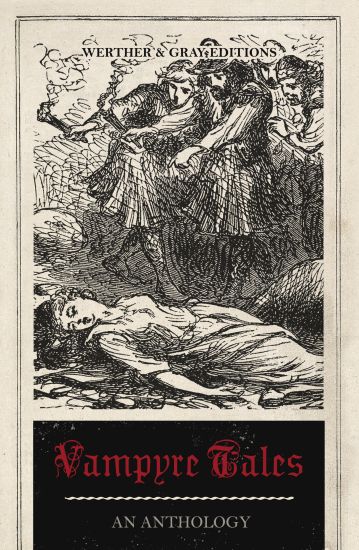
Fifteen chilling tales recount some of the earliest examples of vampire lore ever published. Gothic tales, traditional folklore, satire, psychological horror, and even romance set the stage for a diverse cast of undead characters, including the first ever black vampire story, gay vampires, lesbian vampires, psychic vampires, some old, some young, but all bloodthirsty This anthology also features the first vampire story ever set in the Carpathian region (The Mysterious Stranger, a possible influence on Bram Stoker), as well as Stoker's own story Dracula's Guest, excised by his publisher from his classic Dracula novel before publication.
When Aubrey, a young Englishman, meets a mysterious man from London high society, Lord Ruthven, they become unlikely friends. Shortly after, Aubrey decides to accompany the noble on a trip to Rome. However, when a moral disagreement arises between the two, Aubrey decides to leave Ruthven in Rome, and goes off on his own. Arriving in Greece, Aubrey meets Ianthe, and the two share an immediate connection. After sharing stories and an evening together, Aubrey and Ianthe part ways for the night. However, after a devastating turn of events, Aubrey and Ruthven reunite, and Aubrey, ready to leave Greece behind, is happy to travel with the older man once again. But as they continue their travels, Aubrey slowly begins to notice Ruthven’s odd behavior. After even more consideration, Aubrey realizes a shocking pattern—nearly everyone that Ruthven comes in close contact to meets an untimely end. Afraid of his newly acquired knowledge, Aubrey attempts to distance himself from the suspicious man, though he is forced to reconsider his efforts when Ruthven expresses intent to marry Aubrey’s sister. First published under Lord Byron’s name, The Vampyre rose to immediate commercial success. However, though he was inspired by a discarded piece of Lord Bryon’s work, both authors have since admitted that John William Polidori was the true writer of The Vampyre. Considered to be the first work of vampire fiction, The Vampyre had an immense role in shaping vampires as literary figures, influencing the canonical rules of vampires that many still follow today. First published in 1819, Polidori’s The Vampyre remains to be a thrilling and spooky read centuries later, and has since inspired both film and theater adaptations. With mystery and eerie suspense, Polidori’s work is an extraordinary example of 19th century gothic horror. This edition of The Vampyre by John William Polidori features a striking new cover design and is printed in a font that is both modern and readable. With these accommodations, The Vampyre caters to a contemporary audience while preserving the original innovation of John William Polidori’s work.
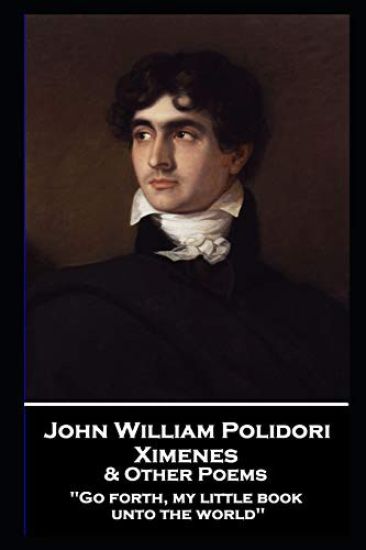
John William Polidori was born on 7th September 1795 in London to Gaetano Polidori, an Italian political migr scholar, and Anna Maria Pierce, an English governess. He was the eldest of 8 children. From 1804 Polidori was a pupil at the recently formed Ampleforth College. In 1810 he proceeded to the University of Edinburgh, where he wrote a thesis on sleepwalking and received his degree as a doctor of medicine on 1st August 1815. He was 19. In 1816, Dr. Polidori was given the job of Byron's personal physician and accompanied him on a trip through Europe. The publisher John Murray offered Polidori 500 to keep a diary of their travels. At the Villa Diodati, Byron's rented villa at Lake Geneva in Switzerland, the pair met with Mary Wollstonecraft Godwin, Percy Bysshe Shelley, and Mary's stepsister, Claire Clairmont. One night in June, after the company had read aloud from a French collection of German horror tales, Byron suggested they each write a ghost story. There were to be two outstanding works from that evening; 'Frankenstein' by Mary Shelley and Polidori's 'The Vampyre' which would be the first published modern vampire story in English. Dismissed by Byron, Polidori traveled in Italy and then returned to England. His story, 'The Vampyre', was published in the April 1819 issue of New Monthly Magazine without his permission. Much to the annoyance of both Polidori and Byron it was the latter who was credited as author. Polidori also had published 'Ximenes, The Wreath & Other Poems' in 1819 and his long theological and sacred poem 'The Fall of the Angels' in 1821 as well as two plays, essays and his diary. Despite his youth Polidori was increasingly worn down by gambling debts and depression. John William Polidori died on 24th August 1821 at the age of only 25 in London. Although his death was recorded as death by natural causes, strong evidence asserts that it was suicide by means of cyanide.
John William Polidori was born on 7th September 1795 in London to Gaetano Polidori, an Italian political migr scholar, and Anna Maria Pierce, an English governess. He was the eldest of 8 children. From 1804 Polidori was a pupil at the recently formed Ampleforth College. In 1810 he proceeded to the University of Edinburgh, where he wrote a thesis on sleepwalking and received his degree as a doctor of medicine on 1st August 1815. He was 19. In 1816, Dr. Polidori was given the job of Byron's personal physician and accompanied him on a trip through Europe. The publisher John Murray offered Polidori 500 to keep a diary of their travels. At the Villa Diodati, Byron's rented villa at Lake Geneva in Switzerland, the pair met with Mary Wollstonecraft Godwin, Percy Bysshe Shelley, and Mary's stepsister, Claire Clairmont. One night in June, after the company had read aloud from a French collection of German horror tales, Byron suggested they each write a ghost story. There were to be two outstanding works from that evening; 'Frankenstein' by Mary Shelley and Polidori's 'The Vampyre' which would be the first published modern vampire story in English. Dismissed by Byron, Polidori traveled in Italy and then returned to England. His story, 'The Vampyre', was published in the April 1819 issue of New Monthly Magazine without his permission. Much to the annoyance of both Polidori and Byron it was the latter who was credited as author. Polidori also had published 'Ximenes, The Wreath & Other Poems' in 1819 and his long theological and sacred poem 'The Fall of the Angels' in 1821 as well as two plays, essays and his diary. Despite his youth Polidori was increasingly worn down by gambling debts and depression. John William Polidori died on 24th August 1821 at the age of only 25 in London. Although his death was recorded as death by natural causes, strong evidence asserts that it was suicide by means of cyanide.
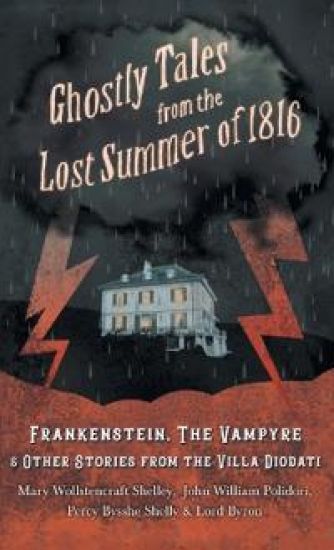
Around two hundred years ago the famous writer Lord Byron rented the mansion known as the Villa Diodati on Lake Geneva. Accompanying Byron, among others, was the 23-year-old poet Percy Shelley, his mistress, Mary Wollstonecraft Godwin, and Byron's physician John William Polidori. The summer would be forever known as the 'Lost Summer of 1816'. For three days they were shut up in the Villa due to cold and stormy weather, which would serve as the backdrop to the telling and writing of horror and ghost stories--the most notable of which was Mary Shelley's "Frankenstein". 'Ghostly Tales from Lost Summer of 1816' is the collected writings from the guests; including "Frankenstein" by Mary Shelley, "The Vampyre" by John Polidori, and the unfinished tales, "Fragment of a Ghost Story" by Percy Shelley, and "A Fragment of a Novel" by Lord Byron. This collection of tales would make for a worthy addition to the shelves of fans of the horrifying and macabre. This edition includes specially-commissioned biographies of each of the authors.
The Vampyre is a short story by John William Polidori. It is based on a fragment written by Lord Byron in 1816 during a gathering of author friends who, trapped inside due to bad weather, decided to write ghost stories. At the request of a friend, Polidori wrote a complete story from the premise outlined in Byron's fragment. Without either author's prior knowledge, the story was published in the April 1819 issue of New Monthly Magazine as "The Vampyre: A Tale by Lord Byron"; despite immediate protests from both Byron and Polidori, the attribution stuck, for a well-known author such as Byron attracted a much better audience.
The Vampyre; A Tale by John William Polidori. "The Vampyre" is a short work of prose fiction written in 1819 by John William Polidori. The work is often viewed as the progenitor of the romantic vampire genre of fantasy fiction. The work is described by Christopher Frayling as "the first story successfully to fuse the disparate elements of vampirism into a coherent literary genre." THE superstition upon which this tale is founded is very general in the East. Among the Arabians it appears to be common: it did not, however, extend itself to the Greeks until after the establishment of Christianity; and it has only assumed its present form since the division of the Latin and Greek churches; at which time, the idea becoming prevalent, that a Latin body could not corrupt if buried in their territory, it gradually increased, and formed the subject of many wonderful stories, still extant, of the dead rising from their graves, and feeding upon the blood of the young and beautiful. In the West it spread, with some slight variation, all over Hungary, Poland, Austria, and Lorraine, where the belief existed, that vampyres nightly imbibed a certain portion of the blood of their victims, who became emaciated, lost their strength, and speedily died of consumptions; whilst these human blood-suckers fattened-and their veins became distended to such a state of repletion, as to cause the blood to flow from all the passages of their bodies, and even from the very pores of their skins.
The Vampire is now a staple of modern culture. Seen in films, comics, posters, books and countless other places and products, his presence has become ubiquitous. Despite this, the origin of this mythical creature remains obscure. When? In what circumstances did this character enter the world of fiction? Included in this collection are several stories that were written in the 19th century. They represent some of the earliest appearances of vampires in written form. The Vampyre is considered by many to be the first ever vampire short story ever written. Carmilla, a gothic novella published 25 years before Dracula, contains themes of lesbian attraction and aristocratic depredation that were hugely controversial at the time. Clarimonde is the story of a priest who is troubled in his faith when he falls in love with a mysterious woman. Collectively these stories represent a remarkable creative outburst that would give birth to the unnerving and endearing Vampire.
Full text. This short work of prose fiction (written in 1819) is often viewed as the progenitor of the romantic vampire genre of fantasy fiction, almost singlehandedly creating the now-popular image of the vampire as an aristocratic seducer. Quote: His guardians insisted upon his immediately leaving his friend, and urged, that his character was dreadfully vicious, for that the possession of irresistible powers of seduction, rendered his licentious habits more dangerous to society. It had been discovered, that his contempt for the adultress had not originated in hatred of her character; but that he had required, to enhance his gratification, that his victim, the partner of his guilt, should be hurled from the pinnacle of unsullied virtue, down to the lowest abyss of infamy and degradation.
Abraham "Bram" Stoker (1847 -1912) was an Irish author, best known today for his 1897 Gothic novel Dracula. The novel tells the story of Dracula's attempt to move from Transylvania to England so that he may find new blood and spread the undead curse, and of the battle between Dracula and a small group of men and women led by Professor Abraham Van Helsing. George Sylvester Viereck (1884 -1962) was a German-American poet and writer. The House of the Vampire...is one of the first psychic vampire stories where a vampire feeds off more than just blood. Joseph Thomas Sheridan Le Fanu (1814 -1873) was an Irish writer of Gothic tales and mystery novels. He was a leading ghost-story writer of the nineteenth century and was central to the development of the genre in the Victorian era. Carmilla is a Gothic novella by Joseph Sheridan Le Fanu and one of the early works of vampire fiction, predating Bram Stoker's Dracula (1897) by 26 years. First published as a serial in The Dark Blue (1871-72), the story is narrated by a young woman preyed upon by a female vampire named Carmilla, later revealed to be Mircalla, Countess Karnstein (Carmilla is an anagram of Mircalla). The story is often anthologized and has been adapted many times in film and other media. John William Polidori (1795 -1821) was an English writer and physician. His most successful work was the short story "The Vampyre" (1819), the first published modern vampire story. The work is often viewed as the progenitor of the romantic vampire genre of fantasy fiction and the first story successfully to fuse the disparate elements of vampirism into a coherent literary genre. Pierre Jules Th ophile Gautier (1811 -1872) was a French poet, dramatist, novelist, journalist, and art and literary critic. "La Morte amoureuse" (in English: "The Dead in Love or Carmille") is a short story written by Th ophile Gautier and published in La Chronique de Paris in 1836. It tells the story of a priest named Romuald who falls in love with Clarimonde, a beautiful woman who turns out to be a vampire. In this book: Dracula Bram Stoker The House of the Vampire George Sylvester Viereck The Vampyre John William Polidori Carmilla Joseph Thomas Sheridan Le Fanu The Dead in Love or Clarimonde Pierre Jules Th ophile Gautier Translator: Lafcadio Hearn