Kirjojen hintavertailu – 12 903 725 kirjaa ja 27 kauppaa

Kirjailija

John Wills

Kirjat ja teokset yhdessä paikassa: 12 kirjaa, julkaisuja vuosilta 2005–2026, suosituimpiin kuuluu American Studies in the Age of New Area Studies. Vertaile teosten hintoja ja tarkista saatavuus suomalaisista kirjakaupoista.

12 kirjaa

Kirjojen julkaisuvuodet: 2005–2026.

American Studies in the Age of New Area Studies

American Studies in the Age of New Area Studies

Clare Corbould; Hilary Emmett; Sarah Garland; Malcolm McLaughlin; Thomas Ruys Smith; John Wills

TAYLOR FRANCIS LTD
2026
sidottu
This book explores what it means to study America in the 21st century and what the emergence of the field of New Area Studies means for the development of American Studies. Analysing the meaning of interdisciplinarity, aesthetics, temporality and periodization, this book reveals both fields of study through the lens of interdisciplinary cases studies, innovative methodologies and a global perspective. Exploring the imagined geographies of America across space and time, the book rethinks the meaning and production of place, and questions what —and where—it means to study America now. Addressing the key issues of nation, place and people in this new disciplinary moment, this book will be a valuable resource to students and scholars of American Studies and Area Studies.
Doom Town, USA: The Nevada Test Site as Ground Zero of 1950s American Culture
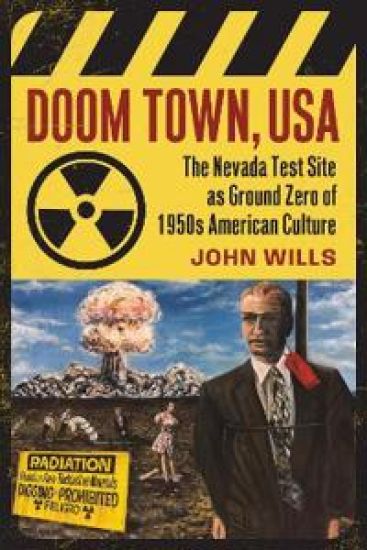
Cultural scholar John Wills takes readers on a cultural tour of Doom Town, USA, designed to be the model 1950s American city and destroyed by an atomic bomb on live television to educate Americans on the need to prepare for possible nuclear war--but also to sell new products in the emerging postwar economic boom. In March 1953 and May 1955, government officials--including the Federal Civil Defense Administration (FCDA), the US Department of Defense, and the Atomic Energy Commission--released nuclear bombs on two model towns at Nevada Test Site, the continental nuclear test facility during the Cold War. These so-called "Doom Towns" were designed to illustrate in the most vivid way possible what might happen to a "typical American home" caught in a Soviet atomic blast. Instead of training troops for war overseas, the Doom Towns literally brought the Cold War home. Drawing on newspaper articles, FCDA reports, and corporate documents, John Wills brings readers into Doom Town, USA--a place where life-size mannequins of the archetypal Mr. and Mrs. America walked the streets in JCPenney clothes, drove Chrysler cars, and lived in the latest trailer homes, tailor-made to escape in the event of nuclear war. The two Doom Towns of Operation Doorstep (1953) and Operation Cue (1955) were far more than just an exercise in developing a new civilian home front. They were a media spectacle and a cultural flashpoint, attracting corporate sponsors, drawing in atomic tourists, and generating new consumer products. The atom bomb may have been bad for world peace, but it was good for business. In the excitement about these experiments, real people even volunteered to be living test subjects--but most were turned away. Doom Town became an unusual but effective banner for corporate and consumer life in the 1950s. Doom Town was an effective simulacrum of white middle-class America, right down to the racially segregated social spaces and the hierarchical gender roles of the dummies living in their classic suburban homes. But these homegrown Hiroshimas also contributed to a broader culture of catastrophe and fear in the late 1950s. Concerns over Communist invasion, Soviet spies, and ICBM missiles coalesced in the Nevada desert, framing a national culture of anxiety. The sudden explosion of the model towns revealed the shocking fragility of postwar living, calling into question the 1950s American Dream and the survivability of American ideals. The cultural crater left by these nuclear test sites exists even today in the many movies, television shows, and video games that dwell on the existential crisis of impending apocalypse. Doom Town, USA is an eye-opening tour guide of one of the most bizarre and uniquely American places in history.
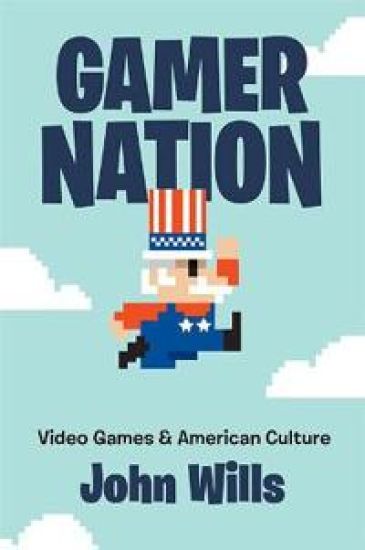
Gamer Nation

Gamer Nation

John Wills

Johns Hopkins University Press
2019
pokkari
Explores how games actively influence the ways people interpret and relate to American life. In 1975, design engineer Dave Nutting completed work on a new arcade machine. A version of Taito's Western Gun, a recent Japanese arcade machine, Nutting's Gun Fight depicted a classic showdown between gunfighters. Rich in Western folklore, the game seemed perfect for the American market; players easily adapted to the new technology, becoming pistol-wielding pixel cowboys. One of the first successful early arcade titles, Gun Fight helped introduce an entire nation to video-gaming and sold more than 8,000 units. In Gamer Nation, John Wills examines how video games co-opt national landscapes, livelihoods, and legends. Arguing that video games toy with Americans' mass cultural and historical understanding, Wills show how games reprogram the American experience as a simulated reality. Blockbuster games such as Civilization, Call of Duty, and Red Dead Redemption repackage the past, refashioning history into novel and immersive digital states of America. Controversial titles such as Custer's Revenge and 08.46 recode past tragedies. Meanwhile, online worlds such as Second Life cater to a desire to inhabit alternate versions of America, while Paperboy and The Sims transform the mundane tasks of everyday suburbia into fun and addictive challenges. Working with a range of popular and influential games, from Pong, Civilization, and The Oregon Trail to Grand Theft Auto, Silent Hill, and Fortnite, Wills critically explores these gamic depictions of America. Touching on organized crime, nuclear fallout, environmental degradation, and the War on Terror, Wills uncovers a world where players casually massacre Native Americans and Cold War soldiers alike, a world where neo-colonialism, naive patriotism, disassociated violence, and racial conflict abound, and a world where the boundaries of fantasy and reality are increasingly blurred. Ultimately, Gamer Nation reveals not only how video games are a key aspect of contemporary American culture, but also how games affect how people relate to America itself.
Disney Culture

Disney Culture

John Wills

Rutgers University Press
2017
nidottu
Over the past century, Disney has grown from a small American animation studio into a multipronged global media giant. Today, the company’s annual revenue exceeds the GDP of over 100 countries, and its portfolio has grown to include Pixar, Marvel, Lucasfilm, ABC, and ESPN. With a company so diversified, is it still possible to identify a coherent Disney vision or message? Disney Culture proposes that there is still a unifying Disney ethos, one that can be traced back to the corporate philosophy that Walt Disney himself developed back in the 1920s. Yet, as cultural historian John Wills demonstrates, Disney’s values have also adapted to changing social climates. At the same time, the world of Disney has profoundly shaped how Americans view the world. Wills offers a nuanced take on the corporate ideologies running through animated and live-action Disney movies from Frozen to Fantasia, from Mary Poppins to Star Wars: The Force Awakens. But Disney Culture encompasses much more than just movies as it explores the intersections between Disney’s business practices and its cultural mythmaking. Welcome to “the Disney Way.”
Disney Culture

Disney Culture

John Wills

Rutgers University Press
2017
sidottu
Beginning with basic black and white drawings of Oswald the Lucky Rabbit and Mickey Mouse in the 1920s, the Walt Disney Company, now nearly 100 years old, is an American institution and a global multimedia giant. More people visit Disneyland than the Great Wall of China, the Eiffel Tower, or the Grand Canyon, while annual revenue for the Disney Company exceeds the GDP of over 100 small countries. Disney owns ABC, ESPN, Pixar, Marvel, and Lucasfilm. Walt Disney himself is a national folk hero, with such films as The Jungle Book and Pinocchio considered national treasures. But how much do we really know about the company that "all started with a mouse"? Disney Culture explores the "wonderful world of Disney" in all its facets and dimensions. John Wills tackles Walt Disney's own unique vision of America, the history of mascot Mickey Mouse, and the design of Disneyland in the 1950s; he also examines a range of Disney movies including animation classics Snow White, Bambi, Fantasia, and more recently Frozen, as well as live-action productions such as Mary Poppins, Saving Mr. Banks and Star Wars: The Force Awakens. Other topics the book touches on are the creation of a specifically Disney way of doing things in the guise of business practice (the so-called Disney Way); advances in animation; theme park operations; the rise of the "Disney Princess"; and Disney fandom. Disney Culture ultimately challenges the reader to think more deeply about the U. S. entertainment industry, investigating how Disney has remained so popular with generations of children and adults, reshaping American and even global society and culture.
US Environmental History

US Environmental History

John Wills

Edinburgh University Press
2012
sidottu
This book explores America's environmental ruin, past and present. Environmental issues in the USA are more important now than ever before. The devastation inflicted by Hurricane Katrina and Deepwater Horizon, as well as growing evidence of global warming, highlight a nation caught in environmental crisis. This introduction to America's environmental crisis shows that it is firmly rooted in the past and that today's problems are manifestations of older systems of capitalism, technology and a catastrophe culture. It covers new environmental disasters such as Katrina and Deepwater Horizon. It identifies 'doomsday landscapes' including the Santa Barbara Oil Spill, the 'Fable for Tomorrow' town in Rachel Carson's Silent Spring (1962) and Nevada's fake Doom Towns blown apart by atomic testing. It looks at whether Americans have been inviting the current situation through their long-term environmental actions. It includes 14 illustrations showing environmental destruction both real and imagined.
US Environmental History

US Environmental History

John Wills

Edinburgh University Press
2012
nidottu
This book explores America's environmental ruin, past and present. Environmental issues in the USA are more important now than ever before. The devastation inflicted by Hurricane Katrina and Deepwater Horizon, as well as growing evidence of global warming, highlight a nation caught in environmental crisis. This introduction to America's environmental crisis shows that it is firmly rooted in the past and that today's problems are manifestations of older systems of capitalism, technology and a catastrophe culture. It covers new environmental disasters such as Katrina and Deepwater Horizon. It identifies 'doomsday landscapes' including the Santa Barbara Oil Spill, the 'Fable for Tomorrow' town in Rachel Carson's Silent Spring (1962) and Nevada's fake Doom Towns blown apart by atomic testing. It looks at whether Americans have been inviting the current situation through their long-term environmental actions. It includes 14 illustrations showing environmental destruction both real and imagined.
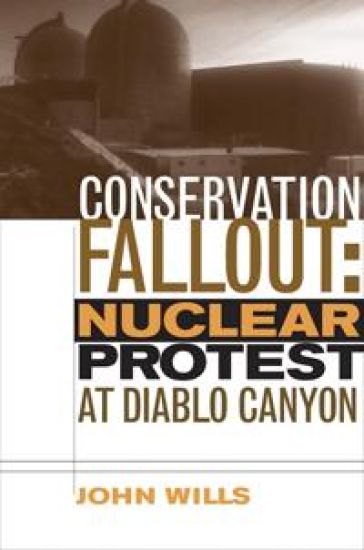
Conservation Fallout

Conservation Fallout

John Wills

University of Nevada Press
2012
nidottu
One of the most controversial atomic projects of the US nuclear industry during the 1960s and 1970s was the construction of a nuclear power plant at Diablo Canyon, a relatively unsettled and biologically rich part of the central California coast. Conservation Fallout traces the course of opposition that tore apart local communities, almost destroyed the Sierra Club, and attracted massive demonstrations in San Francisco and at the plant itself. The result is a balanced examination of nuclear politics in California and of the evolution and strategies of little-studied grassroots protest groups determined to resist the spread of nuclear technology.
The American West

The American West

Karen R. Jones; John Wills

Edinburgh University Press
2009
sidottu
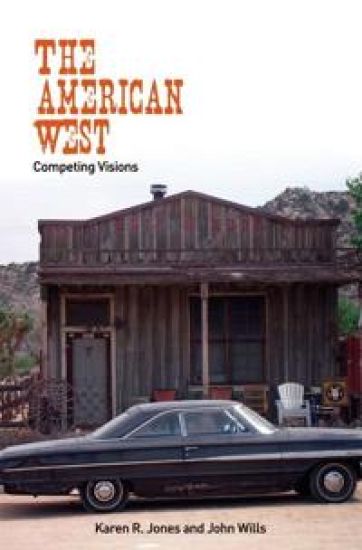
The American West used to be a story of gunfights, glory, wagon trails, and linear progress. Historians such as Frederick Jackson Turner and Hollywood movies such as Stagecoach (1939) and Shane (1953) cast the trans-Mississippi region as a frontier of epic proportions where 'savagery' met 'civilization' and boys became men. During the late 1980s, this old way of seeing the West came under heavy fire. Scholars such as Patricia Nelson Limerick and Richard White forged a fresh story of the region, a new vision of the West, based around the conquest of peoples and landscapes. This book explores the bipolar world of Turner's Old West and Limerick's New West and reveals the values and ambiguities associated with both historical traditions. Sections on Lewis and Clark, the frontier and the cowboy sit alongside work on Indian genocide and women's trail diaries. Images of the region as seen through the arcade Western, Hollywood film and Disney theme parks confirm the West as a symbolic and contested landscape. Tapping into popular fascination with the Cowboy, Hollywood movies, the Indian Wars, and Custer's Last Stand, the authors show the reader how to deconstruct the imagery and reality surrounding Western history. Key Features *Uses popular subjects (the Cowboy, Hollywood westerns, the Indian Wars, and Custer's Last Stand) to enliven the text *Includes 13 b+w illustrations *Interdisciplinary approach covers film, literature, art and historical artefacts
The American West

The American West

Karen R. Jones; John Wills

Edinburgh University Press
2009
nidottu
The American West used to be a story of gunfights, glory, wagon trails, and linear progress. Historians such as Frederick Jackson Turner and Hollywood movies such as Stagecoach (1939) and Shane (1953) cast the trans-Mississippi region as a frontier of epic proportions where 'savagery' met 'civilization' and boys became men. During the late 1980s, this old way of seeing the West came under heavy fire. Scholars such as Patricia Nelson Limerick and Richard White forged a fresh story of the region, a new vision of the West, based around the conquest of peoples and landscapes. This book explores the bipolar world of Turner's Old West and Limerick's New West and reveals the values and ambiguities associated with both historical traditions. Sections on Lewis and Clark, the frontier and the cowboy sit alongside work on Indian genocide and women's trail diaries. Images of the region as seen through the arcade Western, Hollywood film and Disney theme parks confirm the West as a symbolic and contested landscape. Tapping into popular fascination with the Cowboy, Hollywood movies, the Indian Wars, and Custer's Last Stand, the authors show the reader how to deconstruct the imagery and reality surrounding Western history. Key Features *Uses popular subjects (the Cowboy, Hollywood westerns, the Indian Wars, and Custer's Last Stand) to enliven the text *Includes 13 b+w illustrations *Interdisciplinary approach covers film, literature, art and historical artefacts
The Invention of the Park

The Invention of the Park

Karen R. Jones; John Wills

Polity Press
2005
sidottu
The word 'park' conjures a kaleidoscope of bucolic images. Childhood frolics in urban playgrounds. Strolls through the country estates of Stourhead and Versailles. Wilderness adventures in the Serengeti. White-knuckle thrill rides at Blackpool Pleasure Beach and Coney Island. The Invention of the Park explores our fascination with making parks. In a broad-ranging environmental and social history, authors Karen Jones and John Wills search for a common set of ideas that inform park design. From Greek philosophers wandering sacred groves in the ancient world to today's kids watching Mickey Mouse in Disney's Magic Kingdom, the park has inspired and thrilled in equal measure. In a work spanning all five continents and several thousand years, Jones and Wills chart the evolution of the park idea. They ponder the intersection of the green pleasure ground with notions of democracy and freedom, welfare and consumption, conservation and nature. They forward the principle of a universal park idea malleable enough to survive war and revolution. Contributing to a growing literature on global environmental history, the Invention of the Park explores how the park idea has come to transcend national boundaries and found appeal among a worldwide audience. Jones and Wills situate the park as a complex product of natural and cultural forces. Their work is of interest not just to students and scholars of environmental philosophy, history, and landscape design, but to amateur gardeners, rollercoaster 'adrenalin junkies' and all those who like to take a 'walk in the park.'
The Invention of the Park

The Invention of the Park

Karen R. Jones; John Wills

Polity Press
2005
nidottu
The word 'park' conjures a kaleidoscope of bucolic images. Childhood frolics in urban playgrounds. Strolls through the country estates of Stourhead and Versailles. Wilderness adventures in the Serengeti. White-knuckle thrill rides at Blackpool Pleasure Beach and Coney Island. The Invention of the Park explores our fascination with making parks. In a broad-ranging environmental and social history, authors Karen Jones and John Wills search for a common set of ideas that inform park design. From Greek philosophers wandering sacred groves in the ancient world to today's kids watching Mickey Mouse in Disney's Magic Kingdom, the park has inspired and thrilled in equal measure. In a work spanning all five continents and several thousand years, Jones and Wills chart the evolution of the park idea. They ponder the intersection of the green pleasure ground with notions of democracy and freedom, welfare and consumption, conservation and nature. They forward the principle of a universal park idea malleable enough to survive war and revolution. Contributing to a growing literature on global environmental history, the Invention of the Park explores how the park idea has come to transcend national boundaries and found appeal among a worldwide audience. Jones and Wills situate the park as a complex product of natural and cultural forces. Their work is of interest not just to students and scholars of environmental philosophy, history, and landscape design, but to amateur gardeners, rollercoaster 'adrenalin junkies' and all those who like to take a 'walk in the park.'