Kirjojen hintavertailu – 12 903 725 kirjaa ja 27 kauppaa

Kirjailija

John Wong

Kirjat ja teokset yhdessä paikassa: 8 kirjaa, julkaisuja vuosilta 1999–2020, suosituimpiin kuuluu Waning Of The Jiang-zhu Coalition, The: China After The 2000 National People's Congress. Vertaile teosten hintoja ja tarkista saatavuus suomalaisista kirjakaupoista.

8 kirjaa

Kirjojen julkaisuvuodet: 1999–2020.

Waning Of The Jiang-zhu Coalition, The: China After The 2000 National People's Congress

Waning Of The Jiang-zhu Coalition, The: China After The 2000 National People's Congress

John Wong; Yongnian Zheng

World Scientific Publishing Co Pte Ltd
2000
nidottu
With mounting discontent due to widespread unemployment, corruption and misgovernment, the Ninth National People's Congress in March 2000 was a letdown. Significant though was Premier Zhu Rongji's announcement at the Congress of the leadership's decision to go west. While Zhu explained the policy shift as the government's attempt to develop the country's inland regions, many are skeptical, dismissing it as a camouflage for the premier's failure in the reform programmes introduced when he came to power. On the international front, with the US ambivalence in regard to China's WTO accession and China's apparent loss of grip on cross-straits relations, the future of the Jiang leadership appears to be in the balance. Against this background of neiyou waihuan (internal disturbance and external threats), will the Jiang-Zhu coalition be able to rise to the occasion and push through its many reform programmes, let alone retain its hold on power? China After the 2000 National People's Congress, (I) and (II) address this and related questions, giving an in-depth analysis of recent developments and changes in the power relations among China's top leaders, especially the Jiang-Zhu coalition.
Suzhou Industrial Park: Achievements, Challenges And Prospects

Suzhou Industrial Park: Achievements, Challenges And Prospects

John Wong; Liang Fook Lye

World Scientific Publishing Co Pte Ltd
2020
sidottu
This book studies the Suzhou Industrial Park, a flagship project between the governments of Singapore and China, in a holistic manner, by highlighting not only its economic progress but also the developments on the social front such as its neighbourhood centres, schools, housing and talent attraction. The success of the Park should be assessed keeping in view not only its economic achievements alone, but also its ability to attract residents to live and play in it. Making the Suzhou Industrial Park economically and socially attractive is thus a perennial challenge and remains key to the continued success of the industrial park. This book details Suzhou Industrial Park's latest effort in industrial upgrading and transformation in terms of new growth areas as well as the challenges faced. It examines the social achievements of the Park, which are critical in enhancing the overall attractiveness of the Park and distinguishes it from other industrial parks in China and elsewhere. It also highlights how the experiences of the Suzhou Industrial Park is being replicated not only in the Jiangsu province, but also in other provinces and autonomous regions in China.
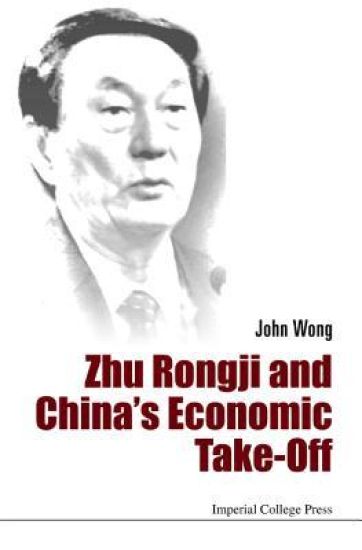
Zhu Rongji And China's Economic Take-off

Zhu Rongji And China's Economic Take-off

John Wong

Imperial College Press
2016
sidottu
Following Deng Xiaoping's economic reform and opening (Gaige Kaifang) policy, China experienced unprecedented high growth for over three decades. Crucial in the process was the role of Zhu Rongji, who was hand-picked by Deng initially as Executive Vice-Premier and later full Premier to carry through the needed reform and manage the critical marketization process through the turbulent 1990s when China's economy suffered many ups and downs. Dubbed as China's 'Economic Czar', Zhu tackled many thorny problems associated with the country's then half-reformed economy ably and effectively, thereby laying the ground for subsequent periods of greater dynamic growth. Zhu was instrumental in preparing China's economy for its final take-off. The chapters in this volume were originally written as 'policy briefings' for the Singapore government from 1997 to 2003 when Zhu was Premier. They cover a wide variety of topics including how he had applied his own way of 'macroeconomic control' (Hongguan Tiaokong), how he went about reforming taxation, foreign exchange and state-owned enterprises, and finally his embrace of capitalism. Each chapter is preceded by a detailed introduction highlighting the main issues and interpreting them from today's perspective based on updated information and additional new research.
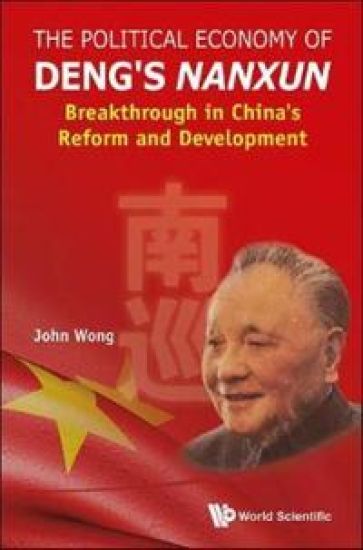
Political Economy Of Deng's Nanxun, The: Breakthrough In China's Reform And Development
This volume is about the political economy of Deng Xiaoping's Nanxun (tour of South China), which was the most critical phase in China's reform and development since 1978. The first round of Deng's reform resulted in high growth through the 1980s. However, it created a messy half-reformed economy with many problems, including the Tiananmen incident. The immediate aftermath of the Tiananmen was collapse of economic growth and reform deadlock. To break out from this low-level “reform-growth trap”, Deng decided to launch the Nanxun, not just to reignite the reform but also to complete China's march towards a market economy. Looking back, the Nanxun led to the most crucial reform breakthrough, which, in turn, sparked off a dynamic reform-growth-nexus for China's eventual economic take-off. The chapters in this volume were originally “policy reports” on China, meant for the Singapore government. These reports were written based on the information available at that time, and reflected the prevailing political mood. Each chapter is accompanied by a detailed introduction that is aimed at providing a broad background for readers to better understand the Nanxun period. The introduction also serves as a post-evaluation of the events based on new information, and shows how those events have evolved over the years. In combination, these chapters should piece together a reasonably realistic picture of the basic politics and economics of the crucial Nanxun period.
China's Politics And Economy In 2003: Meeting The Post-congress Challenges

China's Politics And Economy In 2003: Meeting The Post-congress Challenges

John Wong; Yongnian Zheng; Liang Fook Lye

World Scientific Publishing Co Pte Ltd
2003
nidottu
With the new team of Chinese leaders at the helm following the successful hosting of the 16th Party Congress in November 2002, the attention of China's scholars has now shifted to the raft of challenges that await the new leadership. In the economic realm, there is unlikely to be any sharp changes in the direction of economic policy-making although the leadership faces a number of daunting issues, such as rising urban unemployment, potential rural unrest and the huge debt burden of state banks. In the political arena, power succession has only just begun even though leadership transition is almost complete. Jiang Zemin remains highly influential in his capacity as Chairman of the Central Military Commission. It is however unclear how the working relationship among the triumvirate Hu Jintao, Zeng Qinghong and Wen Jiabao will unfold. The jury is still out whether Hu Jintao can provide the leadership and vision to deal head-on with a number of burning issues, like corruption and the need for political reform.
China's Emerging New Economy

China's Emerging New Economy

Seok Ling Nah; John Wong

World Scientific Publishing Co Pte Ltd
2000
nidottu
The New Economy has hit China, driven by the Internet and e-commerce. China has made a good start in both areas. Since its debut, subscribers to the Internet grew exponentially from a mere 1,600 in 1994 to 16.9 million in mid-2000. E-commerce transactions registered a total revenue of 200 million yuan in 1999, or twice as much as in 1998. B2C e-commerce is expected to grow by 300% in 2000. However, the rapid growth of the sectors is constrained by factors such as a small base of registered users, high costs of using the Internet, government control of information access, and lack of an effective distribution network and financial linkage. Internet businesses are also losing money due to exorbitant charges for telephone lines, an uncertain regulatory environment, and direct competition from the telecommunications operators dominating the market. Nonetheless, the high growth potential of the two sectors is still well recognized by foreign multinationals. Despite China's manifest prohibition of foreign involvement, foreign companies have managed to enter the Chinese market by forming strategic alliances with domestic concerns. It appears that China prefers a smooth and orderly process of market opening based on a more effective regulatory regime such as licensing arrangements. This book is intended for readers interested in China's Internet and e-commerce sectors. Businessmen, corporate planners, business associates, researchers, engineers, technologists, academics and students interested in these industries will find the book useful. Focusing on China's nascent Internet and e-commerce industries, this book presents the historical development, current market status and future growth, as well as discusses the problems and issues facing the two sectors.
China's Politics And Economy In 1999: Coping With Crises

China's Politics And Economy In 1999: Coping With Crises

John Wong; Yongnian Zheng

World Scientific Publishing Co Pte Ltd
2000
nidottu
What the Jiang Zemin leadership faced in 1999 can be characterized by a century-old Chinese saying, neiyou waihuan (literally, “internal disturbance and external threat”). What with the worst growth record in a decade, the Falun Gong sect's siege of Zhongnanhai, Nato's bombing of the Chinese embassy in Yugoslavia, and Lee Teng-hui's new “two-state” theory, the Chinese leadership was under tremendous pressure throughout the year. Many have wondered if that leadership could still hold its own at the turn of the century. This volume provides the reader with an in-depth analysis of how the Chinese leadership coped with the crises during the year. Though there was fair success in managing those crises, serious crises lie ahead which could significantly impact the leadership. China's economic slowdown may be bottoming out, but increasing Party decay, a growing spiritual vacuum, and volatile cross-strait relations are likely to pose serious threats to the leadership.
China's Economy In 1998: Maintaining Growth And Staving Off The Asian Contagion
As the financial crisis swept the Asia-Pacific, China seemed to be the one economy in the region which had been left “largely unaffected” for various reasons, including its strong economic and financial fundamentals as well as its strong political will to defend the Renminbi, which had so far firmly stood the ground. However, China's economy ended 1998 with only 7.8% growth, slightly falling short of its officially pledged target of 8%. Though China in 1998 was still rated as the best-performing economy in the region, its economic growth momentum had visibly slowed down. The Asian contagion had finally caught up with China. It is not certain if the Chinese economy is entering a slower growth era though, in the short run, China can boost economic growth by expanding domestic demand. Slower economic growth for the country will have significant negative effects on its economic reform programmes and social stability.