Kirjojen hintavertailu – 12 903 725 kirjaa ja 27 kauppaa

Kirjailija

John Woods

Kirjat ja teokset yhdessä paikassa: 37 kirjaa, julkaisuja vuosilta 1980–2025, suosituimpiin kuuluu The Girl Who Killed Kennedy. Vertaile teosten hintoja ja tarkista saatavuus suomalaisista kirjakaupoista.

37 kirjaa

Kirjojen julkaisuvuodet: 1980–2025.

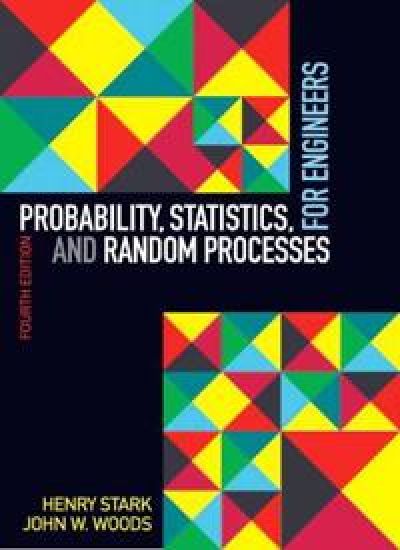
Probability, Statistics, and Random Processes for Engineers
For courses in Probability and Random Processes. Probability, Statistics, and Random Processes for Engineers, 4e is a useful text for electrical and computer engineers. This book is a comprehensive treatment of probability and random processes that, more than any other available source, combines rigor with accessibility. Beginning with the fundamentals of probability theory and requiring only college-level calculus, the book develops all the tools needed to understand more advanced topics such as random sequences, continuous-time random processes, and statistical signal processing. The book progresses at a leisurely pace, never assuming more knowledge than contained in the material already covered. Rigor is established by developing all results from the basic axioms and carefully defining and discussing such advanced notions as stochastic convergence, stochastic integrals and resolution of stochastic processes.
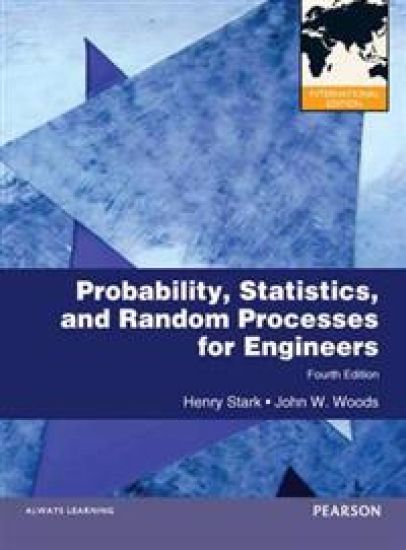
Probability and Random Processes with Applications to Signal Processing
For courses in Probability and Random Processes. Probability, Statistics, and Random Processes for Engineers, 4e is a comprehensive treatment of probability and random processes that, more than any other available source, combines rigor with accessibility. Beginning with the fundamentals of probability theory and requiring only college-level calculus, the book develops all the tools needed to understand more advanced topics such as random sequences, continuous-time random processes, and statistical signal processing. The book progresses at a leisurely pace, never assuming more knowledge than contained in the material already covered. Rigor is established by developing all results from the basic axioms and carefully defining and discussing such advanced notions as stochastic convergence, stochastic integrals and resolution of stochastic processes.
A Practical Logic of Cognitive Systems

A Practical Logic of Cognitive Systems

Dov M. Gabbay; John Woods

Elsevier Science Ltd
2005
sidottu
The present work is a continuation of the authors' acclaimed multi-volume A Practical Logic of Cognitive Systems. After having investigated the notion of relevance in their previous volume, Gabbay and Woods now turn to abduction. In this highly original approach, abduction is construed as ignorance-preserving inference, in which conjecture plays a pivotal role. Abduction is a response to a cognitive target that cannot be hit on the basis of what the agent currently knows. The abducer selects a hypothesis which were it true would enable the reasoner to attain his target. He concludes from this fact that the hypothesis may be conjectured. In allowing conjecture to stand in for the knowledge he fails to have, the abducer reveals himself to be a satisficer, since an abductive solution is not a solution from knowledge. Key to the authors' analysis is the requirement that a conjectured proposition is not just what a reasoner might allow himself to assume, but a proposition he must defeasibly release as a premiss for further inferences in the domain of enquiry in which the original abduction problem has arisen. The coverage of the book is extensive, from the philosophy of science to computer science and AI, from diagnostics to the law, from historical explanation to linguistic interpretation. One of the volume's strongest contributions is its exploration of the abductive character of criminal trials, with special attention given to the standard of proof beyond a reasonable doubt. Underlying their analysis of abductive reasoning is the authors' conception of practical agency. In this approach, practical agency is dominantly a matter of the comparative modesty of an agent's cognitive agendas, together with comparatively scant resources available for their advancement. Seen in these ways, abduction has a significantly practical character, precisely because it is a form of inference that satisfices rather than maximizes its response to the agent's cognitive target. The Reach of Abduction will be necessary reading for researchers, graduate students and senior undergraduates in logic, computer science, AI, belief dynamics, argumentation theory, cognitive psychology and neuroscience, linguistics, forensic science, legal reasoning and related areas. Key features: - Reach of Abduction is fully integrated with a background logic of cognitive systems. - The most extensive coverage compared to competitive works. - Demonstrates not only that abduction is a form of ignorance preserving inference but that it is a mode of inference that is wholly rational. - Demonstrates the satisficing rather than maximizing character of abduction. - The development of formal models of abduction is considerably more extensive than one finds in existing literature. It is an especially impressive amalgam of sophisticated conceptual analysis and extensive logical modelling.

Boys Who Have Abused

Boys Who Have Abused

John Woods; Arnon Bentovim

Jessica Kingsley Publishers
2003
pokkari
John Woods presents a theoretical approach and practical suggestions for mental health practitioners working therapeutically with young people who have abused. Drawing on his long-standing experience, he has developed an integrated theory that bridges the gap between existing cognitive behavioural and psychoanalytic approaches. He shows how this individual treatment model can be applied in a range of contexts including residential settings, group and family work, as well as in individual work. In-depth case studies throughout the book demonstrate how exploring the individual's whole life-course within a psychoanalytic framework enables connections to be drawn between possible childhood abuse and subsequent abusive behaviour. Guidelines are presented on working with the problems of self-destructiveness, masochism and depression facing the young abused/abuser and the impact of sexual abuse on sexuality, gender identity and sexual orientation. This is an instructive and thought-provoking text for all mental health practitioners and allied professionals working with adolescents who sexually offend.
Paradox and Paraconsistency

Paradox and Paraconsistency

John Woods

Cambridge University Press
2002
pokkari
In a world plagued by disagreement and conflict one might expect that the exact sciences of logic and mathematics would provide a safe harbor. In fact these disciplines are rife with internal divisions between different, often incompatible, systems. Do these disagreements admit of resolution? Can such resolution be achieved without disturbing assumptions that the theorems of logic and mathematics state objective truths about the real world? In this original and historically rich book John Woods explores apparently intractable disagreements in logic and the foundations of mathematics and sets out conflict resolution strategies that evade or disarm these stalemates. An important sub-theme of the book is the extent to which pluralism in logic and the philosophy of mathematics undermines realist assumptions. This book makes an important contribution to such areas of philosophy as logic, philosophy of language and argumentation theory. It will also be of interest to mathematicians and computer scientists.
Paradox and Paraconsistency

Paradox and Paraconsistency

John Woods

Cambridge University Press
2002
sidottu
In a world plagued by disagreement and conflict one might expect that the exact sciences of logic and mathematics would provide a safe harbor. In fact these disciplines are rife with internal divisions between different, often incompatible, systems. Do these disagreements admit of resolution? Can such resolution be achieved without disturbing assumptions that the theorems of logic and mathematics state objective truths about the real world? In this original and historically rich book John Woods explores apparently intractable disagreements in logic and the foundations of mathematics and sets out conflict resolution strategies that evade or disarm these stalemates. An important sub-theme of the book is the extent to which pluralism in logic and the philosophy of mathematics undermines realist assumptions. This book makes an important contribution to such areas of philosophy as logic, philosophy of language and argumentation theory. It will also be of interest to mathematicians and computer scientists.
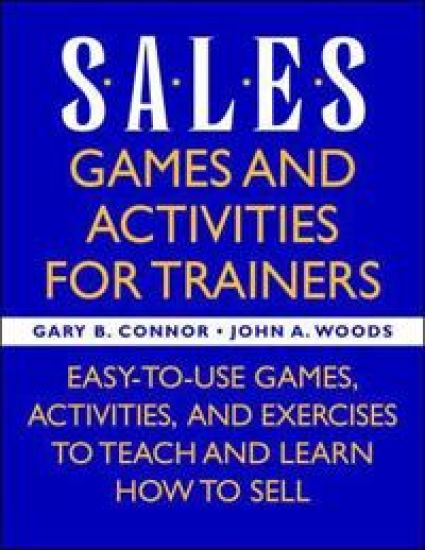
Sales: Games and Activities for Trainers

Sales: Games and Activities for Trainers

Gary Connor; John Woods

McGraw-Hill Professional
1997
nidottu
Games and other classroom activities can make training more fun, memorable, and effective. Sales Games and Activities for Trainers is the most useful—and complete—collection of games, role-plays, activities, and other skill-building exercises ever collected for increasing the effectiveness of sales training. There are games and activities covering all aspects of selling, from making presentations to handling objections.
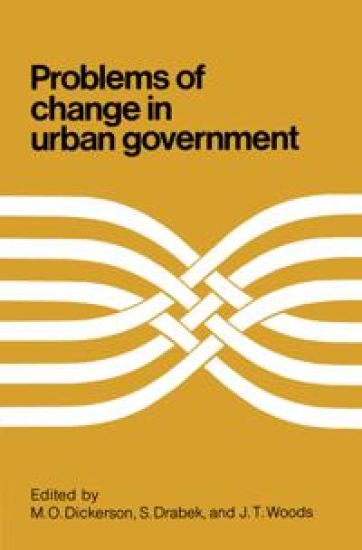
Problems of Change in Urban Government

Problems of Change in Urban Government

M.O. Dickerson; S. Drabek; John Woods

Wilfrid Laurier University Press
1980
nidottu
In 1911 one of every three Canadians lived in urban areas; today three out of four do. This growth has raised serious issues in urban government: How should power and authority be distributed among differing, often competing, urban interests? How can municipal governments obtain the funds they need to satisfy the increased demand for community and social services? How much should citizens participate? At a conference held in Banff on alternate forms of urban government, academics and practitioners considered these, and other pressing urban problems. Problems of change in urban government, presents the results of the conference, along with other, related essays. The contributors are Lloyd Axworthy, Meyer Brownstone, Stephen Clarkson, J. A. Johnson, James Lorimer, Allan O'Brien, T. J. Plunkett, Louise Quesnel-Ouellet, Paul Tennant, and the volume editors.