Kirjojen hintavertailu – 12 859 824 kirjaa ja 27 kauppaa

Kirjailija

Jonardon Ganeri

Kirjat ja teokset yhdessä paikassa: 26 kirjaa, julkaisuja vuosilta 1999–2026, suosituimpiin kuuluu Fernando Pessoa. Vertaile teosten hintoja ja tarkista saatavuus suomalaisista kirjakaupoista.

26 kirjaa

Kirjojen julkaisuvuodet: 1999–2026.

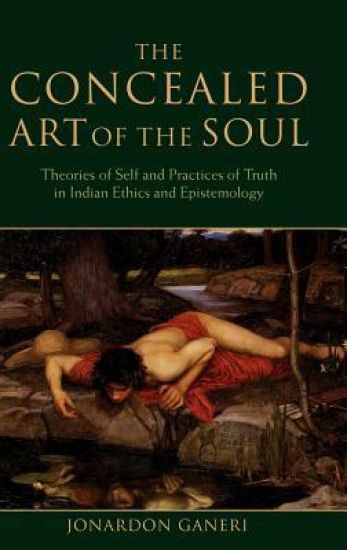
The Concealed Art of the Soul

The Concealed Art of the Soul

Jonardon Ganeri

Clarendon Press
2007
sidottu
In The Concealed Art of the Soul, Jonardon Ganeri presents a variety of perspectives on the nature of the self as seen by major schools of classical Indian philosophy. For Indian thinkers, a philosophical treatise about the self should not only reveal the truth about the nature of the soul, but should also engage the reader in a process of study and contemplation that will eventually lead to self-transformation. By combining careful attention to philosophical content and sensitivity to literary form, Ganeri deepens our understanding of some of the greatest works in Indian literary history. His magisterial survey includes the Upanisads, the Buddha's discourses, the epic Mahabharata, and the writings of Candrakirti, whose work was later to provide the foundation for Tibetan Buddhism. Ganeri argues that many Western theories of selfhood are not only present in, but are developed to high degree of sophistication in these writings, and that there are other ideas about the self found in the work of classical Indian thinkers which present-day analytic philosophers have not yet begun to explore. Scholars and students of philosophy and religious studies, particularly those with an interest in Indian and Western conceptions of the self, will find this book fascinating reading.
Indian Logic

Indian Logic

Jonardon Ganeri

RoutledgeCurzon
2001
nidottu
The articles in this volume are all landmarks in the evolution of modern studies in Indian logic. The book traces the development of modern studies in Indian logic from their beginnings right up to the latest work.
Indian Logic

Indian Logic

Jonardon Ganeri

RoutledgeCurzon
2001
sidottu
The articles in this volume are all landmarks in the evolution of modern studies in Indian logic. The book traces the development of modern studies in Indian logic from their beginnings right up to the latest work.
Philosophy in Classical India

Philosophy in Classical India

Jonardon Ganeri

Routledge
2001
nidottu
This original work focuses on the rational principles of Indian philosophical theory, rather than the mysticism more usually associated with it. Ganeri explores the philosophical projects of a number of major Indian philosophers and looks into the methods of rational inquiry deployed within these projects. In so doing, he illuminates a network of mutual reference, criticism, influence and response, in which reason is used to call itself into question. This fresh perspective on classical Indian thought unravels new philosophical paradigms, and points towards new applications for the concept of reason.
Philosophy in Classical India

Philosophy in Classical India

Jonardon Ganeri

Routledge
2001
sidottu
This original work focuses on the rational principles of Indian philosophical theory, rather than the mysticism more usually associated with it. Ganeri explores the philosophical projects of a number of major Indian philosophers and looks into the methods of rational inquiry deployed within these projects. In so doing, he illuminates a network of mutual reference, criticism, influence and response, in which reason is used to call itself into question. This fresh perspective on classical Indian thought unravels new philosophical paradigms, and points towards new applications for the concept of reason.
Semantic Powers

Semantic Powers

Jonardon Ganeri

Clarendon Press
1999
sidottu
Jonardon Ganeri defends a conception of language as essentially a means for the reception of knowledge through testimony. He argues that the possibility of testimony constrains the form of a theory of meaning. In particular, the semantic power of a word, its ability to stand for or take the place of a thing, derives from the epistemic powers of understanders, their capacity to acquire knowledge simply by understanding what is said. Ganeri finds this account in the work of certain Indian philosophers of language, those belonging to the late classical school of Navya-Ny(ya. He presents a detailed analysis of their theories, paying particular attention to the influential seventeenth-century philosopher Gad(dhara. Ganeri examines the Indian account of the meaning relation and its relata, the role of modes of thought as meaning constituents, and the application of the theory to theoretical names and anaphora. The aim of Semantic Powers is to give epistemology a central place in the study of language. It also shows how classical Indian theory of language can inform and be informed by contemporary philosophy.