

Kirjailija
Jonathan C. Slaght
Kirjat ja teokset yhdessä paikassa: 9 kirjaa, julkaisuja vuosilta 2020–2026, suosituimpiin kuuluu Tigers Between Empires. Vertaile teosten hintoja ja tarkista saatavuus suomalaisista kirjakaupoista.
9 kirjaa
Kirjojen julkaisuvuodet: 2020–2026.

Tigers Between Empires
Jonathan C. Slaght
PENGUIN BOOKS LTD
2025
sidottu
Halvin toimitettuna 32,40 €
The remarkable conservation story of one of the world’s most iconic animalsDeep in the snowy forests of Northeast Asia roams the majestic and revered Amur tigers, more popularly known as ‘The Siberian Tiger’. But in the final years of the Cold War, only a few hundred of these graceful animals remained in their home of the Amur River basin. As the Soviet Union fell, catastrophe arrived, with poaching and logging taking a fast, astonishing toll on an already vulnerable species. Taking us on a journey through remote frozen landscapes, globally renowned conservationist Jonathan Slaght charts the incredible story of how Russian scientists and American conservationists came together to save these magnificent, solitary creatures. He retraces their steps to show how this dedicated, fearless coalition laid the foundations of new tiger research across Asia, transforming public opinion around tigers from something to be feared and hunted, to creatures we must protect. Today, tigers occupy 7% of the lands they did 100 years ago, disappearing in the wild from Bali to Iran. In the ongoing global crisis of species destruction, Slaght shows us that the revival of the Amur tiger can bring us hope for the future: a model for how to live alongside, and revive, the natural world.

Tigers Between Empires: The Improbable Return of Great Cats to the Forests of Russia and China
Jonathan C. Slaght
Farrar, Straus and Giroux
2025
sidottu
Halvin toimitettuna 30,00 €
The thrilling saga of the great Amur tiger and the scientists who came together, across the world, to save it. The forests of Northeast Asia are home to a marvelous range of animals--fish owls and brown bears, musk deer and moose, wolves and raccoon dogs, and leopards and tigers. But in the final years of the Cold War, only a few hundred tigers stepped quietly through the snow of the Amur River basin. Soon, the Soviet Union fell and catastrophe arrived, as poaching and logging took a fast, astonishing toll on an already vulnerable species. Just as these changes arrived, scientists came together to found the Siberian Tiger Project. Led by the moose researcher Dale Miquelle and Zhenya Smirnov, who studied rodents, the team captured and released more than 114 tigers over three decades, witnessed their mating rituals and fights, their hunting and feeding, their ceding and taking of territory, their creation of families. Within the pages of Jonathan C. Slaght's Tigers Between Empires, these characters, both feline and human, come fully alive as we travel with them through the quiet and changing forests of Amur. We travel across time, too, as the species is shaped by the history and politics of empires--like the Qing dynasty's Willow Palisade that once slowed human settlement, or the later introduction of roads through Russian reserves. The Siberian Tiger Project became the longest running tiger research initiative anywhere in the world; its work continues to guide conservationists today.

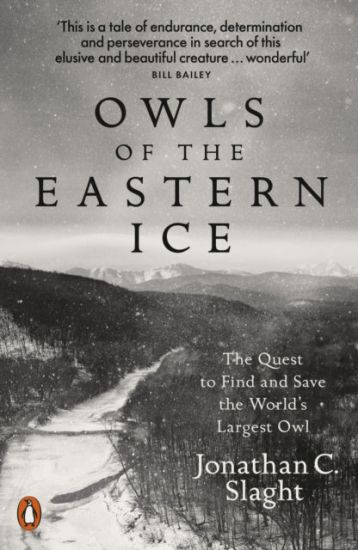
Owls of the Eastern Ice
Jonathan C. Slaght
PENGUIN BOOKS LTD
2021
pokkari
Halvin toimitettuna 20,30 €

Owls of the Eastern Ice: A Quest to Find and Save the World's Largest Owl
Jonathan C. Slaght
Picador USA
2021
nidottu
A New York Times Notable Book of 2020Longlisted for the National Book AwardWinner of the PEN/E. O. Wilson Literary Science Writing Award and the Minnesota Book Award for General NonfictionA Finalist for the Stanford Dolman Travel Book of the Year AwardWinner of the Peace Corps Worldwide Special Book AwardA Best Book of the Year: NPR, The Wall Street Journal, Smithsonian, Minneapolis Star-Tribune, The Globe and Mail, The BirdBooker Report, Geographical, Open Letter ReviewBest Nature Book of the Year: The Times (London) "A terrifically exciting account of Slaght's] time in the Russian Far East studying Blakiston's fish owls, huge, shaggy-feathered, yellow-eyed, and elusive birds that hunt fish by wading in icy water . . . Even on the hottest summer days this book will transport you." --Helen Macdonald, author of H is for Hawk, in Kirkus I saw my first Blakiston's fish owl in the Russian province of Primorye, a coastal talon of land hooking south into the belly of Northeast Asia . . . No scientist had seen a Blakiston's fish owl so far south in a hundred years . . . When he was just a fledgling birdwatcher, Jonathan C. Slaght had a chance encounter with one of the most mysterious birds on Earth. Bigger than any owl he knew, it looked like a small bear with decorative feathers. He snapped a quick photo and shared it with experts. Soon he was on a five-year journey, searching for this enormous, enigmatic creature in the lush, remote forests of eastern Russia. That first sighting set his calling as a scientist. Despite a wingspan of six feet and a height of over two feet, the Blakiston's fish owl is highly elusive. They are easiest to find in winter, when their tracks mark the snowy banks of the rivers where they feed. They are also endangered. And so, as Slaght and his devoted team set out to locate the owls, they aim to craft a conservation plan that helps ensure the species' survival. This quest sends them on all-night monitoring missions in freezing tents, mad dashes across thawing rivers, and free-climbs up rotting trees to check nests for precious eggs. They use cutting-edge tracking technology and improvise ingenious traps. And all along, they must keep watch against a run-in with a bear or an Amur tiger. At the heart of Slaght's story are the fish owls themselves: cunning hunters, devoted parents, singers of eerie duets, and survivors in a harsh and shrinking habitat. Through this rare glimpse into the everyday life of a field scientist and conservationist, Owls of the Eastern Ice testifies to the determination and creativity essential to scientific advancement and serves as a powerful reminder of the beauty, strength, and vulnerability of the natural world.
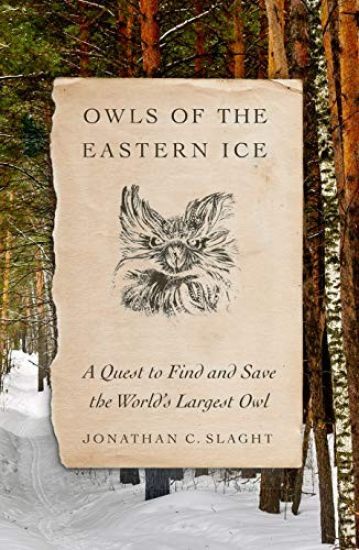
Owls of the Eastern Ice: A Quest to Find and Save the World's Largest Owl
Jonathan C. Slaght
Farrar, Straus and Giroux
2020
sidottu
A New York Times Notable Book of 2020Longlisted for the National Book AwardWinner of the PEN/E. O. Wilson Literary Science Writing Award and the Minnesota Book Award for General NonfictionA Finalist for the Stanford Dolman Travel Book of the Year AwardWinner of the Peace Corps Worldwide Special Book AwardA Best Book of the Year: NPR, The Wall Street Journal, Smithsonian, Minneapolis Star-Tribune, The Globe and Mail, The BirdBooker Report, Geographical, Open Letter ReviewBest Nature Book of the Year: The Times (London) "A terrifically exciting account of Slaght's] time in the Russian Far East studying Blakiston's fish owls, huge, shaggy-feathered, yellow-eyed, and elusive birds that hunt fish by wading in icy water . . . Even on the hottest summer days this book will transport you." --Helen Macdonald, author of H is for Hawk, in Kirkus I saw my first Blakiston's fish owl in the Russian province of Primorye, a coastal talon of land hooking south into the belly of Northeast Asia . . . No scientist had seen a Blakiston's fish owl so far south in a hundred years . . . When he was just a fledgling birdwatcher, Jonathan C. Slaght had a chance encounter with one of the most mysterious birds on Earth. Bigger than any owl he knew, it looked like a small bear with decorative feathers. He snapped a quick photo and shared it with experts. Soon he was on a five-year journey, searching for this enormous, enigmatic creature in the lush, remote forests of eastern Russia. That first sighting set his calling as a scientist. Despite a wingspan of six feet and a height of over two feet, the Blakiston's fish owl is highly elusive. They are easiest to find in winter, when their tracks mark the snowy banks of the rivers where they feed. They are also endangered. And so, as Slaght and his devoted team set out to locate the owls, they aim to craft a conservation plan that helps ensure the species' survival. This quest sends them on all-night monitoring missions in freezing tents, mad dashes across thawing rivers, and free-climbs up rotting trees to check nests for precious eggs. They use cutting-edge tracking technology and improvise ingenious traps. And all along, they must keep watch against a run-in with a bear or an Amur tiger. At the heart of Slaght's story are the fish owls themselves: cunning hunters, devoted parents, singers of eerie duets, and survivors in a harsh and shrinking habitat. Through this rare glimpse into the everyday life of a field scientist and conservationist, Owls of the Eastern Ice testifies to the determination and creativity essential to scientific advancement and serves as a powerful reminder of the beauty, strength, and vulnerability of the natural world.
Eastbound Through Siberia
Jonathan C. Slaght; Georg Wilhelm Steller
Indiana University Press
2020
pokkari
In the winter of 1739, Georg Steller received word from Empress Anna of Russia that he was to embark on a secret expedition to the far reaches of Siberia as a member of the Great Northern Expedition. While searching for economic possibilities and strategic advantages, Steller was to send back descriptions of everything he saw. The Empress's instructions were detailed, from requests for a preserved whale brain to observing the child-rearing customs of local peoples, and Steller met the task with dedication, bravery, and a good measure of humor. In the name of science, Steller and his comrades confronted horse-swallowing bogs, leaped across ice floes, and survived countless close calls in their exploration of an unforgiving environment. Not stopping at lists of fishes, birds, and mammals, Steller also details the villages and the lives of those living there, from vice-governors to prostitutes. His writings rail against government corruption and the misuse of power while describing with empathy the lives of the poor and forgotten, with special attention toward Native peoples. What emerges is a remarkable window into life—both human and animal—in 18th century Siberia. Due to the secret nature of the expedition, Steller's findings were hidden in Russian archives for centuries, but the near-daily entries he recorded on journeys from the town of Irkutsk to Kamchatka are presented here in English for the first time.
Eastbound Through Siberia
Jonathan C. Slaght; Georg Wilhelm Steller
Indiana University Press
2020
sidottu
In the winter of 1739, Georg Steller received word from Empress Anna of Russia that he was to embark on a secret expedition to the far reaches of Siberia as a member of the Great Northern Expedition. While searching for economic possibilities and strategic advantages, Steller was to send back descriptions of everything he saw. The Empress's instructions were detailed, from requests for a preserved whale brain to observing the child-rearing customs of local peoples, and Steller met the task with dedication, bravery, and a good measure of humor. In the name of science, Steller and his comrades confronted horse-swallowing bogs, leaped across ice floes, and survived countless close calls in their exploration of an unforgiving environment. Not stopping at lists of fishes, birds, and mammals, Steller also details the villages and the lives of those living there, from vice-governors to prostitutes. His writings rail against government corruption and the misuse of power while describing with empathy the lives of the poor and forgotten, with special attention toward Native peoples. What emerges is a remarkable window into life—both human and animal—in 18th century Siberia. Due to the secret nature of the expedition, Steller's findings were hidden in Russian archives for centuries, but the near-daily entries he recorded on journeys from the town of Irkutsk to Kamchatka are presented here in English for the first time.