Kirjojen hintavertailu – 12 903 725 kirjaa ja 27 kauppaa

Kirjailija

Jonathan Chaves

Kirjat ja teokset yhdessä paikassa: 7 kirjaa, julkaisuja vuosilta 2001–2023, suosituimpiin kuuluu Cave of the Immortals. Vertaile teosten hintoja ja tarkista saatavuus suomalaisista kirjakaupoista.

7 kirjaa

Kirjojen julkaisuvuodet: 2001–2023.

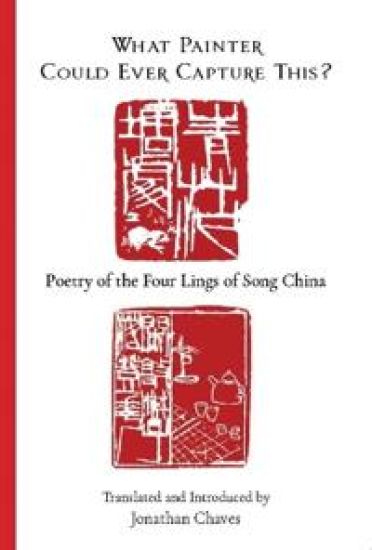
What Painter Could Ever Capture This?

What Painter Could Ever Capture This?

Jonathan Chaves

Floating World Editions
2023
pokkari
A prevalent view of Chinese poetic history among Western readers, already taken for granted by Chinese and Japanese readers, has been that after the so-called Four Masters of Southern Song, the poetry of Song Dynasty (960-1279) essentially came to an end, to be followed by developments in the subsequent three dynasties. Such a view, however, leaves out of consideration a number of accomplished poets in the later Song, whose work is deserving of closer attention both because of its innate quality, and because of its key role as a bridge to the later history of Chinese poetry. Among the most important of these late Song poets were four men from Wenzhou on the Zhejiang seacoast. They were known as the "Four Lings" because, apparently by common consent, they all had noms-de-plume containing the character ling, meaning "numinous" or "magical." The four were: Weng Juan (d. after 1214), Xu Zhao (d. 1211), Xu Ji (1162-1214), and Zhao Shixiu (1170-1219). As other late Song poets, the Four Lings leaned toward understated, straightforward diction that incurred the enmity of those who preferred the more flowery, allusive style of the high Tang. The whole history of Chinese poetry, in fact, can be seen as driven by an interesting tension between these two tendencies. Those literati critics who were suspicious of simplicity-often equating it with "commonness," even "vulgarity" (su ), were on one side of a divide of longstanding in the rich history of Chinese poetic criticism, privileging poetry dense with allusions, sometimes in nearly every line. The Four Lings might counter that these critics are themselves are tainted by pedantry or bookishness in their own poetic work. The retirement of the recluse is a theme that runs through many of the poems of all Four Lings. In fact, a dichotomy between "going forth" to serve in the civil service bureaucracy, and "withdrawing" to some degree of reclusive retirement, is so essential in Chinese thought that it may be considered a timeless component of Chinese civilization. Nor is it a merely "Daoist" as opposed to "Confucian" concept; Confucius himself famously declares in his Analects (7:11): "When they make use of you, then act; when they reject you, then hide away." To "hide away" (cang) implies withdrawal and reclusion of some kind, but with a readiness to re-emerge to serve, when the times improve. The Four Lings in their actual lives, aside from occasional low-level service in the administrations of local officials, were living outside the world of officialdom, while not yet participating in the full reclusion they so admired. They were buyi, "men in plain clothes," fully educated literati but not pursuing government service. There is an undoubted tension between service and withdrawal of various degrees and types, but it is a healthy one, encompassing a full and complex view of human life. The Four Lings deserve to be considered poets of consequence. Although Zhao and Weng are the most frequently cited in the writings of traditional scholars, and are therefore more profusely represented here, the two Xu's are also excellent. Indeed, it would be nearly impossible to convincingly distinguish amongst them stylistically. It is almost as if they share one poetic sensibility.
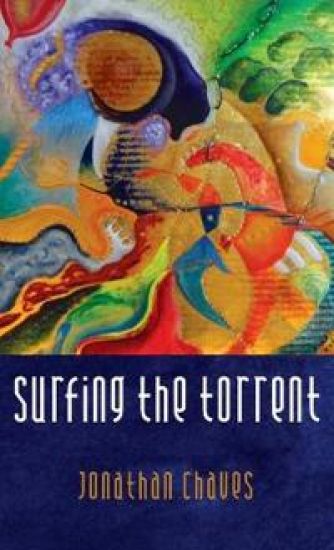
Surfing the Torrent

Surfing the Torrent

Jonathan Chaves

Resource Publications (CA)
2023
pokkari
Surfing the Torrent is about a quest for truth, goodness, and beauty in a world that increasingly questions their very existence. The first of the two parts consists of poems derived from experiences in Greece revealing the birth of love for the place, and a woman of that place, the author's wife. The second part expands to journeys to Europe, India, Taiwan, China, Japan, and through the US, all of which contribute to the winding road. The poems explore varying worldviews and religions, eventually discovering theosis and spiritual growth. Humor plays a role, as it too can be revelatory. The reader is invited to enjoy the poems in a way that is elusive in much modern poetry.
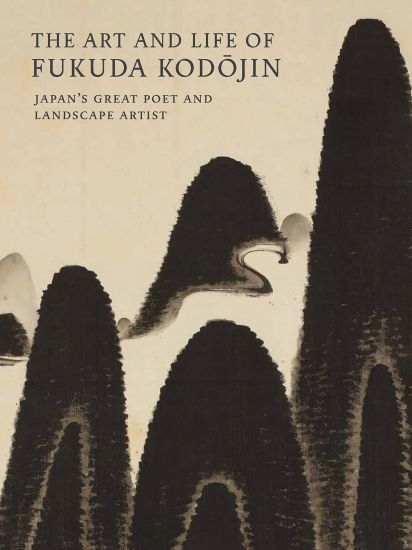
The Art and Life of Fukuda Kodojin

The Art and Life of Fukuda Kodojin

Andreas Marks; Paul Berry; Jonathan Chaves

TUTTLE SHOKAI INC
2023
nidottu
The most comprehensive publication of Kodojin – beautiful and mysterious – a collection of more than 100 paintings with the English translations of his inscribed Chinese poems. The Art and Life of Fukuda Kodojin is the first publication in English to offer an in-depth examination of Kodojin's life, painting, and poetry. This fully illustrated publication draws from institutions and private collections worldwide, and is the result of fifteen years of extensive research into almost eight hundred works of inscribed poetry, literati landscapes, brush paintings and calligraphy. A beautiful and contemplative look into the world of Kodojin, this coveted edition accompanies a special exhibition held at the Minneapolis Institute of Art. Fukuda Kodojin (1865-1944) was a multifaceted artist, recognised for his poetry, painting and calligraphy, and is one of a handful of artists who continued the tradition of Japanese literati painting (nanga) into the twentieth century. Kodojin's painting style is characterized by bizarrely shaped mountain forms rendered in vivid color or monochromatic ink, often with a solitary scholar enjoying the expansive beauty of nature and bits of inscribed poetry. Creating over 700 works in his lifetime, he also made simple paintings of plants and flowers in his dramatic brushwork, and distinctive literati landscapes. Kodojin literally means "Old Taoist" which seems to reflect the path he chose of resilience of an old tradition facing new conditions and new challenges, and is theme felt throughout his art. There is both beauty and mystery in his life and work, and his landscapes can be rich in costly green and blue pigments, detailed layers of ink shading and strokes, or purely abstract. Unique, mysterious and distinctively expressive, The Art and Life of Fukuda Kodojin offers an unprecedented walk through the Old Taoist's mind, sure to both surprise and enlighten the curious reader, scholar, or literati enthusiast.
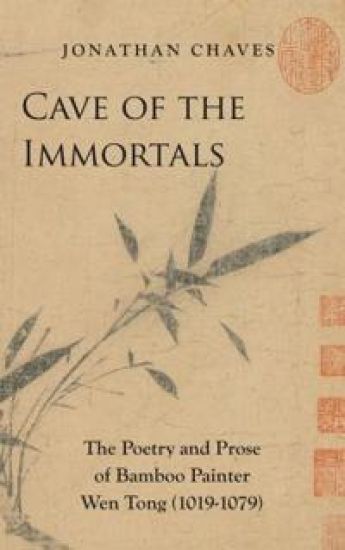
Cave of the Immortals

Cave of the Immortals

Jonathan Chaves

Floating World Editions
2017
pokkari
In the history of Chinese art, Wen Tong (1019 -1079) is considered the supreme master of bamboo painting. This widely shared assessment has perhaps overshadowed his equally brilliant poetry, which has remained virtually unknown. This book is the first in any Western language to present translations of selected poetry and prose by Wen, writings that bring to light aspects of Buddhism, Daoism, and Confucianism rarely addressed by Chinese poets, as they involve devotional practices held in suspicion by many literati. A particular revelation is Wen's unusual interest in what might be called the folk religion of China, including tales of strange and supernatural events, and ceremonies of supplication to various gods, especially dragon deities controlling the rain.
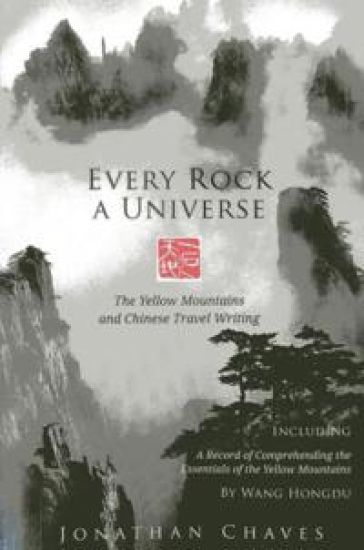
Every Rock a Universe

Every Rock a Universe

Jonathan Chaves

Floating World Editions
2013
pokkari
The Yellow Mountains (Huang shan) of China's Anhui Province have been famous for centuries as a place of scenic beauty and inspiration for poets, painters, and travelers. As early as the Tang Dynasty (618­-906), visitors were climbing at considerable risk its austere rocky peaks with fantastic pine trees, and the area remains a hugely popular tourist destination today. A "golden age" of Yellow Mountains travel came in the 17th century, especially after the traumatic Manchu invasion of China in 1644 led to the overthrow of the Ming dynasty. The mountains subsequently became an important symbol for loyalists protesting the new Qing dynasty and hoping for a reaffirmation of native governance and ideals. Gazing at an album of paintings by Jiang Zhu of Yellow Mountain scenes, his fellow poet and artist Wang Hongdu (1646­-1721/1722) wrote: Open these paintings--not a single place is not a paradise From this day on, I will be dreaming of wandering with the immortals. Wang was not content merely to look at paintings, however. He dedicated himself to traveling to each and every one of the "36 Peaks" as well as the "36 Lesser Peaks" of the Yellow Mountains, and recording his impressions. Yet his resulting masterpiece of Chinese travel writing, the Huangshan lingyao lu (A Record of Comprehending the Essentials of the Yellow Mountains), was not printed until 1775 and has since remained obscure and available only in Chinese. In the present book, Professor Jonathan Chaves of The George Washington University presents the first complete translation of Wang's work into a Western language, with extensive annotations. Wang's newly rediscovered poetry is also presented, showing him to be one of the most accomplished and expressive poets of his day. Introductory essays explore the history of scholarly and religious pilgrimage to the area, and the role of the Yellow Mountains in the great Neo-Confucian, Buddhist, and Daoist revivals of the early Qing period, that is, as the center of a yearned-for spiritual and cultural renaissance.
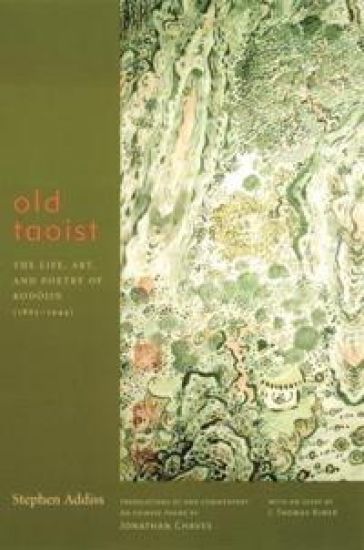
Old Taoist

Old Taoist

Stephen Addiss; Jonathan Chaves; J. Thomas Rimer

Columbia University Press
2001
pokkari
In the literary and artistic milieu of early modern Japan the Chinese and Japanese arts flourished side by side. Kodojin, the "Old Taoist" (1865-1944), was the last of these great poet-painters in Japan. Under the support of various patrons, he composed a number of Taoist-influenced Chinese and Japanese poems and did lively and delightful ink paintings, continuing the tradition of the poet-sage who devotes himself to study of the ancients, lives quietly and modestly, and creates art primarily for himself and his friends. Portraying this last representative of a tradition of gentle and refined artistry in the midst of a society that valued economic growth and national achievement above all, this beautifully illustrated book brings together 150 of Kodojin's Chinese poems (introduced and translated by Jonathan Chaves), more than 100 of his haiku and tanka (introduced and translated by Stephen Addiss), and many examples of his calligraphy and ink paintings. Addiss's in-depth introduction details the importance of the poet-painter tradition, outlines the life of Kodojin, and offers a critical appraisal of his work, while J. Thomas Rimer's essay puts the literary work of the Old Taoist in context.