Kirjojen hintavertailu – 12 859 818 kirjaa ja 27 kauppaa
Kirjailija
Jonathan David Katz
Kirjat ja teokset yhdessä paikassa: 3 kirjaa, julkaisuja vuosilta 2007–2018, suosituimpiin kuuluu Art AIDS America. Vertaile teosten hintoja ja tarkista saatavuus suomalaisista kirjakaupoista.
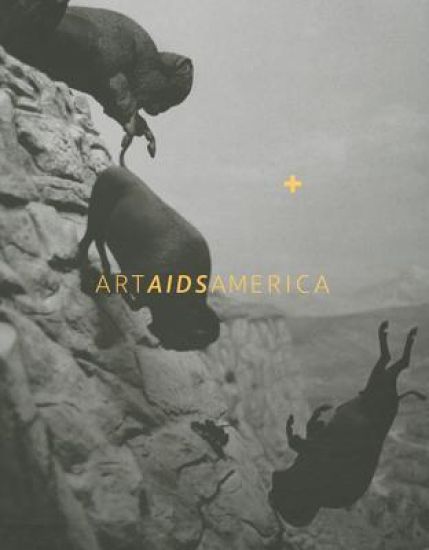
This slipcased boxed set contains the two volumes: Art AIDS America, published in 2015 to coincide with the original exhibit at the Tacoma Art Museum, and the new book Art AIDS America Chicago. Art AIDS America included work by Keith Haring, David Wojnarowicz, Peter Hujar, Robert Mapplethorpe, among many others. Taken together, these two volumes are a stunning overview of the artistic response over the last thirty years to the AIDS epidemic in America, with voices from every community impacted by the crisis.
Art AIDS America is the first comprehensive overview and reconsideration of 30 years of art made in response to the AIDS epidemic in the United States. This book foregrounds the role of HIV/AIDS in shifting the development of American art away from the cool conceptual foundations of postmodernism and toward a new, more insistently political and autobiographical voice. Art AIDS America surveys more than 100 works of American art from the early 1980s to the present, reintroducing and exploring the whole spectrum of artistic responses to HIV/AIDS, from in-your-face activism to quiet elegy.
“Lesbians are not women.” This (in)famous statement by renowned theorist, writer, and activist Monique Wittig marked a watershed moment in critical understandings of gender and sexuality. Wittig’s mise en question of the notion of “woman”—a term she argued was necessarily enmeshed in heterosexual and patriarchal systems of knowing—unsettled seemingly self-evident relationships between language and reality, signification and subjectivity, and even, if not especially, women and feminism. Recalling Wittig’s project and practice of lexical disidentification, by which gender and other signs of identity are ruptured and reworked, this special issue of GLQ offers a variety of often conflicting views on Wittig’s aesthetic, political, and theoretical work. Contributors provide critical and disparate snapshots—some more theoretical and abstract, some more experiential and concrete—of debates on, and investments in, Wittig’s theoretical legacy. Judith Butler analyzes Wittig’s “particular” universalism and offers a careful exposition of her worldview. Diane Griffin Crowder studies Wittig within a context of materialist inquiry that has often been ignored or misunderstood. Robyn Wiegman examines the complex nature of memorialization and inquires into Wittig’s place in contemporary queer theory. Seth Clark Silberman, calling attention to Wittig’s fiction, reverses the usual ascendancy of critique over narrative fiction and produces a formally innovative, if willfully “parasitic,” account of Wittig’s claim on the contributor’s imagination as he watches his mother slowly die of cancer. Alice Jardine, who situates Wittig as a disruptive and disorienting force in a mother-centered feminism, provides an autobiographically charged review of the recent history of feminism, queer studies, and the still uneasy relations between them. The issue also includes a detailed introduction by Brad Epps and Jonathan Katz; a brief personal reflection by Sandra K. Soto, a close friend and colleague of Wittig’s; and two texts by Wittig, one critical (with a foreword by Sande Zeig) and the other creative, both previously unavailable in English. Contributors. Judith Butler, Diane Griffin Crowder, Brad Epps, Alice Jardine, Jonathan Katz, Seth Clark Silberman, Sandra K. Soto, Robyn Wiegman, Monique Wittig, Sande Zeig