Kirjojen hintavertailu – 12 859 824 kirjaa ja 27 kauppaa
Kirjailija
Jonathan Davis
Kirjat ja teokset yhdessä paikassa: 19 kirjaa, julkaisuja vuosilta 2006–2026, suosituimpiin kuuluu TASTE THE PAIN - The Making of The Red Hot Chili Peppers' Mother's Milk. Vertaile teosten hintoja ja tarkista saatavuus suomalaisista kirjakaupoista.
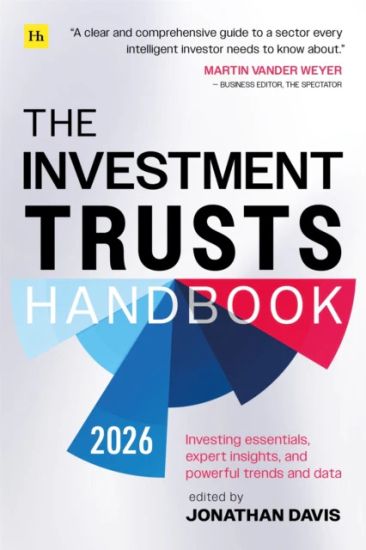
'A clear and comprehensive guide to a sector every intelligent investor needs to know about' –Martin Vander Weyer, Business Editor, The Spectator The ninth edition of the annual investment handbook often referred to as the City's best-kept secret. Expertly edited by Jonathan Davis, professionally qualified investor, Financial Times columnist and editor of the Money Makers newsletter and podcast, The Investment Trusts Handbook 2026 is the connoisseur's choice among a raft of investment guides. With articles by more than twenty different authors, including analysts, fund managers and investment writers, plus more than eighty pages of detailed data and analysis, this latest edition is an indispensable companion for anyone looking to invest in the investment trust sector. Contributors this year include Ben Conway, Charlotte Morris, and Tom Treanor, covering everything from the impact of the US tariffs and future predictions about active EFTs, to emerging trends such as the possibility of AI-managed portfolios and the growing importance of private investors in the investment trusts market. 'The Handbook has become the Wisden of the Investment Trust world – trusted and illuminating' – Simon Elliott, Managing Director, JP Morgan Asset Management
The Investment Trusts Handbook is an editorially independent educational publication. Described in the media as “truly the definitive guide to the sector”, more than 45,000 copies of the Handbook have been sold or downloaded since launch. With fascinating articles by more than 20 different authors, including analysts, fund managers and investment writers, plus more than 80 pages of detailed data and analysis, including performance figures, trust comings and goings and fund manager histories, the latest edition of the handbook is an indispensable companion for anyone looking to invest in the investment trust sector.
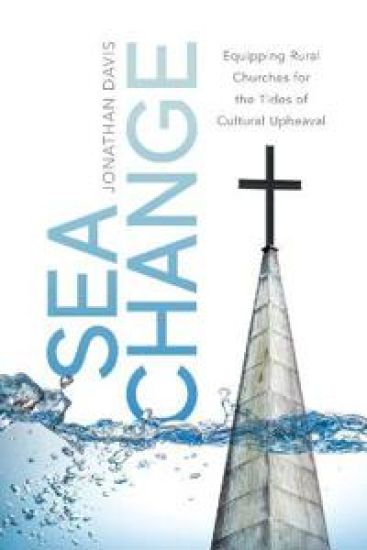
The idea that things never change in a small town is a myth. In fact, the accelerated pace of cultural change all around us impacts every rural community and church in ways that are unprecedented. But rather than resist the change, Jonathan Davis invites rural churches and pastors to embrace it. In Sea Change, he shares why rural churches have strengths that make them better prepared than they may realize to navigate the change, including in areas of: - Tolerance - Authenticity - Individualism - Skepticism Are you a part of a rural congregation? Do you sense that something needs to shift? You're not alone. Based on nearly a decade of doctoral research and personal interviews, Davis's message is a must for every ministry in the emerging North American rural context. He helps leaders ask the right questions, find fresh insight, chart a new course, and set sail in the present age.
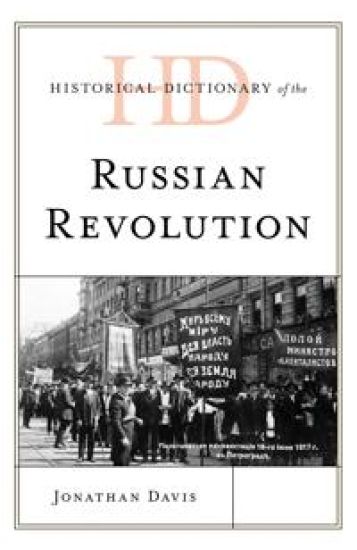
Historical Dictionary of the Russian Revolution focuses on the leading individuals, ideas, political parties and main events that were central to the transformation of Russia during the revolution. The time period runs from January 1917 through to the Treaty of Brest-Litovsk that took Russia out of the First World War in March 1918. It covers the main events, ideas, people and parties and takes the story of the revolution from the eve of the overthrowing of Tsar Nicholas II through to the Bolshevik seizure of power, the first six months of Leninist rule and the Treaty of Brest-Litovsk that ended Russia’s involvement in the First World War. Historical Dictionary of the Russian Revolution contains a chronology, an introduction, and an extensive bibliography. The dictionary section has over 200 cross-referenced entries on the revolutions, the First World War, political parties, ideologies and individuals, and the main events that defined the course of the Russian Revolution. This book is an excellent resource for students, researchers, and anyone wanting to know more about the Russian Revolution.
The Global 1980s takes an international perspective on the upheaval across the world during the long 1980s (1979–1991) with the end of the Cold War, a move towards a free-market economic system, and the increasing connectedness of the world. The 1980s was a decade of unimaginable change. At its start, dictatorships across the world appeared stable, the state was still seen as having a role to play in ensuring people’s well-being, and the Cold War seemed set to continue long into the future. By the end of the decade, dictatorships had fallen, globalisation was on the march and the opening of the Berlin Wall paved the way for the end of the Cold War. Divided into four chronological parts, sixteen chapters on themes including domestic politics, the global spread of democracy, international relations and global concerns including AIDS, acid rain and nuclear war, explore how world-wide change was initiated both from above and below. The book covers such topics as ideological changes in the liberal democratic west and socialist east, protests against nuclear weapons and for democratic governance, global environmental worries, and the end of apartheid in South Africa. Offering an overview of a decade in transition, as the global order established after 1945 broke down and a new, globalised world order emerged, and supported by case studies from across the world, this truly global book is an essential resource for students and scholars of the long 1980s and the twentieth century more generally.
The Global 1980s takes an international perspective on the upheaval across the world during the long 1980s (1979–1991) with the end of the Cold War, a move towards a free-market economic system, and the increasing connectedness of the world. The 1980s was a decade of unimaginable change. At its start, dictatorships across the world appeared stable, the state was still seen as having a role to play in ensuring people’s well-being, and the Cold War seemed set to continue long into the future. By the end of the decade, dictatorships had fallen, globalisation was on the march and the opening of the Berlin Wall paved the way for the end of the Cold War. Divided into four chronological parts, sixteen chapters on themes including domestic politics, the global spread of democracy, international relations and global concerns including AIDS, acid rain and nuclear war, explore how world-wide change was initiated both from above and below. The book covers such topics as ideological changes in the liberal democratic west and socialist east, protests against nuclear weapons and for democratic governance, global environmental worries, and the end of apartheid in South Africa. Offering an overview of a decade in transition, as the global order established after 1945 broke down and a new, globalised world order emerged, and supported by case studies from across the world, this truly global book is an essential resource for students and scholars of the long 1980s and the twentieth century more generally.
No one hurts you quite like family. It's something Harriet and Lily Cassidy have known all too well throughout their lives. Whether it was the loss of their parents or when Lily had walked out of Harriet's life. Harriet is feeling more lost than ever after the events at the Stillwater mine. She's wandered for months trying to figure out where she's going. In need of money and to sort things out she stops in at a new town where she decides she's done hunting monsters. She never knew what had become of her younger sister. Years had passed since they last saw each other. Neither one knowing if the other still lived, but they found each other again in the town of Sangre de Muerto. "Blood of the Dead"There she finds Lily burdened with a bigger responsibility that Harriet cannot understand. One of which is to eliminate an evil that has come to Sangre de Muerto. It is an evil that has killed and corrupted many throughout the ages. Harriet joins her sister in her holy crusade against this evil, but the cunning of this creature leaves the Cassidy sisters clueless as to who the creature could be and who has been corrupted by its evil. Both sisters, still haunted by their pasts, must face the mistakes they have made and overcome old grudges to fight the mysterious monster that threatens to overtake and kill the whole town. But those old grudges may lead one of them into a temptation that will turn loving sisters into hated enemies.
Harriet Cassidy discovered that monsters were real at the age of 14. When she burned them alive in her own home after they had killed her mother. Years later she uses the skills learned from her late father, a civil war veteran, to hunt down evil men and monsters in the old west. Years after her mother's horrific death her father meets his own demise. Blamed by her sister for his death, Harriet finds herself wandering the trail alone. No destination and no purpose in mind. Searching for shelter to get out of winter's grasp, she stumbles upon the remains of a family that have been eaten and skinned alive. After observing the grisly scene, she knows no human could have done this and searches out the nearest town looking for answers and to get the family a proper burial. She finds the town of Stillwater. A mining town whose people live in fear of a reclusive mine owner and their only protection is an old indian fighter for a sheriff who has a green horn for a deputy. On arrival Harriet is stripped of her weapons and confronted by the mine's hired muscle, for defending a young girls innocence. This is when those years of scraping with warlocks and demons comes in handy, and she makes short work of them with the help of Jack, a rugged woodsman who turns into a wolf on nights of the full moon. Not a whole day passes before more people turn up dead. With Harriets curiosity peaked she goes on the hunt for this unknown killer. She recruits Jack, and together they seek a mysterious indian tribe unsoiled by europeans, to find their answers. They find though that those answers may come at a cost, and what Harriet does find out may mean more to her than she ever would have imagined. "The Wendigo and the Werewolf" is a supernatural western and the first of a series. It contains elements of horror, fantasy, action, and a smidgen of romance.
I had known Marie since autumn, 1993, after both of us had worked on a documentary titled Remembering Bonnie and Clyde. She brought in the “death shirt” and other items to be photographed for this program. I watched her being interviewed and was impressed by the story she had to tell. A few days afterward, I sent Marie a small thank-you card with a note telling her how much I enjoyed meeting her and that if I could ever be of assistance, she should call. I didn’t expect a response, but shortly thereafter, Marie called and asked to meet with me, and thus began one of the richest and most interesting times of my life. --Jonathan Davis""It’s probably too late to change the overall perception that the American public has of my brothers Clyde and Buck, as well as Clyde’s sweetheart Bonnie Parker and Buck’s wife Blanche Caldwell Barrow. The public’s perspective on my family members and friends has been reinforced by over 60 years of caricature and exaggeration through the output of the publishing houses and the Hollywood studios. It began during the days of the old newsreels in the movie houses and has continued unchanged up through today’s modern cable television networks and satellite communications. No matter which medium carries the message, the message itself is typically 100% pure baloney. The proper place to begin to tell the story of my brothers, Clyde and Buck, is with our parents, since my father and my mother played such a big part in all of our lives. Henry B. Barrow, my father, was born in Pensacola, Florida, on January 10, 1873 . . . Back in those days, mandatory school attendance was taken pretty lightly. In fact, my father only went to school one-half-day in his life. The day he attempted to go, he was brought back home in a buggy after getting sick at school. Early in his life, he was afflicted with chills and this condition stayed with him throughout his childhood years. I’ve always felt that my father was a victim of a malaria attack back in his Florida days, to which he developed a severe reaction. He was extremely sickly as a child in Florida, and this condition carried over to his early adolescent years in Texas. However, he was able to assist on his father’s farm as his health improved in his later teen years. Apparently getting away from the mosquito-infested Pensacola region of the 1880’s eventually improved my father’s health."" --Marie Barrow Scoma
A brand new, fully updated, second edition of the classic bestsellerWho are the professional investment managers responsible for moving and making millions on the stock market? What approaches and strategies do they adopt? Britain has more successful stock market investors than any other country outside the United States. Yet for a long time their activities – and the secrets of their success – have remained shrouded in mystery to anyone outside the Square Mile. Now the City's top professional investors have talked in depth to a leading financial writer about their lives and their strategies for making money on the stock market. They include such market wizards as the private investor's champion Jim Slater, Michael Hart, long time manager of the UK's oldest investment trust, stockpicker supreme Anthony Bolton, and emerging markets guru Mark Mobius. Nobody with an interest in stocks and shares can fail to learn from reading how these consummate professionals go about their business. Or from their advice on what it takes to be a winner in the financial markets. The Money Makers profiled are: Anthony Bolton, Ian Rushbrook, Nils Taube, Colin McLean, Michael Hart, John Carrington, Jim Slater and Mark Mobius.
The legacy of Blair and the invasions of Iraq and Afghanistan continue to loom large for the Labour Party, whether in opposition or in government, giving rise to fierce debates over Labour's attitude and posture towards the wider world. This book considers the idea of Labour's international identity, examining how world events and Labour's response to them have helped to shape ideology, political culture and domestic agendas from the 1920s until the Iraq War. It provides a fascinating and original exploration of Labour both on the world stage and at home - from the influence of the Soviet Union on political thought in the interwar years to the international student revolts of the 1960s, and from media in the 1990s to Kosovo and New Labour Interventionism. This is essential reading for scholars of modern British politics, as well as anyone interested in the motivations and influences behind the Labour Party's actions on the world stage.
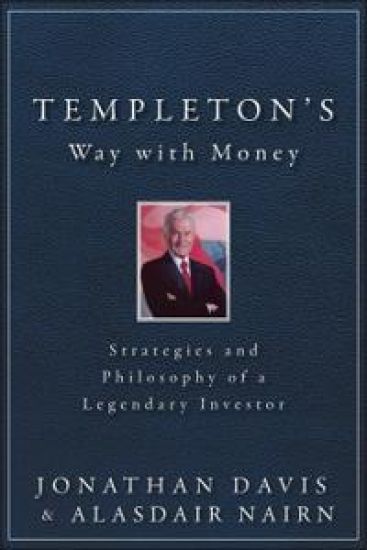
The enduring legacy of a legendary investor Called the "greatest stock picker of the century" by Money magazine, legendary fund manager Sir John Templeton is remembered as one of the world's foremost investors, known for his pioneering insights and phenomenal investment performance over a professional career which spanned more than half a century. Templeton’s Way with Money provides a unique, professional 21st century appraisal of what made this formidable investor the success he was—and why his methods remain as valid today as they were during his long and successful lifetime. Written by two investment experts, one of whom worked closely with Sir John for ten years, and drawing on previously unpublished documents, the book explains in detail how John Templeton's simple but effective investment philosophy of riding out the ups and downs of the market cycle continues to be as relevant as ever for professional and private investors alike. Key features include: A fresh and detailed reappraisal, drawing on a number of previously unpublished documents, of the philosophy which Templeton applied to the two phase of his investment career—first as an investment counsel, and latterly as the most successful global fund manager of his generationA detailed and original study of the performance of the Templeton Growth Fund, demonstrating in detail how Templeton achieved the Holy Grail of investment—above average returns with below average riskFirst hand accounts from former colleagues of their experience in working with Templeton—including those of author Alasdair Nairn's ten-year career working with and for the investment management organization that was Templeton's life workProprietary and original research which explains why Templeton's seemingly simple investment philosophy is sure to produce exceptional returns if implemented effectively Current market conditions make Templeton's contrarian investment method of profiting from pessimism particularly relevant today, and this book a must-read for anyone working with investments.
Topics assembled by Dr. Davis for this issue of Emergency Medicine Clinics include: Scrotal Emergencies; Penile Emergencies; Male GU Procedures; GU Trauma; Renal Stone Disease; Imaging of GU Emergencies; Sexual Assault; Female GU Emergencies (non-pregnant); Pediatric UTI; and Pediatric GU Emergencies.
Following Britain's - and specifically the Blair Government's - decision to support the United States in the war against Iraq, much has been written about the Labour party's international posture and perspectives. Yet very little serious academic analysis of Labour's stance towards the wider world has taken place among specialists. "The British Labour Party and the Wider World" examines how throughout the twentieth century Labour's international policies have been influenced by domestic politics, and how in turn world events and Labour's response to them have helped to change the party's ideology, political culture and domestic agenda from the 1920s up to the Iraq War. This is essential reading for anyone wanting to understand the motivations and influences behind the Labour Party's actions on the world stage, as well as students and researchers of British politics.
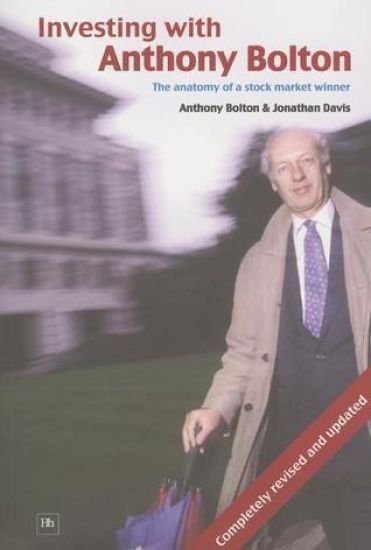
Who is the most successful investment manager in Britain? Arguments could rage forever, but no professional would dispute that Anthony Bolton of Fidelity is among the very best. £1,000 invested in his Special Situations fund at its launch in 1979 was worth more than £125,000 twenty seven years later. No other mainstream UK fund manager has put together such a consistently impressive performance over such a long period. The 125-fold increase represents an average compound growth rate of more than 20% per annum, or 7% per annum greater than the FTSE All-Share Index over the same period. This track record of sustained outperformance stands comparison with that of the greatest American investment superstars such as Warren Buffett and Peter Lynch. For many years, until the fund was voluntarily split in 2006, Fidelity Special Situations was easily the largest and most popular fund in the UK. What are the secrets of Anthony Bolton's success? This important book, now fully revised and updated, takes an in-depth look at the way that Bolton goes about his business and analyses in detail the fund's outstanding performance. Anthony Bolton gives his own personal account of the history of the fund, explains why he believes his contrarian stockpicking methods have worked so well for so long and summarises the lessons he has learnt from his long and succesful career. This book is required reading for anyone with a personal or professional interest in investment.- Fully revised and updated second edition with 25 pages of new material and graphics.- The only full-length book to analyse in detail the strategies and techniques used by the UK's number one professional investor.- Detailed analysis of the performance of his funds and the lessons that investors can draw from its exceptional track record.- Written jointly by Anthony Bolton and one of the UK's best known financial authors, a leading authority on the fund management business.