Kirjojen hintavertailu – 12 903 725 kirjaa ja 27 kauppaa

Kirjailija

Jonathan Gilmore

Kirjat ja teokset yhdessä paikassa: 6 kirjaa, julkaisuja vuosilta 2004–2024, suosituimpiin kuuluu The Cosmopolitan Military. Vertaile teosten hintoja ja tarkista saatavuus suomalaisista kirjakaupoista.

6 kirjaa

Kirjojen julkaisuvuodet: 2004–2024.

The Routledge Companion to the Philosophies of Painting and Sculpture

The Routledge Companion to the Philosophies of Painting and Sculpture

Noël Carroll; Jonathan Gilmore

TAYLOR FRANCIS LTD
2024
nidottu

Halvin toimitettuna 60,40 €

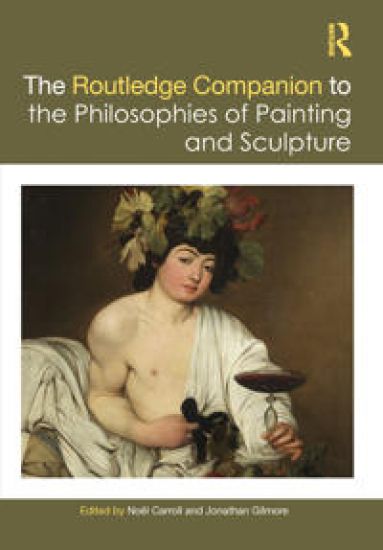
Comprising 45 chapters, written especially for this volume by an international team of leading experts, The Routledge Companion to the Philosophies of Painting and Sculpture is the first handbook of its kind. The editors have organized the chapters across eight broader sections:ArtformsHistoryQuestions of form, style, and addressArt and scienceComparisons among the artsQuestions of valuePhilosophers of artInstitutional questionsIndividual topics include art and cognitive science, evolutionary origins of art, art and perception, pictorial realism, artistic taste, style, issues of race and gender, art and religion, art and philosophy, and the end of art. The work of selected philosophers is also discussed, including Diderot, Hegel, Ruskin, Gombrich, Goodman, Wollheim, and Danto. With an introduction from the editors and comprehensively indexed, The Routledge Companion to the Philosophies of Painting and Sculpture serves as a point of entry to the subject for a broad range of students as well as an up-to-date reference for scholars in the field.
The Routledge Companion to the Philosophies of Painting and Sculpture

The Routledge Companion to the Philosophies of Painting and Sculpture

Noël Carroll; Jonathan Gilmore

TAYLOR FRANCIS LTD
2023
sidottu
Comprising 45 chapters, written especially for this volume by an international team of leading experts, The Routledge Companion to the Philosophies of Painting and Sculpture is the first handbook of its kind. The editors have organized the chapters across eight broader sections:ArtformsHistoryQuestions of form, style, and addressArt and scienceComparisons among the artsQuestions of valuePhilosophers of artInstitutional questionsIndividual topics include art and cognitive science, evolutionary origins of art, art and perception, pictorial realism, artistic taste, style, issues of race and gender, art and religion, art and philosophy, and the end of art. The work of selected philosophers is also discussed, including Diderot, Hegel, Ruskin, Gombrich, Goodman, Wollheim, and Danto. With an introduction from the editors and comprehensively indexed, The Routledge Companion to the Philosophies of Painting and Sculpture serves as a point of entry to the subject for a broad range of students as well as an up-to-date reference for scholars in the field.
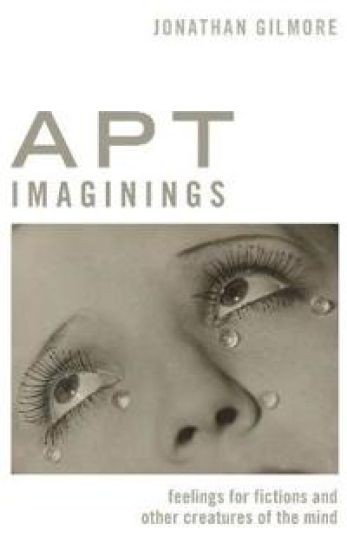
Apt Imaginings

Apt Imaginings

Jonathan Gilmore

Oxford University Press Inc
2020
sidottu
How do our engagements with fictions and other products of the imagination compare to our experiences of the real world? Are the feelings we have about a novel's characters modelled on our thoughts about actual people? If it is wrong to feel pleasure over certain situations in real life, can it nonetheless be right to take pleasure in analogous scenarios represented in a fantasy or film? Should the desires we have for what goes on in a make-believe story cohere with what we want to happen in the actual world? Such queries have animated philosophical and psychological theorizing about art and life from Plato's Republic and Aristotle's Poetics to contemporary debates over freedom of expression, ethics and aesthetics, the cognitive value of thought experiments, and the effects on audiences of exposure to violent entertainment. In Apt Imaginings, Jonathan Gilmore develops a new framework to pursue these questions, marshalling a wide range of research in aesthetics, the science of the emotions, moral philosophy, neuroscience, cognitive psychology, and film and literary theory. Gilmore argues that, while there is a substantial empirical continuity in our feelings across art and life, the norms that govern the appropriateness of those responses across the divide are discontinuous. In this view, the evaluative criteria that determine the fit, correctness, or rationality of our emotions and desires for what is internal to a fiction can be contrary to those that govern our affective attitudes toward analogous things in the real world. In short, it can be right to embrace within a story what one would condemn in real life. The theory Gilmore defends in this volume helps to explain our complex and sometimes conflicted attitudes toward works of the imagination; challenges the popular view that fictions serve to refine our moral sensibilities; and exposes a kind of autonomy of the imagination that can render our responses to art immune to standard real-world epistemic, practical, and affective kinds of criticism.
The Cosmopolitan Military

The Cosmopolitan Military

Jonathan Gilmore

Palgrave Macmillan
2015
sidottu
What role should national militaries play in an increasingly globalised and interdependent world? This book examines the often difficult transition they have made toward missions aimed at protecting civilians and promoting human security, and asks whether we might expect the emergence of armed forces that exist to serve the wider human community.
The Philosophical Disenfranchisement of Art

The Philosophical Disenfranchisement of Art

Arthur C. Danto; Jonathan Gilmore

Columbia University Press
2004
sidottu
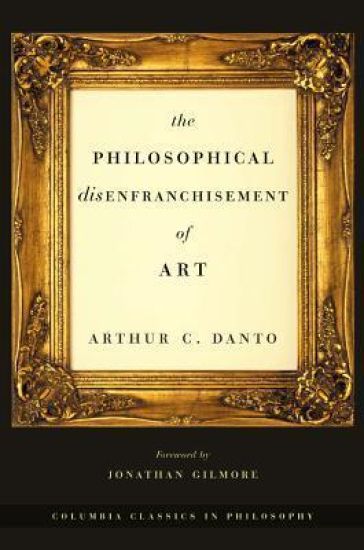
In this acclaimed work, first published in 1986, world-renowned scholar Arthur C. Danto explored the inextricably linked but often misunderstood relationship between art and philosophy. In light of the book's impact-especially the essay "The End of Art," which dramatically announced that art ended in the 1960s-this enhanced edition includes a foreword by Jonathan Gilmore that discusses how scholarship has changed in response to it. Complete with a new bibliography of work on and influenced by Danto's ideas, The Philosophical Disenfranchisement of Art continues to be of interest to anyone who thinks seriously about art, as well as to philosophers, aestheticians, and art historians.
The Philosophical Disenfranchisement of Art

The Philosophical Disenfranchisement of Art

Arthur C. Danto; Jonathan Gilmore

Columbia University Press
2004
pokkari
In this acclaimed work, first published in 1986, world-renowned scholar Arthur C. Danto explored the inextricably linked but often misunderstood relationship between art and philosophy. In light of the book's impact-especially the essay "The End of Art," which dramatically announced that art ended in the 1960s-this enhanced edition includes a foreword by Jonathan Gilmore that discusses how scholarship has changed in response to it. Complete with a new bibliography of work on and influenced by Danto's ideas, The Philosophical Disenfranchisement of Art continues to be of interest to anyone who thinks seriously about art, as well as to philosophers, aestheticians, and art historians.