Kirjailija
Jonathan Glancey
Kirjat ja teokset yhdessä paikassa: 22 kirjaa, julkaisuja vuosilta 2003–2026, suosituimpiin kuuluu Where We Live. Vertaile teosten hintoja ja tarkista saatavuus suomalaisista kirjakaupoista.
22 kirjaa
Kirjojen julkaisuvuodet: 2003–2026.
Britain is in the grip of a housing crisis. It has, in fact, been in the grip of a housing crisis since the Industrial Revolution, when the population soared and people crammed into towns and cities in search of work. What followed is a tale of suburbia, green belts and, since the 1980s, the increasingly common sight of mass-produced and near identical housing across the land. This book argues that British house building over the centuries has been an art. An art of which we can be proud and an art we can still learn from. The artistry involved includes not just the design and appearance, but the setting of homes into the fabric of urban and rural landscapes and the very fabric of people's lives. We need to get the art of new housing right before building ever more homes that, while considered a necessity, no one truly likes. Where We Live is at once a critical history of the art of British housebuilding urban, suburban and rural, a study of where British housing has lost its way for the best part of a century, and a source of inspiration and hope for the future.

'Impressive... Glancey has written an engaging and affectionate account of the V-bombers, not least the figures who made it all possible.' Telegraph THE THREE VERY DIFFERENT models of V class bomber comprising Britain's strategic nuclear strike force - Vickers Valiant, Avro Vulcan and Handley Page Victor - marked a radical change in post-war bomber design. From the time they first entered service between 1955 and 1957, these charismatic, high-flying jets stole the public imagination. Theirs, though, was a terrible beauty. In 1956, over the South Australian desert, Valiant WZ366 was the first British aircraft to drop an operational atomic bomb. The V-bombers were Britain's premier Cold War aircraft. But frictions in Anglo-American relations alongside developments in radar and surface-to-air missiles led to the Royal Navy taking over Britain's nuclear deterrent role in 1968. Despite this, the V-bombers enjoyed a second life in conventional roles, most notably when Vulcans undertook the longest bombing raids in history in the 1982 Falklands War. V-Force sets these formidable, haunting aircraft in the story of the development of twentieth-century weapons of mass destruction, military rivalries and international politics. It is both an extraordinary ode to the V-bombers and a unique lens through which to view Britain's Cold War experience.
21 March 1945. 1530 hours. Dozens of Allied fighters and bombers sweep over German-occupied Venice. Their mission – destroy Germany’s strategic outposts nestled along the port, while leaving the floating city unscathed. As bombs rained down upon Europe, flattening city after city, Venice – La Serenissima; home of Titian and Veronese; immortalised in the serene landscapes of Canaletto – remained sacrosanct. Its artistic and architectural treasure too considerable, too precious to risk destruction. But, as the push up through Italy reached its final, gruelling months, the Allies were confronted with a terrible dilemma. The ancient city of Venice was now closer and closer to the line of fire. As casualties mounted, the value of art, of history seemed diminished – just a month earlier Allied bombers had reduced the ancient hilltop abbey of Monte Cassino to a stony husk. In a gripping tale, bestselling author Jonathan Glancey reveals the thrilling history of ‘Operation Bowler’. Joining audacious Wing Commander George Westlake DFC and his elite team, Operation Bowler explores how an unlikely squad of pilots executed one of the most meticulous and complex air raids of the Second World War, sparing not only Venice, but its people.
As World War II came to an end and America's nuclear bombing of Hiroshima and Nagasaki shocked the world, it became clear that the nascent Cold War would be as different a conflagration from WWII as that war was from WWI. Believing that the UK was extremely vulnerable to nuclear attack, it was quickly determined that only 'the threat of large-scale damage from similar weapons' could prevent a Soviet attack. And, thus, V-Force was born. Entered into service between 1955 and 1957, the three models of V class bombers that made up Britain's strategic nuclear strike force - the Vickers Valiant, Avro Vulcan and Handley Page Victor - were modern marvels of machinery. Capable of both high- and low-level attack with their slick delta wing designs, and supremely quick despite the massive bomb loads they carried, these aircraft were central tenets of Britain's nuclear weapons development. Despite a fall as precipitous as their rise when the Royal Navy took over Britain's nuclear deterrent role in 1968, like a phoenix from the ashes, the V bombers enjoyed a second life as conventional bombers: the Valiant gaining fame in the Suez Crisis; the Victors in the Indonesia-Malaysia confrontation, and the Vulcans undertook the longest bombing raid in history for Operation Black Buck in the Falklands Campaign of 1982. V-Force is both an ode to these most resilient and beautiful of British aircraft, and a lens through which to view Britain's Cold War experience.
Operation Bowler: The Audacious Allied Bombing of Venice During World War II
Jonathan Glancey
Pegasus Books
2025
sidottu
A story of incredible military daring--set against the splendor of Venice--that tells how an unlikely squad of pilots executed the most meticulous air raid of World War II. March 21st, 1945. Bursting through a hazy sky, dozens of Allied fighters and bombers sweep over German-occupied Venice. Their mission: destroy Germany's strategic outposts nestled along the port, while leaving the floating city unscathed. As bombs rained down upon Europe, flattening city after city, Venice--La Serenissima; home of Titian and Veronese; immortalized in the serene landscapes of Canaletto--remained sacrosanct. Its artistic and architectural treasure too considerable, too precious to risk destruction. But as the push up through Italy reached its final, grueling months, the Allies were confronted with a terrible dilemma. The ancient city of Venice was now closer and closer to the line of fire. As casualties mounted, the value of art--of history--seemed diminished; just a month earlier Allied bombers had reduced the ancient hilltop abbey of Monte Cassino to a stony husk. In this vivid narrative, bestselling author Jonathan Glancey reveals the thrilling story of Operation Bowler. Following the exploits of audacious Wing Commander George Westlake and his elite team, Operation Bowler explores how an unlikely squad of pilots executed the most meticulous and complex air raid of World War II, sparing not only Venice but also its people.
21 March 1945. 1530 hours. Dozens of Allied fighters and bombers sweep over German-occupied Venice. Their mission – destroy Germany’s strategic outposts nestled along the port, while leaving the floating city unscathed. As bombs rained down upon Europe, flattening city after city, Venice – La Serenissima; home of Titian and Veronese; immortalised in the serene landscapes of Canaletto – remained sacrosanct. Its artistic and architectural treasure too considerable, too precious to risk destruction. But, as the push up through Italy reached its final, gruelling months, the Allies were confronted with a terrible dilemma. The ancient city of Venice was now closer and closer to the line of fire. As casualties mounted, the value of art, of history seemed diminished – just a month earlier Allied bombers had reduced the ancient hilltop abbey of Monte Cassino to a stony husk. In a gripping tale, bestselling author Jonathan Glancey reveals the thrilling history of ‘Operation Bowler’. Joining audacious Wing Commander George Westlake DFC and his elite team, Operation Bowler explores how an unlikely squad of pilots executed one of the most meticulous and complex air raids of the Second World War, sparing not only Venice, but its people.
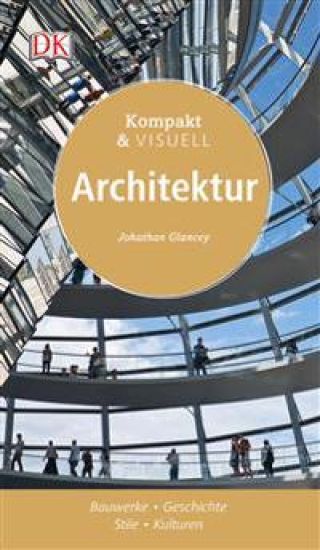
Big Ideas. Das Architektur-Buch
Jon Astbury; Pamela Buxton; Jonathan Glancey
Dorling Kindersley Verlag
2023
sidottu
Explore over 500 masterpieces of modern architecture in this celebration of the most iconic buildings in the world. Written by acclaimed architecture expert Jonathan Glancey, Modern Architecture is a beautifully illustrated guide to the key styles, architects and movements that have defined our skylines since the dawn of the twentieth century. From the dizzying heights of the Shard to the exquisite curves of the Sydney Opera House, and from Frank Lloyd Wright to Sir David Adjaye, this is the essential handbook to the creative discipline that shapes our world.'His comments are always informative, unashamedly partisan and often enjoyably tart' – Sunday Telegraph'One of the finest architectural writers in contemporary Britain' – Scotland on Sunday
This accessible and comprehensive book shines a light on the design history of the famous Anglepoise lamp. Starting with the beginnings of the company with George Carwardine, the designer behind the lamp, the book takes you through an illuminating journey of the development and influence of this British icon. In 1932, vehicle suspension engineer George Carwardine designed the spring, crank and lever mechanism that became the blueprint for the first Anglepoise lamp. Enchanting the world with its light-to-the-touch and anthropomorphic design, the unique and characterful form has adorned the worktables of everyone, from writers to engineers, from the Second World War through to the21st century. Cozy as it is utilitarian, the intimately focused pool of light the Anglepoise creates around an individual’s work is as poetic as it is practical. Today, the lamp is a sure sign of quality and has been hailed as a hallmark of British design. Spring Light details a fascinating history of this household item that the armchair architect, designer and engineer will enjoy. Chapters include:Foreword by Sir John HegartyA Question of Balance: An introduction to the designLight Engineering: Designer George Carwardine’s beginningsDarkness Visible: the Anglepoise in the Second World War and industryLamps for Sale: the launch of the Anglepoise Model 1227 through advertisingLighting by Design: the development of the Anglepoise lamp from the 1970s through to the 2000s – with collaborations with Paul Smith and Margaret HowellLights for Sore Eyes: the success of the design and imitationsAnglepoise goes to the Movies: the Anglepoise in filmsUndimmed Light: the future of Anglepoise and new designsIn the Beginning: a ruminative essay on the lamp – the pools of light it creates and its unique lightweight engineering – by Jonathan Glancey.
Announced in 1912, the Schneider Trophy was a series of glamorous air contests, popularly known as races, that captivated both sides of the Atlantic. While there were many other aviation competitions, the Schneider proved to be, after a rocky start, by far the most memorable attracting a hugely popular and glamorous following whether Trophy races were held in Monaco, the Venice Lido, the Solent or Chesapeake Bay. The Schneider Trophy was a focus not just of remarkable aircraft, derring-do pilots and swooning public attention, but also of fierce rivalries between the competitors: Britain, France, Italy and the United States. It gripped the imaginations of pioneering manufacturers and two of the world's finest aircraft designers - Reginald Mitchell and Mario Castoldi - who worked feverishly hard to outdo one another. Perhaps inevitably, the dynamism of rival engineering and politics led to the most potent military fighters of World War Two with Reginald Mitchell's record-breaking Supermarine seaplanes morphing, one way or another, into the Spitfire. Wings Over Water not only tells the story of the Schneider Trophy afresh but also examines the backdrop and legacy of these legendary air races, which became a driver and celebration of speed and engineering prowess for both sea and ground-based aircraft. It is an exhilarating tale of raw adventure, public excitement, engineering genius and the fortunes of flying boats and seaplanes.
In Logomotive Ian Logan's photographs are assembled into chapters and picture essays recalling the great days of lines such as the Santa Fe, the Union Pacific, and the Kansas City Southern. Some of his journeys are presented as travelogues in which he meets the Fat Controller, gets to sound the horn, and wanders into freight yards to see the last generation of streamline locomotives rusting amid the weeds. Animal motifs, Native American allusions, advertising slogans, names of famous trains such as the Super Chief and the Wabash Cannonball provide the subject matter for other picture features.
What was it really like to take the LNER's Art Deco Coronation streamliner from King's Cross to Edinburgh, to cross the Atlantic by the SS Normandie, to fly with Imperial Airways from Southampton to Singapore, to steam from Manhattan to Chicago on board the New York Central's 20th Century Limited or to dine and sleep aboard the Graf Zeppelin? In the course of The Journey Matters, Jonathan Glancey travels from the early 1930s to the turn of the century on some of what he considers to be the most truly glamorous and romantic trips he has ever dreamed of or made in real life. Each of the twenty journeys allows him to explore the history of routes taken, and the events - social and political - enveloping them. Each is the story of the machines that made these journeys possible, of those who shaped them and those, too, who travelled on them.
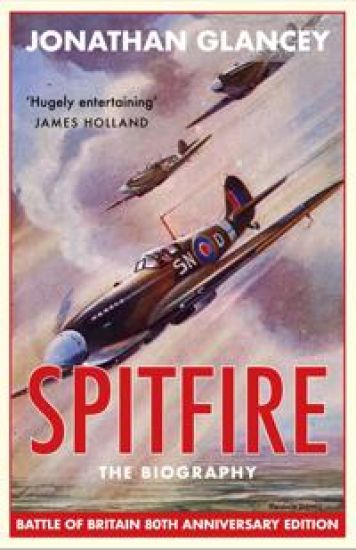
Updated edition to commemorate the 80th anniversary of the Battle of Britain. It is difficult to overestimate the excitement that accompanied the birth of the Spitfire. An aircraft imbued with balletic grace and extraordinary versatility, it was powered by a piston engine and a propeller, yet came tantalisingly close to breaking the sound barrier. First flown in 1936, the Spitfire soon came to symbolize Britain's defiance of Nazi Germany in the summer of 1940. Spitfire: The Biography is a celebration of a great British invention, of the men and women who flew it and supported its development, and of the industry that manufactured both the aircraft and the Rolls-Royce engines that powered it. It is also about the ways in which the sight, sound and fury of this lithe and legendary fighter continue to stir the public imagination worldwide more than eighty years on.
How to Read Towns and Cities
Jonathan Glancey
Herbert Press Ltd
2019
nidottu
Halvin toimitettuna 20,30 €
A highly-illustrated, pocket-sized guide to understanding the forces that have shaped the world’s cities from the dawn of civilisation to the present day. The fortunes of towns and cities rise and fall along with the fate of the civilisations to which they belong. Some are lost entirely, now no more than ruins; others have thrived as urban centres for millennia; and all contain vital clues embedded in their streets and skylines which reveal why their inhabitants grouped together, and tell of their unique social, political and cultural histories. Packed with plans, maps, and drawings, this book takes you on an international journey of discovery to explore the history of cities from our earliest urban origins to the contemporary world city – from Babylon to Beijing, London to Paris, and from the skyscrapers of New York to the streets of their own home town. A must-read for anyone interested in history, cities, and travel, this fascinating book turns you into an urban detective to see how our towns and cities grew the way they are.
Architecture: A Visual History
Jonathan Glancey
DK Publishing (Dorling Kindersley)
2017
sidottu
Halvin toimitettuna 27,60 €
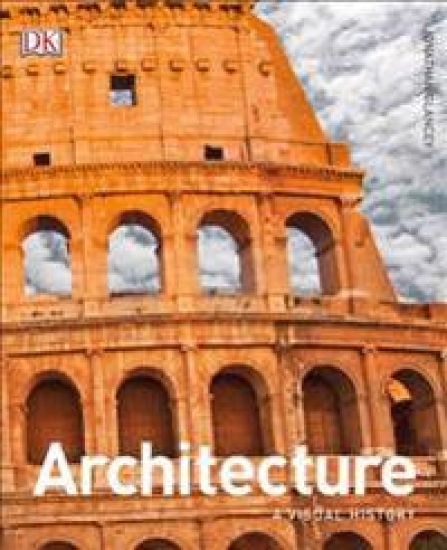
Explore the world's most incredible buildings, from the magnificent architecture of the ancient world to green buildings of the present day. Discover the beautiful details, principal elements, and decorative features of every architectural style, from the Great Pyramid of Giza, Machu Picchu, and the Colosseum to the Sydney Opera House, the Gherkin, and Burj Khalifa. Architecture offers a truly worldwide look at historical and contemporary buildings, with breathtaking photography and intriguing cross-sections to enhance your view. See how and why certain features were common in specific time periods and how these amazing buildings have stood the test of time. Unique specially-commissioned CGI artworks throughout the book showcase more than 10 specific buildings, including The Pantheon and the United States Capitol, giving you an pristine view of their features. Clear annotations of each artwork, along with exquisite photography of specific details, make sure that you don't miss a thing. Presented in a special slipcase, this stunning guide makes the perfect purchase for anyone who is fascinated by our world's most wondrous buildings.
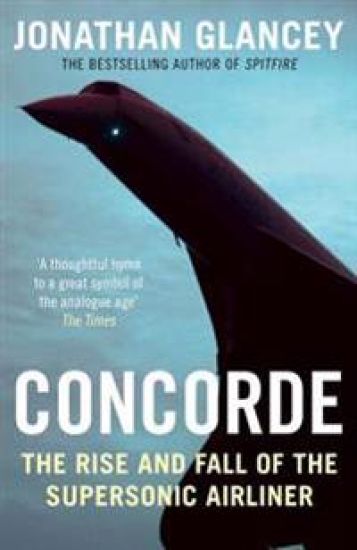
In Concorde, Jonathan Glancey tells the story of this magnificent and hugely popular aircraft anew, taking the reader from the moment Captain Chuck Yeager first broke the sound barrier in 1947 through to the last commercial flight of the supersonic airliner in 2003. It is a tale of national rivalries, technological leaps, daring prototypes, tightrope politics, and a dream of a Dan Dare future never quite realized. Jonathan Glancey traces the development of Concorde not just through existing material and archives, but through interviews with those who lived with the supersonic project from its inception. The result is a compelling mix of overt technological optimism, a belief that Britain and France were major players in the world of civil as well as military aviation, and faith in an ever faster, ever more sophisticated future. This is a celebration, as well as a thoroughly researched history, of a truly brilliant machine that became a sky god of its era.
The British designed and built the Harrier, the most successful vertical take-off-and-landing aircraft ever made. Combining state-of-the-art fighter plane technology with a helicopter's ability to land vertically the Harrier has played an indispensable role for the RAF and Royal Navy in a number of conflicts, most famously the Falklands War. Jonathan Glancey's biography is a vividly enjoyable account of the invention of this remarkable aeroplane and a fitting tribute to the inspiration and determination of the men and women who created it, and the bravery of the men who flew it, often in the most dangerous conditions.