Kirjojen hintavertailu – 12 859 828 kirjaa ja 27 kauppaa

Kirjailija

Jonathan Hall

Kirjat ja teokset yhdessä paikassa: 17 kirjaa, julkaisuja vuosilta 2004–2026, suosituimpiin kuuluu The Unfinished History of the Indebted Nation-State. Vertaile teosten hintoja ja tarkista saatavuus suomalaisista kirjakaupoista.

17 kirjaa

Kirjojen julkaisuvuodet: 2004–2026.

The Battle for Illinois

The Battle for Illinois

Jonathan Hall

Heritage Books
2025
pokkari
The Illinois Confederation, the Fox, the Sauk, the Shawnee, the Potawatomi, and others have settled in, hunted, and farmed various parts of Illinois at different times in history. What became of them after the coming of the Europeans in the mid-sixteenth century? In less than two hundred years after encountering Europeans, no native tribes occupied any land in the state. First, the French, then the British, and finally the Americans all interacted with them. They traded with them, lived amongst them, allied with them, ruled over them, and fought against them. This book focuses on the major battles they fought with other Indians (including the legend of Starved Rock), the French, the British, and the Americans, both within and outside the state. Divided into four parts, the story of the significant battles from prehistoric times and the Colonial period, the Revolutionary War, the War of 1812, and the Black Hawk War are all told in accounts of eyewitnesses or earlier historians. Three appendices (The 1804 Treaty with the Sauk), Abraham Lincoln and other famous people who served in the Black Hawk War, and Reconstructed Forts in Illinois are provided for further information.

The Unfinished History of the Indebted Nation-State

The Unfinished History of the Indebted Nation-State

Jonathan Hall

Springer International Publishing AG
2025
sidottu
This book traces the genesis of the indebtedness of the nation-state in the West, arguing that it is a phenomenon which preceded the emergence of capitalism. Even prior to the emergence of the capitalist mode of production, the ruling class of feudal landowners in the West were dependent on credit, and had to repay the loans provided by their international creditors. Those monetary loans were unavoidable, both for the defence of the emergent territorial state against its rivals and for its expansion in the struggle against them. However autonomous the early Western nation-states may appear to have been, in reality they were all dependent on the transnational creditors of the time, while the latter in their turn depended on them for the extraction of surplus value from the geographically widening circle of their subject populations. In the modern world of international capitalism, the various nationalisms are still inseparable from the international framework of financial institutions which struggle to sustain the global regime for the perpetual extraction of surplus value.
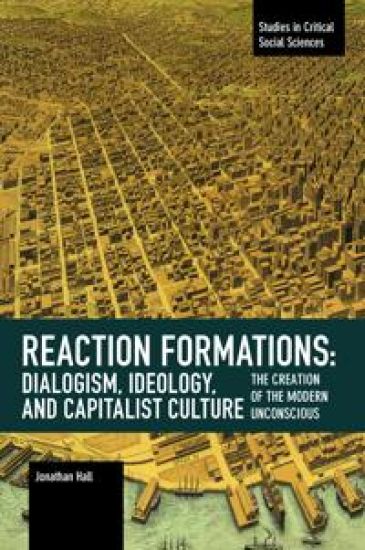
Reaction Formation: Dialogism, Ideology, and Capitalist Culture
Bakhtin and Voloshinov argued that dialogue is the intersubjective basis of consciousness, and of the creativity which makes historical changes in consciousness possible. The multiple dialogical relationships give every subject, who has developed through internalising them, the potential to distance him or herself from them. Consciousness is therefore an "unfinalised" process, always open to a possible future which would not merely reiterate the past. But this book explores its corollary: The relative openness is a field of conflict where rival discourses struggle for hegemony, by subordinating or eliminating their rivals. That is how the unconscious is created out of socio-historical conflicts. Hegemony is always incomplete, because there is always the possibility of a return of its repressed rivals in new combinations.
Translingual Identities and Transnational Realities in the U.S. College Classroom

Translingual Identities and Transnational Realities in the U.S. College Classroom

Heather Robinson; Jonathan Hall; Nela Navarro

Routledge
2020
sidottu
Exploring the roles of students’ pluralistic linguistic and transnational identities at the university level, this book offers a novel approach to translanguaging by highlighting students’ perspectives, voices, and agency as integral to the subject. Providing an original reconsideration of the impact of translanguaging, this book examines both transnationality and translinguality as ubiquitous phenomena that affect students’ lives. Demonstrating that students are the experts of their own language practices, experiences, and identities, the authors argue that a proactive translingual pedagogy is more than an openness to students’ spontaneous language variations. Rather, this proactive approach requires students and instructors to think about students’ holistic communicative repertoire, and how it relates to their writing. Robinson, Hall, and Navarro address students’ complex negotiations and performative responses to the linguistic identities imposed upon them because of their skin color, educational background, perceived geographical origin, immigration status, and the many other cues used to "minoritize" them. Drawing on multiple disciplinary discourses of language and identity, and considering the translingual practices and transnational experiences of both U. S. resident and international students, this volume provides a nuanced analysis of students’ own perspectives and self-examinations of their complex identities. By introducing and addressing the voices and self-reflections of undergraduate and graduate students, the authors shine a light on translingual and transnational identities and positionalities in order to promote and implement inclusive and effective pedagogies. This book offers a unique yet essential perspective on translinguality and transnationality, and is relevant to instructors in writing and language classrooms; to administrators of writing programs and international student support programs; and to graduate students and scholars in language education, second language writing, applied linguistics, and literacy studies.
Translingual Identities and Transnational Realities in the U.S. College Classroom

Translingual Identities and Transnational Realities in the U.S. College Classroom

Heather Robinson; Jonathan Hall; Nela Navarro

Routledge
2020
nidottu
Exploring the roles of students’ pluralistic linguistic and transnational identities at the university level, this book offers a novel approach to translanguaging by highlighting students’ perspectives, voices, and agency as integral to the subject. Providing an original reconsideration of the impact of translanguaging, this book examines both transnationality and translinguality as ubiquitous phenomena that affect students’ lives. Demonstrating that students are the experts of their own language practices, experiences, and identities, the authors argue that a proactive translingual pedagogy is more than an openness to students’ spontaneous language variations. Rather, this proactive approach requires students and instructors to think about students’ holistic communicative repertoire, and how it relates to their writing. Robinson, Hall, and Navarro address students’ complex negotiations and performative responses to the linguistic identities imposed upon them because of their skin color, educational background, perceived geographical origin, immigration status, and the many other cues used to "minoritize" them. Drawing on multiple disciplinary discourses of language and identity, and considering the translingual practices and transnational experiences of both U. S. resident and international students, this volume provides a nuanced analysis of students’ own perspectives and self-examinations of their complex identities. By introducing and addressing the voices and self-reflections of undergraduate and graduate students, the authors shine a light on translingual and transnational identities and positionalities in order to promote and implement inclusive and effective pedagogies. This book offers a unique yet essential perspective on translinguality and transnationality, and is relevant to instructors in writing and language classrooms; to administrators of writing programs and international student support programs; and to graduate students and scholars in language education, second language writing, applied linguistics, and literacy studies.
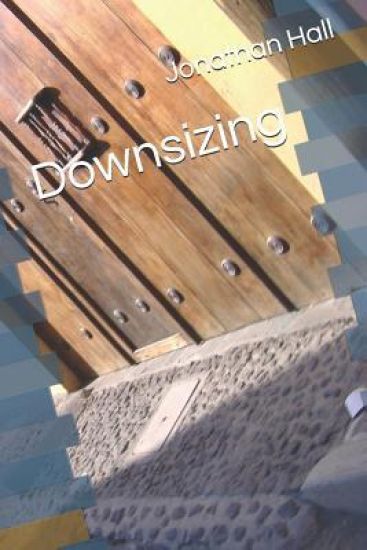
Downsizing: Poems

Downsizing: Poems

Jonathan Hall

Independently Published
2019
nidottu
DOWNSIZING: Poems of loss and hopeFIN DE SI CLE: From Modernism to Kurt Cobain AFTER VALENTINE'S DAY: Poems of love and its aftermath BLINDING DATE: Experiments in chaos UNEMPLOYABLE: Work and family in AmericaTHE LOST BOOK OF MOSES: What the Bible didn't tell you
The Masks of Love

The Masks of Love

Jonathan Hall

Independently Published
2019
nidottu
THE MASKS OF LOVE: Tales of obsession, loneliness, and unexpected connections IN A GREEN EYE: A family dissolves, a legacy of an irresponsible father.. OPEN SEASON: A divorced couple and their son's increasing penchant for violence. UNEMPLOYABLE: Tales of work and worthlessness.
Everyday Miracles: Moments of Healing and Transformation

Everyday Miracles: Moments of Healing and Transformation

Jonathan Hall; Richard Morrison

Quiet Fire Press
2016
nidottu
This inspiring collection of stories was contributed by a group of seasoned travelers who share their favorite miracle stories, along with practical guidance and tools for spiritual development. If you've ever wondered what it would be like to step beyond the veil to get a glimpse of the other side, or be visited by an angel, or receive a message from a loved one in the afterlife, you will be delighted by the testimonials in this book. The authors describe extraordinary experiences that anyone would consider miraculous, from spontaneous healings to safe passage through dangerous war zones. But they also write about the little miracles--that sudden shift in perception, or moment of grace, that forever changes someone's perspective; or the perfect synchronicity that brings exactly what is needed at just the right time. The authors illustrate the importance of listening to our inner wisdom, whether to guide the healing process, transform relationships, or make lifelong dreams a reality. 'Everyday Miracles' will inspire you to be a miracle worker in your own life.
Cicero's Use of Judicial Theater

Cicero's Use of Judicial Theater

Jonathan Hall

The University of Michigan Press
2014
sidottu
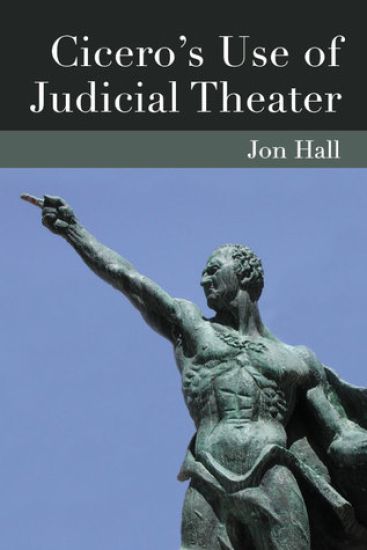
In Cicero’s Use of Judicial Theater, Jon Hall examines Cicero's use of showmanship in the Roman courts, looking in particular at the nonverbal devices that he employs during his speeches as he attempts to manipulate opinion. Cicero's speeches in the law-courts often incorporate theatrical devices including the use of family relatives as props during emotional appeals, exploitation of tears and supplication, and the wearing of specially dirtied attire by defendants during a trial, all of which contrast strikingly with the practices of the modem advocate. Hall investigates how Cicero successfully deployed these techniques and why they played such a prominent part in the Roman courts. These "judicial theatrics" are rarely discussed by the ancient rhetorical handbooks, and Cicero’s Use of Judicial Theater argues that their successful use by Roman orators derives largely from the inherent theatricality of aristocratic life in ancient Rome—most of the devices deployed in the courts appear elsewhere in the social and political activities of the elite. While Cicero’s Use of Judicial Theater will be of interest primarily to professional scholars and students studying the speeches of Cicero, its wider analyses, both of Roman cultural customs and the idiosyncratic practices of the courts, will prove relevant also to social historians, as well as historians of legal procedure.
Cicero's Use of Judicial Theater

Cicero's Use of Judicial Theater

Jonathan Hall

The University of Michigan Press
2014
nidottu
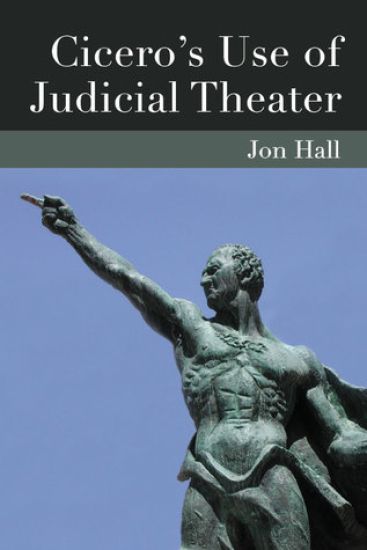
In Cicero’s Use of Judicial Theater, Jon Hall examines Cicero's use of showmanship in the Roman courts, looking in particular at the nonverbal devices that he employs during his speeches as he attempts to manipulate opinion. Cicero's speeches in the law-courts often incorporate theatrical devices including the use of family relatives as props during emotional appeals, exploitation of tears and supplication, and the wearing of specially dirtied attire by defendants during a trial, all of which contrast strikingly with the practices of the modem advocate. Hall investigates how Cicero successfully deployed these techniques and why they played such a prominent part in the Roman courts. These "judicial theatrics" are rarely discussed by the ancient rhetorical handbooks, and Cicero’s Use of Judicial Theater argues that their successful use by Roman orators derives largely from the inherent theatricality of aristocratic life in ancient Rome—most of the devices deployed in the courts appear elsewhere in the social and political activities of the elite. While Cicero’s Use of Judicial Theater will be of interest primarily to professional scholars and students studying the speeches of Cicero, its wider analyses, both of Roman cultural customs and the idiosyncratic practices of the courts, will prove relevant also to social historians, as well as historians of legal procedure.
Meet the Kinect

Meet the Kinect

Sean Kean; Jonathan Hall; Phoenix Perry

APress
2011
nidottu
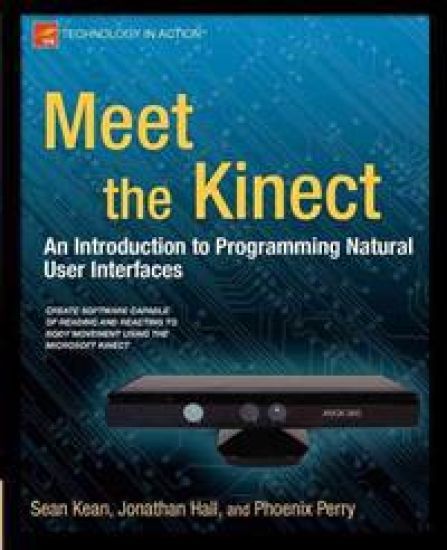
Meet the Kinect introduces the exciting world of volumetric computing using the Microsoft Kinect. You'll learn to write scripts and software enabling the use of the Kinect as an input device. Interact directly with your computer through physical motion. The Kinect will read and track body movements, and is the bridge between the physical reality in which you exist and the virtual world created by your software. Microsoft’s Kinect was released in fall 2010 to become the fastest-selling electronic device ever. For the first time, we have an inexpensive, three-dimensional sensor enabling direct interaction between human and computer, between the physical world and the virtual. The Kinect has been enthusiastically adopted by a growing culture of enthusiasts, who put it to work in creating technology-based art projects, three-dimensional scanners, adaptive devices for sight-impaired individuals, new ways of interacting with PCs, and even profitable business opportunities. Meet the Kinect is the resource to get you started in mastering the Kinect and the exciting possibilities it brings. You’ll learn about the Kinect hardware and what it can do. You’ll install drivers and learn to download and run the growing amount of Kinect software freely available on the Internet. From there, you’ll move into writing code using some of the more popular frameworks and APIs, including the official Microsoft API and the language known as Processing that is popular in the art and creative world. Along the way, you’ll learn principles and terminology. Volumetric computing didn’t begin with the Kinect. The field is decades old—if you’ve ever had an MRI, for example, you have benefitted from volumetric computing technology. Meet the Kinect goes beyond just the one device to impart the principles and terminology underlying the exciting field of volumetric computing that is now wide-openand accessible to the average person.
Hall: Three Plays

Hall: Three Plays

Jonathan Hall

Oberon Books Ltd
2004
nidottu
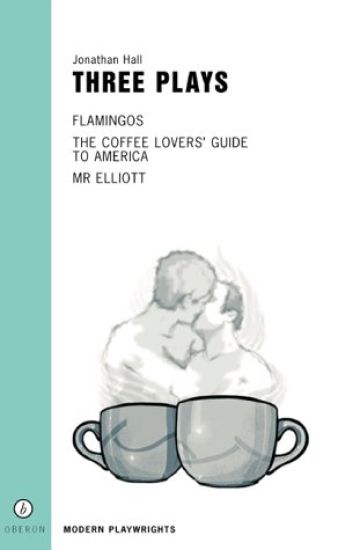
Three insightful dramas exploring modern life from a gay perspective: Flamingos, Mr Elliott and The Coffee Lover's Guide to America. In Flamingos, four very different men spending a weekend in Brighton find that love and lust are trickier to handle than they thought. In The Coffee Lover's Guide to America, Joe is happily ‘married', so he's hardly likely to jump in a car and take a road trip across the US with a guy he's just met - is he? In Mr Elliott a chance encounter with one of his old students means that a ‘straight' teacher's life will never ben the same again.